Key Points
- Arsenal fans flooded north London on Sunday, 31 May 2026, to celebrate the club’s first Premier League title in 22 years.
- The celebration centred on a 9km open-top bus parade through the borough of Islington, starting on Holloway Road and finishing near Upper Street.
- Four buses were used, carrying both the men’s Premier League-winning squad and the women’s team, who won the FIFA Women’s Champions Cup.
- Police expected more than 500,000 fans along the route, turning north London into a “sea of red and white”.
- The parade took place despite Arsenal’s heartbreak in the Champions League final, where they lost to Paris Saint-Germain on penalties after Gabriel missed a crucial spot-kick.
- Crowds included supporters on balconies and rooftops; dozens required rescue from unsafe positions as celebrations intensified.
- Media outlets including the BBC, Sky News, ITV News, and The Mirror provided live coverage and guidance on how to watch or stream the parade.
- The event marked a historic dual achievement: the men’s first Premier League title since 2004 and the women’s FIFA Women’s Champions Cup triumph.
- Local streets were heavily congested, with many fans lining the entire route from early morning as the procession moved through Islington.
- The victory parade was described by reporters as one of the biggest north London football celebrations in recent memory, rivaling past title and cup events.
Islington (North London News) July 4, 2026 –Hundreds of thousands of Arsenal fans filled the streets of north London on Sunday as the club celebrated its latest major trophy wins with an open-top bus parade through the capital. The event, centred on the borough of Islington, saw supporters line a 9km route from Holloway Road to Upper Street, creating what ITV News described as a “sea of red and white” across the area.
- How Did Fans React to Arsenal’s Premier League Title Parade?
- What Was the Route and Scale of the Victory Parade?
- How Did the Champions League Final Impact the Celebrations?
- What Else Was Celebrated Alongside the Men’s Title?
- How Did Media Outlets Cover the Parade?
- What Safety Concerns arose During the Parade?
Arsenal’s men’s team paraded the Premier League title for the first time since 2004, while the women’s team joined the procession to celebrate their FIFA Women’s Champions Cup victory.
Four open-top buses carried players, coaches and club icons, allowing fans close to the squad as they travelled through the heart of north London.
How Did Fans React to Arsenal’s Premier League Title Parade?
As reported by BBC News, crowds arrived early along the parade route, with many supporters occupying balconies, rooftops and first-floor windows to get a better view of the procession.
The atmosphere was described as “jubilant” and “unrivalled in recent decades”, with chants of “Arsenal, Arsenal” echoing through Islington as each bus passed.
ITV News correspondent Ellie Pitt reported that the streets of north London were “bathed in white and red” on Sunday, with fans waving flags, banners and scarves throughout the day.
Some fans had travelled from across the UK and abroad, making the event a focal point for Arsenal supporters worldwide, according to multiple media interviews captured during the parade.
What Was the Route and Scale of the Victory Parade?
According to The Mirror, the celebratory procession travelled along a lengthy 9km route within the borough of Islington in north London.
The route began on Holloway Road, moved through key parts of the borough, and concluded near Upper Street, where players and staff were able to address the crowds directly.
Police estimated that more than 500,000 fans attended the parade, making it one of the largest football-related public gatherings in recent London history.
Traffic around the route was heavily restricted, with many roads closed to vehicles to prioritise pedestrian safety and allow the open-top buses to move smoothly through the crowds.
How Did the Champions League Final Impact the Celebrations?
Despite their Premier League triumph, Arsenal’s men’s team had suffered heartbreak in the Champions League final the night before, losing to Paris Saint-Germain on penalties after Gabriel missed a crucial spot-kick. CNN News18 reported that supporters were still “processing” that result as they lined up for the parade, but were determined to celebrate the domestic title regardless.
Players acknowledged the dual nature of the day during the procession, with some waving to fans while also visibly reflecting on the Champions League loss.
Club officials and media commentators noted that the Premier League title remained a historic achievement, ending a 22-year wait for north London’s most prominent club.
What Else Was Celebrated Alongside the Men’s Title?
As reported by CNN News18, the parade was a joint celebration for both the men’s and women’s teams, marking a “massive season” for the club.
The women’s squad joined the procession to celebrate winning the FIFA Women’s Champions Cup, adding another layer of prestige to the day.
Four buses were used to ensure both teams could be showcased prominently, with captains and key players taking turns to speak to the crowds and lift their trophies above the buses.
Media outlets highlighted this as a rare dual-parade moment, reflecting Arsenal’s strength across both men’s and women’s football in 2026.
How Did Media Outlets Cover the Parade?
The BBC, Sky News, ITV News, The Mirror and Wales Online all provided live coverage and practical guidance on how to watch or stream the parade online.
BBC News offered a “what you need to know” guide, detailing the start time, route and safety advice for fans attending.
The Mirror and Wales Online published articles with links to free live streams and broadcast details, while Sky News and ITV News posted video highlights and on-the-ground reporting from the route.
Journalists across these outlets consistently described the event as one of the most significant north London football celebrations in recent years.
What Safety Concerns arose During the Parade?
ITV News reported that dozens of fans required rescue from high places during the celebrations, as some supporters climbed onto balconies, rooftops and other unsafe positions to get a better view.
Emergency services and police worked to manage crowd safety along the route, with particular attention on structures where people were perched above the streets.
Local authorities and police issued warnings before and during the event, urging fans to remain on the ground and avoid climbing on buildings or unstable structures.
Despite these concerns, the overall tone of coverage remained focused on the scale of the celebration and the historic nature of the Premier League title.
Background of the Development
Arsenal’s Premier League title in 2026 ended a 22-year wait for the club’s first top-flight championship since the 2003–04 season, often referred to as the “Invincibles” campaign under Arsène Wenger.
The victory was achieved under manager Mikel Arteta, who had previously led the club to multiple domestic cup successes and a sustained period of Champions League qualification.
The 2025–26 season was widely regarded as a breakthrough year for Arsenal, with the team demonstrating consistency across the league and finishing ahead of traditional rivals in a tight title race.
The women’s team also achieved a historic FIFA Women’s Champions Cup triumph, reinforcing Arsenal’s status as a dominant force in both men’s and women’s English and European football.
The organisation of the open-top bus parade itself follows a long tradition in English football, where clubs that win major titles or cups host public celebrations in their home cities.
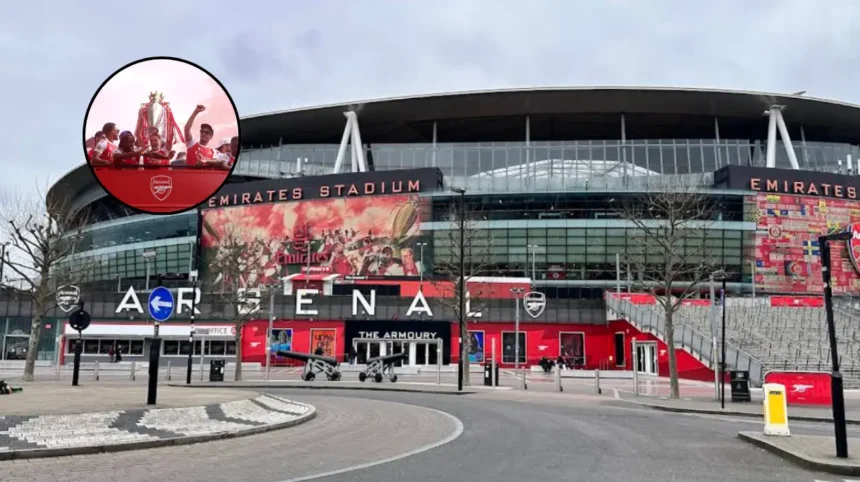
Islington, as the borough containing Arsenal’s home ground, Emirates Stadium, naturally became the focal point for the procession, with the club choosing a route that passed through densely populated fan areas and historic north London neighbourhoods.
How This Development Can Affect North London Fans and the Local Community
For Arsenal supporters in north London, the trophy parade represents a rare opportunity to witness their team in person shortly after a historic achievement, strengthening their emotional connection to the club.
The event has already generated renewed interest in match attendance, membership applications and local fan activities, as supporters feel part of a broader celebration that extends beyond the stadium.
The local community in Islington and surrounding areas may experience both short-term and longer-term effects from the parade.
In the immediate term, congestion, noise and increased footfall are expected to disrupt normal daily routines, with some residents reporting challenges accessing shops and transport during the event.
However, the parade also brings significant positive attention to north London, potentially boosting local businesses, tourism and the area’s reputation as a centre for major football celebrations.
For younger fans and families in the region, the sight of players parading the Premier League title alongside the women’s Champions Cup trophy can have a lasting inspirational impact, encouraging greater participation in football and community sports programmes.
Local schools, youth clubs and community organisations may leverage the momentum from the parade to promote engagement, using the event as a catalyst for discussions about teamwork, achievement and local pride.
From a broader perspective, the success of the parade and the scale of public turnout may influence how future major celebrations are organised across London and other UK cities, with authorities likely to review crowd management, safety protocols and route planning based on lessons learned.
For north London specifically, the event reinforces the area’s identity as a hub for football culture, potentially shaping future investment in stadiums, training facilities and fan infrastructure linked to Arsenal and other local clubs.