Key Points
- Historical Commemoration: English Heritage has officially unveiled a blue plaque at the former home of legendary Arsenal manager Herbert Chapman in Hendon, North London.
- Architect of Modern Football: Chapman is widely credited with revolutionising the sport through tactical innovations like the ‘WM’ formation, floodlighting, numbered shirts, and sports science.
- Humble Roots: Born into a mining family of 11 children in Yorkshire, Chapman trained as an engineer and had a modest playing career before becoming one of football’s most influential figures.
- Unprecedented Success: He led Huddersfield Town to consecutive league titles before transforming Arsenal into a dominant force in English football during the 1920s and 1930s.
- Lasting Impact: The commemoration highlights the preservation of sports history and the enduring relevance of Chapman’s modernising philosophies in contemporary football.
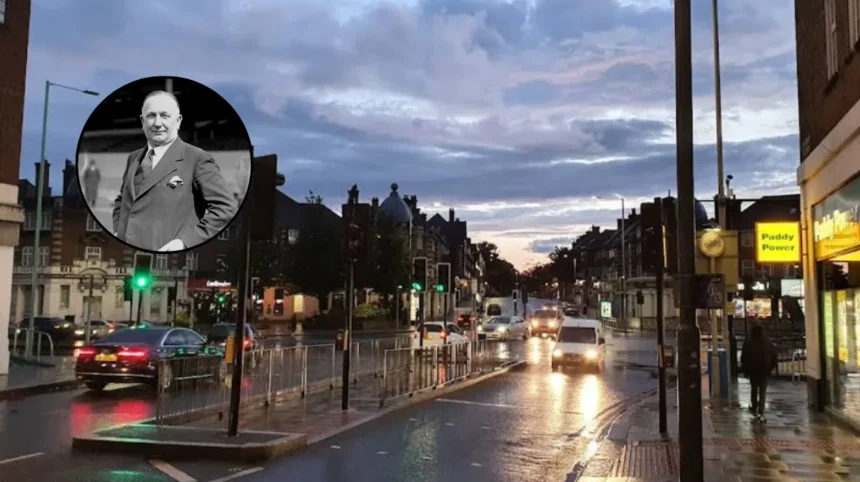
Arsenal FC (North London News) May 23, 2026 – A modest detached suburban house in a quiet street in Hendon, North London, has been officially marked with an English Heritage blue plaque to celebrate the life and legacy of Herbert Chapman, the legendary Arsenal manager widely revered as the architect of modern football.
- Key Points
- Why Is Herbert Chapman Considered the Architect of Modern Football?
- Innovations Beyond the Pitch
- How Did a Yorkshire Miner’s Son Rise to Modernise North London’s Biggest Club?
- Background of This Particular Development
- Prediction: How This Development Affects Football Historians, Local Communities, and Modern Fans
- For the Hendon Community and Local Tourism
- For Modern Football Fans and Arsenal Supporters
The commemoration brings renewed national attention to a figure who transformed football from a disorganised pastime into a tactical, highly professional sport.
Despite his massive success and status within British sports history, historical records show that Chapman chose to live quietly and modestly in this suburban North London residence during the height of his fame and managerial dominance.
Born the son of a coal miner near Rotherham, Yorkshire, Chapman was raised in a sprawling, sports-centric family of 11 siblings. While two of his brothers went on to become professional footballers, Chapman’s own playing career was largely spent in the amateur ranks while he concurrently trained as a mining engineer. However, it was his transition into management—first with Northampton Town, then Leeds City, followed by a glittering spell at Huddersfield Town, and ultimately his definitive era at Arsenal—that altered the landscape of global football forever.
Why Is Herbert Chapman Considered the Architect of Modern Football?
To understand why a quiet house in Hendon has received one of the heritage sector’s highest honours, one must examine the profound tactical and structural shifts Chapman introduced to the game.
Before Chapman’s era, football tactics were rudimentary, largely relying on individual skill and basic attacking formations.
When the offside rule was amended in 1925, Chapman responded by inventing the famous ‘WM’ formation. By dropping the centre-half into the defensive line as a third defender, he created a robust counter-attacking system that provided balance, structure, and defensive solidity. This tactical blueprint became the dominant system across world football for the next three decades.
Innovations Beyond the Pitch
Chapman did not confine his intellect purely to matchday tactics. He viewed football through the lens of an engineer and an entertainer. He was among the very first to advocate for:
- Numbered Shirts: Allowing fans and journalists to easily identify players on the pitch.
- Floodlighting: Championing night-time football so working-class citizens could attend matches outside of daytime hours.
- The White Ball: Replacing the traditional dark brown leather ball to improve visibility for both players and spectators.
- Sports Science and Physiotherapy: Introducing strict diet regimes, massage therapies, and structured fitness programs to prolong player careers.
How Did a Yorkshire Miner’s Son Rise to Modernise North London’s Biggest Club?
The journey from the coalfields of Yorkshire to the leafy suburbs of Hendon is a testament to Chapman’s relentless work ethic and forward-thinking philosophy.
As a young man, his engineering background gave him a unique, analytical approach to problem-solving, which he applied directly to sports management.
After guiding Huddersfield Town to two consecutive First Division titles in 1924 and 1925, Chapman was enticed south by Arsenal, a club then struggling to assert itself in the top flight. Upon arriving at Highbury, he dismantled the existing setup and rebuilt the club from the ground up.
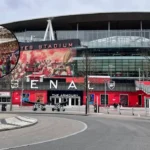
He famously convinced London Underground to rename Gillespie Road station to ‘Arsenal’ in 1932, a marketing masterstroke that cemented the club’s identity within the capital’s infrastructure.
Under his stewardship, Arsenal secured their first major trophy, the FA Cup in 1930, followed by league titles in 1931 and 1933, laying the foundation for the club’s golden decade.
Background of This Particular Development
The installation of a blue plaque by English Heritage is the culmination of years of advocacy by football historians, Arsenal supporters, and heritage preservationists.
The blue plaque scheme, which dates back to 1866, aims to link notable historical figures to the specific buildings in which they lived and worked. While politicians, authors, and artists frequently dominate the list of recipients, English Heritage has increasingly sought to recognise pioneers of sport who have left an indelible mark on British culture.
Chapman’s sudden death from pneumonia in January 1934, at the age of just 55, shocked the sporting world. At the time of his passing, Arsenal were well on their way to a third consecutive league title.
Despite his monumental salary and status as football’s first true “manager” in the modern sense, his choice of a unassuming home in Hendon reflects the grounded nature of a man who never fully abandoned his working-class, engineering roots.
The plaque serves as a permanent physical reminder of the era when North London became the epicentre of footballing innovation.
Prediction: How This Development Affects Football Historians, Local Communities, and Modern Fans
The official recognition of Herbert Chapman’s former home is expected to have a multi-layered impact on sports historians, the local community of Hendon, and the wider football fan base.
This development solidifies the acknowledgement of football management as a significant cultural and historical profession within British society.
It creates a precedent for archiving and honoring the residential histories of early 20th-century sports icons, ensuring that the physical spaces associated with the birth of modern sports tactics are protected from urban redevelopment.
For the Hendon Community and Local Tourism
The presence of a blue plaque elevates the cultural profile of this specific North London neighborhood. It transforms a quiet residential street into a minor pilgrimage site for football purists and historical tourists. This influx of foot traffic, while modest, enhances local historical awareness and fosters a sense of civic pride among residents who share a geographic connection with one of the game’s greatest minds.
For Modern Football Fans and Arsenal Supporters
For the millions of contemporary football fans, this plaque serves as an educational bridge. In an era dominated by multi-million-pound player transfers, hyper-analytical video data, and global branding, the Hendon plaque reminds the public that core concepts—such as shirt numbers, stadium illumination, and tactical formations—originated from the vision of a single man living modestly in North London. It reinforces the identity of Arsenal FC as a club built on a tradition of innovation, inspiring current generations to appreciate the deep historical roots of the sport they watch today.