Key Points
- Midfield Deficit Persists: Despite bolstering the squad’s defensive depth with early summer arrivals, Tottenham Hotspur remain without a single new midfield signing in the current transfer window.
- Financial Valuation Hurdles: Highly rated midfield options, including primary targets evaluated across top European leagues, are proving commercially difficult to secure within current budget constraints.
- Managerial Target Alignment: Head coach Roberto De Zerbi is actively seeking specialized holding and central midfielders to reform the engine room following a challenging Premier League campaign.
- Uncertainty Over Loanees: The club’s capacity to retain temporary assets is restricted, with options to permanently secure existing loanees expiring or facing heavy external competition.
- Squad Leadership Rebuild: While free agency and defensive transactions have filled immediate voids at the back, the hierarchy faces intense external market competition to finalize critical central acquisitions.
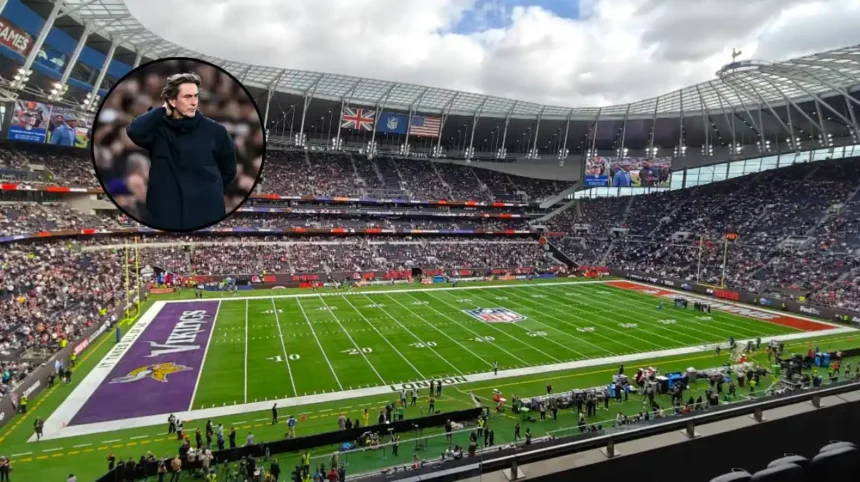
Tottenham Hotspur (North London News) June 10, 2026 – have already finalized two defensive additions to boost their backline this summer transfer window, but the recruitment team has yet to secure a single midfield signing. While a handful of credible, high-profile options remain on the club’s shortlist, fans and analysts are quickly realizing that the primary central targets are becoming increasingly difficult to afford. Following a turbulent campaign that saw the Lilywhites secure Premier League safety on the final day under head coach Roberto De Zerbi, a complete overhaul of the engine room is deemed necessary. However, steep asking fees from rival clubs and complex financial dynamics are stalling progress, threatening to isolate the North London outfit from premium market choices.
- Key Points
- What are the Financial Roadblocks in the Search for a New Anchorman?
- Which Midfielders Fit Roberto De Zerbi’s Tactical Criteria?
- How Does the Structural Rebuild Impact the Midfield Budget?
- Background of the Midfield Recruitment Strategy
- Prediction: How This Development Will Affect Tottenham Hotspur Supporters
What are the Financial Roadblocks in the Search for a New Anchorman?
The central midfield market has escalated dramatically, leaving Tottenham Hotspur to navigate high valuations for players established in both domestic and continental competitions. As reported by transfer expert Fabrizio Romano via Football365, Tottenham had held an interest in defensive midfielder João Palhinha, who spent the previous campaign on loan in North London from Bayern Munich.
However, the exclusive buy-out clause embedded within that temporary agreement has officially expired without exercise. Further reporting by sports journalist Raisa Simplicio of Goal indicates that while Palhinha initially suggested a desire to remain in London, the 30-year-old Portuguese international is now prepared to accept a substantial wage reduction to facilitate a permanent return to his former club, Sporting CP.
With Palhinha’s contract at Bayern Munich running until June 2028 and commanding a gross annual salary of approximately £7.6 million (€9 million), the total financial package required to re-engage the midfielder permanently has compromised Spurs’ positioning.
Simultaneously, alternative domestic options are commanding immense premiums. According to detailed reports from the Manchester Evening News compiled by football writer Matthew Abbott, alternative high-end Premier League central midfielders are carrying restrictive price tags designed to deter suitors.
Nottingham Forest have placed a valuation in excess of £105 million on England international Elliot Anderson, whilst Bournemouth have slapped an £80 million price tag on young midfielder Alex Scott. With Manchester United, Liverpool, and Manchester City actively monitoring these identical markets, Tottenham find themselves in an environment where secondary options command fees historically reserved for world-class talent.
Which Midfielders Fit Roberto De Zerbi’s Tactical Criteria?
As analyzed by sports reporter Mark Whiley of Football London, the tactical system deployed by Roberto De Zerbi demands technical proficiency and physical resilience in a double-pivot system—a blueprint formerly anchored by Alexis Mac Allister and Pascal Groß during the manager’s tenure at Brighton & Hove Albion.
The current squad profile relies heavily on youth prospects like Archie Gray, who is viewed internally as a long-term project requiring the guidance of an experienced, elite partner.
According to senior reporter Joe Williams of Football365, Tottenham have managed to take the lead over Manchester United in the pursuit of Brighton midfielder Carlos Baleba. De Zerbi previously managed the Cameroonian international on the south coast and remains confident that he can extract elite-level performance from the player.
Yet, dealing with Brighton & Hove Albion is notoriously difficult, with the south coast club under no immediate pressure to sell cheap. Furthermore, transfer journalist Graeme Bailey has confirmed that Tottenham hold a firm admiration for Wolverhampton Wanderers’ central midfielder João Gomes, while international correspondent Ekrem Konur reported that both Tottenham and Manchester United have added Sporting’s Morten Hjulmand to their summer shortlists. Each of these targets features an ascending valuation curve that tests the limits of Tottenham’s current allocation for a single position.
How Does the Structural Rebuild Impact the Midfield Budget?
The lack of movement in the centre of the park stands in stark contrast to the swift business completed in other areas of the pitch. As confirmed by official announcements from the Premier League transfer registry, Tottenham have completed the high-profile signing of seasoned left-back Andy Robertson on a free transfer following the expiration of his contract with Liverpool.
As noted by football correspondent David Hytner of The Guardian, De Zerbi moved decisively for the 32-year-old Scotland captain to address a profound “leadership vacuum” within the dressing room that severely undermined the previous season.
In addition to Robertson, a deal has been finalized to secure central defender Marcos Senesi as a free agent from Bournemouth. While these defensive acquisitions did not incur transfer fees, they demand significant wage packages.
Furthermore, resources are being heavily directed toward an overhaul of the forward line. As detailed by sports journalist Rob McCarthy, De Zerbi has approved an ambitious £125 million triple-raid targeting attacking reinforcements, which includes advancing talks to sign winger Savinho from Manchester City in a deal hovering around £43 million. Consequently, with vast amounts of capital allocated toward transforming the frontline and stabilizing the defense, the club’s capacity to meet hyper-inflated asking prices for central midfielders has been heavily strained.
Background of the Midfield Recruitment Strategy
The structural pressure on Tottenham Hotspur’s midfield recruitment stems from consecutive windows of inconsistent scouting profiles and managerial turnover. The squad previously relied on the partnerships of Yves Bissouma, Rodrigo Bentancur, and Pape Matar Sarr. However, injuries, disciplinary absences, and a severe loss of collective form during the preceding campaign exposed a lack of tactical depth and ball-retention capability in central areas.
When the club plummeted into a relegation battle—eventually salvaged on the final weekend via a crucial victory over Everton—the fundamental fragility of the midfield engine room became undeniable.
Historically, the North London club has operated under a strict wage structure and a net-spend model strictly overseen by the executive board. This model prioritizes long-term financial sustainability and infrastructure amortization over bidding wars for established stars. While an American investment group led by tech entrepreneur Brooklyn Earick’s Eight Sports Capital has claimed an agreement to purchase a 24.99% stake in the club from ENIC, the transition has not instantly altered the club’s immediate liquid transfer budget.
As a result, the recruitment department continues to operate within parameters that clash with the current realities of an inflated domestic market, where mid-table Premier League clubs routinely reject bids below £50 million for young central talent.
Prediction: How This Development Will Affect Tottenham Hotspur Supporters
If Tottenham Hotspur remain priced out of their primary midfield targets, the club’s supporters will likely witness a season defined by tactical compromise and heavy structural pressure on the existing squad. Without an elite, defensive-minded anchor to dictate possession and break up transitions, De Zerbi’s high-risk, expansive style of football could leave the backline overly exposed, mirroring the defensive vulnerabilities that caused immense anxiety among the fanbase during the previous year.
For the match-going audience and wider fanbase, failure to secure a marquee central midfielder will mean adjusting expectations away from a rapid return to European contention. Instead, the focus will shift toward a transitional year heavily reliant on the rapid acceleration and development of youth prospects like Archie Gray.
While the signings of proven winners such as Andy Robertson will provide a temporary boost to team morale and leadership, supporters will have to endure a patient process, understanding that the team’s tactical stability will remain compromised until the club successfully navigates market conditions to deliver a commanding central presence.