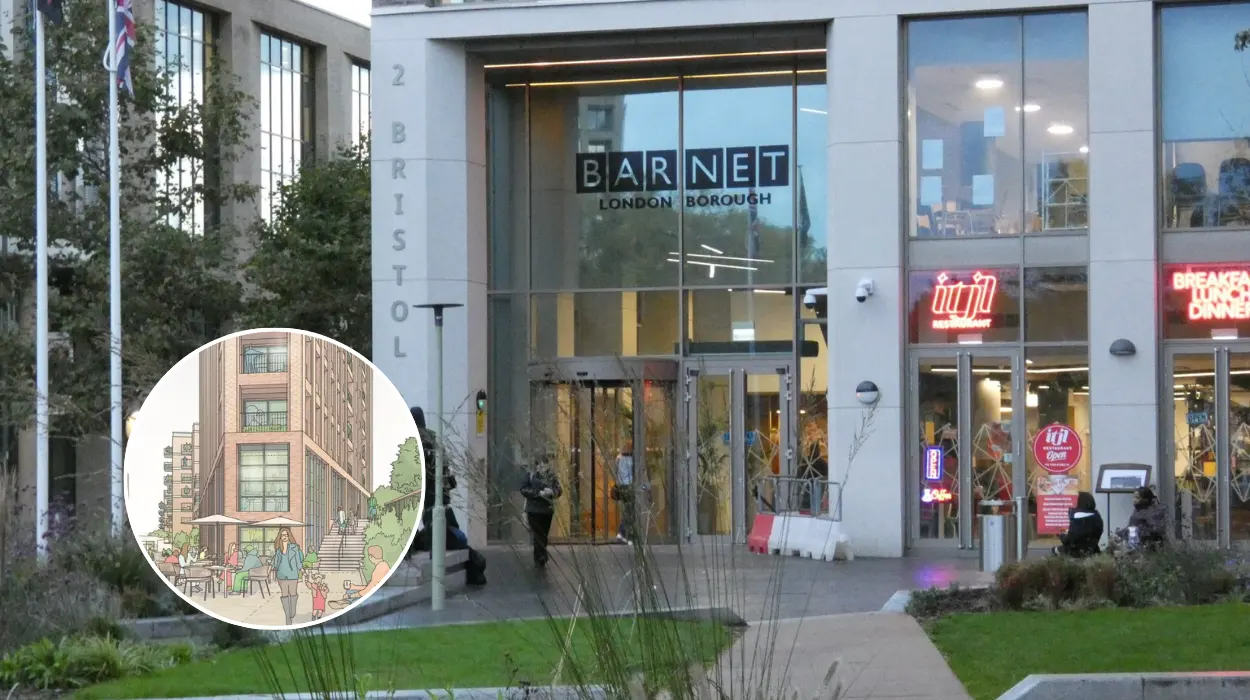
Key Points
- Developer Barratt London and Transport for London’s property company, Places for London, submitted plans for five blocks containing 283 homes and 567 square metres of commercial space on the 160-space car park and adjoining storage spaces at High Barnet Station.
- Barnet Council’s strategic planning committee rejected the proposal during a meeting on Monday.
- The scheme proposed buildings rising up to 11 storeys in height and included 40 per cent affordable housing.
- Labour councillor Sue Baker for Barnet Vale ward reported an “overwhelming amount of negativity” from residents, highlighting the loss of the car park as “problematic” for elderly residents, people with disabilities, and those with mobility issues.
What Were the Key Details of the Rejected Proposal?
The development sought to transform the 160-space car park and adjacent storage areas into a mixed-use site with five blocks reaching up to 11 storeys. According to the Evening Standard’s coverage, the plans included 283 residential units alongside 567 square metres of commercial space, positioning it as a significant contribution to local housing stock. Places for London, Transport for London’s property arm, partnered with Barratt London to submit the application, emphasising the inclusion of 40 per cent affordable housing amid London’s ongoing crisis.
- Key Points
- What Were the Key Details of the Rejected Proposal?
- Why Did Barnet Council Reject the Plans?
- Who Opposed the Development and What Were Their Concerns?
- What Is the Context of Housing Developments Near High Barnet Station?
- How Does This Fit into Barnet Council’s Planning Approach?
- What Are the Implications for Future Developments at the Site?
- Could This Decision Affect Transport for London’s Property Strategy?
- What Role Did Affordable Housing Play in the Debate?
This proposal mirrored similar contentious projects, such as the rejected Great North Leisure Park scheme in Finchley, also covered by the Evening Standard, where housing ambitions clashed with infrastructure concerns. No additional sources reported divergent details on the home count or height, confirming the Evening Standard’s account as the primary reference.
Why Did Barnet Council Reject the Plans?
Resident backlash formed the core of the rejection, with overwhelming negativity cited by local representatives. As reported by the Evening Standard, Labour councillor Sue Baker of Barnet Vale ward told the committee: “I have received an overwhelming amount of negativity” to the plans from residents. She specifically flagged the car park’s loss as “problematic,” noting its use by “many elderly residents” as well as people with disabilities and mobility issues.
Barnet Council’s strategic planning committee, meeting on Monday, deemed the scheme’s scale inappropriate for the site next to High Barnet Station. The Evening Standard highlighted fears over the 11-storey heights overwhelming the suburban character, aligning with broader council priorities to protect community facilities. No statements from Barratt London or Places for London were quoted in available coverage, but the decision reflects patterns in north London planning disputes.
Who Opposed the Development and What Were Their Concerns?
Councillor Sue Baker emerged as a vocal opponent, representing Barnet Vale ward residents directly affected by the station’s proximity. Per the Evening Standard report, she emphasised accessibility issues: the car park served “many elderly residents” alongside those with disabilities and mobility challenges, making its removal a critical barrier. This feedback stemmed from direct constituent input, described as an “overwhelming amount of negativity.”
Broader community sentiment echoed these worries, though specific resident names or groups were not named in the Evening Standard’s account. The council’s rejection prioritised these voices over developer arguments for housing delivery. Similar opposition patterns appeared in related Evening Standard stories, like the Finchley leisure park rejection, where scale dominated discussions.
What Is the Context of Housing Developments Near High Barnet Station?
High Barnet Station, the northern terminus of the Northern line, sits in a residential area where parking remains essential for Tube users without nearby alternatives. The Evening Standard linked this to Barnet Council’s topic page on High Barnet, noting ongoing tensions in housing delivery. The proposal’s 40 per cent affordable component addressed London’s shortage, yet failed to sway planners amid site-specific constraints.
Places for London’s involvement signals TfL’s push to monetise underused assets, as seen in prior submissions covered by the Evening Standard. Barnet Council’s strategic planning committee has a track record of scrutinising such ventures, with this rejection paralleling the Great North Leisure Park decision for housing on Finchley land. No other media outlets provided supplementary context in the reviewed sources.
How Does This Fit into Barnet Council’s Planning Approach?
Barnet Council maintains a balanced stance on growth, rejecting schemes that compromise local amenities despite housing imperatives. The Evening Standard’s Barnet Council topic coverage frames this as part of wider strategic planning efforts. Councillor Sue Baker’s intervention exemplifies resident-led influence, with her statement underscoring mobility equity.
The committee’s Monday meeting decision aligns with policies safeguarding transport infrastructure. As per the Evening Standard, the housing topic page highlights affordable units as a proposal strength, yet insufficient against community needs. This outcome reinforces Barnet’s commitment to contextual development.
What Are the Implications for Future Developments at the Site?
The rejection leaves the 160-space car park intact, preserving access for vulnerable users in the short term. Barratt London and Places for London may revise and resubmit, though no immediate statements emerged from coverage. Councillor Baker’s feedback suggests scale reductions could address core issues.
London’s housing targets persist, potentially pressuring TfL properties elsewhere. The Evening Standard’s linked stories indicate a pattern of rejections for oversized projects in Barnet. Stakeholders must navigate resident priorities alongside affordability mandates.
Could This Decision Affect Transport for London’s Property Strategy?
TfL’s Places for London has pursued station-adjacent developments to fund operations, but this setback highlights planning hurdles. The Evening Standard detailed the partnership with Barratt London, mirroring broader TfL ambitions. No TfL responses were quoted, leaving future strategies unclear.
High Barnet’s car park role for elderly and disabled users complicates such plans. Barnet Council’s stance may influence similar TfL sites across the network.
What Role Did Affordable Housing Play in the Debate?
The 40 per cent affordable allocation was a key selling point, yet overridden by local impacts. Evening Standard reporting positioned it within London’s housing topic, acknowledging its merits. Councillor Baker focused on parking, not affordability, in her critique.