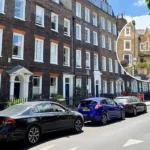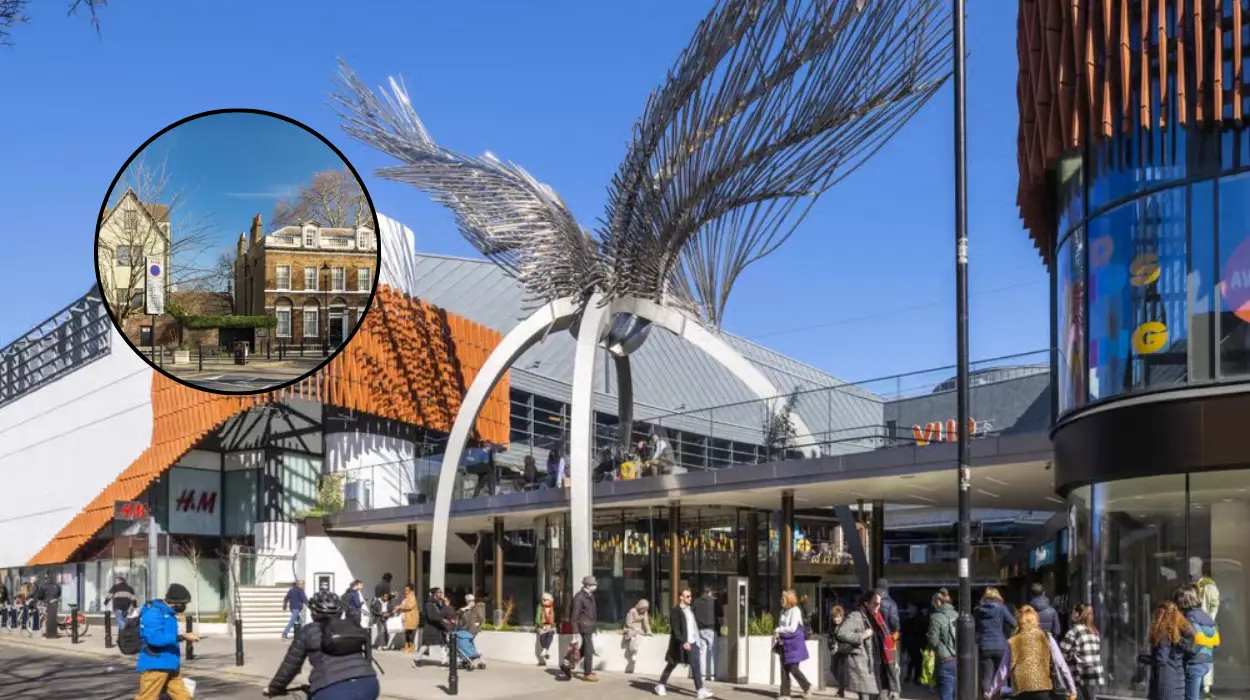
Highbury & Islington sits in the London Borough of Islington, just north of central London, bordered by areas such as Holloway, Canonbury, Barnsbury and Stoke Newington. The name usually refers both to the transport interchange at Highbury & Islington station and the surrounding neighbourhood, especially the streets around Highbury Corner, Highbury Fields and Upper Street.
- A Short History Of Highbury
- The Growth Of Islington
- Highbury & Islington Through Time
- Highbury Fields And Green Space
- Architecture, Streets And Character
- Transport And Connectivity
- Everyday Lifestyle
- Culture, Food And Nightlife
- Football Heritage And Arsenal
- Community, Schools And Services
- Living In Highbury & Islington Today
- Why Highbury & Islington Endures
Highbury itself occupies the higher ground east of Holloway Road, while Islington town centre historically grew along the old Great North Road (now Upper Street and Essex Road). Today, most residents experience the area as one continuous urban fabric, where it is common to walk from Highbury Fields down to Angel or across to Finsbury Park without ever feeling you have “left” Highbury & Islington life.
A Short History Of Highbury
Highbury’s story stretches back to medieval times, when the area was largely rural and centred on a manor house whose name is thought to mean “high fort” on the hill north of today’s Highbury Fields. The land belonged for centuries to religious orders, including the Knights Hospitallers, before being seized by the Crown in the 16th century and later sold to private owners who developed grand houses and estates.
In the 18th and early 19th centuries, Highbury evolved into a semi-rural retreat for Londoners, complete with tea gardens, pleasure grounds and later the vast Highbury Barn entertainment complex, which drew crowds for food, music and fireworks. By the Victorian era, the fields were steadily built over with terraces, villas and crescents, giving the area much of the elegant residential character that still defines it today.
The Growth Of Islington
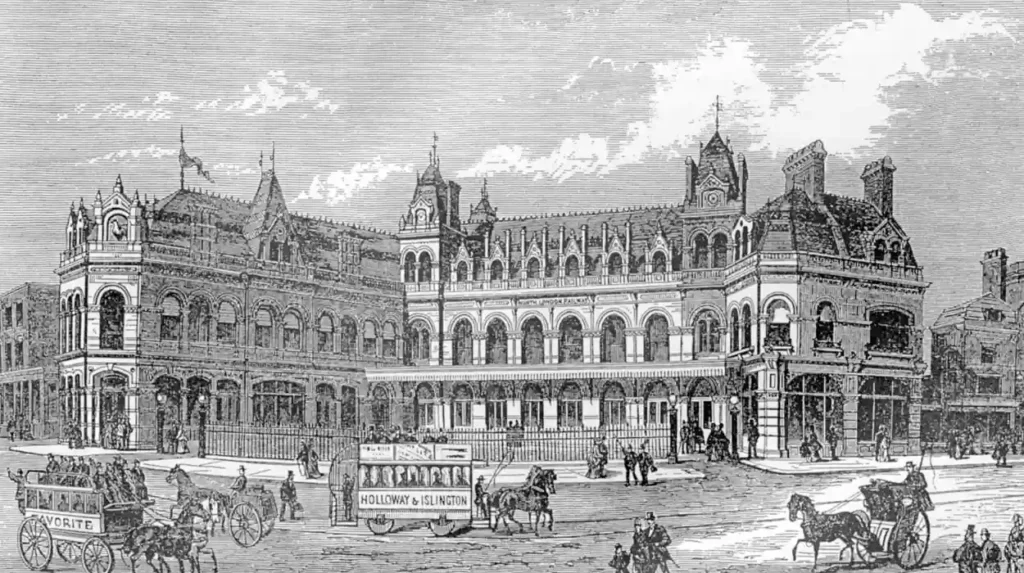
Islington developed along the main route north from the City of London, with inns, farms and later suburban houses spread along what is now Upper Street. As London expanded in the 18th and 19th centuries, Islington shifted from a semi-rural village into a bustling suburb, drawing middle-class residents who wanted clean air and space but easy access to the city.
By the late 19th and early 20th centuries, economic change and population growth brought denser housing and more mixed fortunes, and many of the large houses were subdivided or converted into lodgings. Post-war redevelopment, changing mortgage rules and conservation policies from the mid-20th century onwards then helped reverse decline, attracting new waves of professionals and families who restored period homes and supported a growing local economy.
Highbury & Islington Through Time
The arrival of railway and Underground lines was transformative, turning Highbury & Islington into a major transport node and making commuting from North London into central London practical for large numbers of residents. The station at Highbury & Islington became a key interchange, now serving the Victoria line, London Overground and National Rail services, and firmly embedding the area into London’s everyday travel patterns.
Across the 20th century, Highbury & Islington saw social, architectural and demographic shifts, from wartime damage and post-war rebuilding to gentrification and the growth of a café, restaurant and creative scene. Conservation areas, local campaigns and planning frameworks have helped preserve the distinctive streetscape, especially around Highbury Fields and the surrounding Georgian and Victorian terraces, maintaining a strong sense of place even as residents and businesses have changed.
Highbury Fields And Green Space
Highbury Fields is the largest open space in the Borough of Islington, covering around 25 acres of lawns, tree-lined paths and recreational facilities. Acquired for public use in the 19th century, the Fields have long been a local “green lung”, offering sports courts, playgrounds and quiet corners that anchor daily life for dog walkers, runners, families and office workers.
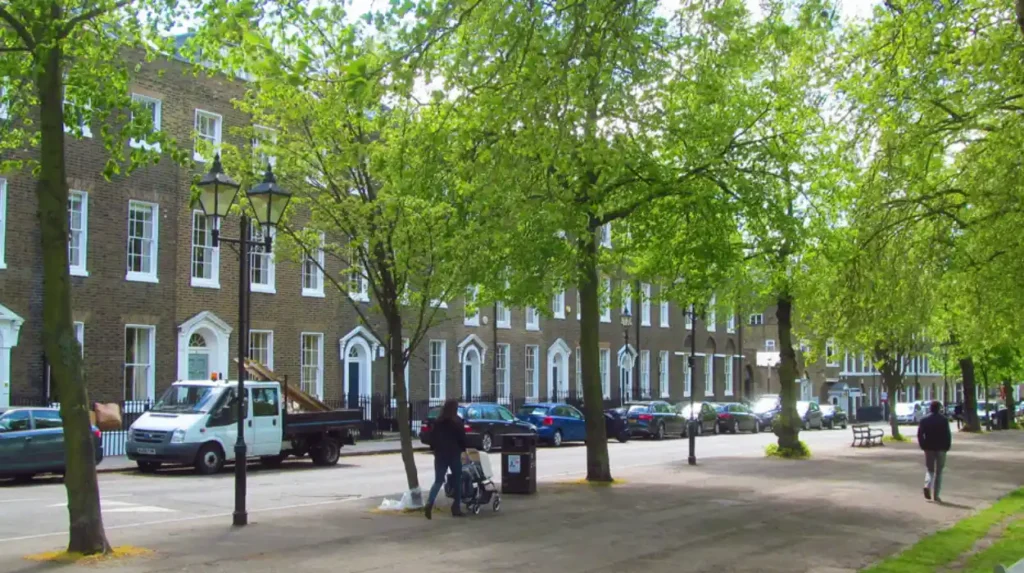
The park is framed on several sides by handsome Georgian and Victorian terraces, creating one of North London’s most attractive urban vistas. Beyond Highbury Fields, residents also enjoy proximity to Clissold Park, Gillespie Park nature reserve and the New River Walk, giving the area a surprisingly generous network of green corridors for an Inner London district.
Architecture, Streets And Character
Highbury & Islington is especially known for its period housing, with long rows of brick terraces, stucco-fronted villas and mansion blocks that date mainly from the late 18th to late 19th centuries. Around Highbury Place, Highbury Crescent and Aberdeen Park, the streets have a distinctly genteel feel, with mature trees, railings and set-back houses that hint at the area’s historic middle-class roots.
Closer to Holloway Road and parts of Islington, there is a more mixed streetscape of mid-20th century estates, converted flats and newer developments, reflecting waves of post-war housing policy and regeneration. This blend of property types contributes to a relatively diverse community, where social housing, long-term residents and newer professional households often live within a few streets of one another.
Transport And Connectivity
Highbury & Islington station is one of North London’s best-connected interchanges, sitting on the Victoria line, multiple London Overground routes (including the North London line and East London line branches) and suburban rail services. For residents, this means fast journeys to the West End, the City, East London technology hubs and beyond, making the area particularly attractive for commuters.
Alongside rail, the area is served by a strong bus network running along Upper Street, Holloway Road and Highbury Corner, linking to Angel, King’s Cross, Camden, Finsbury Park and the broader Islington borough. Cycling infrastructure has also improved in recent years, with local routes, quieter back streets and connections to major cycling corridors helping many residents choose bikes for daily travel.
Everyday Lifestyle
For everyday living, Highbury & Islington offers a combination of village-like convenience and urban buzz. Grocery stores, independent shops, cafés, pubs and restaurants cluster around Highbury Corner, Highbury Barn and Upper Street, meaning most residents can run errands, grab coffee or meet friends without leaving the neighbourhood.
The rhythm of life varies street by street: near Upper Street, evenings can be lively with people heading to bars, theatres and restaurants, while the residential squares and streets around Highbury Fields remain comparatively calm and family-oriented. This mix appeals strongly to those who want nightlife and culture within walking distance but still value quiet, leafy streets for day-to-day living.
Culture, Food And Nightlife
Islington has long been known for its cultural life, and Highbury & Islington benefits from this reputation. The wider area is home to theatres, music venues, galleries and arts spaces, while smaller independent cinemas and performance spaces are easily reached along Upper Street and towards Angel.
On the food front, residents enjoy everything from traditional London pubs and long-established local bakeries to contemporary restaurants, delis and coffee shops. Highbury Barn in particular has a long history as a place of food and hospitality, evolving from 18th-century tea gardens and pleasure grounds into today’s mix of eateries and shops.
Football Heritage And Arsenal
For many, Highbury will always be associated with Arsenal Football Club, which played at its famous Highbury Stadium from 1913 until the move to the Emirates Stadium in nearby Holloway in 2006. Highbury Stadium, known for its art deco stands and intimate atmosphere, has since been sensitively redeveloped into residential apartments, with the pitch area transformed into communal gardens.
Even after the move, match days continue to shape local life, as supporters flow through Highbury & Islington station en route to the Emirates, generating a regular buzz of red-and-white scarves and busy pubs. For residents, Arsenal’s presence adds a unique layer of identity, history and global recognition that few London neighbourhoods can match.
Community, Schools And Services
Local schools and community facilities play a crucial role in Highbury & Islington’s appeal to families and long-term residents. The borough hosts a range of primary and secondary schools, including both state and independent options, many of which attract families specifically hoping to settle in and around Highbury Fields and nearby streets.
Community centres, libraries, faith institutions and local groups help knit the area together, often organising events, meetings and campaigns on topics like planning, traffic, safety and green space. Residents’ associations and conservation groups have been particularly important in debates over development, transport schemes and the protection of historic character, ensuring local voices remain part of decision-making.
Living In Highbury & Islington Today
Today, Highbury & Islington is widely perceived as a desirable, relatively affluent part of North London, with strong demand for both rental and owner-occupied homes. Well-connected transport, attractive housing stock, access to green spaces and proximity to the City and West End all combine to sustain this demand over time.
At the same time, the area’s success has raised familiar questions about affordability, displacement and the balance between preserving character and meeting housing needs. Ongoing planning frameworks from local and regional government aim to manage growth, improve infrastructure and protect heritage, making Highbury & Islington an evolving case study in how inner London changes while trying to remain liveable for a broad range of residents.
Why Highbury & Islington Endures
Highbury & Islington has remained attractive through decades of change because it delivers a rare combination of history, beauty, convenience and community. Few areas can match its mix of period architecture, major transport connectivity, local green space, football heritage and vibrant yet manageable high-street life.
For North Londoners, it offers multiple identities at once: a commuter hub, a neighbourhood of parks and terraces, a cultural corridor along Upper Street, and a place whose name still resonates worldwide through Arsenal. That layered identity, rooted in centuries of development but constantly refreshed by new residents and ideas, ensures Highbury & Islington remains an evergreen subject – and an enduringly appealing place to call home.