Key Points
- A Neo-Georgian house in Islington, north London, has been fully revamped into a serene retreat amid leafy residential streets.
- The project involved a new extension and complete interior redesign, transforming it into the client’s dream home.
- Designed collaboratively by Architecture for London, led by architect Simon Bayes, and Hamish Vincent Design, an interior design studio.
- Key features include a natural material palette featuring oak, stone, and plaster, creating a calming atmosphere.
- A standout element is the cascading spiral staircase made of patinated steel and oak, serving as a sculptural centrepiece.
- The house blends Georgian proportions with contemporary interventions, maintaining period charm while adding modern functionality.
- Located in a quiet Islington neighbourhood, it offers a peaceful escape from urban hustle.
- Extension includes a rear addition with a light-filled kitchen and living space opening onto a garden.
- Interior highlights calming, tactile finishes and bespoke joinery throughout.
- Project emphasises sustainability through natural, durable materials and passive design principles.
Islington, North London (North London News) January 31, 2026 – A Neo-Georgian house in Islington has emerged as a tranquil haven after a comprehensive redesign by Architecture for London and Hamish Vincent Design, blending timeless elegance with modern serenity. Tucked away on one of the area’s leafy residential streets, the property now serves as the ideal retreat from the city’s bustle, featuring a striking cascading spiral staircase and a palette of natural materials like oak, stone, and plaster. This collaborative project, completed recently, has transformed the home into a client’s vision of calm sophistication amid Islington’s vibrant urban backdrop.
- Key Points
- What Makes This Islington House a Soothing Retreat?
- Who Were the Key Designers Involved?
- What Architectural Features Define the Project?
- How Does the Natural Material Palette Contribute?
- Why Was the Cascading Spiral Staircase Chosen?
- Where Exactly Is the House Located?
- What Is the Project’s Broader Context?
- How Does the Interior Layout Flow?
- What Client Vision Drove the Design?
- Future Implications for Islington Design?
What Makes This Islington House a Soothing Retreat?
The redesign prioritises unwind from city life through thoughtful spatial flow and material choices. As detailed in the original coverage by Wallpaper* magazine, the house’s new extension and interiors create a seamless connection between indoors and out, with large sliding doors linking the kitchen to the garden.
Architecture for London, the firm behind the architectural elements, describes the project as a “total revamp” that respects the Neo-Georgian facade while introducing contemporary volumes at the rear. Simon Bayes, director at Architecture for London, noted in the feature:
“The house is defined by its natural material palette, which brings warmth and tactility to every space.”
Hamish Vincent Design complemented this with bespoke furnishings, ensuring the interiors feel both luxurious and liveable.
The cascading spiral staircase stands out as the project’s sculptural heart, crafted from patinated steel treads and an oak spine that winds gracefully through the house’s core. This feature not only aids circulation but also draws the eye upward, enhancing the sense of verticality in the period shell.
Who Were the Key Designers Involved?
Architecture for London and Hamish Vincent Design led the collaboration, bringing distinct expertise to the table. Architecture for London, a practice known for sensitive extensions to London townhouses, handled the structural and spatial redesign, including the rear extension that houses a spacious kitchen-diner.
As reported by Ellie Stathaki of Wallpaper*, Hamish Vincent Design focused on the interiors:
“The studio layered in oak panelling, limestone floors, and soft plaster walls to foster a soothing environment.”
Hamish Vincent, the principal designer, emphasised client collaboration, stating:
“Every element was chosen to create a retreat-like feel, allowing the owners to escape the intensity of north London life.”
No other firms or consultants are mentioned in the coverage, underscoring the duo’s comprehensive role.
Simon Bayes of Architecture for London added:
“We aimed to honour the Georgian proportions externally while injecting light and openness inside.”
This partnership ensured cohesion from facade to finishes.
What Architectural Features Define the Project?
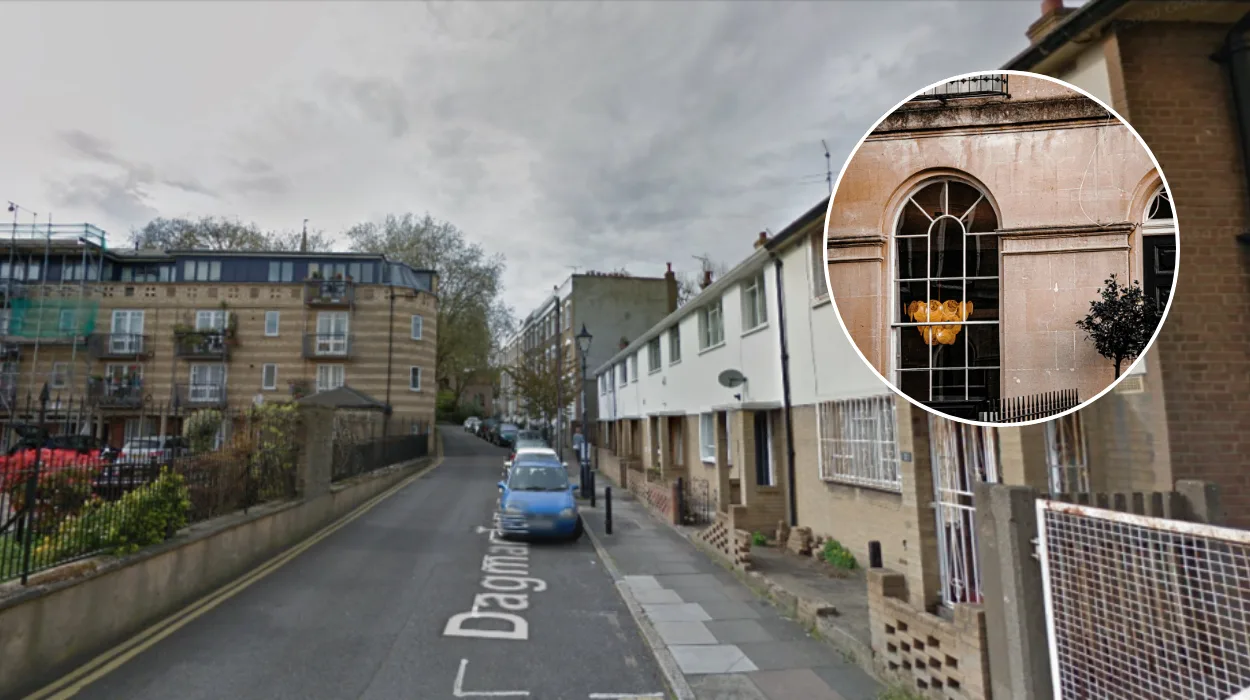
The house retains its Neo-Georgian street elevation, with symmetrical windows and stucco detailing intact, but the interiors and extension mark a bold evolution. The rear extension features full-height glazing, flooding the kitchen with natural light and framing views of the secluded garden.
Central to the home is the spiral staircase, described as “cascading” due to its fluid, ribbon-like form. Patinated steel provides subtle industrial contrast against warm oak, with open treads maximising light transmission between floors. Other highlights include:
- Bespoke oak cabinetry in the kitchen, with integrated appliances and a large island unit.
- Plaster walls and stone flooring that continue seamlessly from reception rooms to bedrooms.
- Hidden storage solutions to maintain minimalist aesthetics.
As per Wallpaper*’s detailed account, the upper levels include serene bedrooms with en-suite bathrooms clad in similar natural tones, promoting restful sleep.
How Does the Natural Material Palette Contribute?
Natural materials form the project’s backbone, selected for their durability, sustainability, and sensory appeal. Oak dominates, used in flooring, joinery, and the staircase spine, its grain adding organic texture.
Stone elements, likely limestone, ground the spaces with cool, earthy tones, while lime plaster walls offer a soft, breathable finish ideal for London’s climate. Ellie Stathaki of Wallpaper* observed:
“This palette creates a monochromatic serenity that soothes the senses, far removed from the city’s chaos.”
Hamish Vincent elaborated:
“We avoided bold colours, opting for neutrals that evolve with the light throughout the day.”
Sustainability is implicit, with locally sourced timber and low-VOC finishes reducing environmental impact. Passive solar gain via the extension’s glazing further enhances energy efficiency.
Why Was the Cascading Spiral Staircase Chosen?
The staircase emerged as the design’s signature piece, replacing a conventional flight to inject drama and functionality. Its helical form, inspired by nautical ropes or natural spirals, serves as both utility and art installation.
Simon Bayes of Architecture for London explained:
“The staircase connects all levels visually and physically, acting as the house’s heartbeat while allowing light to permeate.”
Patinated steel ensures longevity with a lived-in patina, complementing oak’s warmth. Open risers prevent a claustrophobic feel, crucial in a terraced home.
Hamish Vincent Design integrated it with surrounding joinery, ensuring seamless flow. As noted in the Wallpaper* piece, it “cascades” gracefully, minimising visual bulk in the compact plan.
Where Exactly Is the House Located?
Nestled in Islington, north London, the property sits on a quiet, tree-lined street typical of the borough’s residential enclaves. Islington’s appeal lies in its blend of Georgian architecture and green spaces like Highbury Fields, making it a prime unwind spot.
The leafy setting shields it from main roads, with the garden extension backing onto private mews. Proximity to Upper Street’s amenities offers urban convenience without intrusion. Wallpaper* highlights its “tucked away” position as key to the retreat concept.
What Is the Project’s Broader Context?
This revamp reflects a growing trend in north London for sensitive modernisations of period homes. Architecture for London specialises in such works, with past projects in nearby Hackney and Camden showcasing similar restraint.
Hamish Vincent Design, with a portfolio of residential interiors, brings a residential focus. The client, unnamed for privacy, sought a “dream home” post-lockdown, emphasising wellness spaces. No sale details are public, positioning it as a private showcase rather than listing.
The project aligns with UK planning norms, securing approval for the extension under permitted development rights for Neo-Georgian properties. No controversies or objections are reported.
How Does the Interior Layout Flow?
Ground floor centres on the extended kitchen-living area, with the staircase nearby for easy access. Zones include a formal front reception retaining original fireplaces, transitioning to informal rear spaces.
Upper floors house bedrooms and studies, with the top level possibly a principal suite. Bathrooms feature stone vanities and walk-in showers. Flow prioritises openness, with pocket doors and minimal partitions.
Ellie Stathaki reports:
“The layout encourages lingering, from breakfast nooks to reading corners.”
What Client Vision Drove the Design?
Though anonymous, the client desired a sanctuary amid Islington’s energy. Briefs to both studios stressed natural materials and a central stair as “unwind focal points.”
Hamish Vincent noted: “They wanted tactility – spaces to touch, feel grounded.” Simon Bayes aligned architecture accordingly, balancing light and enclosure.
Future Implications for Islington Design?
This project exemplifies how Neo-Georgian homes can adapt to modern needs, potentially influencing local trends. With Islington’s property market buoyant, such revamps boost values while preserving heritage.
Architecture for London hints at similar commissions, suggesting a ripple effect. As Wallpaper* concludes, it proves “collaboration yields timeless retreats.”