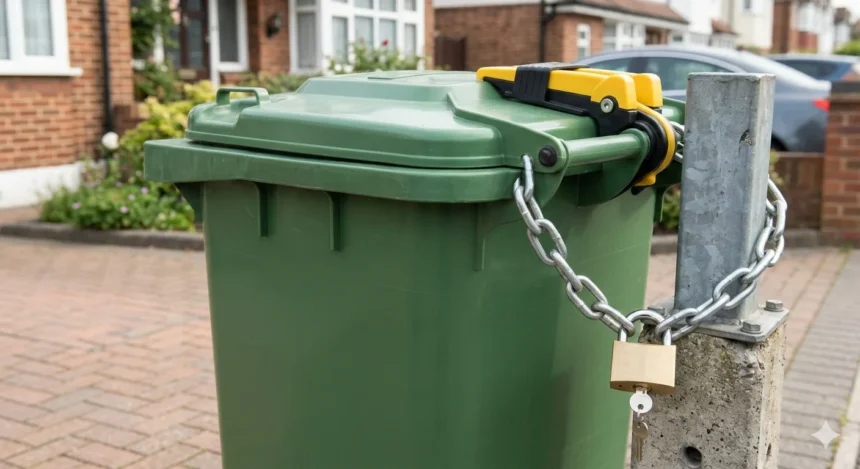
Lock your wheelie bin using a council-approved lid clamp or gravity lock that allows collection crews to empty it without damage. Chain the bin to a fixed post for added security, and always check with your local North London council first. These simple steps keep your bin exclusive to your household waste.
Why This Issue Matters to Local Residents
Illegal use of wheelie bins frustrates residents across Brent, Barnet, Enfield, Camden, Haringey, and Islington. Neighbours dumping extra rubbish fills your bin prematurely, forcing you to store waste indoors or risk fines for overflowing containers.
This misuse contributes to fly-tipping hotspots, as overloaded bins lead to spills on streets. North London councils spend millions clearing such messes, costs passed to local residents via council tax.
Beyond inconvenience, contaminated bins may get rejected during collections, leaving you with unemptied waste. Securing your bin protects your household routine and promotes cleaner neighbourhoods.

Step-by-Step Actions to Solve the Problem
Start by assessing your bin’s location and condition to choose the right security method.
- Select a suitable lock: Opt for lid locks or clamps that prevent opening but release for mechanical arms. Gravity locks auto-engage after emptying.
- Check council approval: Contact your borough’s waste team—Brent Council, Barnet Council, or others—to confirm the device complies with collection standards.
- Install securely: Fix lid clamps with provided screws; thread chains through handles and padlock to a sturdy fence post or ground anchor.
- Label your bin: Add your house number visibly to deter thieves and misuse.
- Test accessibility: Ensure crews can tip the bin without hindrance; trial with a neighbour if possible.
These actions take under an hour and use affordable tools from hardware stores.
Which Council Service Handles It
Each North London borough manages wheelie bin issues through its dedicated waste and recycling department. Brent Council oversees collections in its area, while Barnet Council handles reports of misuse.
Enfield, Camden, Haringey, and Islington councils provide similar services via their environment or street services teams. For unified support, note the North London Waste Authority coordinates disposal across these boroughs.
Residents should reach out to their specific “North London council” service for personalised advice on securing bins.
Information or Documents Needed
Prepare basic details to speed up any council interaction. Provide your full address, including postcode, and describe the issue, such as repeated unauthorised dumping.
Photos of the full bin or evidence like foreign waste items strengthen your report. Note your bin’s serial number, often stamped on the lid, for replacement queries.
No formal documents like ID are typically required for initial advice on locks, but keep council tax statements handy to verify residency.
Expected Response Time
Councils aim to acknowledge bin security queries within 48 hours via email or phone. Advice on approved locks often arrives immediately if submitted online.
For reports of ongoing misuse, frontline teams schedule checks within 7-10 working days, prioritising fly-tipping risks. North London boroughs like Haringey process fines swiftly for clear violations.
Delays may occur during peak seasons, but persistent issues prompt faster action.
What to Do If Follow-Up Is Required
If initial advice lacks detail, reply quoting your reference number and add photos of attempted locks. Request confirmation on specific products for your area.
Escalate to a supervisor via the council’s complaints process if no response in two weeks. Document all communications for records.
Join local resident groups in Brent or Islington to share experiences and prompt collective council attention.
Rights and Responsibilities Under UK Rules
UK law under the Environmental Protection Act 1990 prohibits fly-tipping, including unauthorised use of private bins, with fines up to £400 or more.
Residents have the right to exclusive bin use as council-provided property, but must not obstruct collections. Councils cannot mandate locks but approve compliant ones.
Your responsibility includes proper waste sorting and secure storage between collections to avoid neighbourhood nuisances.
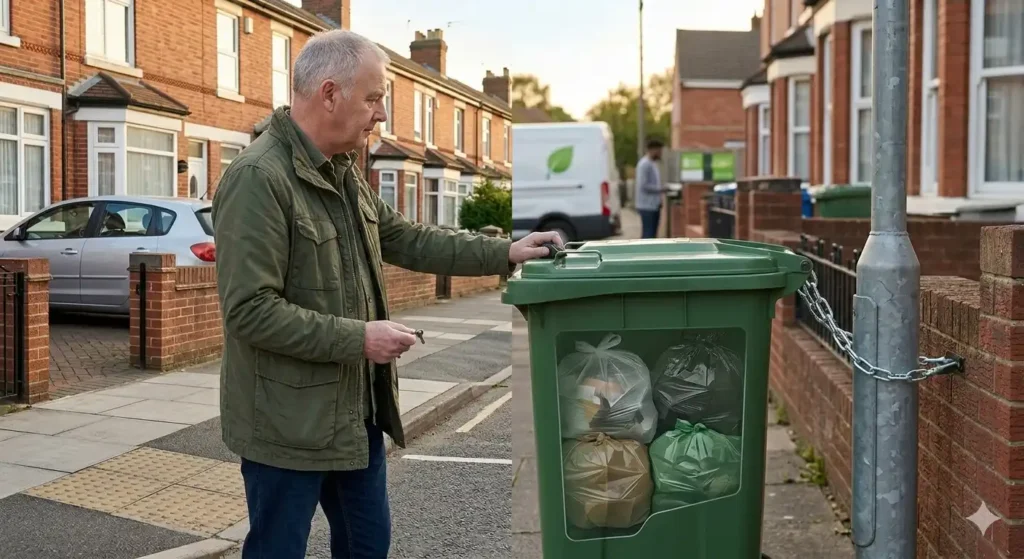
Practical Tips to Avoid the Problem in Future
Position bins out of sight, like behind gates, until collection day to reduce temptation.
Install motion-sensor lights or CCTV overlooking bins for deterrence without invading privacy. Community watches in Barnet and Camden enhance vigilance.
Educate neighbours politely about bin sharing risks, fostering mutual respect. Regularly clean bins to make them less appealing for dumping.
Choose weatherproof locks with spare keys stored safely. Periodically inspect fixings for wear.