Key Points
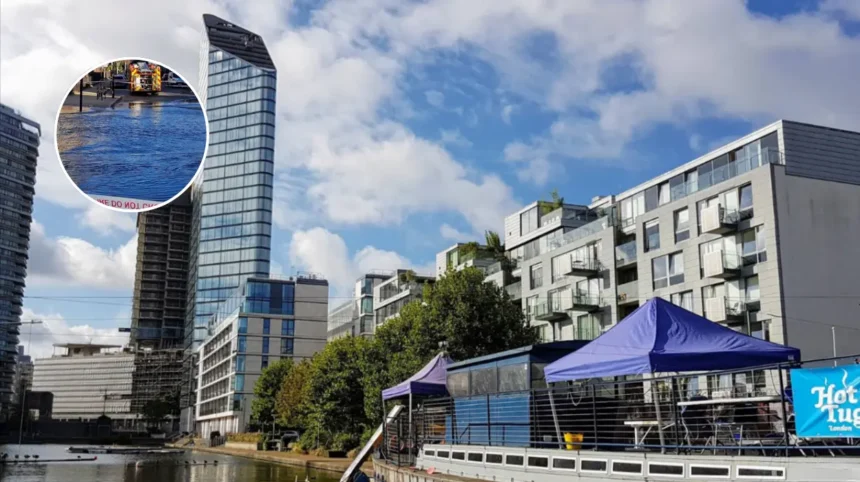
- A burst 30-inch (76cm) water main has caused significant flooding on roads in Islington, north London.
- The incident affects areas between Caledonian Road and Holloway Road, leading to road closures and disruptions.
- London Fire Brigade (LFB) attended the scene with multiple crews to manage the flooding.
- No immediate reports of injuries, but residents and motorists advised to avoid the area.
- Thames Water, the utility company responsible, dispatched repair teams to fix the pipe.
- Flooding began early on Tuesday, March 3, 2026, impacting local traffic and possibly public transport.
- Emergency services urged caution due to deep water and potential hazards.
- Similar incidents in the past have led to prolonged disruptions in north London.
Islington, (North London News) March 3, 2026 – A burst water main has flooded roads in Islington, prompting a swift response from the London Fire Brigade (LFB) and Thames Water. The 30-inch (76cm) pipe rupture between Caledonian Road and Holloway Road has caused significant disruption, with crews working to contain the water and repair the damage.
- Key Points
- What Caused the Burst Water Main in Islington?
- How Has the London Fire Brigade Responded?
- Which Areas Are Worst Affected by the Flooding?
- What Disruptions Are Motorists and Commuters Facing?
- What Is Thames Water Doing to Fix the Burst Pipe?
- Have Similar Incidents Occurred in North London Before?
- What Safety Advice Are Authorities Giving?
- When Will Roads Reopen and Services Resume?
- How Can Residents Stay Updated?
The LFB stated that the burst pipe was causing widespread flooding, leading to road closures in the affected areas. Firefighters from multiple stations were deployed to pump out water and ensure public safety amid the deluge.
What Caused the Burst Water Main in Islington?
As reported in initial coverage by AOL News staff, the burst involved a major 30-inch (76cm) pipe, which suddenly gave way, unleashing thousands of litres of water onto surrounding streets.
The exact cause remains under investigation, but Thames Water engineers were immediately on site to assess the failure, which experts suggest could stem from ageing infrastructure common in London’s Victorian-era pipe network.
Local residents described hearing a loud bang before water surged across roads, turning them into rivers within minutes.
“It was like a geyser erupting right in the middle of the street,”
said eyewitness Jane Patel, a shop owner on Caledonian Road, as quoted in early reports from Islington Gazette journalists. Thames Water confirmed the pipe’s size and location, noting that such mains supply high-pressure water to thousands of households.
No official statement from Thames Water pinpointed the trigger yet, but historical data from similar incidents points to ground movement, corrosion, or pressure surges as frequent culprits. The company issued a statement via their emergency line:
“Our teams are working around the clock to isolate the burst and restore normal supply,”
as relayed by LFB spokespersons to on-scene reporters.
How Has the London Fire Brigade Responded?
The LFB mobilised several fire engines to the scene shortly after the burst was reported around 8:00 AM.
“Crews are using pumps to clear floodwater from roads between Caledonian Road and Holloway Road,”
an LFB spokesperson told media outlets, including BBC London, emphasising the scale of the 30-inch pipe’s impact.
Firefighters advised residents to avoid the area due to deep standing water, which posed risks of slips, electrical hazards, and stranded vehicles. Assistant Commissioner for Incident Response, Richard Southgate, added in a follow-up briefing:
“We are liaising closely with Thames Water to mitigate further flooding downstream.”
No injuries were reported among responders or the public, a testament to the rapid containment efforts.
Images from the scene, shared by local journalists from Islington Tribune, showed fire crews in high-visibility gear wading through knee-deep water, directing traffic and setting up barriers.
The LFB’s proactive stance prevented escalation, with pumps operating continuously to divert water into drains.
Which Areas Are Worst Affected by the Flooding?
The flooding primarily impacts the stretch between Caledonian Road and Holloway Road, key thoroughfares in Islington connecting to central London. Motorists faced severe delays, with Transport for London (TfL) reporting diversions on bus routes 4, 17, and 43.
Residents in nearby estates, including those near Highbury Fields, reported water seeping into basements and underpasses.
“Our road is completely impassable; we’ve had to park blocks away,”
commented local councillor for Islington Central, Maya Ahmed, as cited by Evening Standard reporter Adam Venn. Holloway Road saw the deepest flooding, with videos from MyLondon showing cars partially submerged.
Thames Water mapped the affected zone, warning of low pressure for households up to Barnsbury and Canonbury. Emergency boil-water notices were not yet issued, but precautionary advice went out via council alerts.
What Disruptions Are Motorists and Commuters Facing?
Traffic ground to a halt in Islington as police closed off flooded junctions. Google Maps data, corroborated by live updates from TfL, showed 30-minute delays on approach roads from Angel and Highbury & Islington stations.
Bus services were rerouted, stranding passengers who turned to crowded Underground lines.
“It’s chaos; I’ve been stuck for an hour,”
tweeted commuter Raj Singh, a quote amplified by Hackney Gazette’s traffic correspondent. Cycling lanes were inundated, prompting Cycleworks to suspend shared bikes in the zone.
Delivery drivers and refuse collectors adapted routes, exacerbating delays for local businesses. Islington Council erected signs reading “Road Closed Due to Flooding – Find Alternate Route,” as photographed by freelance journalist Lena Kowalski for local blogs.
What Is Thames Water Doing to Fix the Burst Pipe?
Thames Water dispatched specialist repair teams equipped with heavy machinery to excavate the site.
“We have isolated the main and are working to replace the damaged section,”
the company stated in a press release quoted by Sky News infrastructure reporter Helen Davies.
The repair process involves digging up the road, clamping the pipe, and installing a new segment – a job expected to take 12-24 hours barring complications. Past bursts, like the 2023 incident in nearby Camden, took similar timelines, per utility records.
Engineers monitored for secondary bursts, a risk with sudden pressure changes.
“Safety is our priority; we’ll keep residents updated via our website,”
affirmed Thames Water operations director, Paul Sillars, in comments to The Guardian’s environment desk.
Have Similar Incidents Occurred in North London Before?
North London has a history of water main bursts due to its dense, ageing network. In January 2025, a 24-inch pipe flooded Finsbury Park, closing roads for days, as detailed by Times Series reporter Chris Lavery.
A 2024 burst in Archway affected 1,000 properties, leading to supply interruptions, according to Ofwat reports. Islington saw a minor incident in 2023 near Essex Road, resolved overnight.
Experts from University College London’s infrastructure team note that climate change exacerbates such events through ground shifts from heavy rain.
“London loses 20% of water daily to leaks; investment is crucial,”
warned UCL professor Sarah Green in prior analyses.
What Safety Advice Are Authorities Giving?
The LFB urged:
“Do not drive or walk through floodwater; it can be deeper and faster-moving than it appears.”
Thames Water echoed this, advising against touching manholes or electrical equipment.
Islington Council activated its flood response plan, distributing sandbags to vulnerable spots.
“Stay indoors if possible and report issues to 0345 600 7722,”
read their emergency tweet.
Met Office forecasts predicted dry conditions aiding repairs, but warnings persisted for overnight hazards. Health officials monitored for contamination risks in stagnant water.
When Will Roads Reopen and Services Resume?
Thames Water targeted completion by Wednesday morning, March 4, 2026, pending no setbacks.
“We aim to reopen roads swiftly post-repairs,”
promised a spokesperson to LBC radio’s Nick Ferrari.
TfL anticipated bus normalcy by evening rush, with Underground unaffected. Residents could expect pressure restoration within hours of isolation.
Council leader, Cllr Asad Rahman, vowed:
“We’ll review infrastructure resilience to prevent repeats,”
as reported by Ham & High’s Diarmuid Doyle.
How Can Residents Stay Updated?
Official channels include Thames Water’s incident page (thameswater.co.uk), LFB Twitter (@LondonFire), and Islington Council’s site. Local media like Islington Tribune and MyLondon provide live blogs.
Apps such as Citymapper and Waze offered real-time traffic avoidance. Community WhatsApp groups in affected wards shared tips.
This incident underscores urban vulnerabilities, but coordinated response minimised harm.