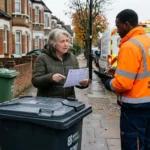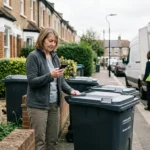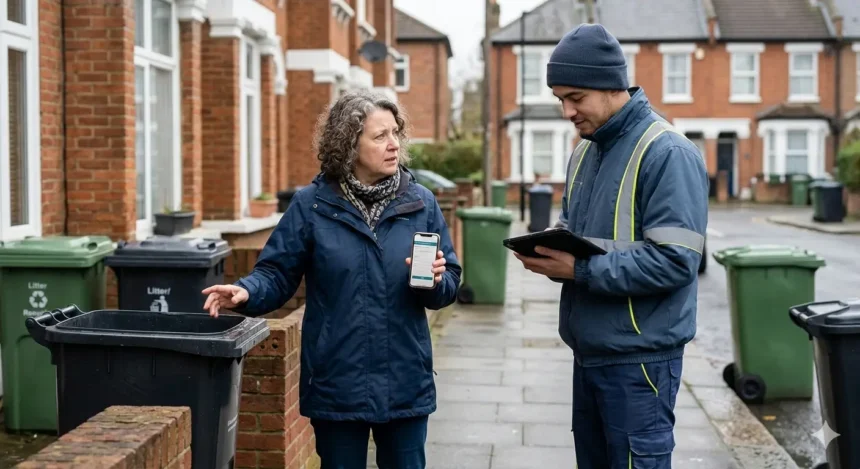
If your bin has been taken and you do not have a crime reference, you can still report it directly to your North London council as a lost or stolen bin. Most councils treat this as a waste service issue first, not a criminal investigation, and will assess whether to replace the container and whether any charge applies. You simply need to use your borough’s bin or waste form, select the “lost” or “stolen” option, and provide your address and bin details so the council can process a replacement.
Why this issue matters to local residents
A missing bin can quickly lead to rubbish piling up, attracting pests, causing bad smells, and encouraging fly‑tipping on your street. For North London council areas such as Brent, Barnet, Enfield, Camden, Haringey, and Islington, reliable bin collections are central to keeping neighbourhoods safe, clean, and pleasant for local residents.
When a bin disappears, households may struggle to store waste properly, risking contamination of recycling and possible enforcement action if bags are left out incorrectly. Promptly reporting a stolen bin also gives the council useful data on problem hotspots so they can plan collections, enforcement, and community support more effectively.
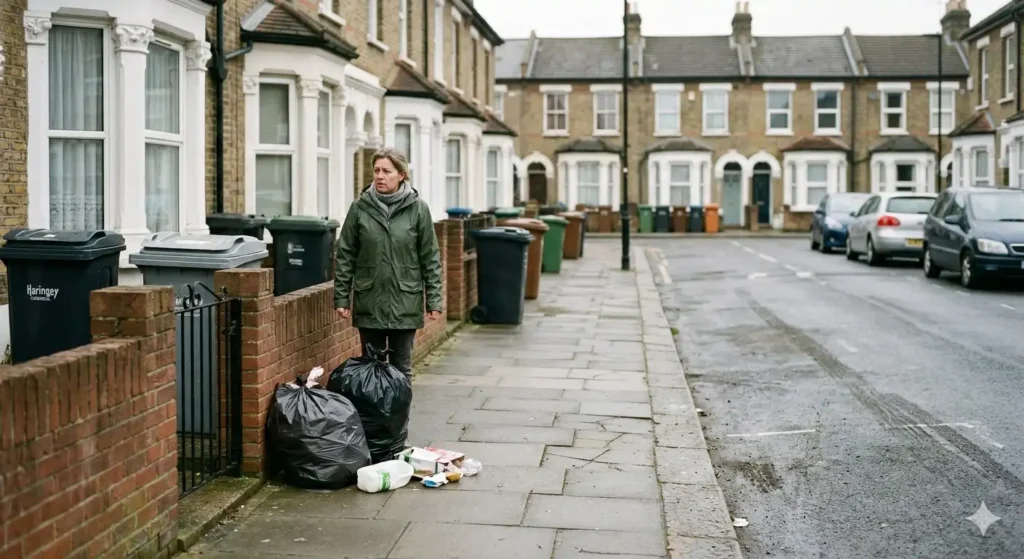
Step-by-step actions to solve the problem
Follow these practical steps if your bin has been stolen and you do not have a crime reference number:
- Check the immediate area
- Look along your street, around corners, and outside neighbouring properties in case your bin has been moved or mixed up on collection day.
- Confirm with neighbours and building managers (for flats or estates) that they have not brought your bin in by mistake.
- Confirm which bin is missing
- Note the colour (for example, general waste, recycling, food or garden waste) and approximate size (standard wheelie bin, large communal container, caddy, etc.).
- If you previously marked the bin with your house number, make a note of this too.
- Go to your council’s website
- Visit the website for your borough: Brent, Barnet, Enfield, Camden, Haringey, or Islington.
- Search for “report lost bin”, “stolen bin”, “replacement bin”, or “bins and recycling”. Most boroughs have an online form dedicated to lost, stolen, or damaged bins.
- Complete the online bin form
- Select the option that best matches your situation (for example “lost or stolen bin”).
- Enter your postcode, address, contact details, and details of the missing bin (type, size, colour, and how many are missing).
- Explain that you do not have a crime reference
- If asked for a crime reference number, choose “no” or “not reported” and use any free‑text box to explain that the bin has gone missing but you have not reported it to the police.
- Some councils will proceed without a crime reference and may decide themselves if police notification is needed for their records.
- Check whether a charge applies
- Councils differ: some replace stolen bins free of charge, others may charge for certain containers or repeated losses.
- The online form or guidance page should confirm if you need to pay and how much.
- Submit and keep your reference
- Once submitted, you should receive an online confirmation screen and often an email with a reference number.
- Keep this safe in case you need to chase progress or query any charge.
Which council service handles it
In Brent, Barnet, Enfield, Camden, Haringey, and Islington, stolen bins are normally dealt with by the waste and recycling or environmental services teams rather than by housing or general customer services.
Typical service names include:
- Waste and Recycling Services
- Environmental Services or Environmental Operations
- Street Scene or Street Environment teams
These teams manage:
- Household waste and recycling collections
- Issue and replacement of wheelie bins, boxes, and caddies
- Investigating persistent bin problems, contamination, and misuse
For flats and estates, the housing or estates management service may work alongside the central waste team if the bins are communal or stored in shared bin rooms.
Information or documents needed
When reporting your stolen bin to a North London council, you can normally complete the request online in a few minutes if you have the right information ready. Councils often ask for:
- Your full name and contact details (phone and email)
- Your full address and postcode in Brent, Barnet, Enfield, Camden, Haringey, or Islington
- The type of bin missing (general waste, recycling, food, or garden waste)
- The size or description (standard household wheelie bin, small caddy, large communal bin)
- When you last saw the bin and when you noticed it missing
- Whether you have checked with neighbours and around the local area
Some councils may also ask for:
- Proof of residency (for example, council tax reference, tenancy, or utility bill details) if you are registering for a container for the first time
- Details of any previous replacement requests, particularly if you have reported stolen bins before
You are not usually required to upload documents just to report the bin missing, but having these details to hand helps speed up the process.
Expected response time
Response and delivery times vary between boroughs and by bin type, but councils typically aim to process lost or stolen bin requests within a set number of working days.
Common expectations include:
- Initial acknowledgement: usually immediate via email or on‑screen confirmation once you submit the online form.
- Assessment: many North London councils review your request within a few working days to check eligibility and any charges.
- Delivery: replacement bins are often delivered within 5–10 working days, although garden waste or specialist bins can take longer during busy periods.
If there is high demand, or if the council uses external contractors for bin supply, it can take several weeks. Guidance pages for other UK councils show examples of 6–8 week lead times for some replacement bin services.
What to do if follow-up is required
If you have reported a stolen bin and heard nothing within the expected timeframe, follow these steps:
- Check your confirmation
- Locate your reference number and check any timescale mentioned in your email or on the council’s website.
- Ensure your contact details were entered correctly.
- Review council updates
- Look at service update pages for your borough in case of delays to bin deliveries or collections.
- Councils sometimes post notices about shortages, supplier issues, or seasonal backlogs.
- Contact the council again
- Use the online contact form or general customer service option to quote your reference and ask for an update.
- Be clear that you are a local resident without a bin and explain any impact on hygiene or storage at your property.
- Consider a formal complaint
In the meantime, check if the council offers temporary alternatives such as additional collection sacks or communal bins where space and policy allow.
Rights and responsibilities under UK rules
Under UK law, householders are responsible for presenting waste correctly, but bins and containers provided by councils often remain the property of the local authority.
For local residents in Brent, Barnet, Enfield, Camden, Haringey, and Islington, this usually means:
- You have the right to access a basic waste and recycling collection for your property, subject to council policy and any specific service arrangements (e.g. flats, HMOs).
- The council can decide the type and number of containers supplied, and may charge for certain bins, extra capacity, or repeated replacements.
Your responsibilities typically include:
- Keeping bins on your property where possible and only placing them on the pavement within the set collection window.
- Ensuring bins are not obstructing pavements or causing hazards when presented.
- Using the correct bin for each waste type and avoiding contamination of recycling.
- Reporting lost, stolen, or damaged bins promptly so they can be replaced and not misused elsewhere.
Although you can report a stolen bin to the police, it is usually treated as a low‑level theft. Councils or partner agencies may share details with the police when necessary for investigation or prevention.
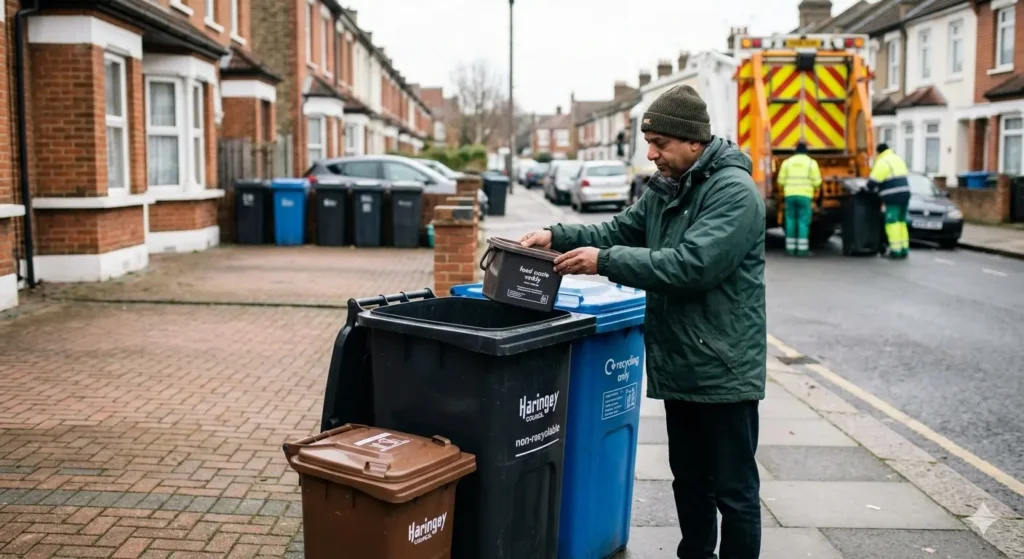
Practical tips to avoid the problem in future
While you cannot prevent every incident, a few simple habits can reduce the risk of bins going missing in North London streets:
- Mark your bin clearly
- Use permanent marker, paint, or numbered stickers to add your house or flat number and street name.
- Distinctive markings make it harder for someone to claim your bin and easier to spot if moved accidentally.
- Bring bins in promptly
- Try to bring bins back onto your property as soon as possible after collection, rather than leaving them out all day or overnight.
- For shared buildings, agree a rota so bins are not left unattended in the street.
- Store bins securely
- If you have space, keep bins behind a gate or in a side passage or courtyard rather than in front gardens directly on the street.
- For estates, use locked bin stores properly and report any broken locks or access issues to your landlord or council.
- Work with neighbours
- Encourage neighbours to label their bins as well so they are less easily swapped.
- If bin theft or tampering is a recurring problem on your road, raise it with the council so they can monitor collections and consider enforcement or education.
By acting quickly when a bin is stolen and following your borough’s process, you can usually get a replacement without needing a crime reference, keeping your home and street clean, compliant, and safe.
Is it worth reporting to the police?
No, in most cases you don’t need to report a stolen bin to the police. Wheelie bins are usually the property of the local council, so theft or loss is typically handled by the council rather than treated as a police matter. Instead, report the missing bin through your council’s waste services so they can arrange a replacement or investigate without requiring a crime reference number.