
When you are waiting for a bin, store your rubbish in tied black sacks inside your home or within your property boundary, and only put it at the front of your property on or just before your scheduled collection day. Do not leave sacks or open bins on the pavement or in shared corridors between collections, as this can be an offence under UK waste‑disposal rules.
- Why this issue matters to North London residents
- How to store rubbish safely while waiting
- Step‑by‑step actions to solve the problem
- Which council service handles this issue
- Information and documents you may need
- Expected response time from your council
- What to do if follow‑up is required
- Rights and responsibilities under UK rules
- Practical tips to avoid the problem in future
Why this issue matters to North London residents
In densely populated boroughs such as Brent, Barnet, Enfield, Camden, Haringey, and Islington, space for waste storage is often limited and shared areas are closely watched by neighbours and councils. Improperly stored rubbish can attract vermin, create odours, and spoil communal spaces, which is why local residents are encouraged to manage waste carefully while they wait for a bin.
North London councils also have strict rules about fly‑tipping and obstruction of pavements. If you leave black sacks or overflowing containers on the street or in stairwells for long periods, you may be warned or fined, so it is important to treat bin‑waiting time as a short‑term situation that still must be handled lawfully.
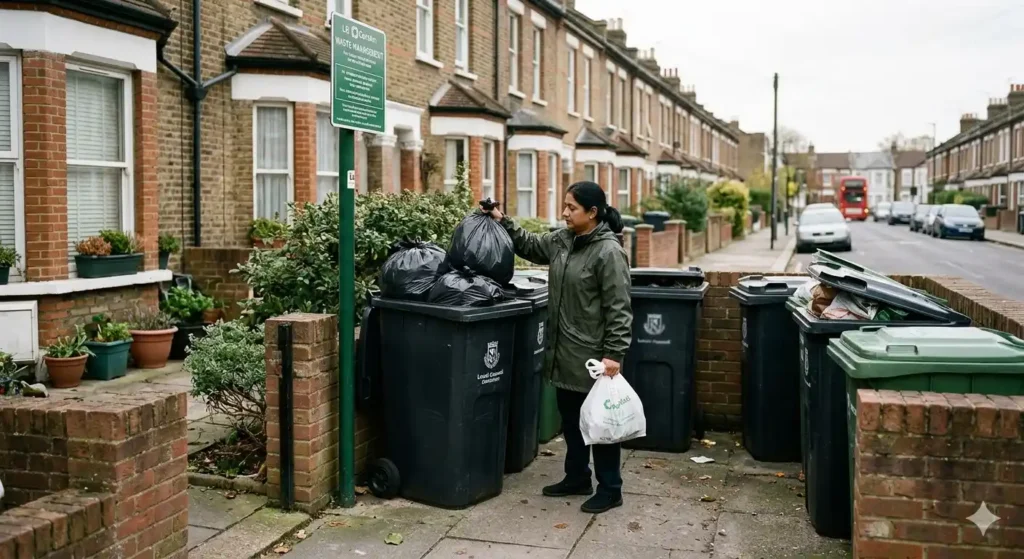
How to store rubbish safely while waiting
While you are waiting for a bin, the safest approach is to keep waste contained, covered, and out of sight within your own property. A typical strategy is to line an indoor bin with a strong black sack, tie it tightly when full, and store similar tied sacks in a dry cupboard, utility room, garage, or yard until collection day.
If you live in a flat or shared block, you can keep small tied sacks in your own flat and only bring them out on collection day to the communal bin area. Avoid leaving loose waste or open bags in corridors, stairwells, or outside your front door, as this can be treated as a failure to dispose of waste properly under environmental‑health rules.
Step‑by‑step actions to solve the problem
If you are waiting for a bin, you can follow a clear sequence of steps to stay within the law and avoid complaints:
- Report the missing or delayed bin to your local council online, using your council’s “bins and recycling” pages.
- Confirm your collection day and check whether you are on the correct schedule, as some North London areas run staggered services.
- Store ongoing waste in strong black sacks or an indoor bin, keeping rubbish sealed and away from living areas as much as possible.
- On collection day, place the tied sacks at the front of your property or in the designated communal area, ready for the waste crew.
- If the bin finally arrives, place any stored sacks inside the bin rather than leaving them loose outside.
By following these steps, you can keep your property tidy and avoid enforcement action while your council completes the bin‑delivery process.
Which council service handles this issue
In North London, household waste and bin‑delivery issues are handled by each borough’s environmental‑health or waste‑and‑recycling department. Residents in Brent, Barnet, Enfield, Camden, Haringey, and Islington all have their own waste‑collections service, so you must contact your own local council and not another borough’s office.
When you contact your council, you will usually deal with the “bins and recycling” or “household waste” section, which can arrange replacement bins, report damage, or check if a new bin has been ordered for your address. Council staff can also confirm whether you are entitled to a standard bin and whether assisted‑collection services are available if you struggle to move waste.
Information and documents you may need
To resolve a bin‑waiting situation quickly, your local council will normally ask for a few standard pieces of information. You should have your postcode, full address, and your council‑tax account number ready, as this helps officers confirm your property and bin entitlement.
If you are reporting a lost or damaged bin, it helps to note the bin’s colour, size, and which collection it is for (e.g., general waste, recycling, or food‑waste caddy). In some cases, councils may ask you to check whether neighbours have accidentally taken the wrong bin or whether a recent collection was missed, so having those details to hand can speed up the process.
Expected response time from your council
Most North London councils aim to respond to bin‑and‑recycling requests within a few working days, though exact times can vary by borough. Some councils treat “no bin” or “lost bin” requests as medium‑priority, so delivery may take up to a couple of weeks, particularly if bins must be ordered from a supplier.
In urgent cases, such as a medically related need or a bin that has been stolen or damaged during a collection, many councils can prioritise your request and may arrange a temporary solution, such as additional sacks or a new bin sooner than usual. If your area has a recent change in collection contractor or routes, there may be a short delay while contractors catch up.
What to do if follow‑up is required
If your bin has not arrived within the timescales your council indicates, you should follow up through the same reporting channel. Some councils allow you to track your request online, while others may ask you to send a second message or contact the waste‑collections team directly.
If you continue to receive no reply or assistance, you can ask your local councillor or ward‑office for support. North London councillors often liaise with council departments to clarify why a bin has not been delivered and can help escalate unresolved cases. Keep records of any dates, reference numbers, and correspondence, as this information can help if further action is needed.
Rights and responsibilities under UK rules
Under UK environmental‑health law, residents are responsible for ensuring their household waste is stored and disposed of safely and cleanly. This means not leaving rubbish in public spaces, not using public litter bins for regular household waste, and not tipping waste onto land or into skips without permission (which is considered fly‑tipping).
At the same time, if you are entitled to a bin and one has not been provided, you have the right to request it from your local council. Councils must act reasonably to supply the correct containers and collection services, and residents can ask for clarification if they are unsure whether a problem lies with their household or with the council’s service.
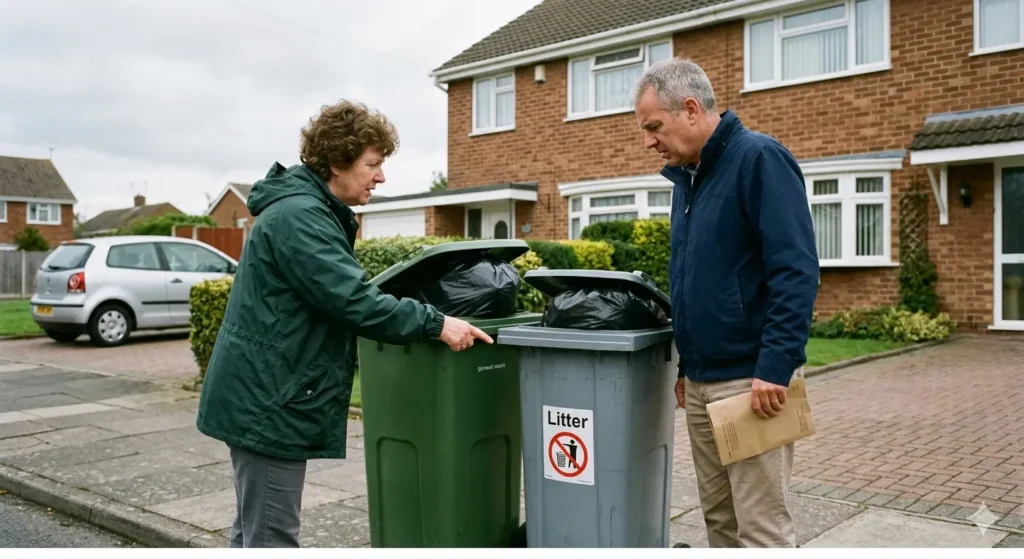
Practical tips to avoid the problem in future
Living in North London, you can take several steps to reduce the chance of being caught without a bin again. One simple measure is to keep a small stock of strong black sacks in your home so you are prepared if a bin is unexpectedly removed or delayed.
Another useful habit is to label your wheelie bin clearly with your house number or postcode, which can help prevent it from being taken by mistake or during a collection error. If you move into a new property, check early whether your address is due for a bin change or if you need to request containers from the council.
You can also sign up for collection reminders or calendar alerts from your borough’s website, which will help you plan ahead and avoid last‑minute surprises. By combining these habits with prompt reporting of any missing or damaged bins, local residents can keep their waste tidy and their homes in good standing with North London council rules.
Where can I put rubbish if my bin is full?
Store excess waste in sealed bags inside a shed, garage, or designated outdoor storage area until your next collection day.