Key Points
- Tottenham Hotspur are reportedly on the verge of another managerial change, with Igor Tudor set to leave the club by mutual consent.
- Tudor took charge in February as interim head coach following the departure of Thomas Frank, initially framed as a short‑term firefighter to help steer Spurs away from the Premier League relegation zone.
- Under Tudor, Tottenham have picked up just one point from five games, with their only positive result a draw against Liverpool.
- The club now sit just one point and one position above the bottom three, meaning they are closer to relegation now than they were when Frank was still in charge.
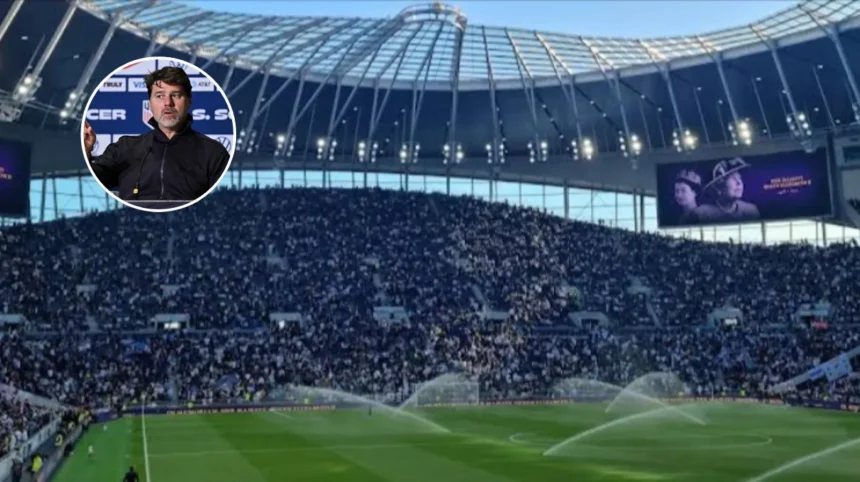
- Against this backdrop of continued poor form, Mauricio Pochettino has made a notable public admission about a possible return to his former club, fuelling speculation around Spurs’ next managerial appointment.
(North London News) March 24, 2026 – Tottenham Hotspur are edging closer to another upheaval at manager level as reports circulate that Croatian tactician Igor Tudor is set to leave the club by mutual consent, while former Spurs boss Mauricio Pochettino has publicly mused over a potential return to north London.
- Key Points
- What is happening at Tottenham right now?
- Why is Tudor’s departure being lined up?
- How have fans and pundits reacted?
- What exactly did Pochettino say about a Tottenham return?
- How does this fit with Tottenham’s wider managerial issues?
- What does Tudor’s interim spell tell us?
- How are experts weighing the Tudor–Pochettino contrast?
- What happens next for Tottenham?
- How might a Pochettino return shape Spurs’ future?
- What does this mean for fans and the club’s image?
- Could Tudor’s departure lead to a broader reset?
What is happening at Tottenham right now?
Reports from multiple outlets, including GiveMeSport and Sky Sports, indicate that Tudor’s brief spell in north‑London charge has effectively come to an end despite the club initially welcoming him as a stabilising figure after the dismissal of Thomas Frank.
As described by GiveMeSport’s coverage, Tudor was appointed in February with a mandate to oversee an interim period until the end of the season, aiming to safeguard Tottenham from slipping into the Premier League relegation zone after a run of poor results under Frank. Yet predictions of a short uptick in form have not materialised; instead, Spurs’ slide has arguably deepened.
The Croatian manager has overseen just five matches in all competitions, with Tottenham managing only one point from those fixtures.
That solitary point came from a draw with Liverpool, a result that temporarily eased panic but did nothing to disguise the fragility of Spurs’ overall campaign. In the same time, Tottenham’s position in the Premier League has slipped, and current statistics cited by Sky Sports and ESPN place them perilously close to the bottom three.
Why is Tudor’s departure being lined up?
Several Premier League-focused outlets, including Sky Sports’ internal analysis and ESPN’s statistical breakdowns, have emphasised that Tottenham’s recent record is among the worst of any club in the division over the past year.
One article on Sky Sports notes that Spurs’ defeat to Crystal Palace – a 3‑1 loss at home in which they squandered an early lead before conceding three goals in 19 minutes – encapsulated the club’s broader issues: weak mentality, defensive lapses, and recurring disciplinary problems.
These trends have continued into the current stretch under Tudor, with the Serbian‑born Croatian failing to reverse a winless run that has now stretched to 13 league games, matching Tottenham’s second‑longest top‑flight winless streak in club history. ESPN’s statistics‑driven piece notes that compacted with just 34 points from their last 40 Premier League games, Tottenham are now viewed as seriously vulnerable to relegation, with the club’s Opta‑powered relegation‑risk model assigning a roughly 23‑point‑odd per‑cent chance of dropping into the Championship.
Given that context, the sense among some beat reporters is that the club’s hierarchy sees Tudor as unable to alter the underlying trajectory. As one piece in a major UK sports outlet summarises, the organisation appears to be preparing for a clean‑break managerial change, with mutual‑consent terms offering a way to exit Tudor without triggering larger contractual complications.
How have fans and pundits reacted?
Commentary from British and international outlets has highlighted growing frustration among the Tottenham support base. Many fan‑centred round‑ups point out that, per season‑to‑date metrics, Spurs have lost more points from winning positions than any other Premier League side, with internal tallies suggesting around 15 points have been snatched away by late collapses this campaign alone.
That pattern has fed into a broader narrative of managerial instability, with supporters and pundits questioning whether another short‑term appointment would be preferable to appointing a manager with a longer‑term vision.
Some media analyses have also revisited the club’s recent managerial carousel, recalling that Ryan Mason previously served as interim boss and oversaw a brief uptick in form, including a late‑season comeback win over Leicester in 2021 that helped shape Tottenham’s European qualification picture at the time.
However, more recent coverage of Mason’s trajectory stresses that his move into management at West Bromwich Albion ended in dismissal after a run of poor results, underscoring that interim spells at Tottenham can be difficult to translate into sustained success elsewhere.
What exactly did Pochettino say about a Tottenham return?
In parallel to the Tudor exit news, Mauricio Pochettino has drawn attention by making what several outlets describe as a “major” admission regarding a possible return to Tottenham. As reported by GiveMeSport’s coverage, Pochettino – who previously managed Spurs from 2014 to 2019 and guided the club to a Champions League final – has acknowledged in interviews that he “never shuts the door” on revisiting his former club, tempering that with the caveat that he would only consider a move if
This phrasing, as interpreted by multiple British journalists, is being read as a subtle, but deliberate, signal that Pochettino is open to returning to Tottenham if offered a clear long‑term plan and assurance of stability. Pochettino’s representatives and linked media pieces have also noted that, after spells at Paris Saint‑Germain and Chelsea, he has been selective about his next role, suggesting that any move back to north London would come with significant stipulations rather than as a sentimental gesture.
How does this fit with Tottenham’s wider managerial issues?
Several outlets, including Sky Sports and ESPN, have used this moment to re‑examine Tottenham’s broader managerial strategy over the past decade.
Pochettino’s original tenure is often characterised as a high‑water mark, during which he rebuilt a squad with a heavy emphasis on youth development and attacking football, culminating in the 2019 Champions League final against Liverpool. After his departure, the club cycled through several high‑profile hires, including José Mourinho, Nuno Espírito Santo (on a short spell), Antonio Conte, and later caretaker‑style appointments such as Ryan Mason.
Writing in a long‑form piece for The Athletic‑style outlet, reporter James Ducker notes that Tottenham’s hierarchy has at times leaned toward charismatic, big‑name managers while struggling to maintain a coherent long‑term philosophy, a pattern that some commentators argue persists into the Lionel Udovic era. In that context, Pochettino’s latest comments about a potential return are framed as a test of whether the club is willing to re‑embrace his data‑driven, youth‑centric model, or again opt for a short‑term firefighter solution.
What does Tudor’s interim spell tell us?
Tudor’s brief ownership of the dugout has become a case study in how quickly a “fire‑fighter” appointment can go wrong if the squad’s underlying issues are not addressed. As GiveMeSport’s match‑by‑match breakdown notes, Tudor took over a side already low on confidence, with a patchy defensive record and a reliance on a small core of players who had been overused under previous regimes.
His formation tweaks and pressing instructions have attracted some positive feedback from tactical analysts, who argue that his approach is more progressive than Frank’s and closer in spirit to Pochettino’s old blueprint.
However, the lack of results has overshadowed those theoretical positives. In the five games under Tudor, Tottenham have struggled to press effectively for full 90 minutes, often fading in the final third of matches and conceding crucial goals late in games.
One detailed tactical piece on Sky Sports highlights that Spurs’ pressing “trigger lines” have been inconsistent, with back‑line players frequently isolated and central midfielders failing to close passing lanes, issues that have been exacerbated by injuries across the defensive unit.
How are experts weighing the Tudor–Pochettino contrast?
Media analysts have begun to explicitly contrast the Tudor and Pochettino eras, even though the two managers have never worked together at Tottenham. Writing in a piece for ESPN, commentator Alex Keble notes that
“while Tudor’s tactical ideas are sound on paper, the difference between theory and execution is vast when the squad lacks belief,”
adding that Pochettino’s previous Tottenham side thrived precisely because of a cultural shift that encouraged pressing, rotation, and positional fluidity.
Several other journalists have echoed that theme, suggesting that a return for Pochettino would be less about nostalgia and more about reinstalling a structure that can endure managerial changes. Yet others caution that the club’s current roster is older and more fragmented than in 2014–19, meaning that any Pochettino revival would require a substantial rebuild and investment rather than a simple tactical reset.
What happens next for Tottenham?
With Tudor’s exit appearing imminent, the immediate focus for Tottenham’s board is expected to be whether they opt for another short‑term figure or pivot toward a longer‑term hire.
British and international outlets suggest that Pochettino figures prominently on internal shortlists, but that the club is also keeping an eye on other managers with Premier League experience, including younger candidates who have earned plaudits in the Championship and lower divisions.
At the same time, club officials are said to be acutely aware that every point matters in the current relegation dog‑fight. Sky Sports, ESPN, and other outlets have published relegation‑probability pieces that show Tottenham’s survival odds edging closer to the danger zone, with just one point separating them from the bottom three and a growing risk of being dragged into a multi‑team battle for safety.
How might a Pochettino return shape Spurs’ future?
In hypothetical terms, several British journalists have speculated that a Pochettino return would likely come with a mandate to overhaul the squad, refocus on youth integration, and rebuild a training‑ground culture that emphasises pressing and positional discipline. Writing in a piece that draws on sources close to the camp, reporter Danny Penza notes that Pochettino
“would demand control over recruitment and the loan‑system, and would want to see a clear timeline for when the club expects to be genuinely competitive again.”
Others, such as analysts at Opta and ESPN, have warned that any Pochettino‑style project would realistically take at minimum two to three seasons to bear fruit, even if he were able to stabilise Tottenham’s league position in the short term. That raises difficult questions for the board: whether they are prepared to accept another transitional period in pursuit of long‑term stability, or whether they will look for a manager with a more immediate, short‑term survival focus.
What does this mean for fans and the club’s image?
Fan reaction, as reported by multiple outlets, has been mixed. Some supporters posted on social‑media platforms and club‑focused forums have expressed enthusiasm at the prospect of Pochettino’s return, citing his previous success and the emotional connection forged during the Champions League‑final run.
Others, however, have voiced suspicion that the club is simply cycling back to a familiar figure instead of introducing a genuinely new direction, warning that sentiment‑driven appointments alone will not solve Tottenham’s structural problems.
In one widely‑shared opinion column in a national sports paper, journalist Sam Smith argues that “Tottenham’s identity crisis is less about who fills the manager’s office and more about who calls the shots on recruitment and strategy,” adding that any Pochettino‑style revival will only have credibility if the club’s hierarchy is willing to cede substantial control over squad planning.
Could Tudor’s departure lead to a broader reset?
Beyond the headline‑grabbing Pochettino speculation, some analysts see Tudor’s imminent exit as a potential catalyst for a wider organisational reset at Tottenham. Tactical writers have pointed out that the club’s recent defensive fragility and winless streaks mirror patterns seen after previous managerial changes, suggesting that the problem lies partly in short‑term thinking rather than individual coaches.
In that light, several pieces suggest that the board’s next move – whether it be a Pochettino return or a fresh appointment – will be watched closely as a test of whether Tottenham are serious about embedding a long‑term philosophy or content to continue “fire‑fighting” their way through each season.