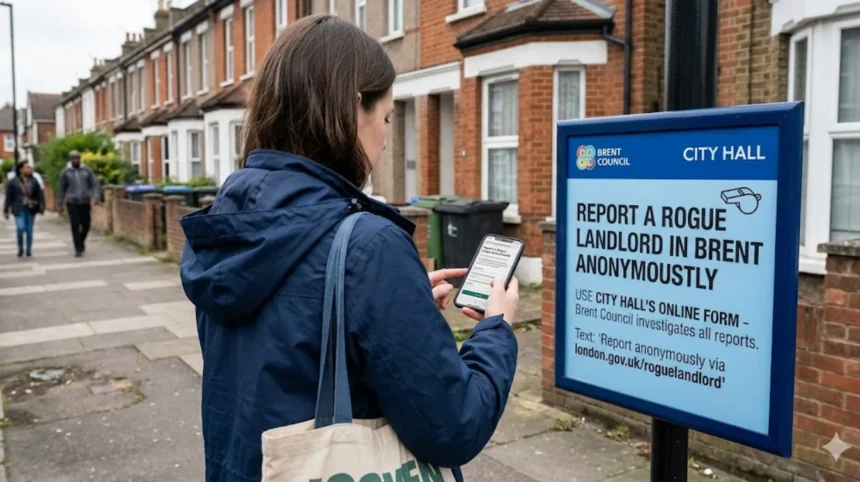
Reporting a rogue landlord in Brent can protect tenants from unsafe living conditions and hold negligent property owners accountable without risking retaliation. Brent Council provides straightforward, confidential channels for anonymous complaints, ensuring residents in North London feel empowered to act.
- Understanding Rogue Landlords in Brent
- Common Signs of a Rogue Landlord
- Legal Framework for Reporting in Brent
- Anonymous Reporting Options with Brent Council
- Step-by-Step Guide to Anonymous Reporting
- What Happens After Your Report
- Protecting Yourself Before and After Reporting
- Brent’s Enforcement Success Stories
- National Resources Complementing Local Action
- Why Anonymity Matters in North London Rentals
Understanding Rogue Landlords in Brent
Rogue landlords exploit tenants by neglecting repairs, ignoring safety standards, or flouting licensing rules, creating hazards in the private rented sector. In Brent, a bustling North London borough, the private rental market has expanded significantly, with nearly half of homes now privately rented, amplifying the need for vigilant enforcement. These landlords often evade property licensing schemes, leading to overcrowded, substandard accommodations that endanger health and safety.
The Housing Act 2004 empowers local authorities like Brent Council to address category 1 hazards—serious risks such as damp, poor ventilation, or electrical faults—through inspections and penalties. Brent’s proactive stance includes street patrols and data cross-checks with council tax records to identify unlicensed properties, resulting in hefty fines exceeding £97,000 in short enforcement bursts. Tenants facing harassment, illegal evictions, or disrepair endure not just physical discomfort but emotional stress, making anonymous reporting a vital safeguard.
Common Signs of a Rogue Landlord
Tenants in Brent might notice persistent disrepair like leaking roofs or faulty heating as hallmarks of rogue behavior, often tied to unlicensed HMOs where overcrowding exacerbates issues. Failure to provide gas safety certificates or obtain required licences for properties housing multiple unrelated households signals non-compliance with Brent’s selective, additional, and mandatory licensing schemes.
Harassment tactics, such as unauthorized entries or threats to cut utilities, violate tenancy laws and qualify for council intervention via the Tenancy Relations Service. Overcrowding in properties rented to more than five people without a mandatory HMO licence, or even three to four in additional licensing categories, poses fire and health risks, as seen in court cases where landlords faced £50,000 fines for “houses of horrors.” Recognizing these patterns early allows residents to gather evidence like photos discreetly before reporting.
Legal Framework for Reporting in Brent
Brent operates under the Housing and Planning Act 2016 and Housing Act 2004, mandating licences for most private rentals except in Wembley Park ward, with selective licensing covering single households across 21 wards since 2023 and 2024 designations. Unlicensed operations trigger civil penalties up to £30,000 or unlimited court fines, plus potential Rent Repayment Orders allowing tenants to reclaim 12 months’ rent.
The council’s Private Housing Services (PHS) Enforcement Policy prioritizes reducing category 1 and high category 2 hazards, using tools like improvement notices and banning orders for repeat offenders. Nationally, the Rogue Landlord and Property Agent Database lists serious violators, while local efforts in Brent include proactive inspections rather than complaint-only responses. This framework ensures reports lead to tangible actions, from compliance orders to prosecutions.
Anonymous Reporting Options with Brent Council
Brent Council facilitates anonymous reports through dedicated online forms and emails, shielding complainants’ identities during investigations. For unlicensed properties, use the “Report a suspected unlicensed property” form on the council’s self-service portal, specifying overcrowding or missing licences without providing personal details.
Email prslicensing@brent.gov.uk for licensing breaches or general rogue behavior, or submit via the anonymous complaints portal at customerportal.brent.gov.uk/anonymous-complaints, which covers housing issues like disrepair in private sector offers. Phone lines such as 020 8937 2384 allow verbal reports, with staff trained to log details confidentially; requests for anonymity are standard practice. These channels feed into PHS Enforcement Team actions, including HHSRS assessments.
Step-by-Step Guide to Anonymous Reporting
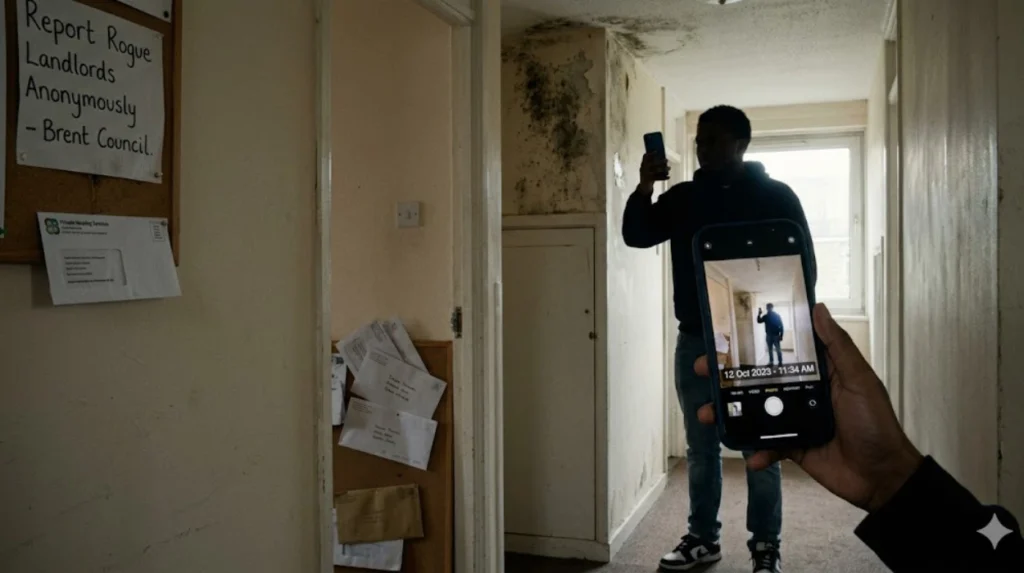
Start by documenting issues with dated photos, videos, and notes on hazards like mould or absent fire alarms, avoiding direct confrontation to preserve anonymity. Access Brent’s online form for unlicensed properties via the property licensing page, filling in the address, occupant estimates, and evidence descriptions without your name or contact.
Next, cross-reference with the public licensing register to confirm non-compliance, then submit via the anonymous portal or email, phrasing as “suspected rogue landlord at [address] due to [specific violations].” Follow up anonymously if needed by referencing your submission ID, and expect council officers to inspect within weeks, prioritizing category 1 risks. Track progress via general inquiries without revealing involvement.
What Happens After Your Report
Upon receipt, Brent’s PHS team reviews evidence and schedules unannounced inspections, often using HHSRS to rate hazards and issue notices for remedies. Compliant landlords face licence conditions; rogues encounter civil penalties, improvement orders, or court summons, as in recent cases netting £49,495 for overcrowding.
Successful probes can lead to Rent Repayment Orders via the First-tier Tribunal, benefiting all tenants, and additions to the national rogue database for nationwide bans. Reporters remain anonymous throughout, with councils legally bound to protect sources unless court-ordered otherwise. Outcomes improve neighborhood standards, deterring further violations.
Protecting Yourself Before and After Reporting
Secure tenancy deposits and request routine safety certificates in writing first, creating a paper trail that strengthens your anonymous report. If facing imminent danger, contact Shelter’s helpline alongside council submission for parallel advice on emergency repairs.
Post-report, monitor discreetly for changes like sudden fixes, signaling council action, and consider joining tenant forums for shared experiences without specifics. Legal protections under the Protection from Harassment Act shield against retaliation, with Brent’s Tenancy Relations Service intervening in threats. This preparation minimizes risks while maximizing impact.
Brent’s Enforcement Success Stories
Brent leads in PRS enforcement, fining landlords £97,727 across six cases in weeks, including £40,000+ for disrepair in family homes. Street surveys post-licensing rollout uncovered prolific unlicensed operators, with magistrates imposing near-£50,000 penalties for hazardous overcrowding.
Banning orders prevent recidivism, as one criminal landlord learned, while 40,000 annual inspections target 10,000 category 1 hazard properties. These victories stem from anonymous tips fueling data-driven crackdowns, proving reports drive real change.
National Resources Complementing Local Action
The Greater London Authority’s rogue landlord form handles licensing breaches across boroughs, forwarding to Brent as needed. Shelter and Citizens Advice offer anonymous guidance on rights, while GOV.UK details Rent Repayment Orders applicable post-council enforcement.
The Ministry of Housing’s database tracks rogues nationally, accessible for checks before renting. Combining these with Brent-specific tools ensures comprehensive protection.
Why Anonymity Matters in North London Rentals
In Brent’s dense rental market, anonymity prevents evictions or harassment, empowering the 46% private renters to report without fear. Councils prioritize confidentiality, investigating solely on merits, fostering safer communities.