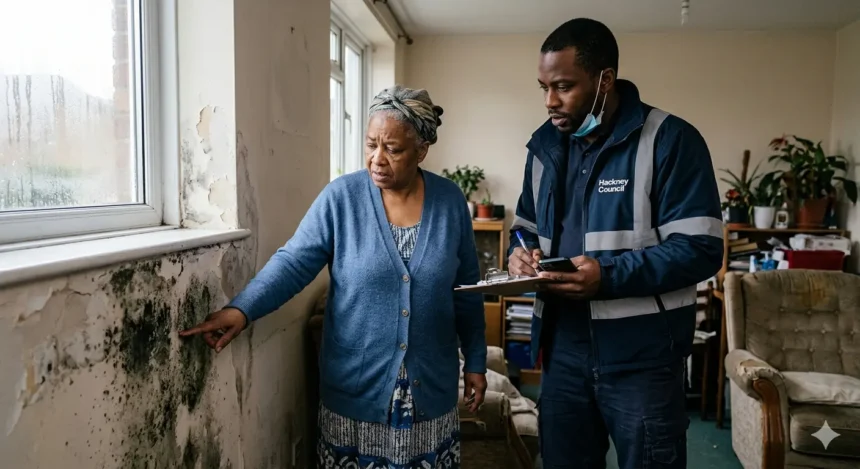
If you live in a Hackney council home and have damp or mould, report it to the council’s repairs service as soon as possible. Council tenants can submit a repair online or contact the repairs centre, and Hackney says all damp and mould reports are inspected within five days.
For local residents in Brent, Barnet, Enfield, Camden, Haringey and Islington, the same principle applies: report the problem quickly, keep records, and follow up if the issue is not fixed promptly.
Why this matters
Damp and mould can damage walls, ceilings, furniture and belongings, but the bigger concern is the risk to health, especially for children, older people and anyone with breathing problems. In Hackney, the council says it treats damp and mould seriously and has taken steps to improve response times in its own homes.
For local residents, acting early also helps identify the cause, such as a leak, poor ventilation or a repair issue that may spread to another room or neighbouring flat. Hackney has said leaks are one of the common causes of damp and mould, which is why they are prioritised for fast inspection and repair.
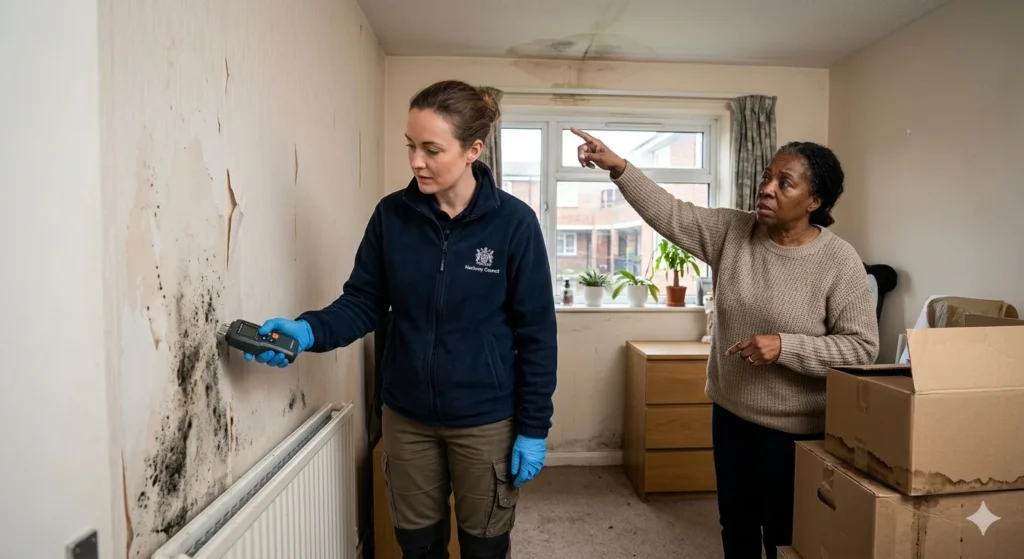
Step-by-step action
Start by checking whether the problem is likely to be condensation, a leak, or a wider repair issue. If you can see water ingress, stained plaster, bubbling paint, black mould, or a persistent damp smell, report it straight away rather than trying to wait it out.
Then take these steps:
- Take clear photos of the affected area, including close-ups and wider shots.
- Note where the damp or mould is, when you first noticed it, and whether it is getting worse.
- Keep copies of any messages, repair requests, letters or emails.
- Report it through the council’s repairs route as a tenant, or through the private sector housing route if you rent privately in Hackney.
- If the issue is linked to a leak, report that immediately so it can be treated as urgent.
If you are a Hackney Council tenant, you can report a repair online, and Hackney also says its repairs centre handles leak reports so a visit can be scheduled. If you rent privately in Hackney, the council directs residents to its private sector housing team, which can investigate and help resolve the issue if your landlord is not acting.
Which service handles it
In Hackney council homes, damp and mould reports are handled through the council’s repairs service. Hackney says reported damp and mould cases are inspected within five days, and leak reports are dealt with through the repairs centre and emergency repairs team if needed outside normal hours.
In privately rented homes in Hackney, the private sector housing team handles complaints where landlords are not resolving damp and mould. Hackney’s published guidance says residents can contact that team by email or by phone for investigation and enforcement where necessary.
For residents in a North London council area such as Brent, Barnet, Camden, Enfield, Haringey or Islington, the relevant housing repairs or environmental health team is usually the first point of contact for council homes and private rented disputes. The exact service name may vary by borough, but the process is usually similar.
Information you should have ready
When you report the problem, be ready to give practical details that help the council or landlord act quickly. Hackney’s published guidance shows that reports are taken seriously when the issue is described clearly and linked to visible evidence.
Useful information includes:
- Your full name and address.
- Whether you are a council tenant, leaseholder or private tenant.
- The rooms affected.
- When the problem began.
- Whether there is a leak, condensation or visible water damage.
- Photos or videos of the issue.
- Any health concerns in the household.
- Any previous repair references or correspondence.
The more detail you provide, the easier it is for the housing or repairs team to decide whether the case needs urgent inspection, specialist work or follow-up checks.
Expected response time
Hackney says all reports of damp and mould will be inspected within five days. It also says leak reports in council homes are treated quickly, with plumbers attending by at least the end of the following day, and emergency repairs handling out-of-hours calls in the same way.
That is useful for residents because it gives a clear target to work from. If you have not had contact within the expected time, or if the issue is getting worse, you should chase the case and ask for a new appointment or escalation.
If follow-up is needed
Sometimes the first visit does not solve the problem, especially if the root cause is hidden behind plaster, in pipework or in a neighbouring property. Hackney’s own updates show it has been working to improve monitoring and communication in damp and mould cases, which is important when repairs need more than one visit.
If follow-up is needed, keep doing the following:
- Ask for the repair reference number.
- Request the findings from the inspection.
- Ask what the cause is and what work is planned next.
- Keep a written record of each contact.
- Take new photos if the problem continues or gets worse.
- Chase the case if deadlines pass without action.
If you are renting privately and your landlord does not respond, contact the council’s private sector housing service so the case can be investigated. Hackney has also said it can serve enforcement notices where landlords fail to take action.
Rights and responsibilities
Under UK housing rules, landlords are expected to deal with repairs that affect the structure, drainage, water systems and safe condition of the home, while tenants are usually expected to use the property properly and allow access for inspections and repairs. In practice, that means residents should report damp and mould early, keep the home ventilated where possible, and co-operate with appointments.
If the issue is caused by a repair problem rather than everyday living, the landlord or council should investigate and fix it. The Housing Ombudsman has also said landlords should take a zero-tolerance approach to damp and mould, identify complex cases early and keep residents informed throughout the process.
For local residents in Hackney and across North London, this means you should not ignore damp patches or mould growth, and you should not be asked to manage a structural repair yourself. If a landlord or council service is slow to act, written follow-up helps show the history of the case and supports any later complaint.
Practical prevention tips
Once the repair is underway, a few simple habits can help reduce the chance of damp building up again. Hackney notes that condensation is a key cause of damp and mould, especially in winter, so everyday ventilation matters.
Useful prevention tips include:
- Use extractor fans where available.
- Open windows briefly to let moist air out, especially after cooking or showering.
- Avoid drying large amounts of washing indoors if you can.
- Keep background heating steady rather than allowing rooms to get very cold.
- Leave a small gap between walls and furniture so air can circulate.
- Report leaks immediately, even if they seem minor.
These steps will not solve a structural problem, but they can reduce condensation while the repair is being arranged. They are especially helpful in flats and shared housing across North London council areas where ventilation can be limited.

What Hackney residents should remember
If you are a Hackney council tenant, the key point is to report the issue quickly through the council’s repairs service and keep evidence of what you have seen. Hackney says damp and mould reports are inspected within five days, which gives residents a clear target for action.
If you are a private tenant in Hackney, use the council’s private sector housing route if your landlord does not deal with the issue. For local residents elsewhere in North London, the same approach applies: report early, keep records, follow up in writing, and ask for escalation if repairs are delayed.
How do I report damp or mould to Hackney Council?
Report it online via your tenant portal or the council’s repairs page, or call housing repairs to log the issue.