You can petition for new parking controls on your road by gathering support from neighbours, drafting a clear request to your local council, and asking parking‑traffic officers or your councillor to assess the street for changes such as yellow lines, permit bays, or resident‑only parking. This process follows standard UK traffic‑regulation rules and is handled through your borough’s parking or traffic‑management service in North London.
- Why parking controls matter to local residents
- Step‑by‑step actions to solve the problem
- Which council service handles this
- Information or documents needed
- Expected response time from the council
- What to do if follow‑up is required
- Rights and responsibilities under UK rules
- Practical tips to avoid the problem in future
Why parking controls matter to local residents
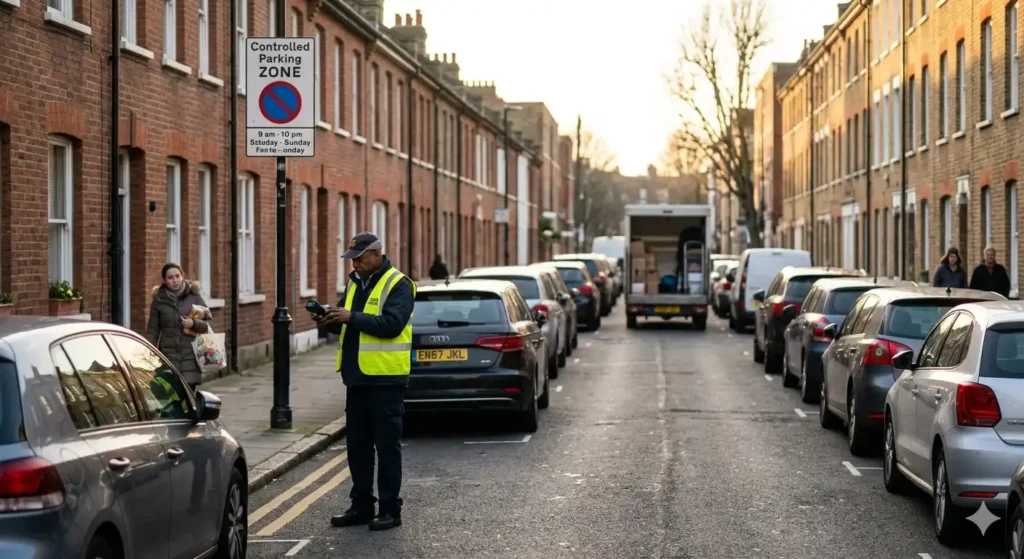
In busy North London boroughs such as Brent, Barnet, Enfield, Camden, Haringey and Islington, streets often fill quickly with commuters, delivery vans and visitors, leaving little space for residents. Long‑term parking, double‑parking and blocked driveways can make it difficult to load and unload, reduce access for emergency vehicles, and create congestion on already narrow roads.
Parking controls such as residents’ bays, Controlled Parking Zones (CPZs), and clear “no waiting” times help balance the needs of local residents with those of visitors and businesses. They can also ease congestion, cut down on illegal parking, and support safer movement for pedestrians and cyclists when laid out correctly.
Step‑by‑step actions to solve the problem
If you think your road would benefit from new parking controls, you can follow a structured approach that councils in North London typically expect.
- Identify the exact issue
Walk your street at different times of day and note what happens. Are non‑residents parking all day? Are driveways and access points blocked? Are there near‑misses with cyclists or delivery vehicles? Write down a short description of the problem, including typical “rush times” and any safety concerns. - Talk to neighbours
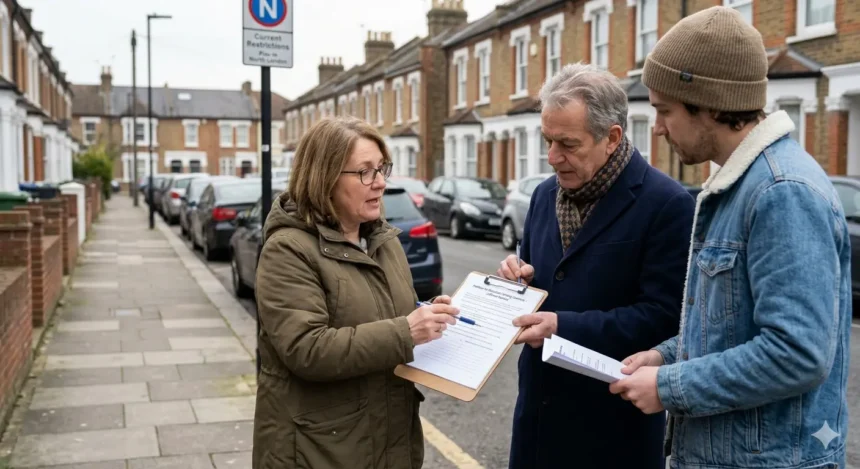
Before making a formal request, speak to people on your street and the roads either side. Many North London councils look for evidence of local support, such as a petition or a list of names and addresses, when assessing parking‑control proposals. Aim to include households both directly on the road and on feeder streets that may be affected. - Check existing rules on your road
Look at the signs and kerb markings. Your street may already sit within a Controlled Parking Zone where some restrictions apply, or it may be part‑time only. If so, your request can focus on extending hours, adding residents’ bays, or tightening yellow‑line rules rather than starting from scratch. - Draft a clear request
Write a short, factual letter or email suggesting specific changes. For example, you might ask for:- Part‑time or 24‑hour yellow lines near junctions or driveways.
- Residents’ parking bays or permit‑only bays.
- A review of whether the street could join or extend a nearby CPZ.
Mention that the proposal is backed by X number of households on the road and explain how it would help residents without unfairly pushing parking problems onto neighbouring streets.
- Submit to the correct council service
North London councils each have a parking, traffic or “highways” unit that handles parking‑control requests. For residents in Brent, Barnet, Enfield, Camden, Haringey and Islington, this is usually the council’s parking or traffic‑management team, often accessed via the council’s website contact form. You can also ask your local councillor to lodge the request on your behalf, which can help speed up the process. - Share your petition or list of supporters
If your council mentions petitions (many boroughs do), attach a scanned copy or clear photo of the signed petition, or paste a list of supportive residents’ names and addresses into the email. Some councils ask that signatures come from more than one road to show broader support, especially for proposals that affect whole CPZs.
Which council service handles this
In North London, each borough manages its own parking controls through its council rather than City Hall or Transport for London. For streets in Brent, Barnet, Enfield, Camden, Haringey and Islington, the responsibility usually lies with the council’s parking or traffic‑management team, sometimes under a “Highways and Traffic” or “Transport and Environment” department.
These teams are responsible for:
- Assessing parking problems and traffic‑flow patterns.
- Deciding on new Controlled Parking Zones, residents’ bays and yellow‑line restrictions.
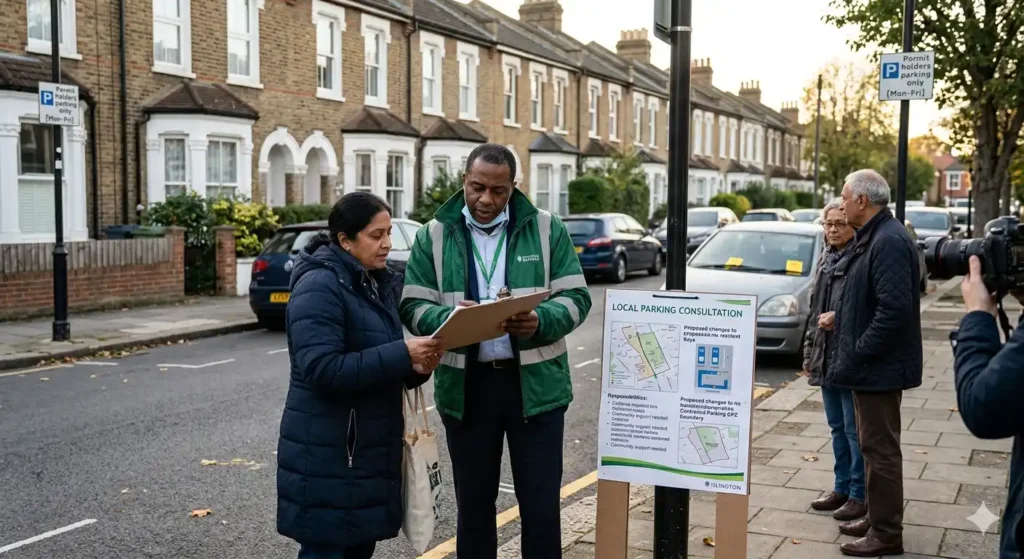
- Organising formal consultations and Traffic Regulation Orders (TROs) when changes are legally required.
Residents can usually contact the team via the council’s website contact form, specifying “parking controls on my road” or “new parking restrictions” in the subject line.
Information or documents needed
To submit a strong, realistic request for new parking controls, local residents should gather or prepare the following:
- A clear description of the problem, including times of day and any safety concerns.
- The full name and postcode of the street, and which section you are concerned about (e.g., “between junctions with X Road and Y Road”).
- A short list of suggested changes (such as “yellow lines at junctions”, “residents’ bays outside numbered addresses 10–20”).
- Evidence of support from neighbours, such as a signed petition or a list of addresses and names.
- Simple photos of current parking conditions, if available, to show blocked driveways or unsafe arrangements.
Most councils do not require formal legal documents from residents at this stage; they use the information you provide to decide whether a formal traffic survey or consultation is needed.
Expected response time from the council
Once you submit a request, the time it takes for a North London council to respond can vary. Many boroughs aim to acknowledge receipt within a few working days, and some offer an online tracker or case‑reference number. A full assessment and any proposed changes may take several weeks or months, especially if the council needs to carry out traffic surveys, public consultations or formal Traffic Regulation Orders.
During this time, officers may:
- Survey parking volumes and times on the road and nearby streets.
- Assess how changes might displace parking elsewhere.
- Check compliance with UK traffic‑regulation rules and guidance.
If the council decides not to introduce new controls, it should explain why, often citing low demand, safety concerns, or the risk of shifting the problem to another street.
What to do if follow‑up is required
If you do not receive a clear response within a few weeks, or if the council resists the suggestion, residents can take several constructive steps:
- Ask for a written update via the council’s contact form, quoting any reference number.
- Request a meeting with your local councillor or ward committee to discuss the issue in person.
- Circulate a short questionnaire among neighbours to quantify how many households support the change, and present the results back to the council.
- If a formal consultation is launched, urge neighbours to respond within the deadline, as strong local support can tip the balance in favour of new controls.
In some cases, residents have also found it helpful to collate photographs and short written statements about specific incidents (for example, blocked driveways or near‑misses) to show that the problem is ongoing and not just seasonal.
Rights and responsibilities under UK rules
Residents in North London have the right to ask their local council to review parking arrangements on their road, but councils must balance this with the needs of visitors, businesses and wider traffic flow. Proposals are usually governed by the Road Traffic Regulation Act 1984 and related traffic‑order guidance, which set out how parking controls and Traffic Regulation Orders can be made.
Local councils can:
- Introduce or extend Controlled Parking Zones.
- Add or remove yellow‑line restrictions, residents’ bays and permit‑only bays.
- Run public consultations before making permanent changes.
Residents are expected to:
- Provide clear, factual information about the problem.
- Show reasonable local support (not just a small minority).
- Accept that some changes may be limited or phased, especially if they could move parking pressure to neighbouring roads.
Practical tips to avoid the problem in future
While formal parking controls can help, local residents can also reduce pressure on their road by adopting simple habits:
- Encourage neighbours to park efficiently and avoid leaving cars on the street all day if they have driveways or garages.
- Use car‑sharing or public transport for regular commutes where possible, freeing up road space for residents at quieter times.
- If your road is near a busy area, consider asking the council about short‑term “peak‑time” restrictions that only apply during rush hours.
- Keep records of any serious incidents, such as blocked driveways or emergency‑vehicle access problems, so you can back up future requests.
Over time, a combination of clear signage, sensible local habits and well‑targeted parking controls can make North London streets feel safer, fairer and easier to use for residents in Brent, Barnet, Enfield, Camden, Haringey and Islington.
How do I deal with inconsiderate parking on my road?
Gather evidence (photos, dates, times), speak to neighbours, and report persistent issues to your local council to build a case for formal parking controls.