Key Points
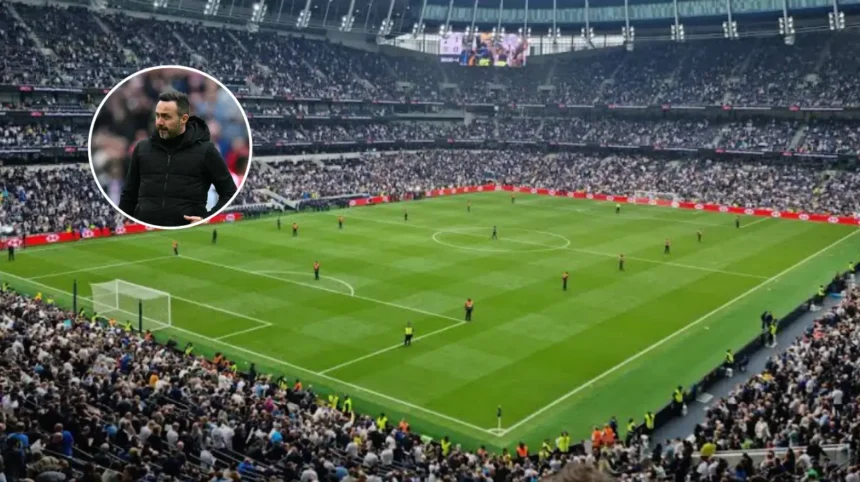
- Roberto De Zerbi has suffered a difficult start to life as Tottenham Hotspur head coach, with a first‑match defeat and a squad injury crisis.
- Ghanaian winger Mohammed Kudus, a player De Zerbi had hoped to base his attacking plans around, has suffered a setback in his quad‑injury recovery and may now need surgery, ruling him out for the rest of the season.
- Tottenham entered De Zerbi’s tenure already in the Premier League relegation zone and have yet to secure a league win under his management.
- Fan discontent over De Zerbi’s appointment has grown, with official supporter groups questioning the club’s values and the risks attached to a long‑term deal with the Italian.
- Several football‑media outlets have highlighted the scale of the short‑term and long‑term problems De Zerbi faces at Spurs, including squad limitations, a fragile dressing room culture and off‑field controversies tied to his past recruitment decisions.
Tottenham Hotspur’s (North London News) April 14, 2026 as reported by Sports Yahoo and fellow football outlets covering his Premier League debut and the club’s medical bulletins. The 46‑year‑old Italian, who arrived at the Tottenham Hotspur Stadium during the international break following the sacking of Igor Tudor, has inherited a side already in the Premier League relegation zone and has yet to reverse their slide on the pitch.
- Key Points
- How bad is Tottenham’s injury crisis‑wise as De Zerbi starts?
- What did De Zerbi’s opening match tell us about Spurs’ state?
- Why are Tottenham fans worried about De Zerbi’s appointment?
- How did the club’s recent managerial chaos set the stage for De Zerbi?
- What do commentators say about De Zerbi’s wider impact on Spurs’ culture?
- Background of this development
- Prediction: How could this development affect Tottenham and its audience?
As Sports Yahoo noted, De Zerbi’s first match in the dugout ended in defeat, leaving Spurs still in the bottom three and tightening the pressure on a new manager who had been brought in on the promise of “instant impact”. The report underlined that De Zerbi now has only six league games to change Tottenham’s trajectory, with each fixture carrying higher stakes as the club seeks to avoid its first relegation battle in over a decade.
How bad is Tottenham’s injury crisis‑wise as De Zerbi starts?
A central blow came via the loss of Mohammed Kudus, the £55 million Ghana star who had been viewed as a key attacking weapon under De Zerbi’s preferred attacking system.
Tottenham’s official website confirmed on 9 April 2026 that Kudus had suffered a setback in his return from a long‑term quad injury originally sustained during the 1–1 draw with Sunderland in January.
The club’s statement, published by Tottenham Hotspur on 9 April, explained that Kudus had briefly returned to team training but would now require further specialist review and “potentially, surgery”, leaving him sidelined for the remainder of the campaign.
That leaves De Zerbi without a player who had contributed two Premier League goals and five assists in 19 appearances this season, according to Supersport and other outlets tracking his stats.
What did De Zerbi’s opening match tell us about Spurs’ state?
De Zerbi’s first competitive outing, a away fixture at Sunderland, ended in a loss that exposed familiar weaknesses in Tottenham’s structure. Match‑analysis coverage by Sports Illustrated on 12 April showed that Spurs offered moments of attacking threat but struggled to sustain pressure, finishing with 0.91 expected goals compared with Sunderland’s 1.79 despite firing 11 shots and landing seven on target.
The report highlighted that De Zerbi’s approach without the ball appeared cautious, allowing Sunderland spells of sustained possession and disrupting the rhythm Spurs needed to pull clear of the relegation battle. Selections and player‑profiling choices, particularly around full‑back roles and the use of players such as Destiny Udogie, were singled out as questions for the new coach, suggesting that squad limitations and tactical adjustment are already weighing on his early decisions.
Why are Tottenham fans worried about De Zerbi’s appointment?
Even before matchday matters escalated, significant sections of the Tottenham support base had expressed unease about the club’s decision to appoint De Zerbi. BBC Sport reported in late March that opposition to the Italian’s appointment was growing among official fan groups, primarily due to his previous association with controversial signings such as Mason Greenwood at Olympique Marseille.
Tristan Foot, secretary of one of the main supporters’ trusts, told BBC Sport that the group had held an emergency meeting and written to the club’s chief executive to raise concerns about whether De Zerbi’s track record aligned with Tottenham’s stated values.
Similar concerns were echoed in opinion pieces by Football365 and Goal, which described De Zerbi as a “volatile” figure with a history of short‑lived tenures and high‑profile falling‑outs at previous clubs.
How did the club’s recent managerial chaos set the stage for De Zerbi?
De Zerbi walks into an environment already marked by instability. Thomas Frank, who had been widely tipped as a more stable long‑term option, was dismissed in February despite a body of work that had drawn positive commentary from pundits. Igor Tudor, hired on the recommendation of former sporting director Fabio Paratici, lasted only five league matches before being sacked, deepening the sense of managerial experimentation rather than a clear plan.
Writing for Football365, one journalist argued that tying De Zerbi to a five‑year deal despite his short spell at Marseille and his tendency to “blow up” within two years at previous clubs represents a high‑risk strategy for a club already in a turbulent phase.
The same piece noted that expectations of long‑term stability at the Tottenham Hotspur Stadium now appear “laughable” given the club’s recent carousel of coaches and the likelihood of renewed pressure if survival is not secured quickly.
What do commentators say about De Zerbi’s wider impact on Spurs’ culture?
Off‑pitch concerns have also entered the debate. Commentary from Football365 and Goal has highlighted that De Zerbi’s past recruitment choices, including Greenwood and Elye Wahi at Marseille, have raised questions about how his style and values might sit with a fanbase that has often pushed for a more socially conscious approach from the club.
The Football365 feature warned that Tottenham’s leadership may not fully appreciate the “biggest problem” about hiring De Zerbi – that his combative personality and controversial player acquisitions could further alienate supporters already frustrated by recent decisions and perceived mismanagement.
Another opinion piece on Goal described the move as a “self‑destructive” gamble, suggesting that De Zerbi is the wrong man to lead a relegation fight and a betrayal of the club’s long‑term sporting identity.
Background of this development
The appointment of Roberto De Zerbi came amid one of the most precarious periods in Tottenham’s recent history. Spurs had already slipped into the Premier League relegation zone by the time the club parted ways with Tudor, and results against Sunderland and other mid‑table sides showed a fragile, inconsistent side lacking the sharpness required to climb clear.
Mohammed Kudus’ initial injury in January had already weakened Tottenham’s attacking options, and early‑season reports from outlets such as Supersport and BBC Sport indicated that he was expected to return after the March international break.
The club’s official update on 9 April 2026 changed that narrative, confirming that Kudus’ quad problem had flared again, forcing a fresh review and raising the prospect of surgery that would rule him out for the rest of the season.
Against that backdrop, De Zerbi’s first week combined a sobering on‑pitch reality with mounting off‑pitch scrutiny, as supporters and analysts alike questioned whether the club’s decision‑making aligned with the level of crisis facing the team.
Prediction: How could this development affect Tottenham and its audience?
For Tottenham supporters, the combination of De Zerbi’s difficult start, Kudus’ long‑term absence and the wider controversy around the manager’s appointment is likely to translate into heightened scrutiny of every result and every transfer decision.
If the club narrowly avoids relegation, the five‑year contract De Zerbi carries may be used by the club to argue for patience and continuity, even as fan‑group leaders and media commentators continue to question the cultural fit and risk profile of his tenure.
If Tottenham fails to stay up, the appointment could be framed retrospectively as a high‑cost misstep that deepened instability rather than resolving it, with further pressure falling on the ownership and executive layer for the choice of coach and the handling of Kudus’ injury and recruitment. For neutral Premier League observers and rival clubs, the situation offers a cautionary case study in how even big‑name managerial hires can founder when layered onto a squad weakened by injuries, inconsistent form and a fractured fan–club relationship.