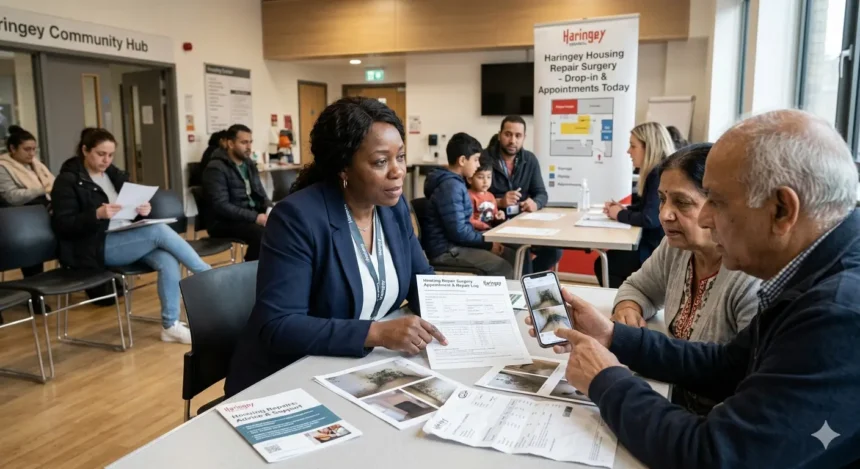
Haringey housing repair surgeries are in‑person or hybrid support sessions run by Haringey Council and local housing partners where council and social‑housing tenants in North London can raise repair issues, check progress, and access advice on repairs, disrepair claims, and housing rights. These surgeries typically follow a standard application‑style process: you must first identify the right surgery, then register or book an appointment, attend with evidence of your repair problems, and follow up with the council or housing association after the session.
- What is a Haringey housing repair surgery?
- What types of repair issues can be handled at a Haringey housing repair surgery?
- What should you bring to a Haringey housing repair surgery?
- How do you find a Haringey housing repair surgery in North London?
- How do you apply or register for a Haringey housing repair surgery?
- What if there is no repair surgery listed for your area in North London?
- How do you report a repair before attending a Haringey housing repair surgery?
- What happens during a Haringey housing repair surgery once you attend?
- How do you follow up after a Haringey housing repair surgery?
- What are your rights if Haringey delays or refuses to carry out repairs?
- How can community housing projects and MPs support Haringey repair applications?
What is a Haringey housing repair surgery?
A Haringey housing repair surgery is a scheduled advice‑giving session hosted by Haringey Council officers, housing associations, or community organisations to help residents with council‑tenanted or social‑housing properties understand and accelerate repairs. The term “surgery” here follows the UK‑local‑government usage, meaning a drop‑in or appointment‑based meeting where residents can ask questions, raise complaints, and receive guidance, rather than a medical procedure.
These sessions usually focus on:
- How to report emergency, urgent, and priority repairs to Haringey Council or a housing association.
- How to chase delayed repairs, escalate complaints, or start a formal housing‑ombudsman complaint.
- How to document evidence of housing disrepair (leaks, damp, mould, heating failures, pest infestations, etc.) and, where relevant, how to pursue a compensation claim.
Because the borough manages about 20,000 council homes and leasehold properties, repair surgeries operate as part‑of‑a‑wider “responsive repairs” policy introduced in 2024–2025 to tackle long‑standing backlogs and improve turnaround times.
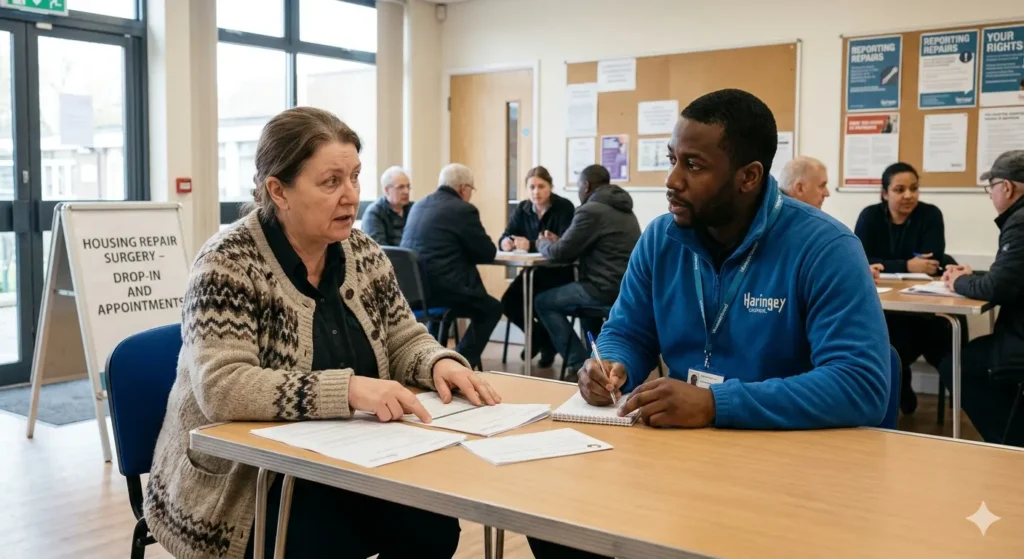
What types of repair issues can be handled at a Haringey housing repair surgery?
A Haringey housing repair surgery can help with most repair and maintenance issues that fall under the council’s or housing association’s statutory responsibilities for a tenanted or leasehold property. Staff and advisers at the surgery can explain whether a problem is the landlord’s duty, how to classify it (emergency, urgent, or priority), and what steps to take next.
Common repair categories covered include:
- Emergency repairs: burst pipes, flooding, gas leaks, no heating in cold weather, serious structural damage, or loss of electrical supply.
- Urgent repairs: partial boiler failure, broken extractor fan, minor but actively worsening leaks, or issues that risk loss of a basic service such as hot water.
- Priority and routine repairs: crumbling plasterwork, persistent damp and mould, window or door faults, blocked drains, and minor structural defects.
The surgery may also address repair‑related disputes, such as disagreements over responsibility for internal fittings, service‑charge bills, or dissatisfaction with previous repair work.
What should you bring to a Haringey housing repair surgery?
To make the most of a Haringey housing repair surgery, you must bring clear, factual evidence of the repair problem and your previous attempts to get it fixed. Advisers use this information to show you exactly how to escalate, escalate correctly, or, if necessary, start a formal complaint or compensation route.
Typical documents and evidence to bring include:
- Tenancy agreement, lease, or council‑housing offer letter (to confirm your status and who is legally responsible for repairs).
- Copies of previous repair reports, emails, text messages, or letters to Haringey Council or your housing association, including repair‑reference numbers and dates.
- Photos and videos of the repair issue (e.g., damp patches, mould, leaking pipes, damaged windows, cracked render, or evidence of pests), ideally dated with a timestamp.
You may also bring:
- Notes of when you first reported the problem, what was promised, and how long work actually took, because ombudsman‑style guidance expects tenants to record these details.
- Any medical or social‑care letters if the housing condition is affecting health, as this can help reclassify your case as “vulnerable” and trigger a faster response.
How do you find a Haringey housing repair surgery in North London?
Haringey housing repair surgeries are advertised through Haringey Council services, local MP‑surgery pages, and community‑housing organisations working in North London. Different surgeries target different audiences (council tenants, housing‑association tenants, leaseholders, or people with specific vulnerabilities), so you must check the description and eligibility criteria on each event page.
Common places to find upcoming repair‑surgery dates are:
- Haringey Council’s housing and repairs pages, which list outreach events, surgeries, and “housing advice” sessions.
- Local MPs’ websites and newsletters (for example, David Lammy’s office lists Haringey‑specific housing advice lines and face‑to‑face sessions).
- Community projects and charities (e.g., Rise Projects, other local housing‑advocacy groups) that co‑host or advertise housing‑repair surgeries with Haringey Council.
If you cannot find a listed repair surgery, you can usually request a housing‑advice appointment through the council’s housing advice line or online form and then ask specifically to book a “repair‑focused” session.
How do you apply or register for a Haringey housing repair surgery?
Applying for a Haringey housing repair surgery means registering your attendance with the host organisation (often Haringey Council, a local MP’s office, or a community housing project) through a sign‑up form, phone call, or email. There is usually no formal “application” like a council‑housing bid; instead, you must secure a slot by providing your name, contact details, and a brief outline of your repair issue.
The registration process typically follows these steps:
- Identify the upcoming repair‑surgery event (date, time, location, or online‑meeting link) from council or community‑organisation notices.
- Complete the booking form or call the housing‑advice number given in the event details, selecting that you want to attend a housing‑repair or housing‑disrepair surgery.
- Answer basic questions such as: your address, tenancy status (council, housing association, leaseholder), the type of repair, and whether you consider yourself vulnerable (e.g., due to health, disability, or caring responsibilities).
Once you receive a confirmation (email, text, or letter), you should treat that confirmation as your “application” being accepted and keep it with your repair evidence when you attend.
What if there is no repair surgery listed for your area in North London?
If no Haringey‑organised housing repair surgery appears for your specific North London street or estate, you can still access equivalent support through the council’s standard housing‑advice and repairs channels. The council’s housing‑advice team can schedule a dedicated phone or in‑person appointment that functions similarly to a surgery, even if it is not branded as such.
Alternative routes include:
- Calling the Haringey housing‑advice line or using the online self‑referral form to request a housing‑repairs appointment.
- Contacting your local MP’s office and asking for a housing‑surgery slot or a referral to Haringey’s housing‑advice team.
- Attending a general housing‑rights or “housing options” event where advisers can guide you on how to report and escalate repairs even if the event title does not mention “repair surgery”.
These options are especially important for residents in areas with high‑repairs demand, such as parts of Tottenham, Crouch End, Wood Green, and Muswell Hill, where Haringey has historically run large‑scale repair‑overhaul programmes.
How do you report a repair before attending a Haringey housing repair surgery?
Before attending a Haringey housing repair surgery, tenants must already have reported the repair issue to Haringey Council or their housing association using the official channels. Doing this beforehand ensures that advisers at the surgery can see your repair history, reference numbers, and any existing appointments, and advise you on how to escalate, re‑book, or complain.
The current reporting routes are:
- Online: through Haringey Council’s housing and repairs portal, where you can log in with your tenancy account, select the property, and choose the repair type (emergency, urgent, priority, or routine).
- Phone: by calling the council’s housing or repairs line during advertised hours (typically weekdays 8:00–18:00, with an out‑of‑hours emergency number).
- Email: by sending a detailed description, photos, and your tenancy details to the designated repairs email address (for example, repairs@homesforharingey.org, as noted in some local guidance).
Each repair request should include:
- Your council housing account or tenancy reference.
- A clear description of the problem (including where it is in the property and when it started).
- Evidence such as photos, dates when you first noticed the issue, and any previous repair appointments or cancelled visits.
You should keep a copy of every report or response, because these records are what you will show at the repair surgery.
What happens during a Haringey housing repair surgery once you attend?
During a Haringey housing repair surgery, Haringey Council officers, housing‑association staff, or community advisers will review your repair case, explain options, and help you choose the next step. They do not usually carry out the physical repair on the spot but focus on information, triage, and escalation rather than on‑site work.
Typical activities include:
- Clarifying whether the repair is an emergency, urgent, or priority job under Haringey’s responsive‑repairs policy, and checking that it has been logged correctly in the system.
- Advising you on how to escalate a delayed repair, including how to use the council’s formal complaints process and when to consider contacting the Housing Ombudsman.
- Explaining your rights on housing disrepair, including when you may be eligible for compensation if the council or housing association has failed to act within reasonable timescales.
If you are classed as vulnerable (for example, because of age, disability, or long‑term illness), staff may arrange for an “enhanced” repairs service or more frequent follow‑ups, as set out in the updated 2024–2025 repairs policy.
How do you follow up after a Haringey housing repair surgery?
Following up after a Haringey housing repair surgery means tracking the agreed‑next‑step with written confirmation and, if necessary, escalating to formal complaints or external bodies. Residents should not treat the surgery as a one‑off event but as the start of a structured escalation path if the repair is still delayed.
Recommended follow‑up actions are:
- Ask for a written summary or note of what was agreed at the surgery (date, officer or adviser name, repair reference, and any new appointment or deadline).
- Contact Haringey Council or your housing association by phone or email to confirm that the repair has been re‑booked or escalated, referencing the surgery date and any new instruction given.
- If the repair is not completed within the agreed timeframe (for example, within 24 hours for an emergency, seven days for urgent, or 28 days for priority), submit a formal complaint using the council’s or housing‑association complaints procedure.
If the repair remains unresolved after the complaint, you may then consider contacting the Housing Ombudsman or a specialist housing‑disrepair solicitor, both of which are referenced in Haringey‑specific guidance and case‑law summaries.
What are your rights if Haringey delays or refuses to carry out repairs?
Haringey Council and registered‑social‑landlord housing associations have statutory and contractual obligations to keep council and social‑housing properties in good repair. If Haringey delays or refuses to act on a repair it is legally responsible for, residents in North London can rely on tenancy‑law principles, ombudsman‑level guidance, and, in some cases, a right‑to‑repair compensation scheme.
Key rights and tools include:
- The right to live in a property that is safe, watertight, warm, and free from serious damp or mould, with functioning heating, water, electricity, and basic sanitation.
- The right to complain through the council’s or housing‑association complaints process and, if the response is unsatisfactory, to escalate to the Housing Ombudsman, which can order compensation for maladministration or service failure.
- The right to seek compensation for housing disrepair if the landlord has failed to act within reasonable timeframes, usually within six years of first notifying the landlord of the condition, and sometimes longer in specific legal contexts.
Residents who attend a housing‑repair surgery are usually given clear signposting to these routes, so they know exactly when and how to move from advice to formal complaint or legal action.
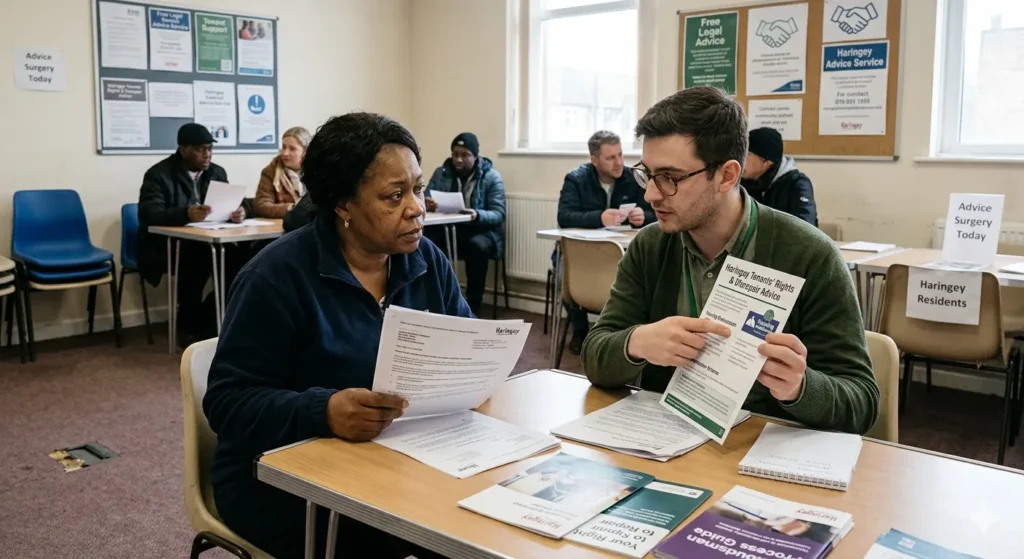
How can community housing projects and MPs support Haringey repair applications?
Community housing projects and local MPs in North London often co‑host or advertise Haringey housing repair surgeries and can provide additional support before and after the session. Their role is mainly advisory and advocacy‑focused, not repair‑contracting, but they significantly increase residents’ chances of getting repairs logged correctly and acted on.
Typical support mechanisms include:
- Helping residents fill in repair‑report forms, complaints forms, or ombudsman‑referral templates with clear, factual wording that meets council‑policy standards.
- Writing letters of support or representations to Haringey Council on behalf of tenants, especially in cases involving vulnerability, health‑related impacts, or long‑running repair disputes.
- Organising or publicising multiple housing‑repair surgeries across different wards (Tottenham, Crouch End, Wood Green, etc.) to improve access for residents who face language barriers, transport difficulties, or digital‑access issues.
By combining these advocacy routes with the formal Haringey repair‑surgery process, residents in North London can create a more robust and visible demand for timely housing repairs.
How do I apply for a housing repair surgery in Haringey?
Book an appointment through the Haringey Council website, contact the housing repairs team, or ask your housing officer. You’ll need your tenancy details and information about the repair issue.