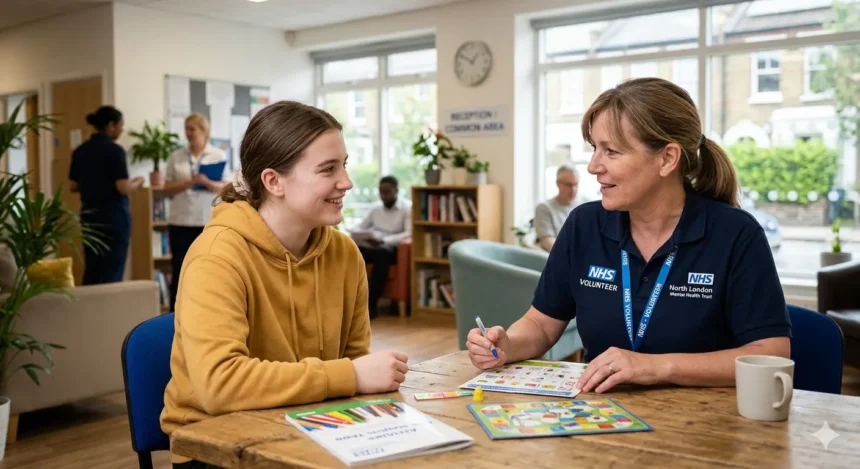
Volunteering for North London NHS mental health services means joining a structured programme run by local NHS mental health trusts that support people across Barnet, Camden, Enfield, Haringey, and Islington. These roles are non‑clinical, supervised, and require background checks and training because they involve close contact with adults and young people who access NHS mental health care. Volunteering can include befriending service users, helping with activities, supporting ward or community environments, and assisting in administrative or outreach roles tied to mental‑health‑focused NHS teams.
- What does “volunteering for North London NHS mental health” mean?
- Which NHS organisations in North London run mental health volunteering?
- What types of volunteer roles are available in North London NHS mental health?
- Who can volunteer for North London NHS mental health services?
- How do you apply to volunteer with North London NHS mental health?
- What are the legal and safeguarding requirements for NHS mental health volunteers in North London?
- What impact does volunteering have on mental health service users and volunteers?
- How can you stay involved long‑term with North London NHS mental health after volunteering?
This guide explains how to find, apply for, and stay involved in volunteering linked to North London NHS mental health services, including legal and practical requirements, typical role types, and how involvement affects careers and community impact.
What does “volunteering for North London NHS mental health” mean?
Volunteering for North London NHS mental health means giving unpaid time to mental‑health‑focused NHS teams in Barnet, Camden, Enfield, Haringey, and Islington, most often through trusts such as North London NHS Foundation Trust, to support patients, families, and staff in non‑clinical ways.
In the UK, volunteering means unpaid work that benefits an organisation and its users, distinct from employment or placements that are part of formal training courses. NHS‑linked volunteering is usually hosted by a specific NHS trust or hospital, with clear role descriptions, line managers, and policies. In North London, the main provider of adult mental health services is North London NHS Foundation Trust (NLFT), which covers the five boroughs listed above and runs wards, community teams, and specialist services.
Volunteering in mental health focuses on improving wellbeing, reducing isolation, and supporting recovery, rather than clinical treatment. Volunteers may sit alongside clinical staff, but they do not perform clinical tasks such as medication administration, diagnosis, or formal therapy. Roles are designed to complement NHS staff work, increase social contact for service users, and help NHS services run more smoothly.
Which NHS organisations in North London run mental health volunteering?
In North London, key organisations offering mental health volunteering are North London NHS Foundation Trust and affiliated hospitals such as St Charles Hospital, which hosts ward‑based mental‑health volunteer roles for adults in the CNWL / VtC programme.
North London NHS Foundation Trust (NLFT) is the main mental health trust for the area, delivering services across Barnet, Camden, Enfield, Haringey, and Islington. It operates inpatient wards, community mental health teams, specialist services for children and young people, and crisis and home‑treatment services. NLFT runs its own volunteering programme with roles that support patients, carers, and staff, and it advertises these via its job pages and “Get involved” section.
Other NHS structures in and around North London also offer mental health volunteering, sometimes overlapping geographically. For example, St Charles Hospital in North West London runs a Mental Health Ward Volunteer role as part of the Central and North West London NHS Foundation Trust (CNWL) Volunteer to Care (VtC) programme. These roles are similar in principle to NLFT roles: non‑clinical, supervised, and requiring checks and training.
What types of volunteer roles are available in North London NHS mental health?
Common volunteer roles in North London NHS mental health include befriending or companion‑style work, ward support, activity assistance, peer support representation, and administrative or community‑outreach roles that help run services and projects.
- Befriending and companion roles
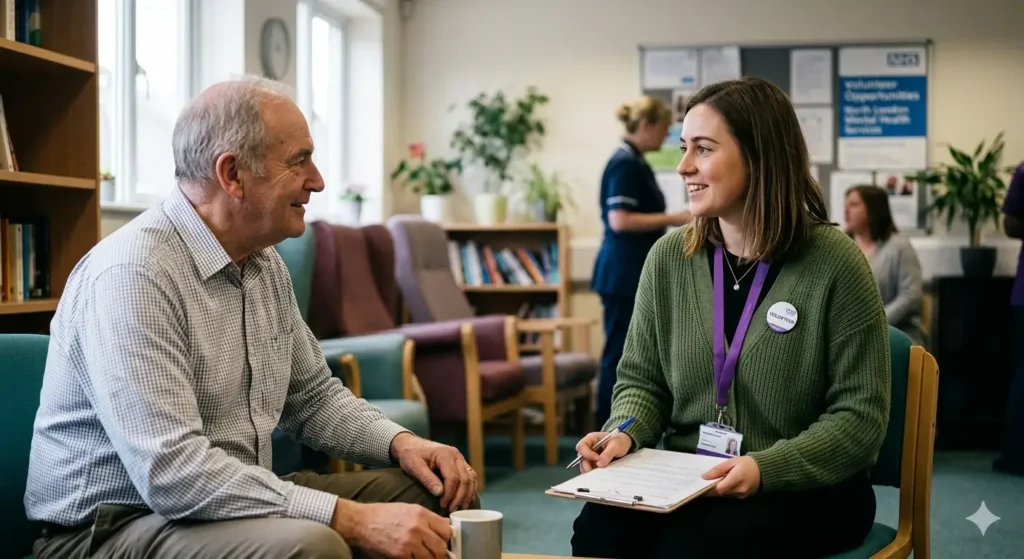
These roles involve spending time with individual service users, often one‑to‑one, to reduce loneliness and support recovery. Volunteers may accompany people to appointments, go for walks or coffee, help with hobbies, or provide steady, non‑judgmental company. Programmes such as the Community Befriending Volunteer role at South London and Maudsley ask for a commitment of at least two hours per week for several months. - Ward and community activity support
Ward‑based volunteers help staff organise and run activities on adult mental health wards, such as board games, crafts, or group outings. They may help prepare spaces, tidy rooms, distribute materials, and encourage participation while staff oversee clinical safety. Community volunteers might support group activities in community mental health centres, supporting sessions that promote skill‑building, exercise, or social connection. - Peer support and representation roles
Peer‑support‑style roles involve working under the heading of “service user” or “expert by experience,” where people who have used mental health services help shape policies or projects. Examples include joining involvement registers, service user steering groups, or membership panels that advise on service design and feedback mechanisms. These roles are still formal volunteering or “expert by experience” positions, not paid employment, and are open to those who meet eligibility criteria. - Administrative and outreach roles
These roles focus on office‑based or public‑facing support, such as helping with phone calls, event organisation, communications, or outreach stalls at community events. Volunteers may assist with local health campaigns, surveys, or information‑sharing projects that aim to raise awareness of mental health services. These roles are useful for people who want impact in mental health but may prefer less direct clinical‑setting contact.
Research shows that structured volunteering in mental health improves both service‑user experience and volunteer wellbeing, so organisations design roles to balance benefit and safety. Typical commonalities include non‑clinical boundaries, supervision, and defined weekly time commitments.
Who can volunteer for North London NHS mental health services?
Volunteers for North London NHS mental health services are usually aged 16 or over, residents of Greater London, and must undergo background checks, training, and reference procedures; some programmes prioritise residents of Barnet, Camden, Enfield, Haringey, and Islington or existing or former service users.
Most NHS mental health trusts in London set a minimum age of 16 for volunteering, because of safeguarding and legal requirements around working with vulnerable adults. Some ward‑based roles, such as those at St Charles Hospital, specify age 18 or over due to higher‑risk environments and more intensive checks. Volunteers must be willing to commit regular hours over several months, often at least three hours per week for nine months or six months, depending on the trust.
Residency and priority criteria vary slightly by trust. North London NHS Foundation Trust states it accepts applications from people living within Greater London, giving priority to those in Barnet, Camden, Enfield, Haringey, and Islington, and to existing or former service users (excluding those who are currently inpatients). Other trusts may give preference to local borough residents or those with lived experience of mental health services, but still accept applications from other London and UK residents.
Volunteers must also meet safeguarding and health standards. This usually includes a Disclosure and Barring Service (DBS) check, submission of two references, and completion of an Occupational Health or health‑disclosure form to ensure they can safely work with vulnerable adults. Training requirements can include basic NHS e‑learning modules, infection‑control training, and specific safety courses such as Breakaway training for ward‑based roles.
How do you apply to volunteer with North London NHS mental health?
To apply, identify the relevant NHS trust or hospital (such as North London NHS Foundation Trust or St Charles Hospital), search its “Volunteering” or “Careers – Volunteers” page, complete an online application form specifying the role, and submit it along with references and any required documents, then wait for an interview and screening.
Step 1: Identify the organisation and role
Start by confirming which trust serves your area: for Barnet, Camden, Enfield, Haringey, and Islington, this is North London NHS Foundation Trust (NLFT). NLFT lists volunteering opportunities on its “Volunteering” and “Get involved” pages, sometimes grouped by borough or service type. For St Charles Hospital‑based roles, the Central and North West London NHS Foundation Trust (CNWL) recruitment or volunteering pages are the correct starting point.
Step 2: Check role requirements and eligibility
Read each role description carefully for minimum age, time commitment, location, and any specific requirements such as DBS checks or training. For example, the St Charles Mental Health Ward Volunteer role asks for a minimum of six months’ commitment and completion of enhanced DBS checks. Some NLFT roles may prioritise service users or residents of certain boroughs, so note if you are eligible under those criteria.
Step 3: Complete the application form
Applications are usually submitted online via the trust’s job portal, where you tick a “Volunteers” box or filter by category. Forms ask for personal details, contact information, preferred location, and relevant experience or reasons for volunteering. You may need to upload or share contact details for two referees, who will be asked to confirm your suitability for working with vulnerable adults.
Step 4: Attend interview and screening
If your application meets criteria, you are invited to an informal interview or discussion with the volunteering coordinator or ward manager. This confirms your motivation, availability, and whether the role fits your skills and boundaries. After selection, you move into the safeguarding pipeline: DBS check, references validation, Occupational Health disclosure, and mandatory training.
Step 5: Start training and placement
Once checks clear, you attend an induction that covers trust policies, confidentiality, equality and diversity, and specific safety procedures. Ward‑based volunteers may also receive Breakaway or de‑escalation training tailored to mental health settings. You then begin regular shifts, reporting to a named volunteer coordinator or ward staff member, and receive ongoing supervision.
Some trusts also offer support for applicants who need help completing forms, such as translation or extra‑time arrangements, and may handle this via email or a dedicated volunteering contact.
What are the legal and safeguarding requirements for NHS mental health volunteers in North London?
Volunteers for North London NHS mental health services must pass a Disclosure and Barring Service (DBS) check, provide two references, complete an Occupational Health or health disclosure, and finish mandatory NHS training modules to ensure they can safely work with vulnerable adults and children.
The DBS check is a criminal‑record‑type check that confirms whether a person has any cautions or convictions that would make them unsuitable to work with vulnerable adults or children. For most NHS mental health roles, an enhanced DBS check is required, which includes access to more detailed police information where relevant. The check is free for NHS volunteers and organised through the trust’s HR or volunteering team.
The two‑reference requirement helps verify a volunteer’s reliability, behaviour, and suitability for a sensitive environment. References can come from previous employers, teachers, or community‑group leaders, depending on the volunteer’s background. References are contacted by the trust and asked to confirm that the applicant is trustworthy and can be placed in a mental health setting.
Occupational Health or health disclosure is used to flag any medical conditions that could affect a volunteer’s ability to perform the role safely or that might need reasonable adjustments. For example, volunteers with certain physical or mental‑health conditions may need modified duties or adjusted schedules, which the trust can plan in advance. Occupational Health teams may also check immunisation status where relevant, such as for infections that can spread in hospital wards.
Mandatory training usually includes e‑learning modules on topics such as safeguarding adults, equality and diversity, information governance, and fire safety. Some trusts add in‑person safety courses, such as Breakaway training, which teaches personal‑safety techniques and de‑escalation methods for situations where someone is distressed or aggressive. These trainings are requirements before independent volunteering; they are not optional.
What impact does volunteering have on mental health service users and volunteers?
Volunteering in North London NHS mental health services improves service‑user wellbeing by reducing loneliness, encouraging social engagement, and supporting recovery, while volunteers gain skills, confidence, and understanding of mental health systems.
For service users, regular contact with a consistent volunteer can reduce feelings of isolation and stigma. Befriending or companion‑type roles create structured, low‑pressure opportunities to spend time outside clinical settings, attend appointments, or join activities, which can indirectly support treatment goals. Qualitative feedback from NHS volunteering programmes shows that patients value the extra time, attention, and sense of being “seen” that volunteers provide.
For volunteers, the experience builds transferable skills such as communication, empathy, teamwork, and problem‑solving. Many volunteers use NHS mental health roles as stepping stones to careers in psychology, social work, nursing, or counsellor‑training pathways. NHS‑led evaluations of volunteering programmes consistently report increased volunteer confidence, motivation, and understanding of mental health services, which can improve future employment prospects.
On a system level, volunteering helps NHS trusts stretch limited resources without compromising clinical care. Volunteers free up clinical staff to focus on treatment while still providing high‑quality social and emotional support, which aligns with recovery‑oriented mental health models. Because of this, NHS trusts in North London continue to expand and formalise volunteering structures, ensuring they are safe, supervised, and clearly defined.
How can you stay involved long‑term with North London NHS mental health after volunteering?
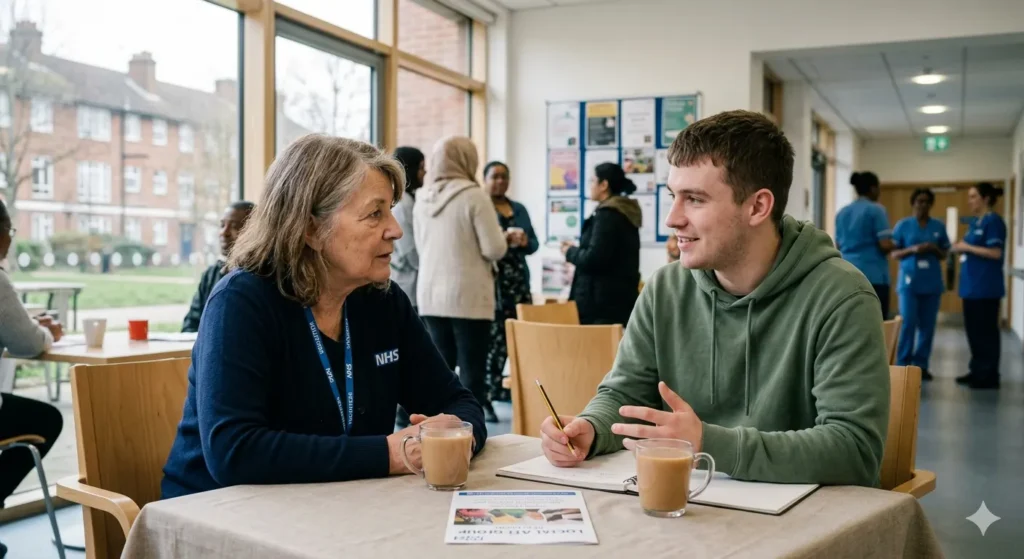
After volunteering, you can stay involved through expert‑by‑experience roles, membership panels, user‑involvement registers, or allied community mental health organisations, which allow ongoing input into service design, policy, and local projects without being a paid employee.
North London NHS Foundation Trust and similar organisations run Involvement Registers and service user / carer groups that recruit former service users and carers to advise on projects, service improvements, and research. These roles are often paid as “consultancy” or “experts by experience” but are still distinct from regular employment and can grow from prior volunteering or patient experience.
Trust membership panels invite members of the public, staff, and service users to review proposals, budgets, and service changes. Membership is open to people living in the five boroughs, London, or England and Wales, and gives a formal platform to influence how mental health services evolve. Some volunteers transition into membership or governance roles because they already understand the trust’s culture and priorities.
Beyond the NHS, many community mental health organisations, charities, and local councils in North London run projects that complement NHS services. These include peer‑support groups, advocacy collectives, and local wellbeing programmes, which often welcome people with NHS volunteering experience as co‑facilitators or project leads. Staying involved through these routes helps sustain a long‑term voice for both service users and volunteers in shaping mental health provision in North London.
Can volunteering help with mental health?
Yes. Volunteering can improve mental health by reducing loneliness, boosting mood, building confidence, and giving a sense of purpose. Supporting others—especially through NHS mental health services—can also help you feel more connected to your community while developing valuable skills.