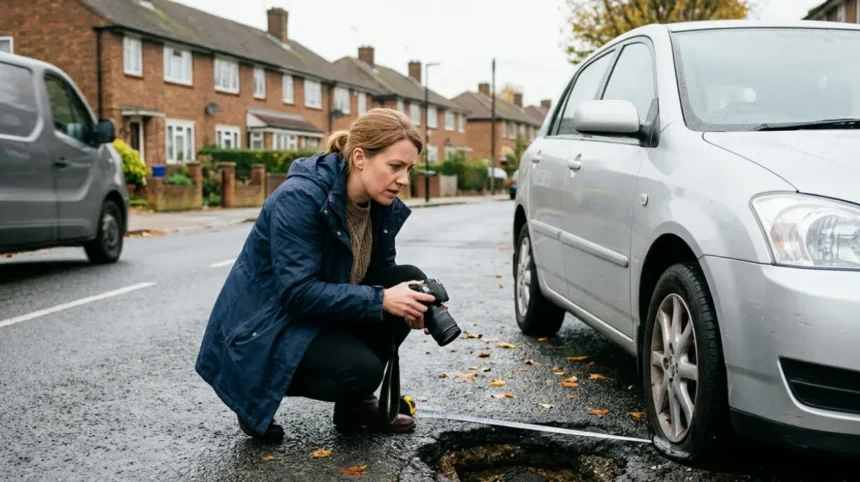
You can claim against a council for pothole damage if a road defect under its control causes injury or property damage and the council is shown to have failed in its duty of maintenance. In England and Wales, local highway authorities have a statutory obligation under the Highways Act 1980 to maintain publicly adopted roads and bridges, and this duty can give rise to a claim for compensation when the failure is directly linked to a specific accident or loss. The focus is not on every pothole, but on whether the defect was dangerous to traffic and whether the council took all reasonable steps to prevent such danger. This applies equally to potholes on busy north London streets and quieter residential routes.
- What legal basis allows claims against councils for potholes?
- Can you claim from a council if a pothole damaged your car?
- What has to be proven to win a pothole‑damage council claim?
- How common are pothole damage claims against councils in the UK?
- What types of pothole damage can lead to a claim?
- How do you formally start a claim against a council for pothole damage?
- What evidence should you gather after pothole damage?
- Can you claim via the Local Government Ombudsman instead of court?
- What statistics and trends show about pothole compensation?
- How do councils decide whether to pay a pothole‑damage claim?
- What happens if the council refuses your pothole‑damage claim?
- What are typical compensation amounts for pothole‑damage claims?
- What impact do successful pothole claims have on councils?
- How can drivers and pedestrians reduce the risk of pothole damage?
- How has pothole‑damage law evolved in the UK?
- What is the long‑term outlook for council liability over potholes?
What legal basis allows claims against councils for potholes?
The main legal basis for a pothole‑damage claim in England and Wales is Section 41 of the Highways Act 1980, which imposes a duty on the highway authority to maintain the highway so that it is passable for ordinary users. Where a defect such as a pothole is shown to be dangerous and to have directly caused injury or property damage, a claimant can bring civil proceedings for damages against the council as the highway authority. The council can defend such a claim by relying on Section 58 of the same Act, which allows it to argue that it took all reasonable care to ensure the road was not dangerous for traffic. This legal framework applies to councils managing roads in north London boroughs such as Barnet, Haringey, and Camden.
Claims most often fall into two categories: personal‑injury claims, where a slip, trip, or fall into a pothole leads to physical harm, and property‑damage claims, where a vehicle’s tyre, wheel, suspension or bodywork is damaged after hitting a pothole. In both cases, the claimant must prove, on the balance of probabilities, that the defect was dangerous and that the council’s failure to repair or inspect it caused the loss. North London residents affected by potholes on busy corridors such as the North Circular or High Road Tottenham typically frame their cases under this framework.
Can you claim from a council if a pothole damaged your car?
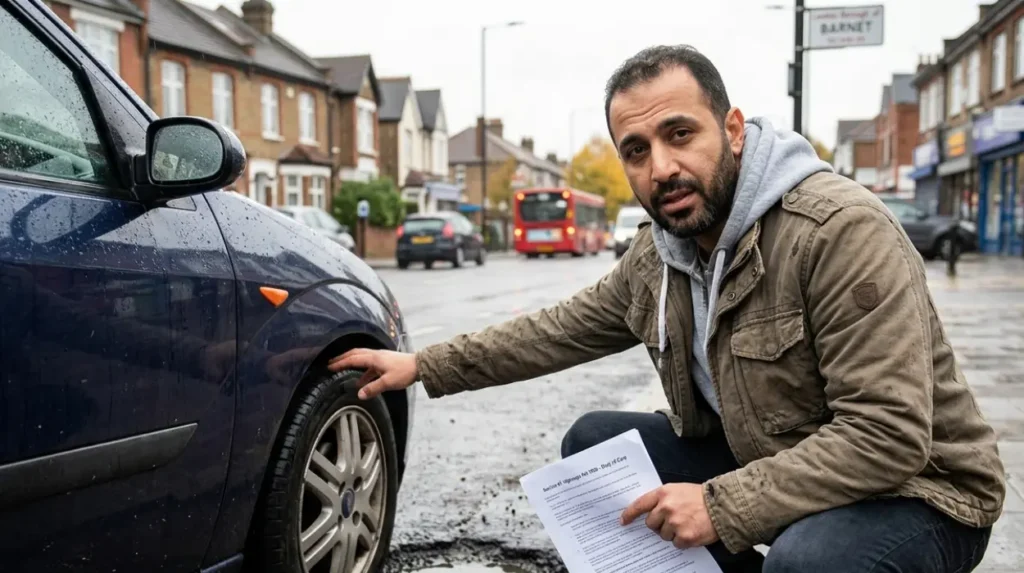
Yes, you can claim from a council if a pothole damaged your car, but there is no automatic right to compensation and success depends on legal arguments, not on simply hitting a hole in the road. The key is to show that the pothole was dangerous for traffic, that the council knew or ought to have known about it, and that they failed to maintain the road in a reasonable timescale. Many councils issue guidance stating that they will only pay out where their negligence can be clearly demonstrated, and set out internal claims procedures for property‑damage incidents. North London local authorities such as Islington, Enfield, and Waltham Forest follow similar principles when assessing pothole‑damage claims.
Evidence plays a central role. Typical evidence includes photos of the pothole, witness statements, MOT or garage reports showing the likely cause of damage, and any prior reports of the defect logged with the council. Courts or insurers may also consider inspection records and maintenance schedules to assess whether the council had taken reasonable steps to keep the road safe. Where the defect is shallow or minor, or where the council can show recent inspections and repairs, claims are more likely to be refused, even on heavily trafficked north London routes.
What has to be proven to win a pothole‑damage council claim?
To win a pothole‑damage council claim, three core elements must be proved: the road was in a dangerous condition, the council failed in its duty to maintain it, and the defect directly caused the injury or property damage. Dangerous does not mean any visible crack; it means a defect that poses an unreasonable risk to an ordinary road user, such as a deep or wide pothole on a frequently used route. The claimant must show that the council knew or should reasonably have known of the defect, and that response times or inspection regimes fell below the standard expected of a competent highway authority. This applies whether the incident occurs in a busy part of north London such as Archway, Finchley Road, or Finsbury Park.
The burden of proof rests with the claimant, but the council can raise a Section 58 defence by demonstrating that it had a proper inspection and repair system and that the pothole was not present or dangerous at the time of the last inspection. Case law has established that councils are not insurers of the highway; they only owe a duty to act reasonably, so even where damage occurs, a claim can fail if the authority’s actions are judged sufficient. As a result, many successful claims involve evidence of repeated reports, long‑standing defects, or unusually severe damage linked clearly to the specific pothole, including on north London arterial roads.
How common are pothole damage claims against councils in the UK?
Pothole damage claims against councils in the UK have risen sharply over recent years, reflecting both deteriorating road conditions and greater public awareness of entitlement to compensation. Research by the RAC motoring organisation shows that compensation claims related to potholes lodged with local authorities across Britain increased by about 90% between 2021 and 2024, with 53,015 claims recorded in 2024 alone. The same data indicates that only around 26% of pothole claims resulted in a payout in 2024, with an average payment of about 390 pounds per successful claim. These figures include cases from north London boroughs such as Barnet, Enfield, and Haringey, where high traffic volumes and older road surfaces contribute to frequent pothole problems.
Other analyses focusing on the largest highway networks in England reinforce this trend. One study of 18 major local authorities found that pothole compensation claims more than doubled between 2022 and 2023, rising from 8,327 to 20,432 claims. Over the same period, councils paid out roughly 15% of all pothole‑related compensation claims, with many rejecting the majority on the grounds that the defect was not sufficiently dangerous or that the council had taken reasonable steps to maintain the road. These figures highlight that while claims are becoming more frequent, winning them remains relatively rare, even in high‑traffic areas such as north London.
What types of pothole damage can lead to a claim?
Pothole‑related claims can arise from several types of harm, including personal injury, vehicle damage, and other property damage such as to bicycles or motorbikes. On pavements, a pedestrian may trip into a sunken or broken section, causing sprains, fractures, or head injuries; on roads, a driver may hit a deep pothole, blowing out a tyre, buckling a wheel, or damaging suspension components. Each type of claim is treated under personal‑injury law or property‑damage law, but the underlying legal framework is the same: the highway authority’s duty under the Highways Act and the Section 58 defence. This applies to accidents on north London streets from Highgate to Wood Green and beyond.
For personal‑injury claims, compensation commonly covers hospital and treatment costs, lost earnings, and ongoing care or rehabilitation needs. For vehicle‑damage claims, compensation usually reflects repair costs, hire‑car expenses, and sometimes depreciation if the incident is linked to a serious or recurring defect. Where the damage is minor, such as a small kerb‑scuff or a superficial wheel dent, insurers or councils may treat this as a normal motoring risk and not admit liability, whereas more severe mechanical or structural damage is more likely to be investigated. In north London, where vehicles often travel at speed on dual‑carriageways, the potential for serious damage is higher.
How do you formally start a claim against a council for pothole damage?
To start a claim against a council for pothole damage, you usually submit a formal compensation claim through the council’s designated insurance or claims department, referencing the specific incident and the road defect involved. Most councils provide online forms or PDF templates for compensation claims due to highway defects and require details such as the date, time, and location of the incident, a description of the damage, and any supporting documents. In some cases, you must first report the pothole or road defect to the council’s highways department and obtain a reference number before lodging a full compensation application. North London residents commonly use the respective borough websites of councils such as Barnet, Hackney, or Islington for this process.
The council will then investigate, often reviewing inspection records, CCTV if available, and any prior reports of the same defect. If the council accepts liability, it may offer a settlement to cover repair costs, medical expenses, and other verifiable losses. If liability is disputed, the claimant may need to escalate the matter to a solicitor and, eventually, to court under the Highways Act framework, particularly where the amount in dispute is significant. Some councils also allow appeals of initial decisions, handled by senior insurance or legal teams rather than frontline customer‑services staff. North London claimants often engage local personal‑injury or highway‑law specialists familiar with the area’s road‑network patterns.
What evidence should you gather after pothole damage?
After pothole damage, you should gather evidence that links the defect directly to the injury or vehicle damage and shows the council’s awareness or reasonable opportunity to act. Key evidence typically includes clear photographs of the pothole from multiple angles, with a ruler or object for scale, photos of the injury or vehicle damage, and written records of the incident such as a police report or accident log. If you have a mechanic’s report or garage invoice, it should explicitly state that the damage is consistent with impact with a pothole rather than general wear or a separate collision. In north London, where some roads are narrow and heavily trafficked, obtaining clear, unambiguous photos can be particularly important.
Additional useful evidence includes any prior reports of the same defect you or neighbours made to the council, emails or case‑reference numbers, and witness statements from passengers or bystanders. For personal‑injury claims, medical records and prescriptions can demonstrate the extent of harm and its impact on work or daily life. The stronger the evidence that the pothole was dangerous and long‑standing, and that the council failed to respond promptly, the more likely the claim is to succeed. Councils dealing with north London roads frequently check their own defect‑report databases to see if a pothole was logged before the incident.
Can you claim via the Local Government Ombudsman instead of court?
You cannot normally use the Local Government and Social Care Ombudsman to secure compensation for pothole damage if you have a clear legal remedy through the courts. The Local Government Ombudsman explains that where a claimant can bring legal proceedings against a council for damages under the Highways Act 1980, it will usually decline to investigate the complaint and instead direct the individual to use the court process. The Ombudsman may only investigate if it would be unreasonable to expect someone to go to court, for example, because of severe disability or financial hardship, but this is the exception rather than the rule.
In practice, the Local Government Ombudsman is more likely to review how a council handled the complaint—for example, whether it responded promptly, applied its internal policy fairly, or communicated clearly—rather than re‑decide the question of liability. If the central issue is whether the council should pay for injury or vehicle damage caused by a pothole, the primary route is through the council’s insurance scheme or via a civil claim, not the Ombudsman. The Ombudsman’s role is complementary: it addresses maladministration, not the monetary outcome of pothole‑damage claims. North London residents who feel their complaint was mishandled by a borough such as Redbridge or Haringey may find this route more appropriate than a direct compensation claim.
What statistics and trends show about pothole compensation?
Statistics on pothole compensation reveal both rising public reliance on local authorities and relatively low success rates. Between 2021 and 2024, the number of pothole‑related compensation claims to UK councils roughly doubled, with the RAC recording 27,731 claims in 2021 and 53,015 claims in 2024. Over the same period, only about 26% of claims resulted in a payout in 2024, down from higher success rates earlier in the decade, indicating that councils are becoming more selective in admitting liability. These figures include a substantial number of claims arising from potholes on north London roads, where traffic densities exacerbate surface wear.
For the largest highway networks in England, one 2025 analysis found that pothole compensation claims more than doubled from 2022 to 2023, rising from 8,327 to 20,432 claims. Across these authorities, councils paid out roughly 15% of all claims, with a total payout estimated at around 824,000 pounds and an average successful claim of about 260 pounds. These figures suggest that while councils are paying more in aggregate because of high claim volumes, the odds of any individual claim succeeding remain low, even in high‑traffic areas such as north London.
How do councils decide whether to pay a pothole‑damage claim?
Councils decide whether to pay a pothole‑damage claim by assessing whether their maintenance and inspection practices met the reasonable care standard set out in the Highways Act 1980. They typically look at inspection records, prior reports of the defect, repair schedules, and local risk‑assessment criteria, for example, prioritising defects on main roads over quiet residential streets. If the pothole was repaired shortly before the incident, or if it was shallow and not clearly dangerous, the council may argue that it took all reasonable steps and refuse the claim. In north London boroughs, councils often prioritise defects on corridors such as the North Circular, A1, and high‑traffic local routes.
Insurance‑claims teams within councils or their external insurers often apply established guidelines for evaluating pothole cases. These guidelines may distinguish between high‑risk defects such as deep potholes on busy through‑roads and low‑risk defects such as small cracks or shallow depressions, and may require evidence that the defect was present and unreported for a certain period before the incident. Where the facts are borderline, councils may offer a partial payment or negotiate a settlement to avoid the cost and uncertainty of court, while still avoiding an admission of full liability. North London authorities sometimes settle modest claims to manage workload and reputation, even where the legal position is not clear‑cut.
What happens if the council refuses your pothole‑damage claim?
If the council refuses your pothole‑damage claim, you can either accept the decision or escalate the matter through internal review or external legal channels. Many councils allow an internal appeal or review, which may be handled by a senior insurance or legal officer and may consider additional evidence not presented in the first submission. If the refusal stands, the next step is to seek advice from a solicitor specialising in highway or personal‑injury claims, who can assess whether the facts justify taking the case to court under the Highways Act framework. North London residents often turn to local law firms with experience in road‑accident and highway‑defect cases.
In court, the claimant must again prove that the road was dangerous, that the council failed in its duty, and that the failure caused the loss. The council will again rely on the Section 58 defence, arguing that it had a reasonable inspection and repair system and that the pothole either was not dangerous or was not present at the last inspection. If the court finds in favour of the claimant, it can order the council to pay compensation; if it finds the council acted reasonably, the claim will be dismissed, and the claimant may be liable for costs. For example, a north London claimant struck a pothole on Seven Sisters Road might succeed only if precise evidence ties the damage to a known, unattended defect.
What are typical compensation amounts for pothole‑damage claims?
Compensation amounts for pothole‑damage claims are usually modest and reflect repair costs, medical expenses, and limited loss of earnings rather than large punitive awards. For vehicle‑damage claims, typical payouts often fall in the range of 200–500 pounds, depending on the severity of the damage, the make and age of the vehicle, and whether hire‑car or additional storage costs are involved. In some larger cases, such as complex suspension repairs or multiple tyre replacements, payments can run to several thousand pounds, but these are exceptions rather than the norm. North London motorists who hit potholes on local high streets may see similar ranges, often without full recovery of all costs.
For personal‑injury pothole claims, compensation is calculated using standard judicial guidelines, which group injuries by severity, for example, minor ankle sprains versus serious fractures or long‑term disability. A minor injury might attract a few hundred pounds, while more severe or long‑lasting injuries could lead to awards in the tens of thousands, if supported by medical evidence and loss‑of‑earnings figures. However, because councils and their insurers often resist liability, many injured claimants accept medical‑care costs or small settlements instead of pursuing higher awards. On north London pavements and busy streets, injured pedestrians may receive modest sums unless the harm is clearly documented and long‑lasting.
What impact do successful pothole claims have on councils?
Successful pothole claims can influence councils’ budgets, maintenance priorities, and public‑relations strategies, even though each claim is relatively small in isolation. As claim volumes have risen, many councils have reported increased insurance‑related costs, with some disclosing that they pay hundreds of thousands of pounds per year in compensation and related expenses. These costs are generally met through local‑authority insurance premiums and council‑tax‑funded budgets, which can put pressure on road‑maintenance allocations and capital‑works programmes. In north London boroughs, this can affect how much is spent on resurfacing projects for major roads and residential streets.
On the positive side, successful claims can prompt councils to tighten inspection regimes, adopt AI‑driven defect‑mapping systems, and prioritise repairs on high‑traffic or accident‑prone routes. Some highway authorities have introduced stricter internal guidelines for logging and responding to pothole reports, in part to reduce the number of successful compensation claims. At the same time, frequent litigation and media coverage of pothole damage can damage public trust in local government, encouraging councils to publicise their repair programmes and to demonstrate their reasonable‑care defence more proactively. North London councils may highlight their annual patching programmes and inspection schedules to reassure residents.
How can drivers and pedestrians reduce the risk of pothole damage?
Drivers and pedestrians can reduce the risk of pothole damage by combining defensive behaviour with proactive reporting of defects. Drivers should maintain safe speeds, especially on poorly maintained roads, keep safe distances from the vehicle ahead so they can see emerging potholes, and avoid swerving suddenly into other lanes, which can increase the risk of secondary collisions. Regular vehicle checks, such as testing tyre tread depth, pressure, and wheel alignment, also help tyres and suspension cope better with minor road imperfections. North London commuters travelling on routes like the A10 or Archway Road should be especially vigilant during winter months when potholes worsen.
Pedestrians should watch the pavement surface, avoid worn‑out or uneven sections where possible, and use designated crossings and paths. Both drivers and pedestrians should report visible potholes to the relevant council or highway authority as soon as safely practicable, using online reporting tools or phone lines, and keep the reference number for potential future claims. Early reporting can not only speed up repairs but also create a documented record that may support a compensation claim if an accident later occurs at the same location. For north London residents, reporting defects on local high streets or near stations can help justify subsequent claims if damage does occur.
How has pothole‑damage law evolved in the UK?
Pothole‑damage law in the UK has evolved primarily through the Highways Act 1980 and subsequent case law interpreting the duty to maintain highways and the reasonable care defence. Earlier legislation placed a basic duty on authorities to keep roads in a state fit for traffic, but the 1980 Act formalised inspection and repair obligations and introduced the Section 58 defence, which has since become central to most pothole‑related claims. Courts have clarified that councils are not insurers of the highway and do not need to ensure every surface is perfect, only that they act reasonably in maintaining it.
Judicial decisions have reinforced the importance of evidence‑based record‑keeping, with several rulings emphasising that councils must maintain documented inspection and repair systems to rely successfully on the Section 58 defence. At the same time, claimants have become more sophisticated in using photographs, inspection logs, and expert reports to argue that defects were dangerous and long‑standing. This interplay between statute, case law, and practice has led to a more structured but still contested legal environment for pothole‑damage claims, including in north London boroughs where local authorities and residents are often in tension over road quality.
What is the long‑term outlook for council liability over potholes?
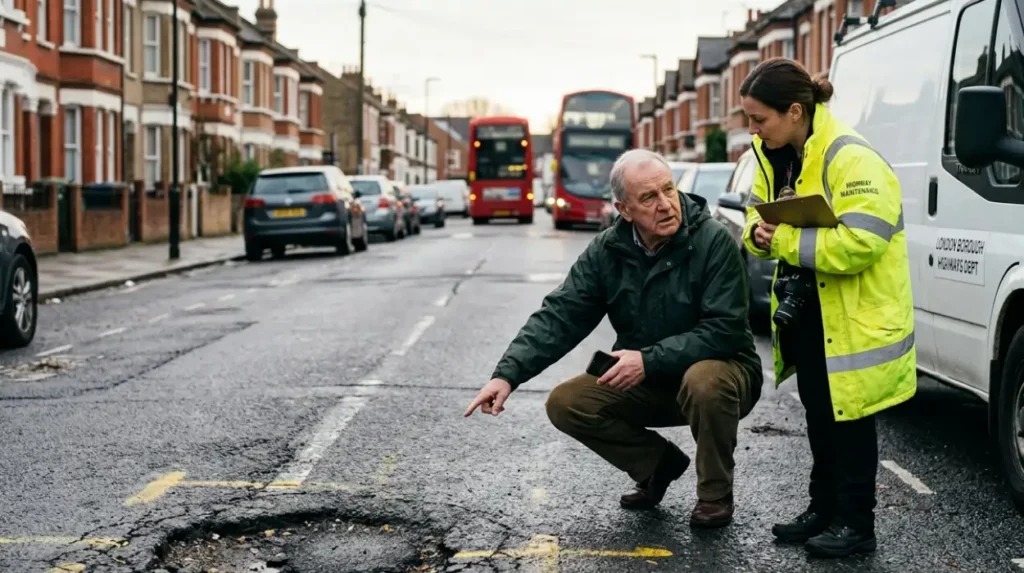
The long‑term outlook for council liability over potholes is shaped by deteriorating road infrastructures, rising claim volumes, and ongoing legal and technological developments. As road surfaces age and funding constraints persist, potholes and other defects are likely to remain common, increasing both the number of accidents and the number of compensation claims. At the same time, councils are expected to invest in better data‑driven maintenance, including AI‑based defect detection and predictive‑maintenance models, which could reduce hazards and strengthen their Section 58‑style defences. In north London, where dense traffic and older road layouts compound the problem, councils may increasingly rely on such systems to manage risk.
From a policy perspective, there is growing pressure for clearer national standards on highway maintenance, reporting, and compensation, which could influence how courts, insurers, and councils treat pothole‑damage claims in future. Some commentators suggest that a more standardised approach, such as national guidelines on inspection frequencies and prioritisation criteria, could reduce uncertainty and litigation while improving road safety. In practice, however, individual claim outcomes will continue to depend heavily on the specific facts, the quality of evidence, and the local authority’s documented maintenance record, including for cases arising from potholes on north London roads.
Can I claim compensation from the council for pothole damage?
Yes. You can claim compensation if a pothole on a council-maintained road caused injury or vehicle damage and the council failed to maintain the road properly.