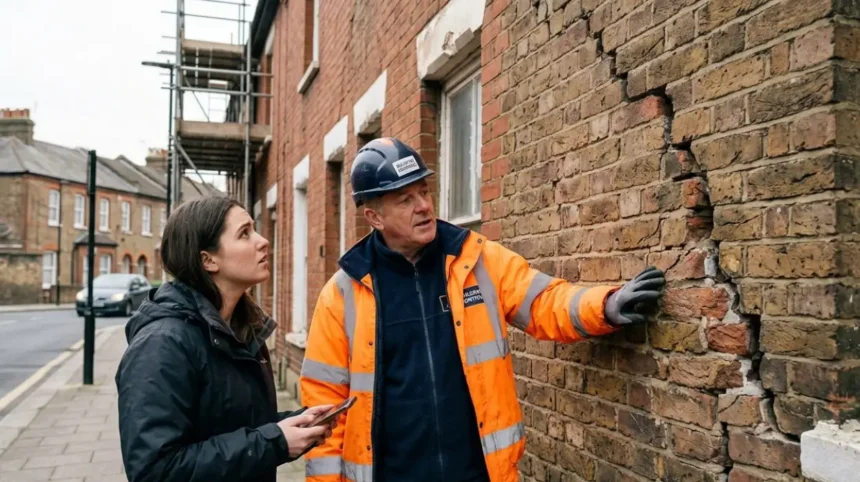
Haringey Council handles reports of dangerous structures through its Building Control team. Residents in North London follow specific procedures under the Building Act 1984 to ensure public safety.
- What Is a Dangerous Structure in Haringey?
- What Causes Structures to Become Dangerous in Haringey?
- Who Handles Dangerous Structure Reports in Haringey?
- How Do You Report a Dangerous Structure in Haringey?
- What Happens After Reporting a Dangerous Structure in Haringey?
- When Is a Dangerous Structure Considered an Emergency in Haringey?
- What Information Do You Need to Report a Dangerous Structure in Haringey?
- Can You Report a Dangerous Structure Anonymously in Haringey?
- What Are Examples of Dangerous Structures in Haringey?
- What Are the Legal Consequences for Owners of Dangerous Structures in Haringey?
- How Does Haringey Ensure Building Safety After Reports?
What Is a Dangerous Structure in Haringey?
A dangerous structure in Haringey is any building, wall, hoarding, or part thereof that poses imminent risk of collapse, injury, or damage due to structural failure, as defined under Section 77 of the Building Act 1984. Haringey Building Control assesses these via inspection after reports.
The Building Act 1984 empowers local authorities like Haringey Council to address structures in dangerous conditions. Section 77 allows councils to apply for court orders requiring owners to secure or demolish such structures. Section 78 permits emergency measures if immediate danger exists, such as shoring up or fencing off.
Haringey defines dangerous structures to include leaning walls, sagging roofs, cracked foundations, and unstable hoardings. Examples encompass boundary walls over 2.5 meters high showing significant cracks and derelict buildings with exposed internals. These assessments align with national standards from the Health and Safety Executive.
Council processes begin with public reports leading to site visits. Implications involve potential fines up to £20,000 for non-compliant owners under the Act. Historical data from 2024 shows Haringey managed compliance across 10,000+ residential properties via monthly reporting.
What Causes Structures to Become Dangerous in Haringey?
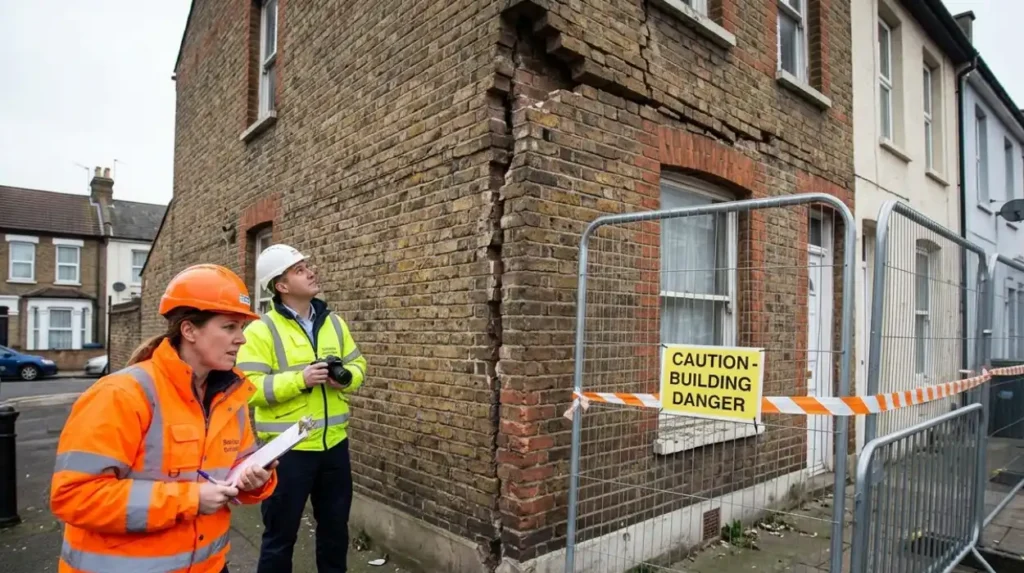
Structures become dangerous in Haringey from age-related decay, poor maintenance, extreme weather, and construction defects like large panel system failures. Common causes include foundation erosion, wall bowing, and roof overloading, addressed by Building Control inspections.
Macro factors stem from London’s aging housing stock, with over 5,000 buildings nationwide identified for cladding issues by 2025. In Haringey, heavy rainfall erodes foundations, while freeze-thaw cycles crack masonry. Subtopics cover material fatigue, where concrete spalls after 50 years, and overload from added floors.
Details include gas explosions risking progressive collapse in large panel system blocks. Haringey examples feature Tangmere and Northolt blocks on Broadwater Farm Estate, evacuated in 2018 due to structural weaknesses linked to 1968 Ronan Point partial collapse.
Implications affect 48% of identified unsafe high-rises UK-wide, with remediation ongoing. Haringey reports integrate these into its 2024-2028 Building Safety Strategy, tracking gas, fire, and structural compliance monthly.
Who Handles Dangerous Structure Reports in Haringey?
Haringey Council’s Building Control team manages all dangerous structure reports. Contact them at 020 8489 5504 (option 1) for urgent cases or use the online form at eforms.secure.haringey.gov.uk for non-emergencies.
Building Control operates under Haringey Council’s Planning and Building Control service. The team, led by a Building Control Manager, enforces the Building Act 1984. They conduct initial assessments within 24-48 hours for urgent reports.
Subtopics distinguish roles: Building Control inspects structures, while Environmental Services handles anti-social behavior links. For higher-risk buildings over 18 meters, coordination occurs with the Building Safety Regulator.
Details require reporters to provide location, description, and owner details if known. Implications ensure rapid response, preventing incidents like the 2021 Haringey window fall prompting fleet-wide checks every five years.
How Do You Report a Dangerous Structure in Haringey?
Report via Haringey Council’s online form at eforms.secure.haringey.gov.uk/ufs/ufsmain?formid=RDS_FORM, providing location, issue description, and contact details. For imminent danger, call 020 8489 5504 (9am-5pm weekdays) or 020 8489 0000 out-of-hours.
The process starts with identifying the hazard, such as a leaning chimney. Submit details online or by phone, including photos if possible. Council logs the report and prioritizes based on risk level.
Subtopics cover form fields: exact address, defect description (e.g., “20cm crack in east wall”), and reporter anonymity option. Phone reports trigger immediate dispatch for life-threatening cases.
Details align with GOV.UK guidance, routing to local councils. Implications include mandatory owner notifications, with non-response leading to council intervention under Section 78.
What Happens After Reporting a Dangerous Structure in Haringey?
Building Control inspects within 24-72 hours, issues notices to owners for repairs, and takes emergency action if needed under Building Act 1984 Section 78. Updates follow via email or phone to the reporter.
Post-report, an officer visits the site to assess stability using tools like crack gauges. They classify as imminent, high, or medium risk. Owners receive a Section 77 notice specifying fixes within timelines, such as 28 days for shoring.
Subtopics include monitoring: repeat visits ensure compliance. Escalation involves court orders for demolition if ignored. Data shows 97% of high-rise ACM cladding remediation complete UK-wide by 2025.
Implications extend to cost recovery from owners, with Haringey recovering via liens. Future relevance ties to post-Grenfell reforms, mandating occurrence reporting within 10 days.
When Is a Dangerous Structure Considered an Emergency in Haringey?
An emergency exists when a structure risks immediate collapse or injury, such as major leaning or debris fall. Call 020 8489 5504 (option 1) weekdays 9am-5pm or 020 8489 0000 out-of-hours for instant response.
Emergencies trigger Section 78 powers for councils to act without notice. Criteria include visible movement, deep cracks over 10cm, or public proximity. Haringey prioritizes these over routine reports.
Subtopics differentiate from non-emergencies: no immediate threat uses online forms. Examples: a hoarding sagging onto a pavement versus gradual wall bowing. Dial 999 if life-threatening alongside council call.
Implications prevent tragedies, like Ronan Point’s 1968 gas explosion killing four. Haringey’s strategy ensures 100% compliance reporting.
What Information Do You Need to Report a Dangerous Structure in Haringey?
Provide the structure’s full address, detailed defect description (e.g., “leaning north wall by 15 degrees”), photos, your contact details, and owner information if known. Anonymity is available via form.
Essential data enables precise location via postcode in N8-N22 areas. Descriptions specify dimensions, e.g., “crack 5m long, 3cm wide.” Photos from multiple angles aid remote triage.
Subtopics include optional details: occupancy status, recent weather impacts. Owner names from Land Registry speed notices. Forms comply with data protection.
Implications of complete reports yield faster action, reducing public risk. Incomplete ones delay inspections.
Can You Report a Dangerous Structure Anonymously in Haringey?
Yes, Haringey allows anonymous reports through the online form or phone without name disclosure. Building Control acts on the details provided regardless.
Anonymity protects reporters from reprisal in neighbor disputes. Forms have checkboxes for no-contact preference. Phone operators log details without identity if requested.
Subtopics cover verification: council cross-checks with site visits. Examples: antisocial behavior-linked reports via 020 8489 1000.
Implications maintain high reporting rates, crucial for proactive safety in dense North London.
What Are Examples of Dangerous Structures in Haringey?
Examples include Tangmere and Northolt blocks (large panel system failures, evacuated 2018), leaning boundary walls over 2.5m, sagging roofs on derelict sites, and cracked high-rise facades.
Historical cases like Broadwater Farm highlight LPS risks post-Ronan Point. Recent include window defects prompting 5-year checks across high-rises.
Subtopics list three types: residential (cladding failures), commercial (hoardings), public (pavements). Stats: 5,214 UK buildings over 11m needed remediation by 2025.
Implications drive Haringey’s strategy, with monthly KPI tracking.
What Are the Legal Consequences for Owners of Dangerous Structures in Haringey?
Owners face Section 77 court orders for repairs/demolition, fines up to £20,000, and council cost recovery via property charges under Building Act 1984.
Non-compliance leads to prosecution in magistrates’ court. Haringey recovers abatement costs first from site sale if needed. Post-Grenfell, higher-risk owners submit safety cases.
Subtopics: three penalties—fines, orders, liens. Examples: leaseholder buybacks in unsafe blocks.
Implications enforce accountability, with 34% remediation complete UK-wide.
How Does Haringey Ensure Building Safety After Reports?
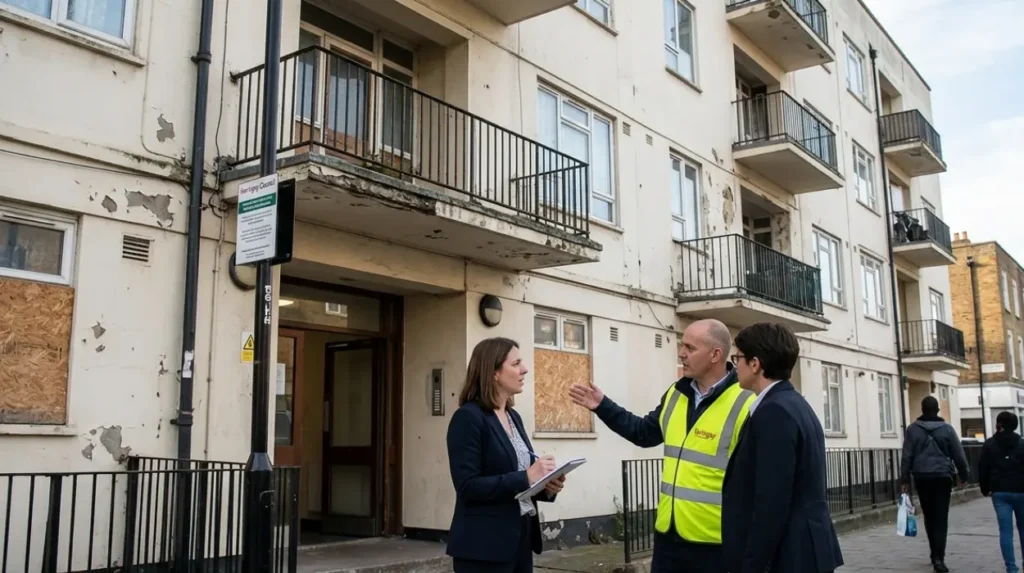
Haringey conducts inspections, issues notices, monitors compliance, and integrates into 2024-2028 Building Safety Strategy with monthly reporting on fire, gas, and structures.
Ongoing regime includes resident engagement and occurrence reporting within 10 days. High-rises require Building Assessment Certificates.
Subtopics: data systems track 10,000+ properties. Implications: full compliance across heights.
What is considered a dangerous structure in Haringey?
A dangerous structure is any building, wall, or part of a structure that poses an immediate risk of collapse, injury, or damage. Under the Building Act 1984, this includes leaning walls, unstable roofs, cracked foundations, or unsafe hoardings.