Key points
- Poppy Hope Lomas, a seven‑day‑old baby, died on 26 October 2022 following complications after a planned home birth in Enfield, north London.
- An inquest at Barnet Coroner’s Court, presided over by senior coroner Andrew Walker, found that the Royal Free London NHS Foundation Trust failed Poppy’s mother, Gemma Lomas, by not recognising and appropriately managing a high‑risk pregnancy and by supporting an unsafe home delivery that was against medical advice.
- The coroner heard that Poppy likely suffered a lack of oxygen to her brain in the 30 minutes before birth, and that medical staff at University College Hospital estimated she had been deprived of oxygen for about seven to eight minutes.
- Gemma Lomas told the inquest that the home‑birth midwives did not respond quickly enough when Poppy was born “blue and floppy”, and that she had not been properly informed that her pregnancy and the planned birth were high risk.
- Midwives had given Lomas a checklist before the birth outlining warning signs including scar pain after a previous caesarean, prolonged pushing, and abnormalities in the baby’s health, but she believes several red flags were ignored.
- The coroner criticised the Royal Free London NHS Foundation Trust for failing to address “an accumulation of risk factors” and for encouraging what he described as an unsafe home delivery.
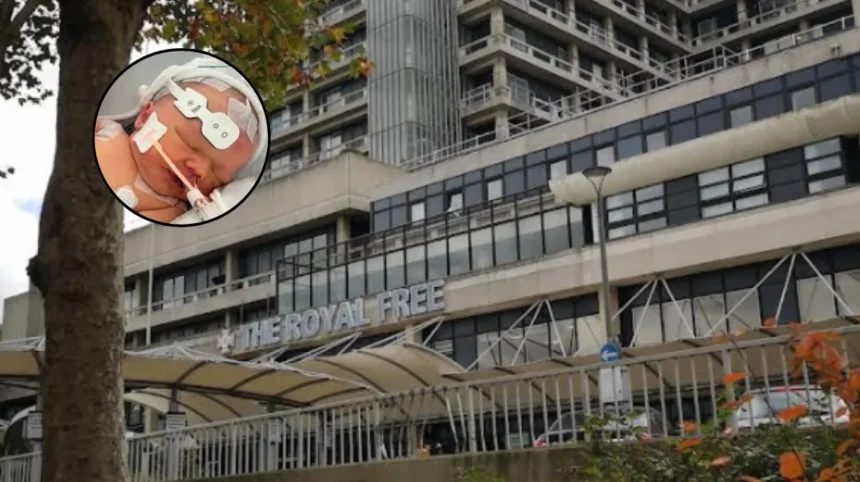
Enfield (North London News) April 24, 2026 – The Royal Free London NHS Foundation Trust has been found to have failed a mother whose newborn baby died days after an unsafe home birth that was supported by the trust despite being contrary to medical advice (Barnet Coroner’s Court inquest, reported by The Guardian and Evening Standard).
- Key points
- What did the mother say about the home birth and the midwives’ response?
- What was the role of the high‑risk checklist and the home‑birth team?
- What did the coroner say about the trust’s conduct?
- How did the NHS trust respond to the coroner’s findings?
- Background of the development
- Prediction: How could this development affect families and NHS services?
Poppy Hope Lomas, a seven‑day‑old girl, died on 26 October 2022 after complications arising during a planned home birth at her family home in Enfield, a case which has prompted serious scrutiny of how midwives and the Royal Free London NHS Foundation Trust handled high‑risk pregnancies and home‑birth referrals.
Senior coroner Andrew Walker told the inquest at Barnet Coroner’s Court that the Royal Free London NHS Foundation Trust had agreed to support Gemma Lomas’s “unsafe home delivery that was against medical advice”, and that the trust failed to address “an accumulation of risk factors” linked to her pregnancy and birth plan.
Evidence presented to the coroner indicated that Poppy likely suffered a lack of oxygen to her brain during the final 30 minutes before she was born, with clinicians at University College Hospital later estimating that she had been deprived of oxygen for approximately seven to eight minutes.
What did the mother say about the home birth and the midwives’ response?
As reported by BBC London and the BBC’s inquest coverage, Gemma Lomas told Barnet Coroner’s Court that she felt the home‑birth team did not act quickly enough once something went wrong during the birth.
Lomas described seeing her daughter emerge “blue and floppy”, recalling that Poppy’s head “flopped back”. She said: “I remember saying,
‘There’s something wrong.’ They said, ‘No, she’s fine, the baby’s fine.’”
Lomas also told the court that she had not been informed that her pregnancy and the planned home birth were high risk, and that she
“would never have made a decision to harm my baby or myself”
had she known the full extent of the risks.
Her testimony was highlighted by The Guardian and the Evening Standard, which reported that she came to believe that several warning signs outlined in a pre‑birth checklist given by midwives had been ignored.
What was the role of the high‑risk checklist and the home‑birth team?
As detailed in reporting by the Evening Standard and Daily Mail, midwives had issued Gemma Lomas with a checklist prior to the birth listing potential warning signs, including scar‑site pain following her previous caesarean section, prolonged pushing in labour, and any abnormalities in the baby’s condition.
According to the Daily Mail’s coverage of the inquest, Lomas believes that several of these red flags were present but were not adequately acted upon, and that the home‑birth team failed to escalate care when it became clear something was wrong.
The Evening Standard, citing evidence before Barnet Coroner’s Court, reported that the planned home delivery at the Enfield address was carried out with the Edgware Midwives home‑birth team, which is part of Barnet Hospital and falls under the Royal Free London NHS Foundation Trust.
The coroner’s remarks, as relayed by The Guardian and the Evening Standard, emphasised that the trust had not properly addressed the “build‑up of risk factors” in the case, and that the decision to support a home birth, given the known medical history, was inappropriate.
What did the coroner say about the trust’s conduct?
Senior coroner Andrew Walker, in his findings at Barnet Coroner’s Court, stated, as reported by The Guardian and the Evening Standard, that the Royal Free London NHS Foundation Trust had failed Gemma Lomas by agreeing to support an unsafe home delivery that ran counter to medical advice.
Walker’s comments were echoed in coverage by the Evening Standard, which wrote that the coroner had identified an “accumulation of risk factors” that the trust did not adequately manage, contributing to the circumstances that led to Poppy’s death.
BBC London’s reporting of the inquest noted that the coroner recorded a conclusion that the death arose from the complications of the birth, but did not make any finding of unlawful killing or individual misconduct against particular staff members.
Nevertheless, the inquest put the conduct of the Royal Free London NHS Foundation Trust, the Edgware Midwives home‑birth team, and the pathways for communicating risks in high‑risk pregnancies under sharp public and professional scrutiny.
How did the NHS trust respond to the coroner’s findings?
The Royal Free London NHS Foundation Trust issued a statement to The Guardian and the Evening Standard expressing its condolences to Gemma Lomas and her family and acknowledging that there were “shortcomings” in the care provided.
The trust stated that it had already begun a review of how home‑birth referrals are assessed and that it would implement changes to ensure that high‑risk factors are properly identified and communicated to both patients and clinicians.
The Evening Standard reported that the trust also confirmed it would act on the coroner’s recommendations, including improving the use of risk‑assessment checklists and ensuring that midwives are clearer with patients about the limitations and risks of home births in certain circumstances.
Background of the development
The case of Poppy Hope Lomas sits within a wider context of ongoing concern about how the NHS in England manages high‑risk pregnancies and the safety of home births, particularly when previous caesarean sections are involved.
Guidance from national and international bodies, as outlined in medical literature cited by outlets such as The Guardian and the Cleveland Clinic, stresses that pregnancies with prior caesarean sections, certain medical conditions, or multiple risk factors are classified as “high risk” and often require closer monitoring, specialist review, and delivery in hospital settings rather than at home.
Checklists used by midwives, similar to the one given to Gemma Lomas, are designed to prompt assessments of fetal heart rate, maternal vital signs, gestational age, and warning signs such as scar‑site pain or prolonged labour, so that clinicians can escalate care promptly when needed.
In this case, the coroner’s findings suggest that these tools were present but were not fully or effectively applied, and that the trust’s decision‑making about supporting a home birth in a high‑risk scenario fell short of expected standards, a point emphasised by both The Guardian and the Evening Standard.
Prediction: How could this development affect families and NHS services?
For expectant mothers and families in north London and across England, the inquest’s findings could heighten scrutiny of how trusts explain the risks and limitations of home births, especially where there is a history such as a prior caesarean section or other high‑risk factors.
If the Royal Free London NHS Foundation Trust and other NHS trusts implement the coroner’s recommendations, future patients may see clearer risk‑assessment processes, more explicit written and verbal information about whether a home birth is considered safe, and stricter thresholds for approving home‑birth referrals.
For NHS services and midwifery teams, the case may prompt tighter internal audits of home‑birth pathways, more structured training around checklist use and escalation protocols, and a greater emphasis on documenting and justifying decisions that deviate from standard medical advice.
For journalists, regulators, and patient‑safety advocates, the outcome offers a concrete example of how failures at the level of risk communication and referral management can culminate in serious harm, and may influence future campaigns and policy discussions around maternity safety in the NHS.