Key Points
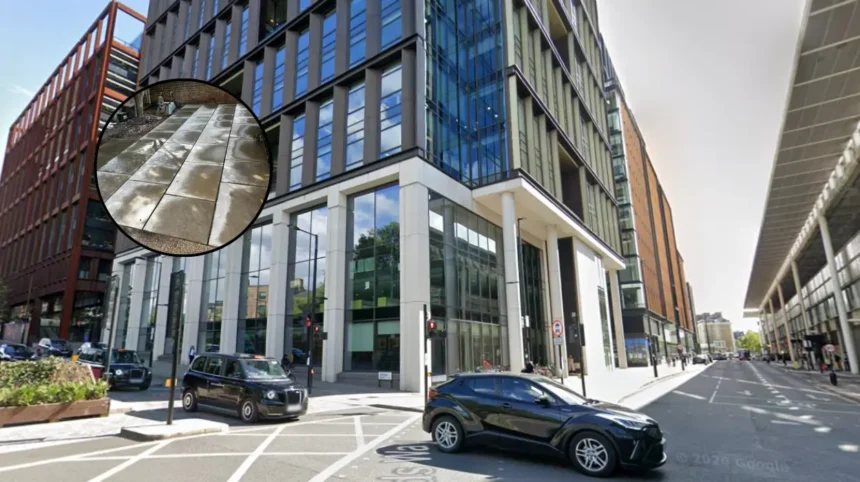
- Camden Council in north London has ordered James Corden to remove paving slabs laid without planning permission in the front garden of his £11.5 million mansion to contain bins.
- Neighbours and preservation groups describe the slabs as ‘unsightly’, claiming they reduce biodiversity and harm the character of the conservation area.
- The 47-year-old Gavin & Stacey actor has defied the enforcement threat by submitting a 26-page letter to the council, arguing no discernible change to the garden’s appearance exists.
- Corden asserts there is no evidence of harm to the property or conservation area character, labels the council’s position ‘illogical’, and claims its reasoning lacks proper analysis and contains contradictions.
- The slabs were placed illegally to manage bins, sparking complaints from locals focused on visual and environmental impact.
Camden Council (North London News) April 25, 2026 – Camden Council has issued an order to James Corden to dismantle paving slabs installed without approval in his £11.5 million mansion’s front garden. The move addresses complaints about bin containment in a conservation area. Corden, known for mixing with Hollywood stars, has challenged the council’s demand through detailed correspondence.
- Key Points
- Why Did Camden Council Order James Corden to Remove the Paving Slabs?
- What Has James Corden Responded to the Council’s Enforcement Threat?
- How Have Neighbours and Preservation Groups Reacted to the Paving Slabs?
- What Are the Potential Next Steps in the James Corden Camden Council Dispute?
- Background of the Development
- Predictions: Impact on High-Profile Property Owners in Conservation Areas
Why Did Camden Council Order James Corden to Remove the Paving Slabs?
Camden Council acted after deeming the paving slabs a breach of planning control in a conservation area. Neighbours and preservation groups raised concerns that the slabs are ‘unsightly’, reduce biodiversity, and prove ‘detrimental to the character of the conservation area’. The council views the installation, done without planning permission, as altering the front garden inappropriately.
The Gavin & Stacey actor placed the slabs to contain bins effectively. As reported in the original coverage, this ‘minor landscaping’ has drawn formal scrutiny despite its practical intent. Preservationists argue it disrupts the area’s aesthetic and ecological balance.
Council enforcement typically follows site investigations confirming breaches. Here, the slabs’ placement prompted the order, with potential for a formal enforcement notice if unmet. Corden faces requirements to restore the original state.
What Has James Corden Responded to the Council’s Enforcement Threat?
James Corden has refused to destroy the slabs, sending a 26-page letter to Camden Council. He argues ‘there is no discernible change in the appearance of this section of the front garden of the property’. Corden adds there is no evidence of harm to the character of the home or the conservation area.
In the letter, he calls the council’s position ‘illogical’. He contends it did not properly analyse or explain the claimed harm, with its reasoning contradicting itself. This response defies the threat of enforcement action.
Corden, 47, maintains the work constitutes minor landscaping. His detailed rebuttal seeks to counter the council’s allegations point by point, emphasising lack of visual or environmental impact.
How Have Neighbours and Preservation Groups Reacted to the Paving Slabs?
Neighbours view the slabs as ‘unsightly’ and out of place in the conservation area. Preservation groups echo this, stating they ‘reduce biodiversity’ by replacing permeable surfaces with hard landscaping. Both parties claim the change harms the area’s character.
Complaints highlight the front garden’s role in maintaining local heritage. The slabs, laid for bin containment, clash with expectations for soft landscaping in such zones. Groups urge restoration to preserve uniformity.
Local sentiment focuses on collective standards over individual convenience. This dispute underscores tensions between property owners and community preservation efforts in north London.
What Are the Potential Next Steps in the James Corden Camden Council Dispute?
Camden Council could issue a formal enforcement notice if Corden does not comply. Such notices specify breaches and required actions, like slab removal and site restoration. Non-compliance risks further legal steps, including prosecution.
Corden might pursue a retrospective planning application. Councils sometimes invite this before enforcement to regularise developments. Appeal options exist if refused.
The 26-page letter represents Corden’s initial defence. Ongoing dialogue or formal appeals could follow, depending on council response. Similar cases often involve negotiation or tribunal review.
Background of the Development
This dispute arises in Camden, north London, a borough known for strict conservation area rules protecting heritage and aesthetics. James Corden purchased the £11.5 million mansion amid his Hollywood career, including hosting The Late Late Show. The property sits in a designated conservation area, where changes to front gardens require planning permission to safeguard character, biodiversity, and visual amenity.
Conservation areas mandate approval for hard landscaping like paving slabs, especially if replacing grass or planting that supports local ecology. Bin containment drives many such alterations, but councils prioritise permeable surfaces to manage runoff and maintain green space. Corden’s installation bypassed this process, triggering standard enforcement protocols after neighbour reports.
Precedents in Camden involve similar garden modifications, with councils issuing notices for unapproved patios or driveways. Preservation groups actively monitor these zones, advocating for compliance to prevent cumulative erosion of area character. Corden’s high profile amplifies the case, but procedures remain consistent for all owners.
Predictions: Impact on High-Profile Property Owners in Conservation Areas
This development highlights enforcement rigour for celebrity residents in London’s conservation areas. High-profile owners like Corden may face heightened scrutiny from neighbours and councils, prompting stricter adherence to planning rules for minor works like bin areas. Retrospective applications could become common, delaying projects but avoiding notices.
Local preservation groups gain leverage, potentially increasing reports on similar alterations. Owners might invest more in pre-approval consultations, raising upfront costs but reducing dispute risks. Councils could see more appeals, straining resources yet reinforcing policy consistency.