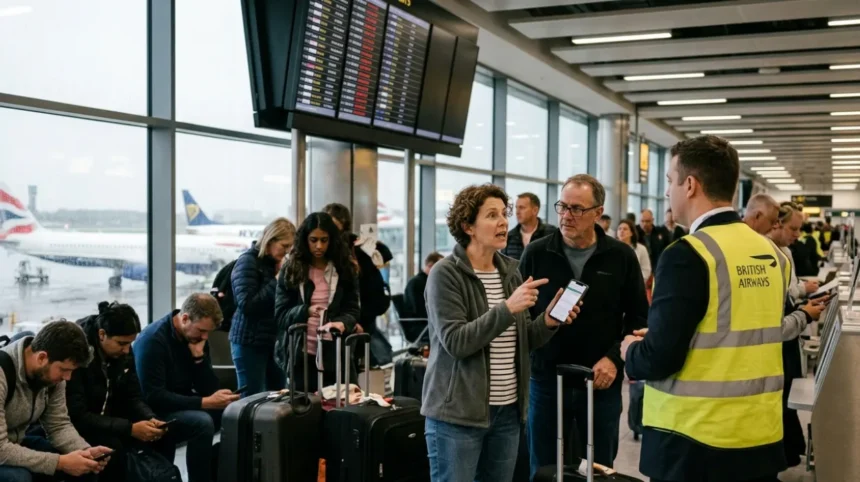
Airlines cancelling flights due to fuel pressures is a growing reality for travellers flying into and out of airports serving North London, such as Heathrow and Stansted. Rising jet‑fuel prices and supply‑chain risks now directly shape which routes operate, how often, and what passengers pay. This article explains exactly how fuel conditions trigger airline cancellations, what protections North‑London‑based passengers have, and what to expect in the months ahead.
- Why are airlines cancelling flights because of fuel?
- How does fuel affect airline operations and scheduling?
- What are the main reasons airlines cancel flights over fuel?
- Which airlines are cutting or cancelling flights from the UK?
- How does fuel pricing translate into flight‑cancellation decisions?
- What role do hedging and fuel contracts play?
- How do rerouted flights increase fuel use and cancellations?
- Which types of routes are most likely to be cancelled?
- How does fuel‑driven cancellation affect North London passengers?
- What are passengers’ rights when a flight is cancelled over fuel?
- How can travellers reduce the risk of fuel‑related cancellations?
- What data show about fuel‑cost‑driven cancellations?
- What are the long‑term implications for airlines and travellers?
Why are airlines cancelling flights because of fuel?
Airlines cancel flights linked to fuel when operating costs rise sharply, alternative routes burn more fuel, or near‑term supply‑chain risks make some routes unprofitable or logistically unstable. Jet fuel often accounts for around 20–25 percent of an airline’s operating expenses, so a sudden doubling of fuel prices can push whole route networks into loss‑making territory.
In 2026, conflict‑related disruptions at key oil‑transit choke‑points such as the Strait of Hormuz have driven the global reference price for jet‑fuel from roughly 99 dollars per barrel in early February to around 200 dollars per barrel by mid‑April. Airlines must either absorb these costs, pass them on as price hikes, or reduce capacity; in practice, many large carriers have chosen to cancel or cut thousands of flights, especially on short‑haul and medium‑haul routes.
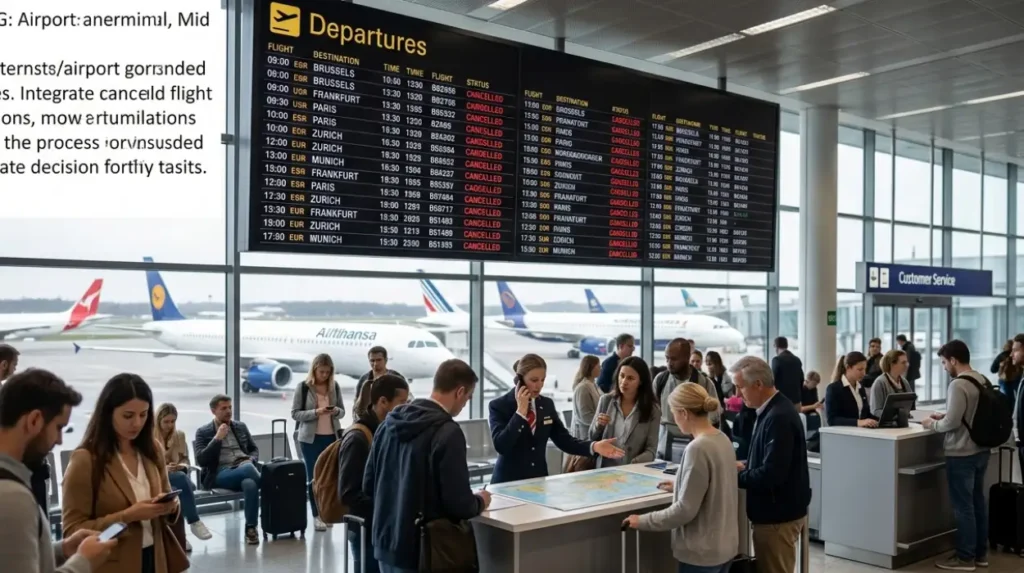
How does fuel affect airline operations and scheduling?
Fuel directly affects three main parts of airline operations: route‑profitability models, flight‑scheduling algorithms, and fleet‑utilisation decisions. Airlines run daily simulations that compare projected fuel consumption, ticket‑revenue forecasts, and airport‑charging levels for each route; when fuel prices spike, many routes fall below the minimum acceptable return threshold and are removed from the schedule.
For example, European carriers such as Lufthansa and KLM have announced large‑scale reductions in short‑haul capacity, with Lufthansa planning to cut nearly 20,000 short‑haul flights through October 2026, citing fuel‑cost pressure and the need to de‑risk the network. These cuts typically hit off‑peak and low‑density routes first, while core business and long‑haul routes may be maintained with higher fares or reduced frequencies.
What are the main reasons airlines cancel flights over fuel?
The main reasons fall into three categories: fuel‑price spikes, fuel‑supply worries, and route‑re‑routing penalties. First, when wholesale jet‑fuel prices double in a matter of weeks, airlines face tens or hundreds of millions of pounds in extra operating costs; even hedged contracts cover only part of future requirements, so boards must cut capacity to avoid unsustainable losses.
Second, energy‑agency warnings that Europe may have only about six weeks of jet‑fuel stocks left in 2026 have prompted some carriers to proactively reduce flights in anticipation of logistical bottlenecks. Third, conflict‑driven airspace closures force airlines to reroute longer paths around the Middle East, increasing time‑in‑air and fuel burn on many London‑to‑Asia and Middle‑East routes, which makes some schedules untenable at current fare levels.
Which airlines are cutting or cancelling flights from the UK?
Several major carriers serving UK airports, including those used by North London residents, have announced fuel‑related schedule reductions. Germany’s Lufthansa Group has pledged to cancel around 20,000 short‑haul flights through October 2026, affecting many UK‑Europe connections. Air France and KLM, which operate extensively from London Heathrow and other UK hubs, have announced fare‑hike packages and the removal of around 80 round‑trip routes in April–May 2026 as fuel costs rise.
British‑based low‑cost carriers such as EasyJet have also reported sharp increases in fuel‑related costs, with an extra 25 million pounds in fuel expenditure in early 2026 alone; this has contributed to lower headline profits and tighter route‑planning decisions. The result is fewer frequencies on some regional routes, later‑season reductions, and more single‑daily flights instead of multiple‑daily options.
How does fuel pricing translate into flight‑cancellation decisions?
Airlines translate fuel pricing into cancellations through a sequence of cost‑and‑demand calculations. Each route is modelled with a base fuel‑burn rate, expected load factor (passenger fill‑rate), average ticket price, and ancillary‑revenue assumptions; when fuel costs rise, the models are re‑run to identify routes whose total cost‑to‑operate exceeds forecast revenue.
For instance, if a London–Amsterdam route originally burns 3,600 kilograms of fuel per flight and fuel prices rise from 99 dollars per barrel to 200 dollars per barrel, the incremental fuel cost can add tens of thousands of pounds per day across the route‑pair. If the airline cannot raise fares enough without depressing demand, or if off‑peak‑day load factors are low, the only viable option is to cancel some or all flights on that route.
What role do hedging and fuel contracts play?
Hedging allows airlines to lock in jet‑fuel prices months or years ahead using financial contracts that reference oil or fuel benchmarks. These contracts cover only a portion of total fuel needs—often 50–70 percent—so even an airline with strong hedging protection must still expose part of its fleet to the spot‑market price, which can double abruptly during crises.
When unhedged fuel costs surge, airlines come under pressure to cut flights that are not protected by long‑term contracts. Hedging does not prevent cancellations entirely; it only delays the impact, smoothing the transition over quarters. As older contracts expire and new, higher‑cost contracts renew, airlines must realign their networks to match the higher underlying cost base, which can lead to phased cancellations over several months.
How do rerouted flights increase fuel use and cancellations?
Conflict‑driven airspace closures force many airlines to reroute flights away from the Middle East, adding hundreds of miles to each trip and increasing fuel burn. For example, London‑bound long‑haul flights from Southeast Asia that previously flew over the Gulf may now track north through Central Asia or Turkey, extending flight times by 45 minutes to 90 minutes and increasing fuel consumption by 10–15 percent per sector.
This extra fuel use raises both direct costs and carbon‑emission charges, which airlines must then offset via higher ticket prices or reduced capacity. On some routes, the additional fuel, slot, and crew‑time costs push the route below the minimum profit threshold, leading airlines to cancel or reduce frequencies rather than absorb sustained losses.
Which types of routes are most likely to be cancelled?
Three categories of routes are most vulnerable to fuel‑driven cancellations: short‑haul low‑density routes, off‑season regional routes, and certain long‑haul routes with high fuel‑intensity. Short‑haul routes running at low average load factors are the first to be cut because they generate relatively little revenue per kilogram of fuel burned.
Off‑season regional routes that only operate profitably in peak summer or winter holiday periods are also at risk, as fuel‑price spikes compress the narrow profit window. Long‑haul routes that require heavy‑fuel‑burn aircraft and are already marginal in yield—such as some London‑to‑secondary‑Asian‑city routes—may see reductions or cancellations if airlines cannot raise fares enough to offset the higher jet‑fuel cost base.
How does fuel‑driven cancellation affect North London passengers?
North London passengers relying on Heathrow, Stansted, Luton and Gatwick experience fuel‑driven cancellations through fewer daily departures, higher fares, and tighter transfer connections. For example, Heathrow‑based short‑haul flights to European cities may be cut back from multiple‑daily services to one‑daily flights, forcing travellers into less convenient departure times.
On long‑haul routes, rerouting can increase journey times and raise
瞭解並
–){
content: “
fares on many London‑bound routes; consultancy data show that some London‑to‑Melbourne and London‑to‑Hong Kong fares have risen by around 70–80 percent year‑on‑year as fuel costs and route‑replanning pressures mount. This combination of fewer flights and higher prices makes planning holidays and business travel from North London more complex and expensive.
What are passengers’ rights when a flight is cancelled over fuel?
Under EU and UK passenger‑rights rules, cancellations are treated based on who controls the cause, not on the label an airline uses. Airlines often cite “fuel shortages” or “rising fuel costs,” but whether passengers qualify for compensation depends on whether the disruption falls under the carrier’s control or under “extraordinary circumstances” such as conflict‑related airspace closures.
If a European airline cancels a Heathrow‑to‑Europe flight with less than 14 days’ notice and the reason is within its control—such as commercial route‑pruning due to fuel‑cost assumptions—passengers may be entitled to compensation up to 600 euros plus a refund or rerouting. If the airline can show that airspace closures or government‑mandated fuel‑supply restrictions forced the cancellation, compensation may not apply, though passengers still retain the right to a refund or rebooking.
How can travellers reduce the risk of fuel‑related cancellations?
Travellers can reduce their exposure to fuel‑related cancellations by choosing airlines with strong fuel‑hedging practices, avoiding the most marginal routes, and building flexibility into travel plans. Major network carriers with long‑term fuel contracts and diversified route networks tend to be more resilient to short‑term price spikes than smaller, low‑cost operators focused on thin‑margin routes.
Booking core business‑ or holiday‑period travel on mainline London‑to‑major‑European‑capital routes—which are more likely to be kept profitable—rather than on niche or low‑frequency regional routes also lowers the risk of last‑minute cancellations. Flexible travel dates, non‑peak departure times, and seat‑change flexibility features in fares give passengers more options if airlines adjust schedules in response to fuel‑cost pressures.
What data show about fuel‑cost‑driven cancellations?
Recent data show that fuel‑cost spikes correlate with measurable reductions in airline capacity and increases in fares. Jet‑fuel prices have risen from roughly 85–90 dollars per barrel in early 2026 to around 150–200 dollars per barrel within weeks, a doubling that has pushed many airlines into negative‑margined operations on weaker routes.
Consultancy and media reports indicate that some long‑haul London‑to‑Asia fares have increased by 70–80 percent year‑on‑year during this period, while European carriers have announced cuts of tens of thousands of seats or flights across their networks. EasyJet alone flagged an extra 25 million‑pound fuel‑cost burden in early 2026, which contributed to its projected loss of 540–560 million pounds for the six‑month period ending in March 2026.

What are the long‑term implications for airlines and travellers?
Fuel‑driven cancellations are likely to reshape airline networks for several years, favouring more profitable, high‑density routes and pushing thinner services into seasonal or charter‑style operations. Airlines may accelerate fleet‑modernisation programmes, replacing older, fuel‑hungry aircraft with more efficient models to reduce sensitivity to fuel‑price swings.
For travellers, especially those based in North London, this means accepting higher average fares, fewer off‑peak options, and more reliance on main intercontinental hubs. It also increases the value of travel‑insurance, flexible tickets, and diversified route choices, because the risk of schedule changes and cancellations tied to fuel‑market volatility will remain elevated as long as oil‑transit risks and global fuel prices stay high.
Why are airlines cancelling flights because of fuel costs?
Airlines cancel flights when rising fuel prices make certain routes unprofitable. Since jet fuel can account for up to a quarter of operating costs, sudden price spikes can force airlines to reduce or cancel services.