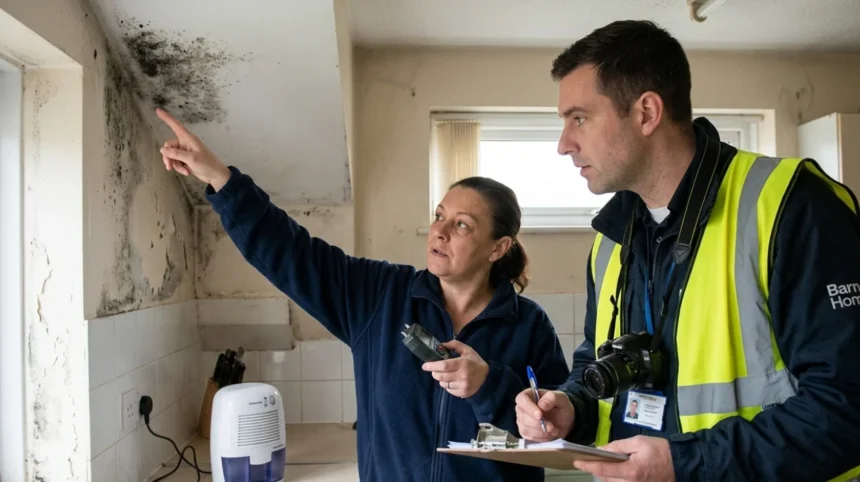
Damp and mould in Barnet Homes need a fast, evidence-based response that starts with identifying the cause, reporting it in writing, and pushing for an inspection and repair plan. The quickest route is to treat every case as a housing defect until Barnet Homes confirms the source and completes the remedy.
- What causes damp and mould in Barnet Homes?
- The main damp types
- What should you report to Barnet Homes first?
- What to include in the report
- How do you make Barnet Homes act faster?
- When the delay becomes serious
- What repairs actually solve damp and mould?
- Common contractor actions
- What can you do while waiting for repairs?
- Simple interim steps
- What are your rights in Barnet?
- Why health evidence matters
- What should North London residents expect next?
What causes damp and mould in Barnet Homes?
Damp and mould come from condensation, leaks, penetrating water, or rising damp, and each requires a different repair. Condensation is the most common cause in homes with poor ventilation, while leaks, roof defects, and failed damp proofing require building repairs, not cleaning alone.
Damp means unwanted moisture in building materials or indoor air. Mould is a fungus that grows on damp surfaces, especially in corners, behind furniture, on cold walls, and around windows. In rented homes, the legal and practical question is not just whether mould is visible, but why moisture is present and what structural fault or living-condition issue drives it.
Barnet Homes publishes prevention advice that focuses on reducing moisture and improving ventilation. That advice includes keeping windows open where safe, opening kitchen and bathroom windows more widely during use, keeping bathroom and kitchen doors closed during moisture-producing activities, and drying clothes in a way that allows airflow. Those steps help when condensation is the cause, but they do not solve leaks, defective brickwork, or other fabric problems.
The main damp types
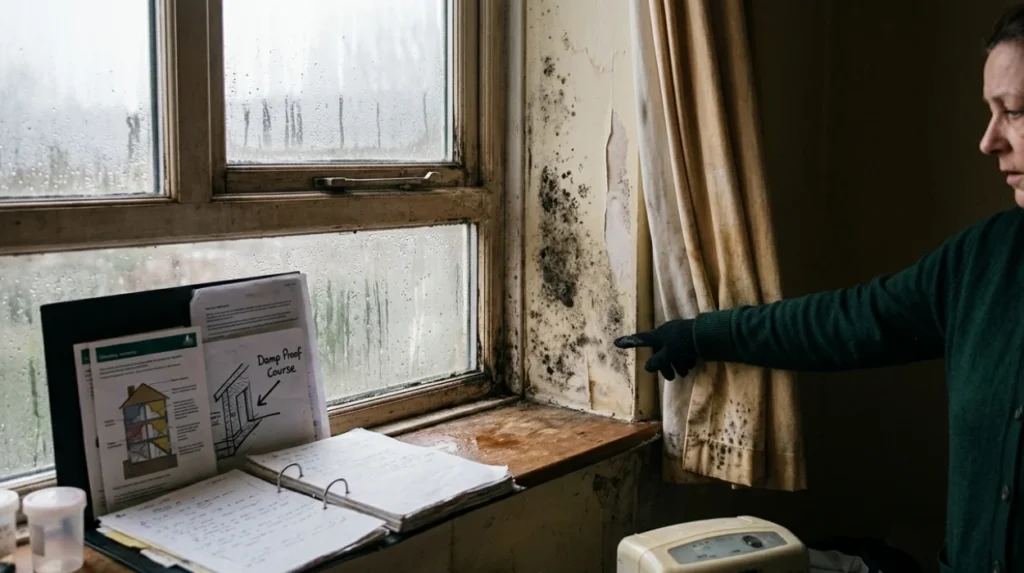
There are 3 main types of damp in homes: condensation, penetrating damp, and rising damp. Examples include steamed-up windows and black mould for condensation, rainwater entering through cracked render for penetrating damp, and tide marks or salt staining on lower walls for rising damp.
Condensation forms when warm, moist air hits cold surfaces. Kitchens, bathrooms, and bedrooms create most indoor moisture through cooking, bathing, breathing, and drying clothes indoors. Poor ventilation, overcrowding, and cold walls make the problem worse.
Penetrating damp enters from outside through defects such as broken roof tiles, cracked masonry, damaged gutters, blocked downpipes, or failing pointing. Rising damp moves up from ground level where a damp proof barrier is absent, damaged, or bridged by external ground levels or internal plaster faults.
What should you report to Barnet Homes first?
Report the problem immediately in writing, describe where the damp and mould appear, include photos, and state any health impact or safety risk. Ask Barnet Homes for an inspection, a repair reference number, and a written response that identifies the cause and the next steps.
Barnet Homes says its Damp, Mould, and Condensation Policy is designed to diagnose and prevent issues promptly and that its Healthy Homes Team handles reports of damp and mould. A clear report helps the landlord distinguish a condensation problem from a structural defect and reduces delay in assigning the right repair route.
A strong report includes the room, exact location, visible damage, smell, dates, and any recurring pattern. Examples include “mould above the bedroom window after rain,” “wet patch under the kitchen sink,” or “black mould behind the wardrobe on an external wall.” These details help connect the symptom to a cause and speed up inspection.
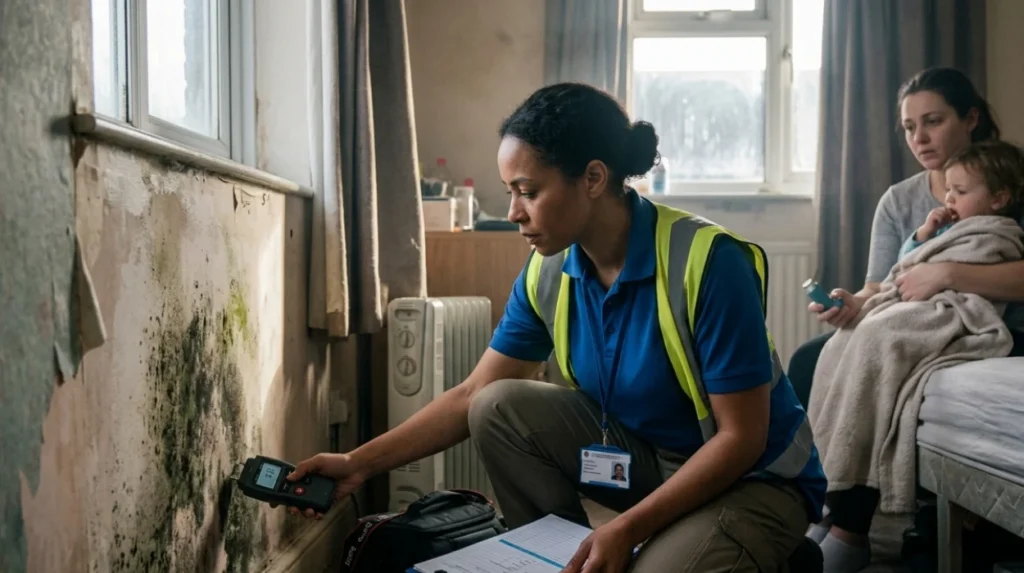
If the problem affects a child, an older person, someone with asthma, or anyone with a breathing condition, state that clearly. UK guidance links damp and mould with respiratory illness, and UKHSA reports that around 2 million people in England live in homes with significant damp and/or mould.
What to include in the report
Include the date you first noticed the issue, the date you reported it, and whether it returns after cleaning. Mention any leak history, previous repairs, or places where water enters during rain. Add a request for both a diagnosis and a repair plan, because treatment without diagnosis leaves the cause in place.
Keep copies of emails, screenshots, texts, and repair bookings. If a contractor visits, write down the visit date, the findings, and whether the inspection covered lofts, gutters, pipes, windows, or walls. This record becomes important if the issue remains unresolved or if escalation is needed.
How do you make Barnet Homes act faster?
The fastest route is to escalate early, keep every message in writing, and ask for an urgent inspection when the mould is spreading, affecting health, or linked to leaks. If the home is unsafe, say so plainly and request emergency action or temporary accommodation while repairs are completed.
Social landlords in England now face stricter duties on hazardous damp and mould under Awaab’s Law, introduced through 2025 reforms, with emergency hazards requiring action within 24 hours. Barnet Homes also states that it uses a policy framework for prompt diagnosis and prevention, which supports escalation when a repair stalls.
Speed comes from making the issue hard to postpone. Use words such as “urgent,” “ongoing,” “health risk,” “children in the property,” “worsening after rainfall,” and “suspected leak.” Those phrases identify hazard level, not inconvenience, and place the report into the category of a live repair problem.
If you already reported the issue and nothing happened, send a follow-up that states the original report date, the current condition, and the fact that the defect remains unresolved. If a contractor attended but left the cause untreated, ask for a second inspection with a supervisor or surveyor review.
When the delay becomes serious
Delay becomes serious when mould recurs after cleaning, damp spreads across multiple rooms, or the property stays cold and wet. It also becomes serious when there is visible water ingress, repeated leakage, flaking plaster, or symptoms such as coughing, wheezing, or worsening asthma.
The Housing Ombudsman has recorded cases involving long-running damp and mould issues at Barnet Council, showing how recurring problems can stretch over years when the underlying defect is not resolved quickly. That history matters because repeated complaints create a paper trail that supports stronger escalation if repairs stall.
What repairs actually solve damp and mould?
Real fixes remove the moisture source, restore ventilation, or repair building defects. Effective repairs include leak repair, roof and gutter work, improved extractor fans, replacement of damaged plaster, damp proof treatment where required, and better insulation or ventilation upgrades.
Condensation fixes usually focus on air movement and moisture control. Barnet Homes advises reducing steam, using windows and ventilators, keeping kitchen and bathroom doors closed during moisture-heavy activities, and drying clothes with airflow. Which? also identifies ventilation as the simplest and cheapest route for condensation problems.
Penetrating damp requires exterior or plumbing repairs. Examples include fixing broken tiles, resealing windows, clearing gutters, repairing downpipes, and correcting cracks in walls or render. Rising damp requires specialist diagnosis and may involve damp proof course repair, cream injection, tanking in certain areas, or other structural remedies depending on the building.
A dehumidifier reduces indoor moisture, but it does not repair a leak or failed barrier. It works as a temporary support tool, not a permanent solution, and it does not substitute for a landlord repair where the building fabric is defective.
Common contractor actions
Contractors often start with inspection, moisture readings, and visual checks. Examples include checking rooflines, guttering, pipework, window seals, external walls, extractor fans, loft insulation, and the condition of plaster and skirting boards.
After diagnosis, the remedy should match the cause. A leaking pipe needs plumbing repair; a blocked gutter needs clearance and repair; a cold, moisture-heavy room needs ventilation or heating improvements; and a damaged damp proof course needs specialist treatment.
What can you do while waiting for repairs?
You can slow mould growth by lowering indoor moisture, improving airflow, and cleaning minor surface mould safely. These steps reduce spread, but they do not remove the underlying defect, so they sit alongside a formal repair request rather than replacing it.
Barnet Homes recommends practical moisture-control habits such as covering pans, not leaving kettles boiling, drying washing with ventilation, and opening windows where possible. Keeping furniture a little away from external walls also helps air circulate and reduces cold-surface mould growth.
Clean small areas of mould using a mould-safe cleaner and wear protective gloves and a mask if needed. Do not scrub deeply damaged plaster or paint if the wall is wet, bubbling, or crumbling, because that signals a defect that needs repair, not cosmetic treatment.
If a room feels persistently cold, keep the heating steady rather than allowing repeated sharp temperature swings. Warm air holds more moisture, and stable heating reduces condensation on cold surfaces in bedrooms, corners, and behind large furniture.
Simple interim steps
Run extractor fans during and after showering or cooking if the home has them. Keep lids on pans, dry laundry in a ventilated room, and avoid blocking vents or trickle openings.
Move wardrobes and beds slightly away from external walls. This creates airflow behind furniture and reduces hidden mould growth in corners that stay colder than the rest of the room.
Wipe condensation from windows each morning if it forms. That action removes surface moisture before mould establishes on seals, frames, and adjacent paintwork.
What are your rights in Barnet?
Tenants have legal protection when damp and mould make a home unsafe or unfit for habitation. The Homes (Fitness for Human Habitation) Act 2018 lists damp and mould growth as a condition that can make a rented home unfit, and landlords must act once aware of the problem.
Government guidance for tenants under the Homes Act includes damp and mould growth among the hazards covered by the law. Citizens Advice explains that when a damp problem keeps coming back, tenants should tell the landlord, and the landlord is usually responsible once aware of the problem.
The Housing Health and Safety Rating System treats damp and mould as a housing hazard because of health and well-being impacts. UKHSA also links damp and mould exposure to respiratory disease and records a disproportionate impact on disadvantaged groups.
If Barnet Homes does not act after notice, tenants can use the complaints process and then pursue formal escalation routes. The legal position becomes stronger when there is repeated reporting, evidence of a health risk, and proof that the landlord knew about the issue but did not resolve it.
Why health evidence matters
Health evidence turns a repair issue into a safety issue. Examples include asthma flare-ups, coughing, wheezing, recurring chest infections, and sleep disruption from cold or mouldy rooms.
UKHSA’s research found around 2,800 disability-adjusted life years lost in 2019 from residential damp and mould exposure in England, which shows that the issue has a measurable population-health impact. That matters in housing management because it supports faster intervention rather than cosmetic cleanup.
What should North London residents expect next?
Residents should expect faster diagnosis, tighter repair standards, and stronger enforcement where hazard levels are high. The direction of policy in England is clear: damp and mould are treated as health and housing risks that require documented action, not routine decoration work.
Barnet Homes has already created a policy, and the Healthy Homes Team focuses on prompt diagnosis and prevention. That fits the wider national shift after Awaab Ishak’s death, which pushed damp and mould to the centre of housing enforcement and social landlord accountability.
For North London tenants, the practical consequence is simple. Persistent mould, recurring leaks, and poor ventilation are no longer issues to sit on for months. They are repairing problems with health consequences, legal duties, and a growing expectation of rapid, recorded response.
What should I do first if I find damp or mould in my Barnet Homes property?
Report it to Barnet Homes in writing as soon as possible, including photos, location details, and any health concerns. Request an inspection, a repair reference number, and a written diagnosis of the cause.