Hackney Council provides weekly housing surgeries across its estates, allowing residents to meet face-to-face with housing officers to discuss repairs, maintenance concerns, and access online reporting tools. These sessions are designed to facilitate direct communication between tenants and the local authority, ensuring that issues are documented and escalated to the appropriate repair teams effectively.
- What is a Hackney Council housing repair surgery?
- How do you find the schedule for a housing surgery?
- Which repair issues are prioritized by Hackney Council?
- What documentation should you bring to a surgery?
- How does the council manage its repair contractors?
- What are the tenant’s rights regarding housing disrepair?
What is a Hackney Council housing repair surgery?
A housing repair surgery is an in-person, recurring session held at various Hackney estates where residents consult directly with housing officers regarding property maintenance issues, receive guidance on repair reporting procedures, and troubleshoot access to the council’s online services.
The primary function of these surgeries is to bridge the communication gap between tenants and the Hackney Council housing department. Residents often experience difficulties navigating large-scale administrative systems, such as the 24-hour online repairs reporting service. By providing a physical space for interaction, officers can assist tenants in logging repair requests correctly, which ensures the council’s internal systems register the request according to the necessary priority levels.
These surgeries operate as a proactive mechanism to prevent housing disrepair, which refers to the deterioration of a property due to the landlord’s failure to maintain structural integrity or essential services. When a resident attends a surgery, they can highlight persistent issues that may have previously gone unresolved, such as damp, electrical faults, or plumbing leaks. The housing officer documents these concerns, providing a formal record that can serve as evidence should the repair process stall or require legal escalation in the future.

How do you find the schedule for a housing surgery?
To find the schedule for a housing repair surgery in Hackney, residents must consult the official Hackney Council website, check community noticeboards within their specific housing estate, or contact the central housing department directly via their official service enquiry channels.
Hackney Council maintains various communication channels to disseminate information regarding local service availability. Because these surgeries are often estate-specific, they do not always follow a uniform borough-wide schedule. Residents are encouraged to monitor their estate’s physical noticeboards, as these are frequently used by local housing management to post updates about upcoming surgeries, including dates, times, and designated meeting locations.
Alternatively, the council’s digital infrastructure provides the most accurate and up-to-date information. By navigating the “Housing” section of the Hackney Council website, tenants can search for local housing management offices or service points. If digital information is unavailable or unclear, calling the central contact centre ensures accurate confirmation of when and where the next surgery will occur. Proactive enquiry prevents wasted journeys and ensures that tenants are fully prepared to present their repair evidence effectively.
Which repair issues are prioritized by Hackney Council?
Hackney Council categorizes housing repairs into four distinct priority levels: Immediate (within two hours), Emergency (within 24 hours), Urgent (within five working days), and Normal (within 21 working days), based on the threat to a tenant’s health, safety, or security.
Understanding these classifications is critical for residents when reporting issues, whether via an online form, a telephone call, or during a housing surgery. The Council’s repair framework is structured to allocate resources where they are most critically needed:
- Immediate (within 2 hours): Repairs required to make a property safe, such as gas leaks, severe electrical exposure, or major structural failure that poses an imminent danger to residents or the public.
- Emergency (within 24 hours): Issues that compromise basic living conditions or security, including total loss of heating in winter, major plumbing leaks, or broken external doors and windows that leave the home insecure.
- Urgent (within 5 working days): Repairs to essential facilities that are malfunctioning but not immediately dangerous, such as faulty internal plumbing, persistent drainage issues, or intermittent power supply to essential appliances.
- Normal (within 21 working days): General maintenance tasks that do not pose a threat to health or security, such as minor plastering cracks, non-essential joinery repairs, or aesthetic issues that do not impact the core habitability of the property.
These timeframes represent the commitment to making the property safe and functional rather than necessarily completing the final, full-scale repair in all instances.
What documentation should you bring to a surgery?
When attending a housing repair surgery, you should bring a detailed log of all previous repair reports, photographic or video evidence of the damage, copies of any correspondence with the council, and any medical reports if the disrepair is affecting your health.
The efficacy of a housing surgery depends heavily on the quality of documentation presented to the housing officer. Providing concrete evidence allows the officer to bypass general enquiries and move directly to the verification of the specific disrepair. Effective evidence packages should include:
- Chronological Log: A written list of dates and times you have previously reported the issue, including reference numbers provided by the council’s contact centre or online system.
- Visual Evidence: Dated photographs or videos showing the extent of the disrepair, such as the spread of damp patches, the specific location of a leak, or the state of faulty fixtures.
- Correspondence Records: Any emails, letters, or SMS messages sent to or received from the council regarding the issue, demonstrating how long the problem has persisted.
- Impact Statements: Documentation showing how the issue impacts the household, such as letters from a GP or medical professional if the condition is aggravating asthma, respiratory issues, or other health concerns.
Organizing these documents beforehand ensures that the housing officer has a clear, factual basis to take action or escalate the request within the council’s management system.
How does the council manage its repair contractors?
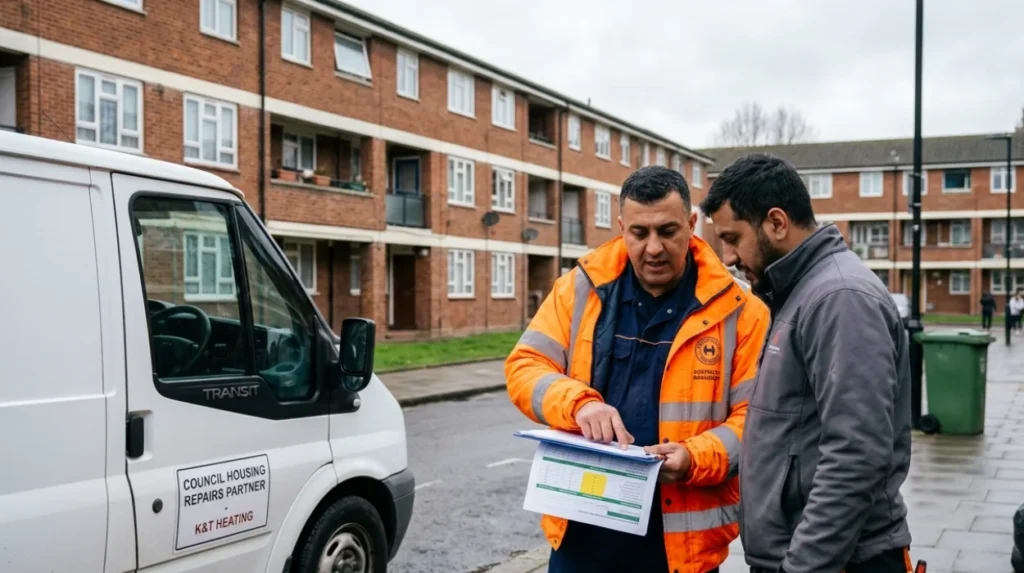
Hackney Council manages its housing repairs through a network of internal staff and multiple external contractors, a structural shift implemented to improve service delivery capacity, increase response times for urgent repairs, and reduce the backlog of outstanding maintenance tasks.
Following historical challenges with service delivery and contractor performance, the Council transitioned from reliance on a single main support contractor to a model involving four separate specialized contractors. This diversification allows the council to maintain better oversight and accountability. By spreading the volume of work across several providers, the council aims to prevent the service bottlenecks that historically led to significant delays for residents.
The performance of these contractors is measured against the priority response timeframes established by the Council. For instance, regarding plumbing, the council has mandated that all leaks must be addressed either within 24 hours or by the end of the following working day. Data analysis of this new model indicates a measurable reduction in average repair times, such as the decrease in plumbing leak resolution times from eight days to just under three days. This structural change demonstrates the Council’s ongoing commitment to optimizing its maintenance mechanisms and meeting statutory obligations toward its tenants.
What are the tenant’s rights regarding housing disrepair?
Under the Landlord and Tenant Act 1985, tenants have a statutory right to live in a property that is kept in good repair, including the structure, exterior, and essential installations like water, gas, electricity, and sanitation.
If Hackney Council fails to carry out necessary repairs within a reasonable timeframe after being notified, they may be in breach of these statutory obligations. Tenants possess specific legal mechanisms to enforce these rights when the standard repair process fails:
- Right to Repair Scheme: A specific policy that covers small, urgent repairs. If the council does not complete these within a set period, tenants may be entitled to compensation.
- Formal Complaints Procedure: Tenants must exhaust the Council’s internal complaints process before escalating to higher authorities.
- Housing Ombudsman Service: If the internal complaint remains unresolved, the tenant can refer the matter to the Housing Ombudsman, which independently reviews the dispute and can order the landlord to perform repairs or pay compensation.
- Legal Action: In cases of severe or persistent disrepair that impacts health and safety, tenants can initiate a civil claim for disrepair to legally compel the landlord to act and seek compensation for the inconvenience or damage caused.
Understanding these rights is essential for tenants dealing with prolonged neglect. While housing surgeries are a valuable first step for administrative resolution, formal legal or ombudsman channels exist for instances where the council fails to uphold its obligations.
What is a Hackney Council housing repair surgery?
A housing repair surgery is a face-to-face session where tenants meet housing officers to report and resolve repair issues in their homes.