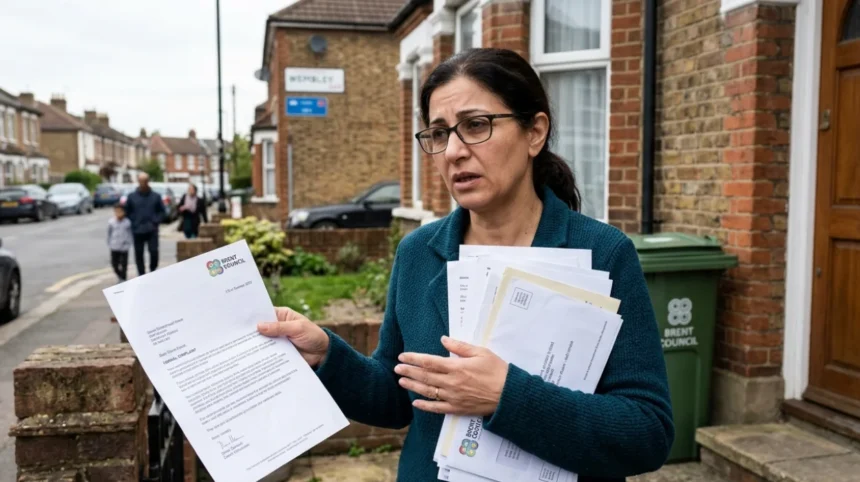
Brent Council is a London Borough Council that covers large parts of North London, including Wembley, Neasden, Kilburn, Harlesden, and parts of Cricklewood and Willesden. Despite a formal complaints policy, many residents report not receiving timely or meaningful replies to complaints, especially about housing, council tax, and local services. This article explains what “Brent Council complaints” means, how its complaint‑handling system is supposed to work, why responses are often delayed or absent, and what residents can do when they do not get a reply.
- What does “Brent Council complaints” mean?
- How is Brent Council’s complaints system supposed to work?
- Why do residents feel Brent Council is not replying?
- What do Brent Council’s complaints policies say about response times?
- How are housing‑related complaints treated in Brent?
- Why do some complaints never get a proper response?
- How can North London residents improve their chances of a reply?
- What impact does poor complaint‑response have on trust in Brent?
- What changes is Brent Council planning to its complaints system?
What does “Brent Council complaints” mean?
A Brent Council complaint is a formal, written expression of dissatisfaction with a council service, usually made via the council’s online “How to make a complaint” page, by email, or by letter. By law, the council must treat eligible complaints as “statutory complaints” under the Local Government and Social Care Ombudsman (LGSCO) framework, which applies to services such as housing, social care, education, and council tax. A complaint is different from a general enquiry or a casual phone call; it triggers a defined multi‑stage process with target response times and escalation routes.
Brent defines three main complaint routes: corporate complaints (handled by the central complaints team), service‑specific complaints (for example housing management or children’s services), and statutory adult‑care or children‑services complaints. Corporate complaints are typically acknowledged within 5 working days and should be responded to within 10 working days, with a possible extension of up to another 10 working days for complex cases. Service‑specific policies, such as those for housing management or children’s services, set longer timescales, often up to 20 working days for stage‑two investigations.
In practice, many residents report that their “complaints” are downgraded to informal enquiries or are not acknowledged at all, which can make it appear that the council is “not responding.” This blurring of the line between a complaint and a concern is one reason why residents feel ignored, even when the council may still be treating the issue internally as a non‑formal case.

How is Brent Council’s complaints system supposed to work?
Brent Council follows a multi‑stage complaints procedure modelled on the LGSCO complaint‑handling code. The process usually starts when a resident submits a complaint that meets the council’s eligibility criteria, such as being about a specific decision, action, or service failure. The central Complaints Service Team then creates a case record, assigns it to a lead officer, and notifies the resident that the complaint is being formally considered.
The first stage, often called Stage 1, is a local investigation by the service team responsible for the alleged failure (for example Housing Management, Children’s Services, or Council Tax). The council aims to respond within 10 working days, with extensions allowed for complex, historic, or multi‑strand complaints. If the resident is unhappy with the outcome, they can escalate to Stage 2, where an independent investigating officer outside the original service team reviews the case and may arrange a meeting with the complainant.
Where the council’s internal process does not resolve the issue, residents can ultimately refer the matter to the Local Government and Social Care Ombudsman (LGSCO) or, in housing cases, the Housing Ombudsman. These bodies can investigate local‑authority decisions, assess whether the council has acted fairly and in line with its own policy, and order remedies such as apologies, service improvements, or compensation. The LGSCO and Housing Ombudsman have criticised Brent in several individual cases for delays, poor communication, and failure to adhere to published timescales.
Why do residents feel Brent Council is not replying?
Residents often feel Brent Council is not responding because their complaints land in overloaded channels, are misclassified, or are not acknowledged in writing. Phone lines and email teams can be slow, with some residents reporting long call‑waiting times, generic auto‑replies, or unanswered emails, especially for housing‑related issues such as repairs, rehousing, or council‑tax debts. The council itself has acknowledged that its complaints handling is “not up to standard” and has launched projects to improve record‑keeping and follow‑ups.
Another issue is that the council sometimes treats expressions of dissatisfaction as “concerns” or “queries” rather than formal complaints, which means they do not trigger the automatic acknowledgement and response timelines. Residents may send multiple messages and receive only one brief reply or no reply at all, creating the impression of non‑response even when the case is being handled informally. This mislabelling can also mean that performance data reported in the Annual Complaints Report under‑represents the true volume of complaints, because many cases are not logged as formal complaints until much later, if at all.
Internal pressures also contribute to the perception of non‑response. Reports and local scrutiny show that some service areas, including housing management and children’s services, have experienced high caseloads, staff shortages, and IT‑system problems, which increase processing time and reduce the quality of written feedback. When the same officers are dealing with urgent front‑line work, such as safeguarding or emergency repairs, non‑urgent complaints may be deprioritised, leading to missed deadlines and delayed replies.
What do Brent Council’s complaints policies say about response times?
Brent Council’s own “How to make a complaint” guidance states that Stage‑1 corporate complaints should be acknowledged within 5 working days and answered within 10 working days, with a possible extension of 10 working days for complex cases. For housing‑management complaints, the council has committed to acknowledging escalated complaints within 5 working days and providing a full Stage 2 response within 20 working days, though it notes that some cases may take longer where they are historic or highly complex.
The Annual Complaints Report for 2024–2025 confirms that timeliness of complaint responses has been a key performance issue, with some cases missing the 10‑ or 20‑day targets. The report highlights that delays are more common in areas such as housing management and children’s services, where complaints often involve multiple departments, long time periods, or sensitive information. The council has since pledged to enhance monitoring of these cases in order to reduce unnecessary escalations and improve reply rates.
In housing‑related ombudsman cases, the Housing Ombudsman has repeatedly found that Brent failed to meet its own internal timelines, including by not escalating complaints to Stage 2 on time and by prolonging investigation periods. These delays have led ombudsman‑ordered remedies such as compensation for distress and inconvenience, explicit confirmation that the council must follow its own complaint‑handling code, and recommendations to improve record‑keeping and communication with residents.
How are housing‑related complaints treated in Brent?
Housing management complaints in Brent cover issues such as repairs, pest infestations, anti‑social behaviour, rehousing, and allocation of council or social‑rent properties. Residents are instructed to submit housing‑management complaints via a dedicated online form or by email, which should then be logged in the council’s corporate complaints system and assigned a case reference. The council has a separate “How your complaint will be handled” page for housing management, which sets out the 5‑day and 20‑working‑day timelines mentioned earlier.
Several Housing Ombudsman decisions show that Brent has mishandled housing‑management complaints by failing to acknowledge complaints properly, not updating residents, or not escalating unresolved cases to Stage 2. In one 2025 decision, the landlord (Brent Council) did not escalate a resident’s complaint to Stage 2 within the required timeframe, which substantially prolonged the resident’s wait for resolution and caused additional distress. The Ombudsman deemed the handling “mismanaged” and ordered the council to pay compensation and to review its internal processes.
Inside the council, the Housing Management team has been under additional pressure due to high demand for repairs and rehousing, particularly in areas with older housing stock and overcrowding. The council’s 2024–2025 Complaints Report notes that housing‑management complaints continue to be a significant source of dissatisfaction, with residents often citing poor communication and lack of follow‑up rather than the technical merits of the work itself.
Why do some complaints never get a proper response?
Some complaints never receive a proper response because they are not formally logged, are lost in the system, or are not prioritised alongside urgent work. Residents sometimes report sending emails or letters that receive no acknowledgement, or they receive generic auto‑replies that do not address the specific issue raised. In one documented case, a resident’s “concerns” were only later treated as a formal complaint, after the council’s own Complaints and Casework Manager and the Corporate Director, Law & Governance, decided the issues met the formal‑complaint threshold.
Systemic issues inside the council also play a role. The council has admitted that its complaint‑handling culture and record‑keeping need improvement and has begun internal projects to tighten logging, training, and performance reporting. However, implementing these changes across large departments such as Housing Management and Children’s Services takes time, and residents may therefore experience inconsistent treatment from one office to another.
In some instances, the council may also treat a complaint as “closed” after sending a brief response, even if the resident feels the issue is unresolved. This can lead to a cycle in which the resident continues to write follow‑ups, but the council does not re‑open the case formally, creating the impression that it is ignoring the complaint. When such cases are later referred to the LGSCO or Housing Ombudsman, the ombudsman may conclude that the council’s original response was inadequate and order further investigation or remedies.
How can North London residents improve their chances of a reply?
Residents in North London wards such as Wembley, Neasden, Kilburn, and Harlesden can improve their chances of a reply by using the council’s formal complaint routes, keeping clear records, and escalating when necessary. The first step is to submit a written complaint that clearly states the service, the date of the incident, the impact on the resident, and what outcome is being sought (e.g. repair, rehousing, or compensation). Complainants should use the online “How to make a complaint” form or email the dedicated complaints address, and they should keep a copy of the complaint and any reference numbers.
If there is no acknowledgement within 5 working days or no substantive response within the stated timeframe, residents should write a follow‑up email or letter, quoting the original complaint reference and explicitly stating that they are escalating the matter. For housing‑management complaints, residents can invoke the Stage‑2 escalation process and request an investigating officer, as outlined in the council’s housing‑management complaints guidance.
When the council still fails to respond adequately, residents can refer the case to the Local Government and Social Care Ombudsman (LGSCO) or the Housing Ombudsman, depending on the nature of the complaint. These bodies can compel the council to provide a full investigation and can order compensation or other remedies if they find maladministration. The LGSCO has already criticised Brent in several cases for slow or inadequate responses, and these findings are used in the council’s annual complaints‑performance review to drive internal improvements.
What impact does poor complaint‑response have on trust in Brent?
Repeated delays and non‑responses damage trust in Brent Council among North London residents, especially in areas such as housing, council tax, and children’s services. Residents describe feeling “ignored,” “disrespected,” or “treated as a nuisance” when they cannot get a reply, even after multiple attempts. This perception of indifference is reinforced by external reviews and ombudsman decisions that highlight systematic failures in communication, record‑keeping, and adherence to policy.
Poor complaint‑response also affects how residents engage with services. Frustrated residents may avoid contacting the council even for urgent matters, or they may rely on informal channels such as social media or local‑neighbourhood groups, which are not part of the formal complaint‑handling system. This can skew the council’s internal performance data, because only those who persist through the formal route are captured in the official complaints statistics.
On the council’s side, the 2024–2025 Annual Complaints Report notes that complaints are an important source of learning and service improvement, but it also admits that response‑time and communication weaknesses remain “points of strain.” Improving these weaknesses is necessary not only to reduce the number of ombudsman referrals but also to rebuild trust in Brent Council as an accountable local authority for North London.
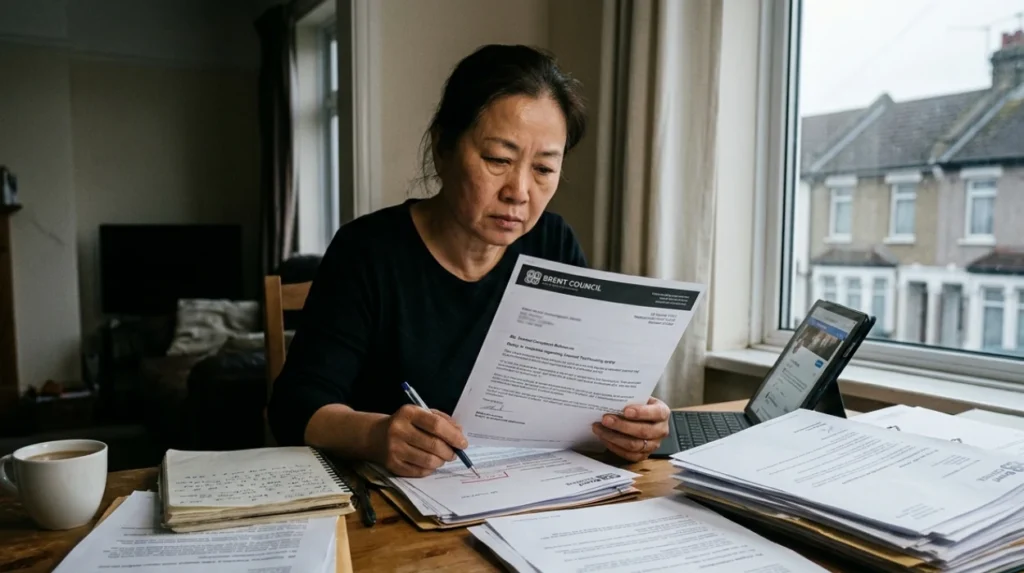
What changes is Brent Council planning to its complaints system?
Brent Council has begun several reform initiatives aimed at improving complaint handling, transparency, and response quality. In October 2024 it launched a project focused on housing‑management complaints, which has included creating a new housing‑management complaints webpage, consulting 135 residents via survey, and starting internal culture‑change campaigns so staff recognise the importance of resident dissatisfaction. The council has also commenced system changes to strengthen complaint‑record keeping, performance reporting, and training for complaint handlers.
The 2024–2025 Annual Complaints Report signals that the council plans to monitor more closely the number of compensation cases and the timeliness of complaint responses, with the goal of reducing unnecessary escalations to the LGSCO. The report also notes that the difference between Brent’s resolved‑complaint rate and those of similar London boroughs is now smaller, suggesting that some reforms are beginning to show results. However, the council acknowledges that deeper cultural and operational changes are still needed, particularly in services such as housing management and children’s services.
For residents, these planned changes mean that the formal complaint system may become more transparent and responsive over time, but they also mean that persistence is still necessary in the short term. Staying within the official complaint‑handling channels, documenting all contacts, and escalating to the LGSCO or Housing Ombudsman where appropriate remain the most effective ways for North London residents to obtain replies and remedies from Brent Council.
Why does Brent Council take so long to reply to complaints?
Common reasons include high workload, staff shortages (especially in housing), and complaints being misclassified as “enquiries” instead of formal complaints.