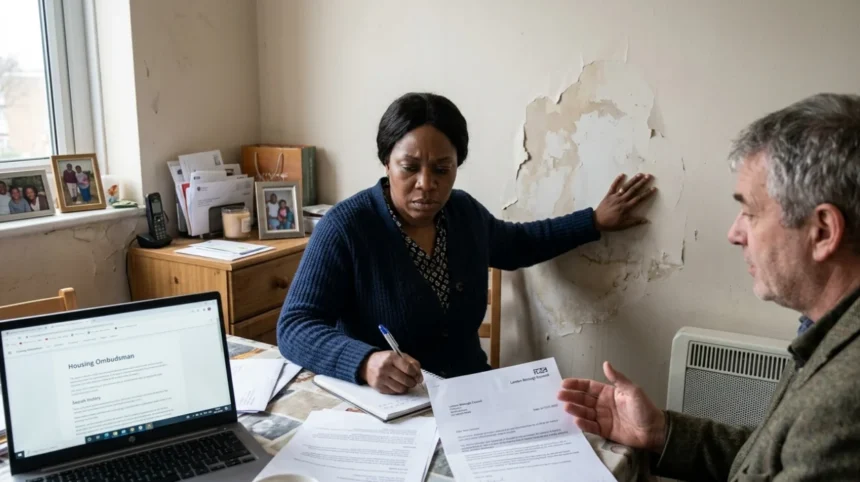
If your local council ignores a repair request, you must formally document the issue in writing and progress through their internal complaints procedure before escalating your case to the Housing Ombudsman or seeking independent legal intervention to enforce your rights.
- What are the legal responsibilities of the council as a landlord?
- How do you document a repair request for maximum impact?
- When should you escalate a repair to the formal complaints process?
- How do you report the council to the Housing Ombudsman?
- Can you force the council to carry out repairs through legal action?
Housing disrepair in the United Kingdom is governed by specific statutory frameworks that mandate landlords—including local councils—to maintain residential properties in a safe and habitable condition. When a council fails to act on legitimate repair requests, tenants are empowered by established legal processes designed to compel the landlord to fulfil their obligations. Understanding these mechanisms is essential for any North London resident facing negligence regarding essential home maintenance, as effective resolution relies on building a robust, evidence-backed trail of communication and failure-to-act.
What are the legal responsibilities of the council as a landlord?
The Landlord and Tenant Act 1985, specifically Section 11, legally obligates your council landlord to keep the structure, exterior, and essential installations of your home—including water, gas, electricity, and sanitation—in a state of good repair.
Under this legislation, the council is responsible for the ongoing maintenance of the property’s fabric, which encompasses walls, roofs, chimneys, and foundations. Furthermore, they must ensure that all installations for the supply of water, gas, and electricity, as well as space heating and water heating, are maintained and kept in proper working order. This duty also extends to common parts of a building, such as staircases, entrance halls, and communal lighting, ensuring these areas remain safe for tenant use.
Crucially, the Homes (Fitness for Human Habitation) Act 2018 strengthens these protections by requiring that properties remain fit for habitation throughout the duration of the tenancy. If a property suffers from damp, mould, excessive cold, or severe structural hazards, the council must address these issues regardless of whether the tenant specifically requested a repair, provided the council is aware of the defect. Failure to adhere to these standards constitutes a breach of the tenancy agreement, providing the legal foundation for formal complaints and potential enforcement actions.
How do you document a repair request for maximum impact?
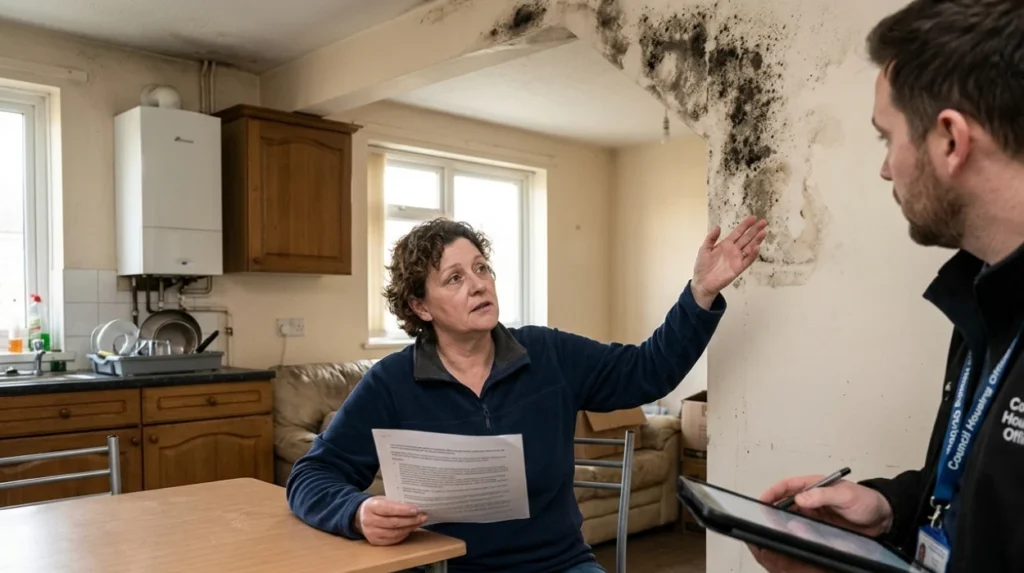
You must create a comprehensive, chronological evidence file by reporting the repair in writing, including dated photographs of the damage, copies of all correspondence, and records of every attempt to resolve the issue with the council.
Effective documentation is the bedrock of any successful housing disrepair claim. When you first identify a defect, you should send a formal report via the council’s official repair portal or email, ensuring you keep a digital record of the submission. If you use physical mail, always send letters via recorded delivery, as this provides verifiable proof of receipt by the council’s housing department.
Your evidence file should contain three distinct components. First, provide clear, high-resolution photographs or videos that accurately demonstrate the severity of the disrepair. Second, maintain a log of all interactions, including the names of council representatives you spoke with, the dates and times of calls, and a summary of what was promised. Third, keep copies of all relevant documents, such as previous inspection reports, medical evidence if the disrepair is affecting your health, and any correspondence where the council acknowledged the problem but failed to take action. This meticulous approach ensures that if you eventually escalate the matter to the Housing Ombudsman, your case is supported by undeniable factual history.
When should you escalate a repair to the formal complaints process?
You must escalate to the formal internal complaints process immediately if the council fails to respond to your initial repair request within their stated service-level agreement or within a reasonable timeframe, typically 14 to 28 days depending on urgency.
Most local authorities in North London operate a structured, multi-stage internal complaints policy that must be exhausted before external bodies will consider your case. Stage one typically involves an investigation by a team manager, who is expected to provide a formal response within 10 working days. If the resolution offered at this stage is unsatisfactory or if the council fails to meet its own deadlines, you must advance to stage two, which involves a senior manager review and generally allows for a 20-working-day response period.
A minority of councils may include a third stage involving a formal complaints panel, lasting another 20 working days. During this process, it is vital to keep your communication focused on the specific breach of the tenancy agreement and the health and safety implications of the outstanding repairs. Always request a “Complaint Closure Letter” at the end of each stage, as this document is a prerequisite for escalating your grievance to the Housing Ombudsman or other independent regulatory bodies.
How do you report the council to the Housing Ombudsman?
You can escalate a “Repair Failure” to the Housing Ombudsman once you have completed all stages of your council’s internal complaints procedure or if the council has failed to respond within eight weeks of your initial complaint.
The Housing Ombudsman is an independent public body that resolves disputes between social housing tenants and their landlords. To initiate this process, you must submit your case via the Housing Ombudsman’s online portal, providing your unique complaint reference number and all supporting evidence gathered during your internal complaint stages. The Ombudsman evaluates whether the council has failed to follow its own procedures, caused unreasonable delay, or ignored its statutory repair obligations.
When the Ombudsman reviews a case, they consider three main outcomes: upholding the complaint, partially upholding it, or rejecting it. If the complaint is upheld, the Ombudsman may issue legally binding orders, which include requiring the council to perform the necessary repairs within a strict timeframe, conducting an independent survey of the property, or providing financial compensation to the tenant for the distress and inconvenience caused by the prolonged disrepair. Throughout this process, continue to pay your rent, as withholding payment can negatively impact your legal standing and may lead to eviction proceedings.

Can you force the council to carry out repairs through legal action?
Yes, you can initiate civil legal proceedings against the council to enforce repairs, often with the assistance of solicitors specializing in housing disrepair, who may operate on a “no win, no fee” basis to secure injunctions and compensation.
When administrative complaints fail to produce results, civil court action becomes the primary mechanism for compelling action. A court can issue an injunction, which is a formal order requiring the council to carry out the repairs within a court-mandated period. Failure to comply with an injunction can lead to severe penalties, including fines for the council or, in extreme cases, contempt of court proceedings against responsible officers.
Beyond the injunction, you may be entitled to damages, which cover two main areas: general damages for the period during which you lived in an unfit property, and special damages to replace or repair personal belongings damaged by the disrepair, such as furniture ruined by damp or clothes affected by mould. It is advisable to seek specialist legal advice early, as professional solicitors can assess the strength of your evidence and determine the likelihood of a successful claim. Legal experts will often involve environmental health inspectors, who can conduct an official hazard assessment of your home, providing powerful independent evidence to support your legal case for enforcement.
What can I do if my council landlord is ignoring repair requests?
Start by putting everything in writing and then move into the formal complaints process. If that fails, escalate to the Housing Ombudsman.