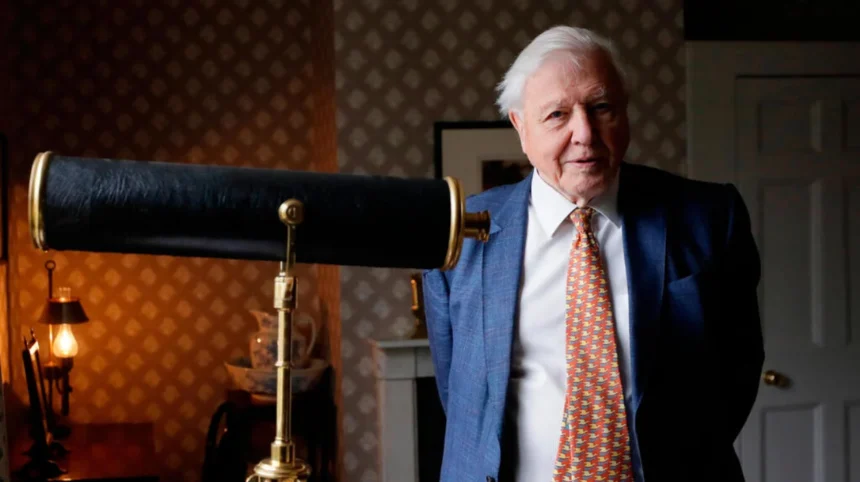
Most people retire at 65. Sir David Attenborough turned 100 just three days ago and is still narrating wildlife documentaries. That fact alone tells you everything you need to know about the man the world has spent a century falling in love with.
Born in London on 8 May 1926, the same year the General Strike brought Britain to a standstill, David Frederick Attenborough has lived through more history than most textbooks cover. The Great Depression. The Second World War. The birth of television. The moon landing. The internet. Climate change. Through all of it, he never stopped filming, never stopped narrating, and never stopped fighting for the planet he loves.
The birthday celebrations on 8 May were nothing short of extraordinary. The BBC hosted a live event at London’s Royal Albert Hall that brought together some of the most recognisable names on earth to pay tribute. King Charles III led the messages, praising Attenborough’s unparalleled contribution to public life. Leonardo DiCaprio called him the greatest environmental voice of his generation. Judi Dench said he had made her a better person. UN Secretary-General António Guterres described him as one of the planet’s most vital advocates at the most critical moment in its history. Phoebe Waller-Bridge and Nile Rodgers also sent their love.
Dan Smith of Bastille performed live, followed by Iceland’s Sigur Rós playing Hoppípolla, the track that has become inseparable from Attenborough’s most breathtaking sequences. When those opening notes filled the hall, the audience of world-famous faces sat in near silence, swept up in something that felt bigger than a birthday.
Attenborough himself marked the milestone with characteristic modesty. In a new BBC documentary, Making Life on Earth: Attenborough’s Greatest Adventure, he was asked to name the moment that has stayed with him most across seven decades of filmmaking. His answer was immediate. During the filming ofLife on Earth in 1979, a silverback gorilla in the mountains of Rwanda approached him, reached out a hand, and briefly touched him before moving away. The moment was broadcast to millions and remains one of the most-watched clips in BBC history. “Extraordinary, really,” Attenborough said quietly.
“It was one of the most privileged moments of my life.”
The career that produced that moment began in 1954 with Zoo Quest, one of the first programmes to film wild animals outside a studio. From there came BBC Two, colour television launched during Wimbledon in 1967, and then a body of work that permanently reshaped how humanity understands the natural world. Life on Earth. The Blue Planet. Planet Earth. Frozen Planet. Our Planet. Every series a landmark. He remains the only person in history to have won a BAFTA for programmes in black and white, colour, HD, 3D, 4K, and virtual reality.
At 100, this man is not done. Blue Planet III is in production, and Attenborough will narrate it. The ocean, he has said, is the most important place on earth.