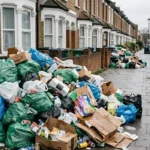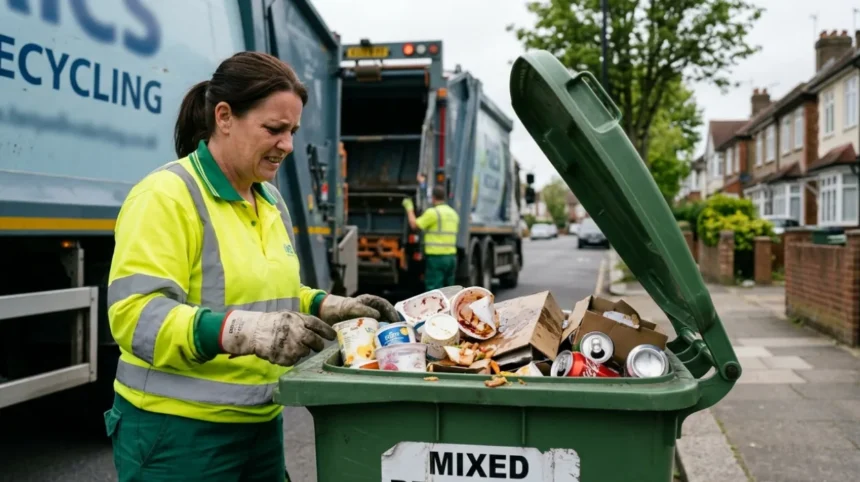
Bins are rejected because non-target materials, food residue, liquids, or incorrect packaging reduce recyclate quality and can make entire collection loads unsuitable for recycling; North London councils and processors therefore refuse collection or discard loads to general waste or incineration to protect health and processing efficiency.
- What is bin contamination?
- Why do councils refuse to collect contaminated bins?
- What materials most commonly cause rejection?
- How do materials recovery facilities detect and respond to contamination?
- What are the legal and regulatory drivers behind rejection?
- How does contamination affect recycling economics and markets?
- What best-practice steps prevent bin rejection?
- What enforcement actions occur after a contaminated collection?
- What are practical examples of contamination leading to rejection?
- How will contamination issues evolve and what are future implications?
- Where to find authoritative local guidance and support?
What is bin contamination?
Bin contamination means items placed in a waste stream do not belong there or are soiled, wet, or hazardous, preventing correct sorting and safe processing; examples include food-soiled cartons, plastic bags in recycling, and batteries in general waste.
Bin contamination is the presence of materials in a container that are either the wrong material for that stream or are soiled, wet, or hazardous, which reduces the quality of the collected material. Local authorities and waste facilities define contamination by their accepted lists for each stream and by material condition (clean/dry) required for processing. In North London boroughs such as Haringey, Islington, Camden and Barnet, local guidance mirrors national MRF standards and emphasises dry, loose recyclables and separate food waste where kerbside food collections exist. Contamination triggers manual rejection at kerbside or wholesale rejection at the materials recovery facility (MRF) when contamination rates exceed operational thresholds.
Why do councils refuse to collect contaminated bins?
Councils refuse collection to prevent cross-contamination of loads, protect crew safety, reduce processing costs, and avoid entire lorry-load rejections that force disposal by incineration or landfill, which increases costs and environmental impacts.
Council crews are instructed to leave containers that contain visible contamination because a single heavily contaminated bin can compromise a whole vehicle’s load and raise health and safety risks for staff handling the waste. North London councils operate collection contracts with MRFs that include quality thresholds; when kerbside crews identify non-compliant bins they apply contamination notices or leave the bin uncollected to prevent whole-load rejection at regional MRFs serving London boroughs. When a contaminated load reaches a materials recovery facility, operators may reject the entire load if contamination exceeds acceptable limits, which forces disposal at higher cost and reduces recycling rates for the local authority.
What materials most commonly cause rejection?
Common causes are food and liquid residue, plastic bags, nappies and hygiene products, incorrectly mixed paper/card, and hazardous items such as batteries; each stream has specific problem items, for example greasy pizza boxes and plastic bags in recycling.
Food waste and liquids are the most frequent contaminants in household recycling because even small residues spread and degrade paper, card, and cardboard, and cause plastic and glass to stick together, which complicates sorting. Plastic bags and film contaminate recycling lines because they tangle machinery and cannot be processed at MRFs that expect loose, bag-free material. In North London flats and terraced housing, congested bin stores and shared containers increase the chance of mixed waste and bagged recycling entering streams, especially where communal recycling guidance is unclear. Nappies, sanitary products, aerosols, and batteries are non-recyclable in standard streams and create hygiene or fire risks, prompting rejection or special handling requirements.
Explore More Help & Resources
What happens when recycling is not collected?
How to report repeated missed rubbish collections?
How do materials recovery facilities detect and respond to contamination?
MRFs use mechanical sorting, visual inspection, and quality-control sampling; when contamination rates in a vehicle load exceed contractual thresholds, operators either remove contaminants manually or reject the load for disposal, depending on time, cost, and safety considerations.
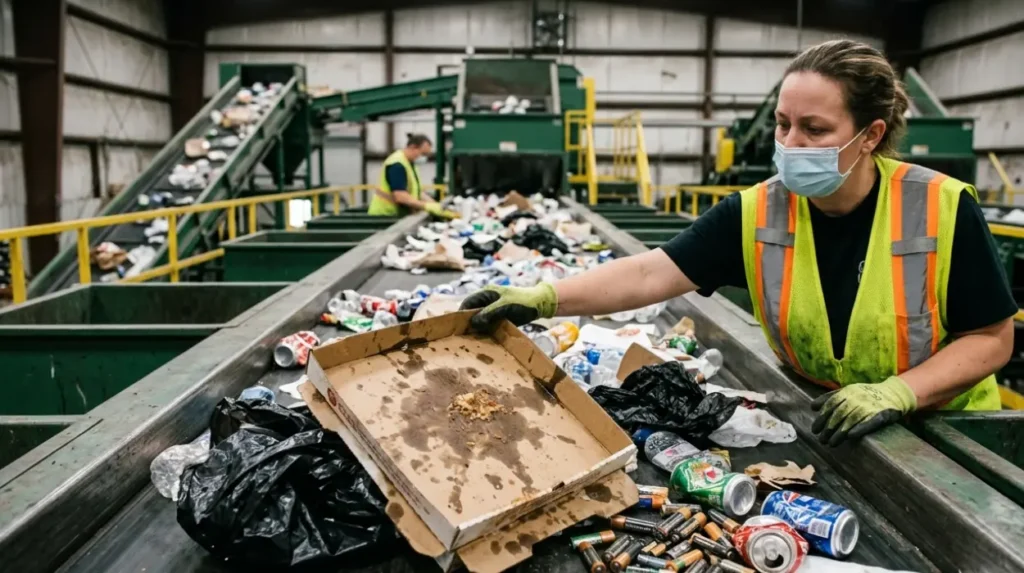
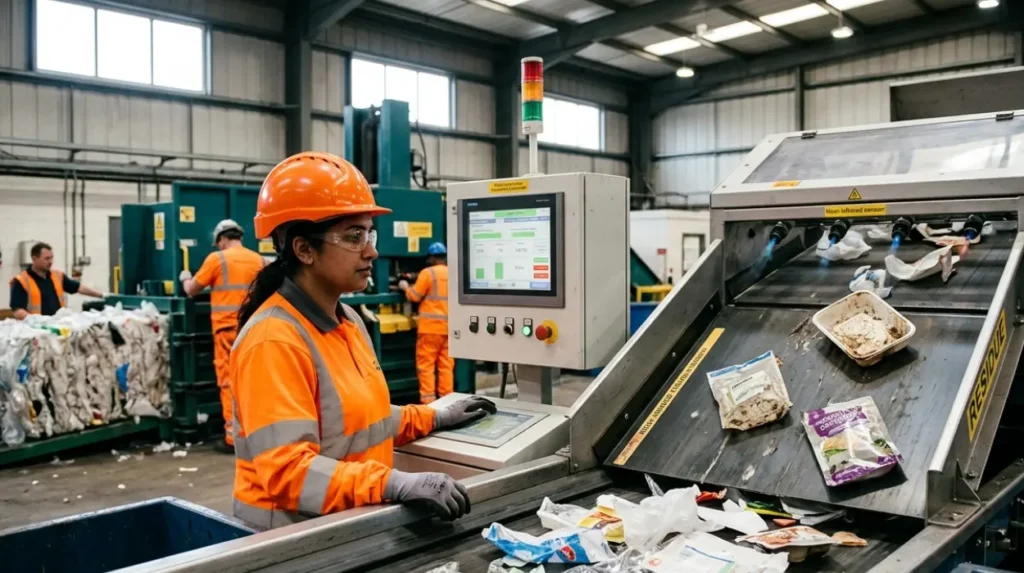
At the MRF, incoming loads pass tip floors, picking lines and mechanical separators; trained operatives remove visible contaminants, while conveyor-based sensors and screens separate materials by size and density. London-area MRFs that process material from North London boroughs use sampling to measure contamination levels and apply contractual rules with local councils; when contamination is too high, the site rejects the load and diverts it to energy-from-waste or landfill because cleaning the load is uneconomic or unsafe. Rejection protects downstream processes—such as baling and commodity sales—from receiving downgraded or hazardous material that would reduce market value or trigger buyer refusal.
What are the legal and regulatory drivers behind rejection?
Regulations require waste producers and collectors to separate streams, meet quality standards, and prevent hazardous disposal; from 31 March 2025 businesses in England face stricter separation duties, increasing enforcement of contamination controls and rejection where rules are breached.
UK waste regulations and recent policy updates require separation of recyclable materials and impose duties on businesses and local authorities to minimise contamination and maximise quality for recycling markets, with statutory guidance setting expected separation standards from March 2025 for businesses in England. North London councils implement these regulations through service specifications and contractual quality metrics with MRF operators; commercial premises in Camden, Islington and surrounding boroughs must follow separate collection rules or face enforcement under business waste duties. Councils operate contracts with MRFs that include quality specifications and penalties for excessive contamination; these contractual rules create practical thresholds for rejecting contaminated loads to protect marketability of recyclates.
How does contamination affect recycling economics and markets?
Contamination reduces the commodity value of recyclables, raises processing costs, and can cause whole-load disposal; this reduces council income from sales, increases disposal bills, and undermines the circular economy by reducing usable recyclate supply.
When recyclables contain contaminants, buyers lower the price or refuse loads, because mixed or soiled material requires extra cleaning or is unsuitable for end-use manufacturing, shrinking revenue for local authorities and MRF operators. For North London boroughs, reduced income from commodity sales affects local waste budgets and can limit investment in local recycling services or education programmes targeted at high-contamination areas such as dense housing and student accommodation. Increased sorting and disposal add operational costs; if a load is rejected and sent to incineration or landfill, councils pay higher disposal fees and lose recyclable material revenue, weakening funding available for waste services and recycling education programmes.
What best-practice steps prevent bin rejection?
Prevent rejection by rinsing containers, keeping materials dry and loose (no plastic bags), following local lists for each stream, separating food waste and hazardous items correctly, and checking council guidance before collection day.
Clean and empty containers before placing them in recycling; even small amounts of food or oil degrade paper and attract pests, increasing rejection risk. Never place recyclables inside plastic carrier bags—use the bin directly—because most MRFs cannot process bagged loads and bags tangle sorting equipment. In North London, residents in flats should use internal sorting systems and follow communal recycling notices; building managers must provide clear signage and adequate storage to prevent bagged or incorrectly mixed recyclables entering communal bins. Follow your local authority’s published lists for accepted items and any separate food or garden waste schemes, including specific rules for glass, textiles, electricals, and hazardous items, because guidance varies by council and contract. For businesses, implement segregated waste streams and staff training to meet the legal separation duties effective from March 2025, and keep records of waste handling to demonstrate compliance.
What enforcement actions occur after a contaminated collection?
Authorities issue contamination notices, leave non-collected bins with hangers or stickers, impose fines or service withholding for repeat offences, and require corrective action from businesses under waste duty regulations enforced since 2025.
Household bins left uncollected receive contamination hangers or stickers explaining the fault and providing corrective instructions; repeat non-compliance can lead to refusal of further collections until the issue is fixed. North London councils typically combine education with enforcement: initial interventions include door-knocks, letters, and information campaigns in high-contamination streets, followed by fines or remedial notices for persistent offenders or non-compliant commercial premises. Councils may issue Fixed Penalty Notices, remedial notices, or require businesses to change waste contracts if contamination persists, relying on statutory duties for businesses introduced in recent regulatory updates to enforce correct separation and reduce contamination.
What are practical examples of contamination leading to rejection?
Examples include a recycling lorry-load rejected because many households placed food-soiled pizza boxes and plastic bags into recycling, a communal flat bin left uncollected for nappies, and a business load rejected for mixed hazardous waste and batteries.
A common occurrence is pizza boxes with grease stains placed in paper/card bins; grease soaks paper fibres and prevents proper pulping, causing MRFs to downgrade or reject loads containing many such boxes. In North London, multi-occupancy buildings often generate bagged recycling that contains non-recyclable items; when refuse crews identify contaminated communal bins, they leave contamination notices and the block faces repeated service actions until compliance improves. Commercial premises mixing food waste, contaminated packaging and hazardous items such as batteries into a general recycling container can have their entire commercial load refused under business waste separation rules and contractual penalties applied.
How will contamination issues evolve and what are future implications?
Stricter regulations, increased MRF automation, commodity buyer quality demands, and extended producer responsibility schemes will raise quality expectations, leading to fewer accepted contaminated loads and stronger incentives for source separation and producer-led packaging redesign.
Regulatory tightening and the UK’s expanding extended producer responsibility frameworks push producers to design packaging for recyclability, reducing contamination caused by hard-to-clean or mixed-material items and improving sorting compatibility at MRFs. MRF automation and optical sorting improve contamination detection accuracy but also enforce stricter quality thresholds because buyers demand consistent, high-purity bales; higher automation increases rejection of substandard loads rather than relying on manual correction. For North London, combined action by boroughs, local waste partnerships, and producer responsibility measures will change kerbside expectations and require targeted education in high-density areas, improving long-term recycling outcomes and reducing rejected loads.
Where to find authoritative local guidance and support?
Consult your North London council’s waste pages for accepted materials and contamination rules, contact your waste contractor for business collections, and use government guidance for statutory duties and separation requirements introduced in 2025.
Local authority web pages explain the exact list of accepted materials, reasons for non-collection, and the bin contamination notification process; these pages also provide advice on preparing materials, food waste schemes, and special collections for bulky items. North London residents should check the specific borough site—such as Camden, Islington, Haringey, or Barnet—for local rules, collection calendars, and communal bin guidance, because collection arrangements and accepted items differ by council and contractor. Businesses should consult DEFRA and their local waste contractor for statutory separation duties and contractual quality thresholds established by regulations effective from March 2025, which include separate handling requirements for certain recyclable streams.
Why do councils reject contaminated bins?
Councils reject contaminated bins to stop entire recycling loads being ruined, protect sorting machinery, reduce fire and hygiene risks, and avoid expensive disposal costs caused by unusable recyclables.