Key Points
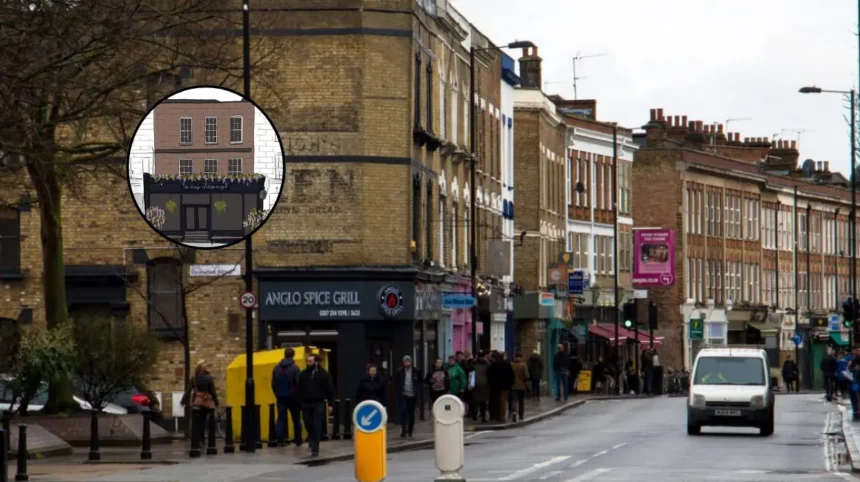
- Historical Transition: The iconic Gary’s Bar on Stoke Newington Church Street, which closed on 28 December 2025, is being reimagined as a traditional pub.
- The Namesake: The new establishment will be named ‘The Mary Wollstonecraft’, paying tribute to the 18th-century feminist philosopher and educator associated with the area.
- Independent Leadership: The project is led by independent publican Nick Bailey, the founder of the successful Robin Ale & Cider House in Stroud Green.
- Heritage Site: The premises at 181 Church Street is a Grade-II listed building dating back to the early to mid-1700s.
- Community Features: The venue will retain its expansive beer garden, a rare asset in the locality previously used for music, sports, and language classes.
Stoke Newington (North London News) May 15, 2026 —A historic cornerstone of Stoke Newington’s social fabric is set for a significant revival as plans emerge to transform the former Gary’s Bar into a traditional ale house. Following its closure in late December after three decades of service, the Grade-II listed building at 181 Church Street will be rebranded as ‘The Mary Wollstonecraft’. The venture, spearheaded by acclaimed independent publican Nick Bailey, seeks to honour the legacy of the pioneering feminist philosopher while preserving the site’s longstanding reputation as a community hub.
When did Gary’s Bar close, and why is its replacement significant?
As reported by the editorial team at Hot Dinners, the venue at 181 Church Street had functioned as Gary’s Bar for over 30 years, serving as a staple of the North East London nightlife and community scene.
The establishment officially bade farewell to its regulars on 28 December last year. The closure marked the end of an era for Church Street, leaving a void in a neighbourhood known for its independent spirit and historical depth.
The significance of the replacement lies not only in the preservation of the physical structure—a mid-18th-century building—but in the cultural alignment of the new name. Mary Wollstonecraft, often cited as one of the founding feminist philosophers, lived and worked in Newington Green.
Her presence is already marked by a prominent, albeit controversial, sculpture by Maggi Hambling located nearby. By naming the pub after her, the new management is intertwining local heritage with the hospitality industry.
Who is Nick Bailey, and what is his vision for the new pub?
According to reporting from Hot Dinners, the redevelopment is being led by Nick Bailey. Bailey has already established a reputation within the North London pub circuit through his work with The Robin Ale & Cider House in Stroud Green, which opened in 2023.
The Robin Ale & Cider House has been noted for its “strong indie feel,” focusing specifically on real ales and ciders sourced from small, independent breweries across the United Kingdom.
This niche approach has allowed Bailey’s previous ventures to stand out amongst the more commercial or “chain” offerings found in the Finsbury Park and Stroud Green corridors.
Regarding the ethos of the new Stoke Newington site, it is understood that Bailey intends to replicate this commitment to independent producers.
The focus will shift away from the bar-centric model of the previous occupiers toward a “traditional neighbourhood pub” atmosphere. This includes maintaining the integrity of the Grade-II listed architecture while ensuring the beverage program reflects modern craft sensibilities.
What features will ‘The Mary Wollstonecraft’ retain from the original site?
While the branding and interior focus are set to change, the physical assets of 181 Church Street remain a primary draw for the local community. As noted by local heritage observers and community contributors to North London news outlets, the site is distinguished by its substantial beer garden.
Historically, under the stewardship of the previous owners, this outdoor space was a versatile venue for:
- Live Music: Hosting local bands and acoustic sets.
- Sporting Events: Large-screen broadcasts of football tournaments.
- Cultural Education: Unique community initiatives, such as Irish language lessons, which became a hallmark of the Gary’s Bar era.
The transition to The Mary Wollstonecraft is expected to keep these community-facing elements intact, albeit under a more traditional pub framework. The building itself, dating from the early to mid-1700s, requires a sensitive touch due to its listed status, ensuring that the historical character of Church Street is not diluted by modern renovations.
Background of the particular development
The transformation of 181 Church Street is reflective of a broader trend in Stoke Newington—a neighborhood that has spent the last two decades balancing rapid gentrification with a fierce desire to protect its radical history.
Mary Wollstonecraft’s connection to the area is profound. In 1784, she moved to Newington Green to establish a school for girls. It was during this period that her intellectual life flourished under the influence of the Dissenting minister Richard Price.
The choice to name a pub after her is part of a growing movement to reclaim and celebrate the “Radical Newington” identity.
The site itself, Gary’s Bar, was one of the few remaining “old school” venues that survived the initial wave of Church Street’s commercial evolution in the early 2010s.
Its closure was viewed by many residents as the end of a specific type of community hospitality—unpretentious and locally rooted. The entry of an independent operator like Nick Bailey, rather than a large corporate pub chain, is seen as a compromise that preserves the “indie” spirit of the street while modernising the offering for a new generation of residents who value craft provenance.
Prediction
The opening of The Mary Wollstonecraft is likely to have a stabilising effect on the Stoke Newington hospitality landscape. For the local residents, the prediction is a return to a “third space” that balances the heritage of the building with high-quality, independent products.
Given Bailey’s track record at The Robin, we can expect a shift in the demographic; while Gary’s Bar attracted a loyal, long-term local crowd, the new focus on real ales and cider will likely attract “destination drinkers” and craft beer enthusiasts from across London.
Furthermore, the emphasis on the beer garden ensures that the venue will remain a vital asset during the summer months, potentially increasing footfall for neighbouring retail businesses on Church Street. However, the transition from a bar—often associated with late-night music—to a “traditional pub” may lead to a quieter, more curated evening atmosphere. This change will likely be welcomed by residents living in the immediate vicinity of the Grade-II listed building, who may prefer the regulated environment of an ale house over a high-energy bar.
In the broader context of the London pub scene, The Mary Wollstonecraft will serve as a litmus test for whether “theme-adjacent” historical naming can successfully merge with the modern trend of independent cider and ale houses. If successful, it may set a precedent for other historical buildings in the borough to be rebranded with local historical figures, further entrenching Stoke Newington’s identity as a hub for both radical history and craft hospitality.