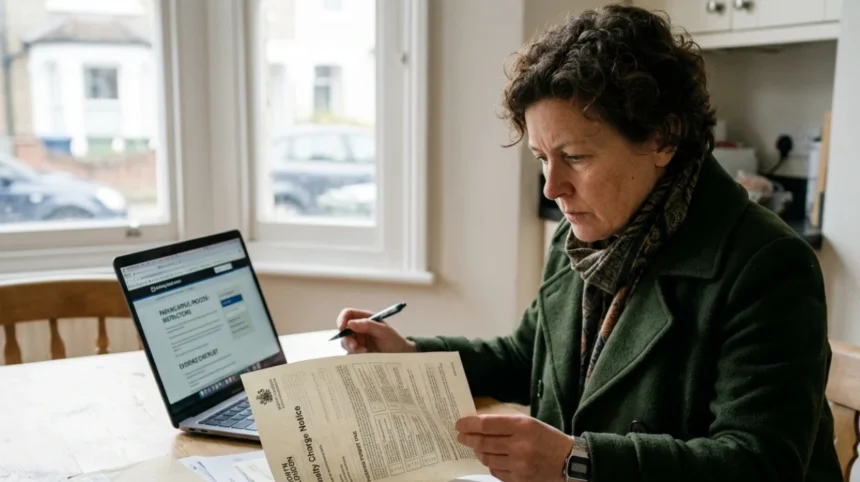
An unfair parking permit fine in North London is usually challenged by identifying who issued it, checking the legal basis for the charge, and submitting a written appeal with evidence within the correct deadline. In England and Wales, council PCNs normally allow 28 days to challenge, and an informal challenge within 14 days can preserve the discounted amount if rejected.
- What counts as an unfair parking permit fine?
- How do parking permit fines work?
- What should you check first?
- Which grounds usually succeed?
- How do you build a strong appeal?
- What evidence should you include?
- What happens after you challenge it?
- What if the permit issue came from the council?
- What mistakes ruin an appeal?
- What time limits apply in the UK?
- How does this affect residents and drivers?
- When should you escalate it?
- How should you word the challenge?
What counts as an unfair parking permit fine?
An unfair parking permit fine is a penalty or charge issued when the driver or keeper believes the ticket was wrongly issued, excessive, or not supported by the facts, the signage, the permit rules, or the council’s own process. In North London, this often involves borough enforcement in areas such as Camden, Islington, Haringey, Barnet, Enfield, Hackney, or Brent, where controlled parking zones and resident permits are common.
Parking enforcement in North London is split into different systems. Local councils issue penalty charge notices, often called PCNs, under civil parking enforcement rules. Private parking operators issue parking charges under contract terms, and those are appealed through the operator first, then through POPLA or the IAS depending on the trade body.
A permit fine is often called unfair when the alleged contravention happened because of a permit display problem, a resident permit status issue, a visitor permit error, a permit renewal delay, or a council administration fault. In North London, these disputes often arise in dense residential streets where parking demand is high and permit checks happen frequently.
How do parking permit fines work?
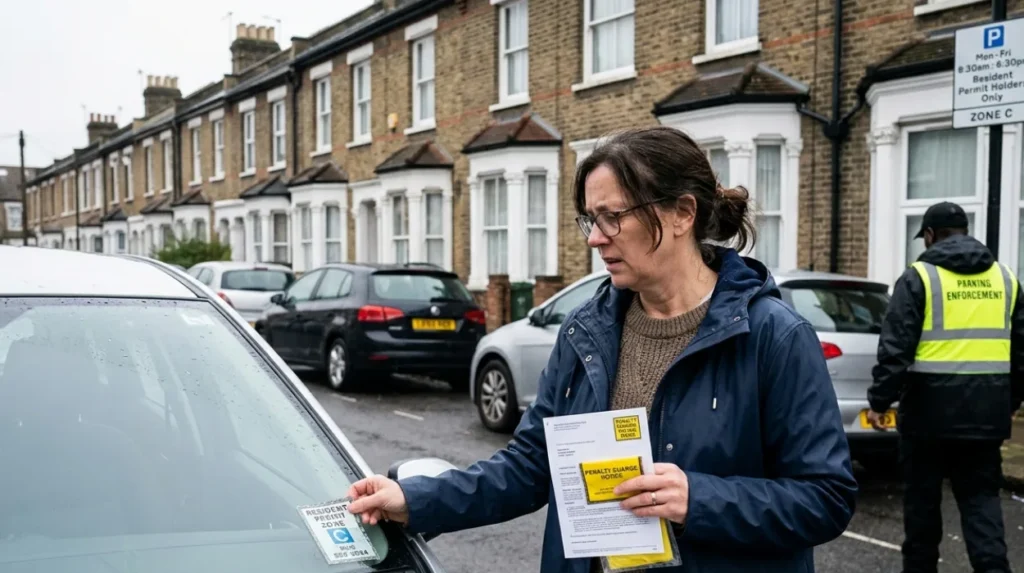
Parking permit fines arise when an authority says a vehicle was parked without a valid permit, outside the permit terms, or in breach of a controlled parking zone rule, and then issues a penalty or charge based on that alleged breach. In North London, this usually happens in borough-controlled zones where permit bays, shared-use bays, and loading restrictions operate alongside resident parking rules.
Council parking enforcement often starts with a ticket on the windscreen or a PCN sent by post. If the ticket is placed on the vehicle, the motorist normally makes an informal challenge to the council first. If the ticket arrives by post, the motorist normally makes a formal representation after receiving the notice to owner.
Private parking charges work differently. The motorist challenges the parking company directly, and if the operator rejects the challenge, the case can go to POPLA if the operator belongs to the British Parking Association, or the IAS if it belongs to the International Parking Community. In North London, this distinction matters in car parks, shopping areas, and private residential developments where rules differ from borough streets.
Permit disputes also happen at the permit administration stage, not just after a fine. Some councils run a separate resident parking permit appeals process for refusals or withdrawals, and one example is Kensington and Chelsea Council, which uses a two-stage written appeal system and issues responses within 21 days. That process concerns the permit itself, not a penalty notice.
What should you check first?
The first check is the type of ticket, the issuer, the date, the location, and the exact reason written on the notice, because those details decide the appeal route and deadline. In North London, this matters because borough councils, transport contractors, and private operators all use different notices and different appeal routes.
You should then compare the notice against the on-street signs, permit zone markings, bay markings, and the terms of your parking permit. If the permit was valid but not visible, the issue often turns on display requirements. If the permit had expired, the issue often turns on renewal timing or whether the council failed to process an application correctly.
You also need to check for procedural defects. Common issues include the wrong vehicle registration number, incorrect date or time, missing photos, a location error, or a notice served outside the required period. For council PCNs, the challenge must be made within 28 days, and early action can protect the discounted amount in some cases.
Which grounds usually succeed?
The strongest grounds are factual error, faulty signage, permit validity, service error, and procedural unfairness, because each one attacks the legal basis of the charge. In North London parking cases, the most common winning point is often proof that the permit was valid or that the zone signage did not clearly explain the restriction.
A factual error exists when the authority got the facts wrong. Examples include a valid permit already on file, a vehicle that was in the correct zone, a permit linked to the wrong registration by council error, or a payment recorded against the wrong account. A signage defect exists when the restriction was not clearly communicated.
A permit validity issue exists when the permit was active but the authority failed to recognise it. Examples include a resident permit renewed on time, a visitor permit properly logged, or a blue badge and permit combination ignored by the officer. A service error exists when the council’s own system caused the breach, such as an online renewal failure or an administrative delay.
A procedural unfairness issue exists when the authority fails to follow the required process. For council PCNs, there is a formal appeal structure, and if the formal challenge is rejected, the council must issue a notice of rejection that explains the next step and the right to appeal to an independent tribunal. Missing or defective paperwork can matter.
How do you build a strong appeal?
A strong appeal uses a clear timeline, copies of every relevant document, and direct proof that the permit was valid or that the notice was issued in error. In North London, this is especially important because boroughs often enforce permit rules strictly and expect precise evidence.
Start with the permit itself. Include a copy of the permit, renewal confirmation, payment receipt, email approval, application reference, and any screen shot showing the permit was active on the date in question. If the permit was physical, photograph both sides and show where it should have been displayed.
Then add location evidence. Use photographs of the bay markings, street signs, permit zone signs, and the vehicle where it was parked. If the restriction was ambiguous, the signage evidence becomes central. If the officer’s photos are poor or incomplete, compare them against your own images and note the gap.
The last step is a written chronology. Set out the date, time, parking location, permit status, and why the charge is wrong. Keep it factual. The decision-maker needs a direct narrative that links the permit, the location, and the alleged breach.
What evidence should you include?
Use evidence that proves validity, location, timing, or administrative fault, because those are the four categories councils and appeal bodies evaluate most often. In North London borough cases, the quality of evidence often decides whether a charge is cancelled quickly or escalated.
Useful evidence includes the permit record, the council confirmation email, bank or card payment proof, the permit application reference, photos of the parked vehicle, and photos of the signs. If the permit was renewed late because of a system issue, include screen shots, error messages, and timestamps.
If the vehicle was used by a family member, employer, or carer, add permission records and any policy showing the permit allowed that use. If the permit depended on residency or eligibility, include council tax records, tenancy papers, utility bills, or any document the council used to confirm eligibility. An evidence bundle works best when each item supports one specific factual point.
What happens after you challenge it?
After you challenge a council PCN, the council either accepts the challenge, rejects it, or progresses the case to the next formal stage, and the deadlines continue to run. In North London, council responses vary by borough, but the basic legal structure stays the same.
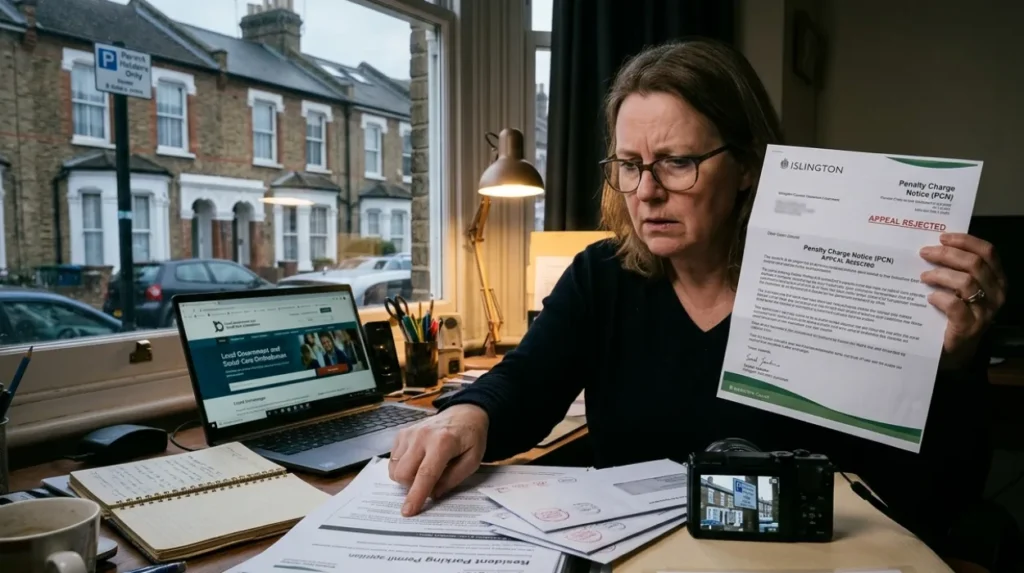
If a formal representation is accepted, the fine is cancelled. If it is rejected, the council sends a notice of rejection, which gives 28 days to pay or appeal to an independent tribunal. If you do nothing after that, the council can issue a charge certificate, which increases the amount owed.
For private parking charges, the process is different. If the operator rejects the internal appeal, the motorist can go to POPLA or the IAS depending on whether the operator is in the BPA or IPC scheme. That appeal is independent of the parking company, which matters because the second-stage review is often the real test of the case.
What if the permit issue came from the council?
If the permit problem is a council administration issue, the right route is usually the council’s own parking permit complaints or appeals process, followed by the Local Government and Social Care Ombudsman if the council handled the case unfairly. In North London, this is relevant where a borough refuses, delays, or withdraws a resident permit, or fails to update records correctly.
This kind of dispute is different from a PCN appeal. A permit appeal concerns the decision to issue, refuse, or withdraw the permit itself. A PCN appeal concerns the penalty for parking without a valid permit or in breach of the permit conditions.
The Local Government and Social Care Ombudsman says you should complain to the organisation first and go through its complaints process before complaining to the Ombudsman. The Ombudsman also says complaints normally need to be made within 12 months of becoming aware of the matter, and you must show personal injustice. That means the permit complaint route is separate from the PCN route.
What mistakes ruin an appeal?
The biggest mistakes are missing the deadline, using vague wording, ignoring the ticket type, and failing to attach proof, because each one reduces the chance of cancellation. In North London, these mistakes are common because many drivers assume a resident permit automatically defeats a ticket.
A vague appeal says only that the ticket is unfair. A strong appeal says exactly why it is wrong, with dates, times, permit numbers, photos, and supporting documents. The decision-maker needs facts, not frustration.
Another common mistake is using the wrong process. A council PCN is not appealed in the same way as a private parking charge, and a permit refusal is not the same as a penalty notice. If you send the wrong form to the wrong body, the deadline can expire while the case sits unopened.
What time limits apply in the UK?
The main time limit for a council parking PCN is 28 days, and many councils also offer a discounted period of 14 days if the challenge is made quickly. In North London, this is especially important because some boroughs enforce deadlines strictly and do not extend them for late appeals.
For formal representations after a notice to owner, the same 28-day period applies. For private parking charges, the operator’s own notice tells you the deadline, but many operators also use a 28-day response window. The ticket always controls the process, so the notice must be read carefully.
For council permit appeals, local councils set their own internal timelines. Kensington and Chelsea, for example, issues a written response within 21 days and allows 14 days for a second-stage written appeal after an unsuccessful first stage. Local rules therefore matter as much as national rules.
How does this affect residents and drivers?
An unfair parking permit fine affects money, mobility, and access to a home, workplace, or healthcare location, so the correct appeal process matters as much as the amount of the charge. In North London, residents often rely on permits because on-street parking is limited and controlled parking zones are widespread.
For residents, permit disputes often arise from renewal delays, vehicle changes, address changes, or evidence requested by the council. For workers and carers, the issue often involves time pressure and reliance on a permit to park legally near a property. In both cases, the practical consequence is the same: a valid permit holder needs to prove entitlement quickly.
The longer-term implication is that parking systems depend on accurate records. If the permit database, signage, or notice process is wrong, the appeal process becomes the main safeguard. That is why written evidence and timely action carry so much weight.
When should you escalate it?
Escalate after a rejection, after a refusal that follows the council’s published process, or when the authority ignores clear evidence and fails to apply its own rules. In North London, escalation often happens when a borough rejects a valid resident permit argument without properly addressing the documents.
If the complaint concerns permit administration rather than a PCN, use the council’s complaint route first and then the Local Government and Social Care Ombudsman if the issue remains unresolved. The Ombudsman only reviews council service complaints and does not replace the direct appeal route for most parking penalties.
Escalation works best when the case file is complete. Keep the original PCN, all correspondence, photographs, permit records, and proof of submission. A clean paper trail improves the chance of success at every stage.
How should you word the challenge?
Use short, direct sentences that identify the legal point, the permit evidence, and the outcome you want, because clarity improves the chances of a fair review. For North London parking appeals, a simple, factual format works best with council case officers and tribunal reviewers.
A good challenge says the permit was valid, the vehicle was in the correct place, the officer’s record is wrong, or the council failed to process the permit correctly. Then state the PCN number, the vehicle registration number, the date, the location, and the reason the charge is invalid. End by asking for cancellation of the PCN or reinstatement of the permit.
The wording should avoid irrelevant complaints. Focus on the facts the authority can verify. The goal is to make it easy for the reviewer to agree that the notice should be cancelled.
Challenge the ticket by matching the correct route, deadline, and evidence to the exact type of parking problem, because that combination gives the strongest case. In North London, that means checking whether the issue comes from a council PCN, a private charge, or a permit administration decision before you reply.
For council PCNs, use the council’s appeal route within 28 days and submit detailed evidence, while for private parking charges, use the operator first and then POPLA or the IAS if needed. For permit refusals or withdrawals, follow the council’s published permit appeals or complaints process and escalate to the Ombudsman only after the council has had a proper chance to resolve the matter.
How do parking permit fines work in North London?
Parking permit fines are issued when a council or private operator says a vehicle was parked without a valid permit or outside permit rules in a controlled parking zone.