Key Points
- A woman has died after being struck by a lorry near Finsbury Park station in north London.
- The collision occurred at the junction of Seven Sisters Road and Isledon Road shortly before 12.55 pm on Wednesday, 20 May 2026.
- Emergency crews attended but the pedestrian was pronounced dead at the scene, the Metropolitan Police said.
- Enquiries are ongoing to formally identify the woman and to trace her next‑of‑kin.
- The lorry driver stopped at the scene and is co‑operating with police to establish how the incident happened; no arrests have been made in connection with the crash.
Finsbury Park (North London News) May 21, 2026 – A woman has died after being struck by a lorry near Finsbury Park station in north London. According to a Metropolitan Police statement, the collision took place at the junction of Seven Sisters Road and Isledon Road shortly before 12.55 pm on Wednesday, 20 May 2026.
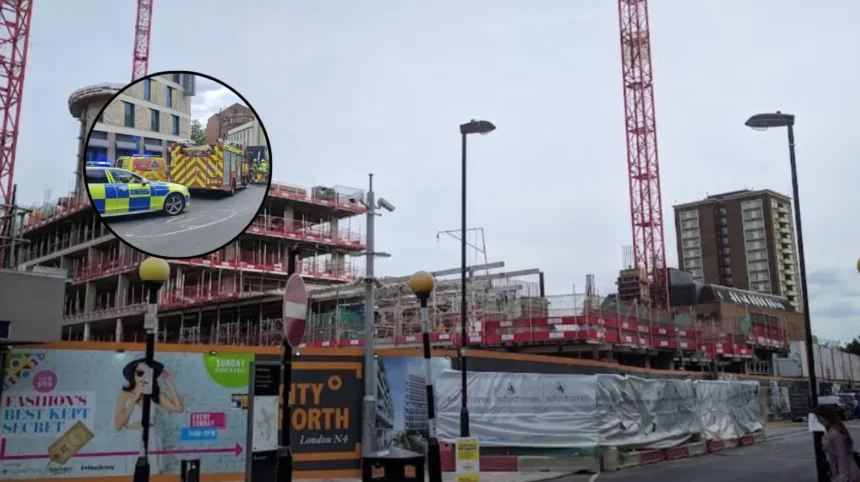
Emergency services, including police and ambulance crews, were dispatched to the scene. Despite treatment by paramedics, the woman was pronounced dead at the location, police added. Witnesses reported that traffic was stopped or diverted while officers cordoned off the area to allow for a forensic examination of the site.
Who was the pedestrian and what is known about her?
As reported by the Metropolitan Police, enquiries are continuing to formally identify the woman and to contact her next‑of‑kin.
The force did not release her age, name or address, noting only that officers are working with specialist support teams to notify the family.
A spokeswoman for the Metropolitan Police told BBC News that a post‑mortem examination will be carried out “in due course” to help establish the precise cause of death.
No further details about the victim’s background, occupation or where she lived were given in the official statement.
What do police say about the lorry driver?
The driver of the lorry stopped at the scene following the collision and has been assisting police with their enquiries, the Metropolitan Police said.
No arrests have been made in connection with the incident, police confirmed, though investigations into the circumstances are ongoing.
Detectives from the Met’s Roads and Transport Policing Command are leading the probe and are reviewing CCTV footage from nearby cameras as well as any available dash‑cam material.
Officers have asked anyone who witnessed the collision or who may have video or mobile‑phone footage to contact them via the non‑emergency number 101, quoting the relevant incident reference, if provided.
How did emergency services respond?
London Ambulance Service crews and other emergency responders were dispatched to the junction of Seven Sisters Road and Isledon Road within minutes of the initial report, according to a Met Police statement. Paramedics treated the woman at the scene, but despite their efforts, she could not be saved.
The London Fire Brigade was also called but did not need to carry out any extrication or rescue work, officials indicated, as the lorry driver remained in the cabin and there were no reports of further casualties among other road users.
Traffic along Seven Sisters Road was disrupted for several hours while officers processed the scene and collected marks left by the vehicles.
What has been said by local residents and passers‑by?
Residents and commuters in the Finsbury Park area described the junction as busy, with heavy pedestrian and vehicle movement, especially around the tube station entrance. A local shopkeeper, speaking anonymously to the Islington Tribune, said the area has seen several near‑miss incidents in recent years, raising concerns about crossing‑point safety.
Passers‑by told reporters they saw the woman lying on the carriageway with emergency crews surrounding her and the lorry parked nearby; several people said they initially thought the collision must have been avoidable, though they emphasised that they did not know the full details of what happened.
Background of the development
The incident near Finsbury Park station adds to a broader pattern of fatal collisions involving pedestrians and heavy vehicles on busy London roads.
The junction of Seven Sisters Road and Isledon Road has previously featured in other serious‑collision reports, including a fatal incident where a pedestrian died after colliding with a car close to the same stretch of road.
In recent years the Metropolitan Police and Transport for London have highlighted the need for improved road‑safety measures on arterial routes such as Seven Sisters Road, including clearer signage, enhanced pedestrian crossings and better separation between vehicles and walkers.
Local authorities in the borough of Haringey have also run campaigns urging drivers to reduce speed and remind lorry operators to check blind spots, particularly around stations and narrow junctions.
Road‑safety campaigners argue that many fatal crashes in London occur at or near transport hubs such as Finsbury Park, where pedestrians often cross at busy times with limited physical protection from fast‑moving traffic.
They have called for the adoption of 20‑mph limits, raised crossings and more extensive use of “red‑route” pedestrian‑priority schemes along major corridors like Seven Sisters Road.
How this development could affect local residents and similar audiences
For residents of Finsbury Park and neighbouring areas such as Manor House, Harringay and Holloway, the death may heighten concerns about walking or cycling near busy junctions, particularly at peak commuting hours.
Local pedestrians may feel encouraged to use formal crossings, avoid jaywalking and pay closer attention to turning vehicles, especially large lorries, around the station precinct.
For policy makers and transport planners, the incident underlines pressure to review junction design, signal timings and crossing‑point layouts at Finsbury Park and other similar interchanges.
The case could prompt further scrutiny of how borough councils and Transport for London implement their Vision Zero‑style road‑safety targets, which aim to eliminate fatal and serious collisions over time.
Among drivers and lorry operators, the collision may lead to renewed emphasis on safety training, blind‑spot awareness and adherence to speed limits near busy stations and bus stops. Fleet operators may be prompted to review their own internal procedures around incident reporting and driver conduct after a serious collision, especially where no arrests have been made but investigations remain open.