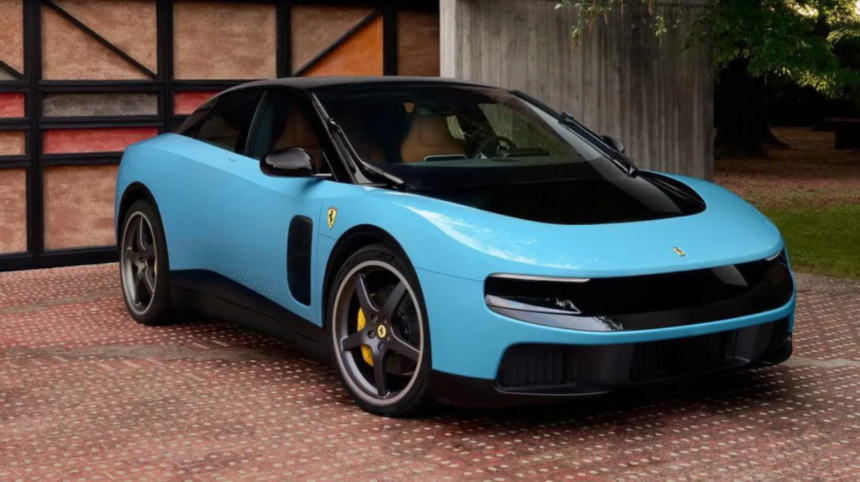
The global automotive industry is undergoing a structural transition from internal combustion engines to battery electric vehicles (BEVs). Within this shift, high-performance supercar manufacturers face distinct engineering and branding challenges, as traditional performance metrics rely heavily on engine acoustics and mechanical engagement. Ferrari N.V., the Italian luxury sports car manufacturer founded by Enzo Ferrari in 1939, is currently developing its first fully electric vehicle. This transition represents a major pivot for an organization historically defined by its atmospheric V8 and V12 internal combustion powerplants. As urban centres implement stricter emissions regulations, the development of an electric supercar becomes essential for maintaining market access in regions such as the United Kingdom and the European Union.
- What is the timeline for the release of the electric Ferrari?
- How will the engineering of an electric Ferrari differ from traditional internal combustion models?
- What are the performance specifications and technical capabilities of the electric Ferrari?
- How will Ferrari manage the acoustic experience without a traditional internal combustion engine?
- What impact will the electric Ferrari have on drivers in metropolitan areas like North London?
- How will battery weight and thermal management be handled to maintain supercar handling?
- What are the long-term market implications and sustainability prospects for the electric Ferrari?
- What are the main obstacles Ferrari faces during this powertrain transformation?
- How does the electric Ferrari compare to competing high-performance electric vehicles?
- How will global charging networks support the operation of high-performance electric supercars?
The adoption of electric propulsion by luxury manufacturers alters the traditional relationship between vehicle performance, consumer expectations, and regulatory compliance. For drivers in metropolitan areas like North London, where Ultra Low Emission Zones (ULEZ) and zero-emission mandates dictate vehicle usage, the introduction of an electric Ferrari impacts both local urban transportation patterns and broader automotive investment strategies. This comprehensive analysis evaluates the engineering methodologies, market positioning, infrastructural demands, and long-term implications of Ferrari entering the electric vehicle landscape.
What is the timeline for the release of the electric Ferrari?
Ferrari will officially reveal its first fully operational battery electric vehicle in late 2025, with the initial commercial deliveries scheduled to commence across global markets, including the United Kingdom and Europe, by the fourth quarter of 2026.
The timeline for the introduction of the first all-electric Ferrari aligns with strategic corporate targets established during the company’s 2022 Capital Markets Day. During this presentation, executive leadership committed to a product diversification strategy where electric models will account for 5% of the total vehicle lineup by 2026, expanding significantly to 40% by the year 2030. To support this operational shift, construction concluded in June 2024 on the “e-building,” a dedicated manufacturing plant located within the historic Maranello production complex in Italy. This specialized facility handles the hand-assembly of electric motors, high-voltage inverter units, and structural battery packs alongside traditional internal combustion powertrains.
Production Infrastructure in Maranello
The e-building represents a capital investment exceeding €500 million, serving as the technological hub for Ferrari’s future powertrain configurations. The facility utilizes advanced automation systems and guided vehicles to assist technicians in assembling advanced components. By keeping production centralized in Maranello, the company maintains direct quality control over proprietary technologies, preventing reliance on external suppliers for critical performance components.
Market Testing and Prototype Development
Road testing of early development mules began in mid-2024, utilizing modified chassis configurations to assess thermal management systems and battery weight distribution under dynamic track conditions. These test vehicles allow engineers to refine the software algorithms governing torque vectoring and regenerative braking. This iterative development process ensures that the final production version fulfills rigorous durability and safety standards prior to its public debut in late 2025.
How will the engineering of an electric Ferrari differ from traditional internal combustion models?
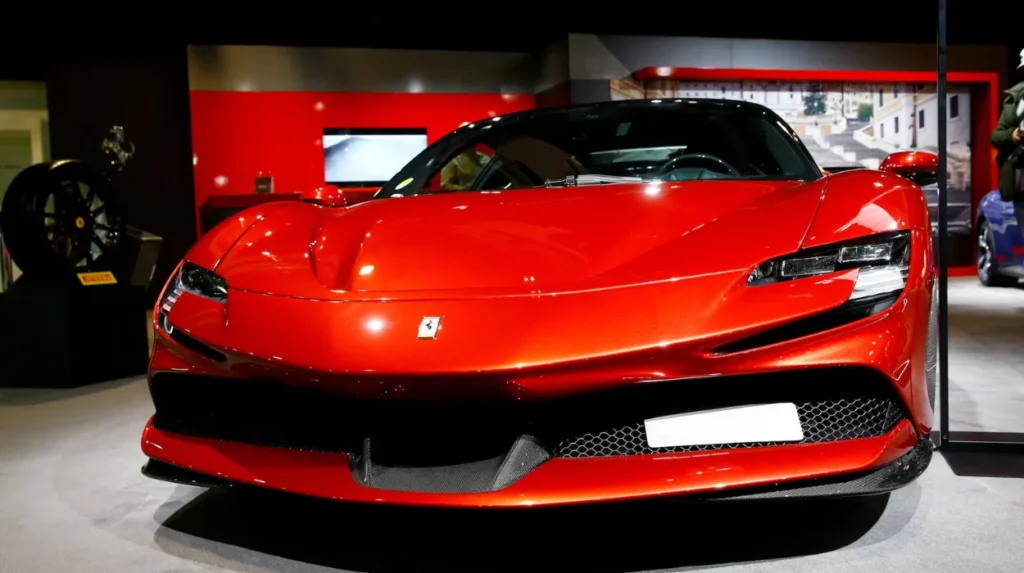
The engineering of an electric Ferrari replaces the internal combustion engine, multi-speed transaxle, and exhaust apparatus with an advanced skateboard chassis architecture incorporating proprietary axial-flux electric motors, a structural lithium-ion battery pack, and a high-efficiency 800-volt silicon carbide inverter system.
The transition from internal combustion technology to battery electric powertrains fundamentally alters the mechanical architecture and mass distribution of the vehicle. In a traditional mid-engine Ferrari sports car, the engine and transmission reside behind the cabin, concentrating mass within the center of the vehicle to optimize rotation and handling. In contrast, a battery electric supercar distributes weight across the floor pan via a structural battery pack casing, lowering the total center of gravity while increasing the polar moment of inertia.
Propulsion Systems and Axial-Flux Technology
Traditional electric vehicles typically deploy radial-flux electric motors, where the magnetic flux flows perpendicular to the rotation axis. Ferrari utilizes axial-flux electric motors, a configuration where the magnetic flux lines run parallel to the rotational axis. Axial-flux motors provide distinct advantages for high-performance vehicles, including:
- Significantly higher torque density per kilogram of motor mass.
- More compact axial dimensions, allowing placement directly within the wheel hubs or subframe assemblies.
- Enhanced cooling efficiencies due to the direct surface contact of the stator rings.
Inverter and Power Electronics Integration
The power electronics suite operates on an 800-volt electrical architecture, utilizing silicon carbide (SiC) semiconductor power modules rather than standard silicon insulated-gate bipolar transistors (IGBTs). Silicon carbide technology reduces switching losses by up to 75%, allowing the vehicle to handle higher electrical currents with reduced thermal dissipation requirements. This structural choice accelerates power delivery from the battery pack to the propulsion units while supporting ultra-fast direct current (DC) charging capability.
What are the performance specifications and technical capabilities of the electric Ferrari?
The electric Ferrari targets a cumulative power output exceeding 1,000 brake horsepower via a multi-motor all-wheel-drive configuration, enabling a 0-62 miles per hour acceleration time under 2.0 seconds and utilizing an advanced 800-volt architecture for rapid battery replenishment.
Performance metrics for high-end sports cars focus primarily on acceleration capacity, continuous power delivery, thermal stability during track use, and deceleration mechanics. By implementing individual electric motors across both axles, the vehicle achieves precise four-wheel-drive capabilities. This mechanical arrangement permits instantaneous torque application, bypassing the rotational delays inherent in turbocharged internal combustion engines and multi-gear mechanical gearboxes.
Torque Vectoring and Dynamic Control Systems
The inclusion of multiple independent electric motors permits advanced torque vectoring strategies, where individual wheels receive specific torque allocations based on real-time traction variables. This process is governed by a central electronic control unit running proprietary software algorithms, replacing traditional mechanical limited-slip differentials. During high-speed cornering, the outer wheels receive positive torque while the inner wheels undergo regenerative deceleration, actively pulling the vehicle into the apex and counteracting understeer caused by the heavy battery mass.
Aerodynamic Development and Drag Reduction
Managing aerodynamic drag while generating adequate downforce requires substantial changes to the vehicle’s bodywork. Without the cooling requirements of a front-mounted or mid-mounted radiator core, the frontal surface area can be minimized to lower the coefficient of drag ($C_d$). Engineers incorporate active aerodynamic components, such as motorized front splitters, variable underbody flaps, and adaptive rear diffusers, to balance low-drag highway cruising requirements with high-downforce cornering stability.
How will Ferrari manage the acoustic experience without a traditional internal combustion engine?
Ferrari will generate a distinctive acoustic identity through a proprietary sound generation system that captures, amplifies, and blends natural mechanical resonances from the electric motors and drivetrain components with synthesized low-frequency tones distributed through internal and external speakers.
The acoustic output of a Ferrari engine, particularly its signature high-revving V12 harmonic sequence, forms a core element of the brand identity and provides essential sensory feedback to the driver regarding vehicle speed and traction limits. Electric motors operate almost silently, producing only a high-frequency whistle that lacks the emotional resonance demanded by luxury automotive buyers. To address this, Ferrari filed patents in 2023 for an advanced sound amplification apparatus designed to map motor rotational velocities directly to a structured acoustic soundtrack.
“The emotional connection to the vehicle is deeply rooted in the acoustic response. The challenge is extracting a authentic sound signature that reflects the physical forces at play within the electric drivetrain.” — Ferrari Engineering Document
Acoustic Amplification Mechanics
Rather than relying entirely on synthetic, artificial sound profiles, the engineering team focuses on capturing the structural vibrations generated by the rotors, inverters, and transmission gear teeth. These genuine mechanical frequencies are directed into an acoustic conduction chamber that naturally amplifies specific structural notes. This acoustic energy is then mixed with low-frequency synthesized tones to generate an aggressive, authoritative signature that varies continuously based on throttle inputs, load profiles, and vehicle velocity.
Exterior Sound Delivery and Compliance
The sound management system utilizes specialized external speaker arrays integrated into the rear bodywork structures, satisfying regional safety requirements for Acoustic Vehicle Alerting Systems (AVAS) while maintaining an exterior auditory presence. Internal acoustic transducers mounted behind the cabin bulkheads transfer structural vibrations directly into the chassis monocoque, ensuring the driver receives tactile and auditory speed cues without causing excessive cabin resonance during sustained long-distance highway travel.
What impact will the electric Ferrari have on drivers in metropolitan areas like North London?
The electric Ferrari grants North London drivers unrestricted, permanent exemption from daily urban emissions charges while providing an silent, high-performance vehicle optimized for navigating ultra-low emission corridors and congested arterial metropolitan roadways.
Operating a high-performance luxury vehicle within major metropolitan zones presents growing logistical difficulties due to evolving urban planning policies. In Greater London, the expansion of the Ultra Low Emission Zone (ULEZ) enforces a daily compliance charge of £12.50 for vehicles that fail to meet stringent Euro emissions metrics, a regulation that affects numerous vintage and high-displacement supercars. Furthermore, localized Zero Emission Zones (ZEZ) enforce complete financial penalties or outright entry bans on any vehicle utilizing an internal combustion engine, regardless of its primary manufacture year or catalyst configuration.
Compliance with Urban Emissions Frameworks
For residents in North London neighborhoods such as Hampstead, Highgate, and Islington, an all-electric Ferrari bypasses these local environmental financial penalties entirely. The vehicle qualifies for the Congestion Charge cleaner vehicle discount, eliminating daily toll fees when entering central London sectors. This operational flexibility transitions the supercar from an exclusive weekend track vehicle into a fully viable option for daily urban transportation across dense municipal regions.
Charging Infrastructure Requirements in Suburban Enclaves
The ownership profile within affluent suburban areas mandates the installation of dedicated high-output charging infrastructure. While public rapid-charging networks are growing along major transport corridors such as the A1 and the Circular Road (A406), residential charging remains the primary refueling method. Owners utilize dedicated wall-mounted three-phase Alternating Current (AC) charging points supplying 22 kilowatts of electrical power, allowing for complete overnight battery replenishment within the safety of residential garages or private courtyards.
How will battery weight and thermal management be handled to maintain supercar handling?
Ferrari manages battery weight by integrating the cells directly into a carbon-fiber structural monocoque chassis to minimize dead weight, while utilizing an advanced immersion cooling fluid circuit that surrounds each individual cell to prevent thermal runaway.
The principal challenge when engineering an electric sports car is mitigating the substantial mass penalty imposed by contemporary chemical energy storage units. A typical lithium-ion battery pack capable of supplying adequate track endurance weighs between 450 and 600 kilograms. If this mass is integrated incorrectly, it compromises agility, increases braking distances, and degrades steering responsiveness. Ferrari mitigates this mass through structural cell-to-pack integration and carbon-composite chassis engineering.
Cell-to-Pack Integration Methods
Traditional electric vehicles house batteries within individual modular enclosures that are then bolted inside an external structural tray. Ferrari employs a cell-to-pack (CTP) methodology where the individual battery cells are bonded directly within the main structural floor pan of the carbon-fiber monocoque chassis. This configuration eliminates unnecessary structural interfaces, using the battery casing itself to increase the torsional rigidity of the vehicle frame by up to 30%, which allows for a reduction in the thickness and weight of other chassis components.
| Component / Parameter | Standard Modular Battery Design | Ferrari Structural Cell-to-Pack |
| Housing Style | Individual internal modules within a tray | Integrated directly into carbon monocoque |
| Chassis Torsional Rigidity | Baseline reference value | Up to 30% increase over baseline |
| Cooling Method | Indirect lower cooling plates | Direct liquid immersion cooling circuit |
| Volumetric Efficiency | ~45% space utilization | Greater than 60% space utilization |
Immersion Thermal Management Systems
High-performance driving cycles exert massive thermal loads on individual battery cells during rapid acceleration and high-rate regenerative braking. Standard surface cooling plates are insufficient for maintaining optimal operating temperatures between 20°C and 35°C during sustained track use. Ferrari utilizes a liquid immersion cooling architecture, where a dielectric, non-conductive fluid flows directly around the skin of every individual cell. This rapid thermal transfer prevents localized hot spots, minimizes the risk of thermal runaway, and allows the vehicle to deploy peak electrical power repeatedly without initiating software-driven thermal power restrictions.
What are the long-term market implications and sustainability prospects for the electric Ferrari?
The electric Ferrari secures the brand’s long-term commercial relevance within a heavily regulated global market, preserving corporate equity while driving the development of sustainable synthetic interior textiles and closed-loop battery component recycling programs.
The introduction of an all-electric model alters the long-term asset valuation, collection dynamics, and environmental footprints traditionally associated with the Ferrari brand. Historically, Ferrari vehicles maintain high residual values, frequently appreciating over time due to mechanical scarcity and historical importance. The integration of high-voltage battery systems introduces finite component lifespans driven by chemical degradation factors, requiring new corporate warranty programs and circular remanufacturing systems.
Battery Reclamation and Circular Recycling Loops
To protect asset longevity and minimize raw material sourcing demands, Ferrari partners with academic research institutions and industrial recycling operations to build a closed-loop recycling infrastructure. Spent battery packs are returned to designated depots where they undergo hydrometallurgical processing to extract core minerals including:
- Lithium carbon compounds for cathode reformation.
- Battery-grade cobalt sulfate substances.
- High-purity elemental nickel matrices.
These reclaimed elements are directed back into the battery manufacturing chain, reducing the environmental footprint of raw mineral extraction by up to 50%. This closed-loop framework ensures compliance with strict European Union battery passport mandates, which require comprehensive lifecycle tracking for all traction battery units produced after 2027.
Sustainable Interior Craftsmanship and Textiles
The sustainability goals of the electric vehicle program extend to the composition of the passenger cabin. Alongside traditional leather options, the vehicle introduces premium bio-synthetic textiles derived from recycled marine polymers and agricultural byproducts. These sustainable components undergo intensive durability assessments to ensure they match the UV resistance and tactile refinement expected within the luxury automotive space, aligning the vehicle’s interior materials with its zero-emissions propulsion system.
What are the main obstacles Ferrari faces during this powertrain transformation?
The primary obstacles encompass the weight penalties of modern battery chemistries, the loss of traditional mechanical feedback, the high costs of infrastructure upgrades, and the risk of resistance from brand purists who favor internal combustion engines.
Successfully shifting a legacy supercar manufacturer toward complete electrification involves balancing technical, financial, and cultural elements. Ferrari must deliver an authentic driving experience while complying with international environmental laws that threaten to penalize high-emission vehicle production. Managing these conflicting demands represents a complex challenge for the engineering teams based in Maranello.
Overcoming Technical and Cultural Constraints
The core challenges within Ferrari’s electrification strategy involve:
- Weight Management: Counteracting the 500-kilogram mass penalty of modern lithium battery packs to maintain the agile handling traits that define a traditional supercar.
- Acoustic Innovation: Formulating an engaging sound profile that feels connected to the physical forces of the vehicle without sounding artificially synthetic.
- Infrastructure Capital Requirements: Investing in specialized production machinery and global dealership updates to safely service and support high-voltage 800-volt powertrains.
- Customer Retention: Reassuring long-term collectors and brand purists that an electric platform can deliver genuine driving engagement and emotional excitement.
By resolving these technical hurdles through innovations like axial-flux motors and structural battery integration, Ferrari establishes a framework for high-performance vehicles that can survive and thrive in an increasingly zero-emission world.
How does the electric Ferrari compare to competing high-performance electric vehicles?
The electric Ferrari distinguishes itself from existing high-performance electric vehicles by prioritizing low-profile motorsport ergonomics, proprietary axial-flux motor technology, and a specialized chassis setup focused on agility over pure straight-line acceleration metrics.
The luxury high-performance electric vehicle sector includes several key competitors, such as the Rimac Nevera, the Porsche Taycan Turbo GT, and the Lotus Evija. Most current production electric hypercars focus on achieving high straight-line acceleration numbers and massive peak horsepower ratings, which often results in increased total vehicle weight and wider footprints. Ferrari’s development philosophy concentrates on track agility, predictable handling feedback, and maintaining a low seating position identical to a classic mid-engine sports car layout.
Comparative Structural Layouts
Many standard high-performance EVs stack their battery cells in a tall block behind the passenger seats or across a uniform SUV-style skateboard frame, which raises the overall roof height. Ferrari positions its structural battery pack across a thin, low-profile footprint under the cabin floor and within the rear subframe cavities. This custom configuration keeps the overall vehicle height low, preserving optimal aerodynamics and providing the low-slung seating position preferred by performance driving enthusiasts.
Driving Engagement Philosophy
While competitors rely on standard electronics suites to manage vehicle weight, Ferrari connects its torque vectoring algorithms directly to its established Side Slip Control (SSC) system. This integration allows for controlled power slides and progressive handling transitions at the limit of grip, ensuring the electric supercar retains the lively, predictable characteristics of its internal combustion predecessors rather than feeling overly computerized or heavy through tight corners.

How will global charging networks support the operation of high-performance electric supercars?
High-performance electric supercars rely on ultra-fast Direct Current public charging networks capable of supplying 350 kilowatts or more, allowing 800-volt battery architectures to charge from 10% to 80% capacity in less than 20 minutes.
The usability of an electric supercar outside of urban environments depends heavily on the availability of reliable, high-output charging infrastructure. Standard alternating current home charging systems work well for overnight replenishment, but long-distance travel and extended track sessions require ultra-fast direct current (DC) networks to prevent long downtime periods. As high-performance vehicles adopt 800-volt architectures, the charging infrastructure must scale up to deliver high currents safely.
Public Highway Charging Densities
Major transport corridors across the United Kingdom and Europe are steadily expanding their networks of 350-kilowatt and 400-kilowatt charging hubs. These stations utilize liquid-cooled charging cables to manage the heat generated when transferring high currents into the vehicle’s battery pack. This high-capacity connection allows drivers to quickly top up their batteries during brief stops, making long-distance touring feasible.
Trackside Charging Integration
To support track days, racing circuits are updating their pitlane environments with dedicated high-output DC charging points. These trackside installations enable drivers to run multiple high-speed sessions throughout the day, using short charging breaks in between to maintain optimal battery levels. This setup ensures that electric supercar owners can utilize their vehicles for extended performance driving without experiencing significant logistical delays.
When will Ferrari release its first electric car?
Ferrari is expected to officially unveil its first fully electric vehicle in late 2025, with customer deliveries beginning in 2026. The launch forms part of Ferrari’s broader electrification strategy, which aims to increase the share of electric vehicles in its lineup over the coming years.