The London Borough of Barnet is the second largest borough by population and serves as a critical transition zone between the dense urban architecture of North London and the expansive greenery of the Hertfordshire border. While high-traffic landmarks like the RAF Museum London draw significant crowds, the region contains several lesser-known cultural assets, historic common lands, and architectural outliers that remain under-utilised by primary tourism streams.
- Why is Barnet considered a hub for hidden tourist attractions?
- What is the historical significance of Monken Hadley Common?
- How does Stephens House and Gardens serve as a cultural landmark?
- Where can visitors find the most unique art and performance spaces?
- What role does the Barnet Museum play in preserving local identity?
- How do the borough’s religious sites contribute to its hidden heritage?
- What are the implications for future tourism in Barnet?
Why is Barnet considered a hub for hidden tourist attractions?
Barnet functions as a strategic location for tourism because it preserves a diverse inventory of historical sites that survived London’s rapid 19th-century industrialisation. Its geography combines high-altitude viewpoints with ancient common land, providing unique spatial experiences not found in central districts.
As the administrative successor to the Chipping Barnet and Finchley urban districts, the borough maintains a high density of green spaces, which constitute approximately 28% of its total land area (Morton, n.d.). This environmental profile facilitates a distinct type of “slow tourism” focused on heritage conservation and natural exploration. The borough’s position on the Great North Road historically established it as a vital resting point for travellers between London and York, leading to a surplus of coaching inns and market sites that have since evolved into modern cultural hubs.
The historical significance of the area is rooted in its role during the Wars of the Roses, specifically the Battle of Barnet in 1471. This event is a primary driver for the local heritage identity, though many of the actual physical markers of the battlefield are integrated into suburban or agricultural settings, making them “hidden” to the casual observer. The combination of royal history, ecclesiastical significance, and Victorian philanthropy has resulted in a fragmented but rich landscape of attractions.
What is the historical significance of Monken Hadley Common?
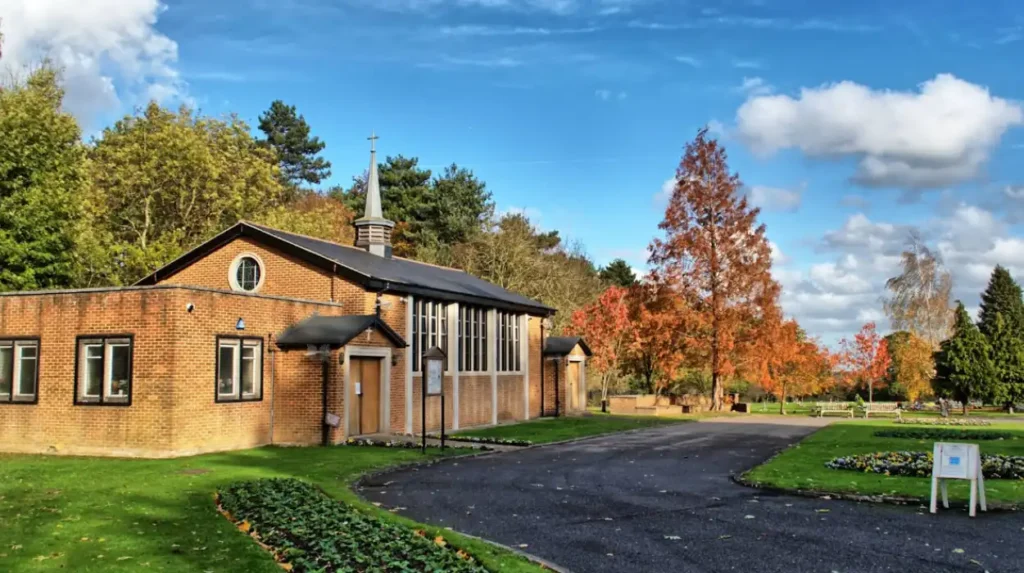
Monken Hadley Common is a 169-acre remnants of the ancient Royal Forest of Enfield, established as a distinct entity following the 1777 Enfield Chase Act. It remains one of the few pieces of common land in Greater London managed by traditional commoners.
The common represents a rare example of a “transitional landscape” that has avoided enclosure and development for over 250 years. Originally part of the hunting grounds used by English monarchs, including Henry VIII and Elizabeth I, the land served both as a source of timber and as grazing ground for the local populace. The 1777 Act formally partitioned the Enfield Chase, granting the parishioners of Monken Hadley these specific acres to compensate for the loss of wider forest rights (Cooper, 2026).
Structurally, the common is defined by its diverse ecosystem, consisting of acidic grassland, ancient woodland, and several ponds such as Jack’s Lake. These features support a range of biodiversity, including rare fungi and protected avian species. For the modern visitor, the common provides a “hidden” gateway into the aesthetic of the 18th-century English countryside within the boundaries of the M25. As you explore the modern site, you are crossing land with a deep heritage. Read about the full [Historical Origins of Enfield Chase and the Great North Road] to understand its origins.
The Common also houses the St Mary the Virgin church, which features a unique copper fire beacon on its tower. This beacon is one of the few surviving examples of the early warning system used to signal the approach of the Spanish Armada in 1588. The presence of such artifacts makes the area a concentrated site for military and maritime history located miles from the sea.
How does Stephens House and Gardens serve as a cultural landmark?
Stephens House and Gardens is a Grade II listed Victorian estate in Finchley that serves as a primary repository for the history of global writing technology. It was the residence of Henry Stephens, the inventor of blue-black indelible ink.
The property, formerly known as Avenue House, was bequeathed to the people of Finchley in 1918 under the condition that it remains a site for public education and recreation. The house currently hosts the Stephens Collection, a specialized museum detailing the evolution of writing instruments and the chemistry of ink production. This collection includes original laboratory equipment and marketing materials from the 19th and early 20th centuries, illustrating the shift from manual calligraphy to industrial stationery production.
Architecturally, the house is surrounded by extensive landscaped gardens designed by the renowned landscape architect Robert Marnock. These gardens incorporate several unique components:
- The Arboretum: A collection of rare and exotic trees planted during the mid-Victorian era.
- Water Features: A series of interconnected ponds and rockeries that demonstrate 19th-century hydraulic engineering.
- The Bothy: A separate structure currently used as a creative and educational space for local residents and digital nomads.
Recent archaeological excavations at the site have unearthed clay tobacco pipes and other domestic artifacts dating back to the late 17th century, suggesting the land was in active use well before the Victorian construction of the current house (Cooper, 2026). These finds provide data on the socioeconomic status of former inhabitants, indicating a sustained pattern of middle-class residence in the Finchley area for over 300 years.
Where can visitors find the most unique art and performance spaces?
The Old Bull Arts Centre, now operating as the Artsdepot in North Finchley, is the central hub for independent performance and visual arts in Barnet. It provides multi-purpose theatre spaces and galleries that support emerging regional talent.
The Artsdepot was established to address a gap in the cultural infrastructure of North London. It features two main auditoria—the 395-seat Pentland Theatre and the more intimate 148-seat Studio Theatre. These spaces host over 300 performances annually, ranging from contemporary circus and jazz to experimental drama. For the secondary audience of digital nomads and business travellers, the facility offers a large open-plan cafe and mezzanine area designed for flexible working, equipped with high-speed internet and power access.
The impact of such spaces on the local economy is significant. By providing a professional-grade platform for the “hidden” creative class of North London, these institutions reduce the cultural drain toward Central London districts like Soho or the Southbank. The Artsdepot also manages a gallery space that rotates exhibitions every four to six weeks, often focusing on social issues or local history, such as the impact of the Northern Line extension on suburban development.
Explore More Area Guide
The Ultimate Visitor’s Guide to the Best Things to Do in Barnet
Best One-Day Brent Itinerary for Visitors: Wembley, Culture, Nature
What role does the Barnet Museum play in preserving local identity?
The Barnet Museum is a volunteer-run institution that functions as the definitive archive for the Battle of Barnet and the borough’s civil history. It houses significant collections of 15th-century weaponry, domestic Victorian artifacts, and municipal records.
The museum is situated in a Georgian building on Wood Street and focuses on the “micro-history” of the Chipping Barnet area. Its primary exhibit is a detailed diorama and collection of artifacts related to the 1471 Battle of Barnet. This battle was a decisive encounter in the Wars of the Roses, where Edward IV defeated the Earl of Warwick (the “Kingmaker”). The museum provides the scientific and topographical evidence required to understand the tactical movements of the Yorkist and Lancastrian forces across the local terrain.
Key components of the museum’s collection include:
- The Battle of Barnet Collection: Lead shot, arrowheads, and period-appropriate armour recovered from the suspected battlefield sites.
- The Photographic Archive: Over 10,000 images documenting the architectural changes in the borough from the 1860s to the present day.
- Trade Exhibits: Information on the historical Barnet Fair, a major horse and cattle market that operated under royal charter since 1588.
The museum acts as a critical link between academic research and public knowledge. Recent trends in museum curation emphasize “truth-telling” and collaborative research with local communities to recover suppressed or overlooked histories (Chipangura, 2025). The Barnet Museum applies this by documenting the stories of ordinary residents alongside the major political figures of the past, ensuring a comprehensive social record of the borough.
How do the borough’s religious sites contribute to its hidden heritage?
Religious sites in Barnet, such as St John the Baptist Church and the Monken Hadley parish, serve as physical timelines of English ecclesiastical architecture from the 14th century to the modern era. They contain high-density historical data in their masonry and records.
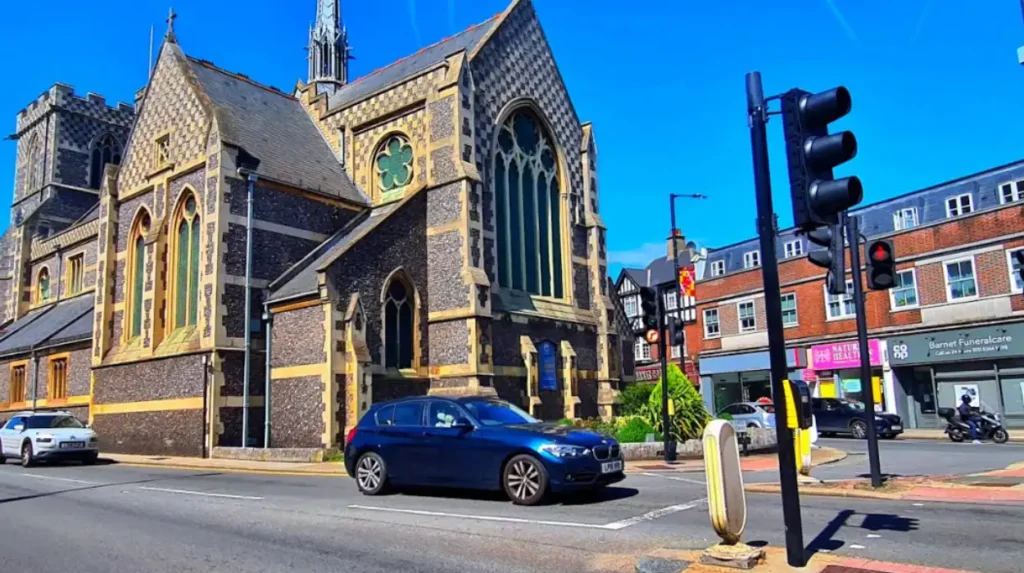
St John the Baptist Church, located at the highest point of Barnet Hill, is a landmark that has undergone multiple reconstructions since its initial founding in the 1200s. The current structure, primarily dating from the 15th century, features a distinctive flint-and-stone exterior characteristic of the Perpendicular Gothic style. Inside, the church contains monuments to prominent local families, including the Ravenscrofts, who founded the local grammar school in 1573.
The implications of these sites extend beyond theology. They were historically the primary centres for local administration and record-keeping before the establishment of secular councils. Parish records from these churches provide demographic data on mortality rates, marriage patterns, and social standards during the 18th century, offering insights into the evolution of domestic life in North London (Smith, 2024).
Furthermore, the “hidden” nature of these sites often lies in their smaller details, such as:
- The Tower Beacon (Monken Hadley): A functional relic of the 16th-century national security infrastructure.
- Masons’ Marks: Unique carvings on the stones of St John the Baptist that identify the specific medieval guilds responsible for the construction.
- The Boundary Markers: Ancient stones located in churchyards that once defined the legal limits of the parish and the City of London’s jurisdiction.
What are the implications for future tourism in Barnet?
The future of tourism in Barnet is likely to shift toward sustainable, heritage-led development that leverages AI and augmented reality to make “hidden” historical sites more accessible. This strategy aims to distribute visitor footfall away from congested central zones.
As international tourist arrivals are projected to rise by 3% to 5% throughout 2025 and 2026, there is an increasing demand for “secondary destinations” that offer authentic local experiences (Peleka, 2026). Barnet is uniquely positioned to meet this demand by promoting its extensive green belt and historical assets. The integration of digital platforms will allow travellers to access real-time data on hidden gems, such as the exact locations of the Battle of Barnet markers or the rare tree species in Stephens Gardens.
Climate change also influences the structure of local tourism. Small destinations are increasingly developing adaptation strategies to manage the impact of weather patterns on heritage sites and green spaces (Corradini, 2026). In Barnet, this involves the participative development of conservation plans for ancient woodlands like Monken Hadley Common to ensure they remain resilient to the urban heat island effect of Greater London.
The long-term value of these hidden gems lies in their ability to provide a multi-layered narrative of London’s growth. From the medieval battlefields to the Victorian innovation of indelible ink, Barnet preserves the specific components of the English experience that are often lost in more rapidly urbanised districts. For the tourist or resident, these sites offer a profound connection to the structural and social history of the capital.
What are the best hidden gems to visit in Barnet?
Some of the best hidden gems in Barnet include Monken Hadley Common, Stephens House & Gardens, Barnet Museum, St John the Baptist Church, and the Dollis Valley Greenwalk. These attractions offer a mix of history, nature, architecture, and local heritage away from the borough’s busiest tourist sites.