The London Borough of Barnet is a geographically diverse and culturally significant administrative area situated in the northernmost part of Greater London. It is defined by a unique combination of suburban residential districts, extensive protected green spaces, and a demographic profile that reflects one of the most religiously and ethnically diverse populations in the United Kingdom.
- Is Barnet the largest borough in London by population?
- What is the historical significance of Barnet within North London?
- Why is Barnet considered a “Green Borough”?
- How does the borough reflect London’s religious and cultural diversity?
- What are the top leisure and tourism attractions in Barnet?
- Is Barnet a suitable hub for digital nomads and business travellers?
Is Barnet the largest borough in London by population?
Barnet is the second-most populous borough in London, with a recorded population of approximately 389,300 residents as of recent census data. It occupies a total land area of 86.74 square kilometres, making it the fourth-largest borough by physical size in Greater London.
The borough’s population density and scale are primary drivers of its administrative importance. As of 2024 and 2025 planning reports, Barnet continues to see significant demand for infrastructure, particularly in the education sector, where school roll projections remain high despite a slight decrease in reception place preferences compared to the 2012 peak of 3,163 (Shasha, 2024). The working-age population (ages 18–65) constitutes approximately 75% of the total residency, which is slightly lower than the London-wide average of 79.4%, indicating a higher proportion of families and retirees (Chabé-Ferret & Marzano, 2024).
The borough is composed of several distinct town centres, including:
- Chipping Barnet (also known as High Barnet)
- Edgware
- Hendon
- Finchley
- Golders Green
Each of these districts contributes to a macro-socioeconomic structure where urban density in the south transitions into the metropolitan green belt in the north. This spatial distribution allows Barnet to function as a bridge between the high-intensity economic activity of Inner London and the more rural character of Hertfordshire.
What is the historical significance of Barnet within North London?
Barnet’s historical significance is rooted in its position as a strategic gateway on the Great North Road and its role in the Wars of the Roses. It served as a vital coaching stop for travellers moving between London and the North.
Historically, the area was dominated by the Battle of Barnet in 1471, a decisive engagement during the Wars of the Roses that resulted in the death of Richard Neville, Earl of Warwick (“The Kingmaker”), and the restoration of King Edward IV to the throne. This event marked a shift in English dynastic power and solidified Barnet’s place in national military history.
As you explore the modern site, you are crossing land with a deep heritage. Read about the full [Battle of Barnet and Medieval North London] to understand its origins.
Beyond medieval warfare, Barnet’s development was accelerated by the arrival of the Great Northern Railway in the 19th century and the later expansion of the London Underground’s Northern Line. Hendon, a central district within the borough, became a pioneer in global aviation. The Hendon Aerodrome, established by Claude Grahame-White in 1911, was the site of the first airmail delivery in the UK and later became a major RAF base during the Second World War. Educational and religious institutions also shaped the borough; for instance, Queen Elizabeth’s School was founded in 1573 under a royal charter from Elizabeth I (Gillard, n.d.).
Why is Barnet considered a “Green Borough”?
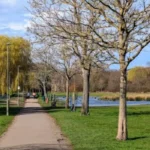
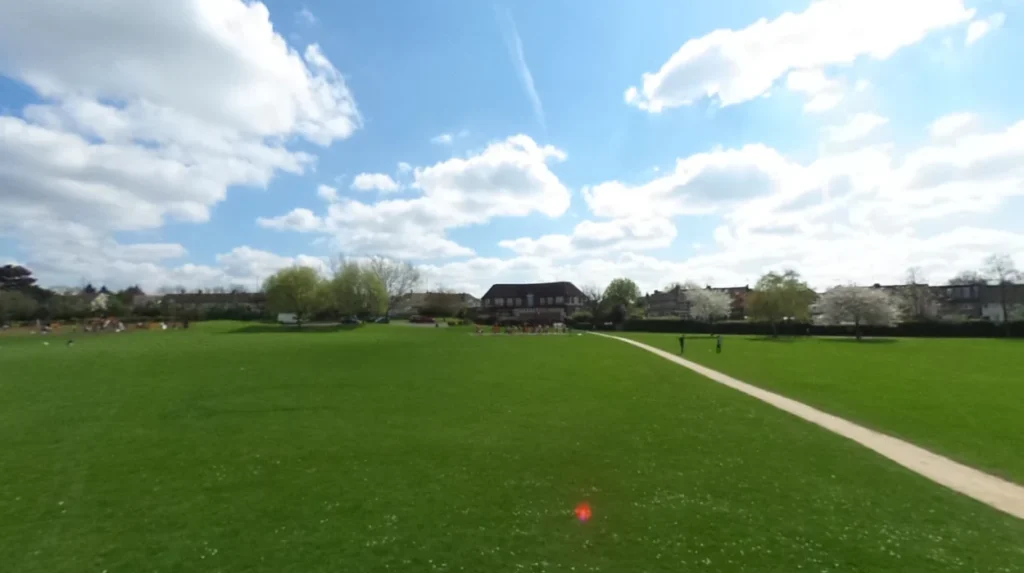
Barnet is classified as a green borough because 28% of its total land area is designated as Metropolitan Green Belt. It contains over 200 parks, 67 sites of Nature Conservation Importance, and eight local nature reserves within its boundaries.
The environmental structure of Barnet is essential to its identity as a leisure destination. The borough offers an average of 18,489 square kilometres of accessible greenspace per district, which is a significant proportion of its total administrative area (Adamu et al., 2023). These spaces provide critical ecosystem services and serve as primary recreational hubs for North London.
Key examples of Barnet’s green infrastructure include:
- Hadley Common: An ancient common that remains largely unchanged since the medieval period.
- Oak Hill Woods: A local nature reserve and ancient woodland in East Barnet.
- Scratchwood: The largest area of ancient woodland in the borough, offering extensive trails.
- Sunny Hill Park: Located in Hendon, providing panoramic views across North London.
The high percentage of greenspace contributes to a “leafy” suburban character that attracts families and domestic tourists. This environmental preservation is a deliberate policy to prevent urban sprawl while maintaining biodiversity in the metropolitan area. Statistics indicate that London boroughs with this level of greenery—ranging typically between 18% and 42% coverage—see improved health outcomes for residents (Adamu et al., 2023).
How does the borough reflect London’s religious and cultural diversity?
Barnet is home to the largest Jewish community in the United Kingdom, representing 14.5% of the borough’s population. This cultural presence is visible through numerous synagogues, kosher retailers, and community centres, particularly in Golders Green, Hendon, and Finchley.
The demographic diversity of Barnet extends beyond its Jewish heritage. According to the Institute for Jewish Policy Research, nearly a quarter (23.1%) of the UK’s Jewish population resides in just two boroughs: Barnet and Redbridge (Graham, 2007). In Barnet, one person in seven is Jewish, creating a distinct cultural and social fabric (Graham, 2007).
In addition to this, the borough has substantial:
- Hindu communities: Centred around Finchley and Hendon.
- Muslim communities: Supported by several mosques and Islamic education centres.
- Christian denominations: Representing a wide array of Anglican, Catholic, and Orthodox churches.
This multi-faith environment influences the borough’s leisure and tourism offerings. Cultural festivals, diverse culinary options, and community-led businesses are staples of the local economy. The presence of community hubs is vital for maintaining this cohesion; 58% of such hubs in areas like Barnet are “hyper-local,” serving specific small neighbourhoods to address social isolation and improve local wellbeing (Trup, 2019).
What are the top leisure and tourism attractions in Barnet?
Barnet’s top attractions include the Royal Air Force Museum London, the multi-ethnic culinary hubs of Golders Green, and the historic high street of Chipping Barnet. These sites offer a mixture of military history, cultural immersion, and traditional English market-town experiences.
The Royal Air Force (RAF) Museum in Colindale is the borough’s primary international tourist draw. Located on the site of the former Hendon Aerodrome, it houses over 100 aircraft and extensive exhibits detailing the history of aviation and the RAF’s role in global conflicts. It serves as a major educational resource, with archaeological and historical links to the Second World War (Moshenska, n.d.).
For leisure travellers, the borough provides:
- Shopping and Dining: The Spires Shopping Centre in High Barnet and the diverse food scene in Golders Green.
- Arts and Culture: The artsdepot in North Finchley, a multi-venue cultural centre featuring theatre, dance, and visual arts.
- Active Leisure: Several high-quality golf courses and the Barnet Copthall Leisure Centre, which includes a stadium used by professional sports teams.
The economic impact of these attractions is supported by a robust network of Small and Medium Enterprises (SMEs). These businesses are often the primary drivers of innovation and local employment within the borough’s service sector (Qiwen, 2026).

Is Barnet a suitable hub for digital nomads and business travellers?
Barnet is an ideal location for digital nomads due to its high density of community hubs, quiet green spaces with public Wi-Fi, and excellent transport links to Central London via the Northern Line and Thameslink services.
For the modern professional, Barnet offers a “best of both worlds” scenario. It provides the quietude necessary for focused work while remaining 30 minutes away from the City of London. The borough’s infrastructure includes numerous “community hubs”—buildings or spaces owned or leased by the community that offer workspaces, health initiatives, and social connectivity (Trup, 2019). Approximately 41% of these hubs have been operating for over a decade, providing a stable environment for remote work (Trup, 2019).
Transport components include:
- The Northern Line (High Barnet and Edgware branches): Direct access to King’s Cross, Bank, and Waterloo.
- Thameslink: Fast rail connections from Mill Hill Broadway and Hendon to St Pancras International.
- Major Road Networks: Proximity to the M1 motorway, A1, and North Circular (A406).
While productivity growth in the UK has faced a “spatial puzzle” with slower growth in many London districts since 2008, Barnet remains a competitive area for labour productivity due to its highly skilled workforce and professional service base (Wong, 2026). The borough’s mix of residential comfort and commercial accessibility makes it a preferred secondary location for domestic business travellers who wish to avoid the congestion of Inner London.
What is the London Borough of Barnet known for?
The London Borough of Barnet is known for its extensive green spaces, rich historical heritage, diverse communities, and major attractions such as the RAF Museum London. It is also home to the largest Jewish community in the United Kingdom and serves as a gateway between Greater London and Hertfordshire.