Key Points
- Demolition Proposal: A formal planning application has been submitted to Enfield Council detailing plans to demolish an existing detached residential property in the suburban area of Winchmore Hill.
- Proposed Replacement: The application seeks regulatory approval to replace the single property with a modern, two-storey family-sized home designed to fit the quiet context of the street.
- Focus Area: The development is focused within the sought-after N21 postal district, specifically targeting a residential plot situated on one of Winchmore Hill’s quieter, lower-traffic streets.
- Council Oversight: Enfield Council’s planning department is currently evaluating the submission as part of its weekly compilation of local infrastructure and residential applications.
- Broader Context: The submission forms part of a wider wave of property development applications across the London Borough of Enfield, highlighting ongoing suburban intensification pressures.
Winchmore Hill (North London News) June 13, 2026 — Suburban property dynamics in the north London suburbs are facing a renewed test following a series of planning submissions presented to municipal authorities. According to official planning registers compiled by architectural reporters, a suburban plot in Winchmore Hill has become the center of a fresh structural bid aimed at expanding the local footprint of family-sized housing.
- Key Points
- How does the Winchmore Hill Bid Fit into Enfield Council’s Broader Housing Strategy?
- Background of Suburban Development in the London Borough of Enfield
- Predictions: How this Development Affects Local Residents and the N21 Property Market
- Influence on the Local Housing Market
- Long-Term Planning Precedents
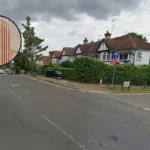
The primary application seeks full planning permission from Enfield Council to demolish an existing residential building and construct a replacement two-storey family home within the N21 postal district. The development site is located on one of Winchmore Hill’s quieter, traditionally low-density residential streets, making the prospect of structural clearance and prolonged construction a notable point of discussion for surrounding households.
The documentation filed with Enfield Council’s planning division indicates that the project organizers intend to optimize the existing land plot. While full architectural specifications, including internal floor areas and exact boundary dimensions, remain under formal review by council planning officers, the overarching design brief emphasizes a multi-level family dwelling.
The submission is listed alongside a broader weekly release of applications spanning the entirety of the borough, reflecting a persistent trend toward redeveloping aging detached or semi-detached housing stock to meet modern architectural standards and energy efficiency criteria.
How does the Winchmore Hill Bid Fit into Enfield Council’s Broader Housing Strategy?
The latest architectural scheme has emerged at a time when outer London authorities are balancing municipal growth targets against suburban conservation objectives. Local civic organizations, including the Enfield Society, maintain an active framework for monitoring development applications to ensure that any new construction projects preserve the architectural character and environmental baseline of local neighborhoods.
The application framework for the Winchmore Hill site requires a thorough assessment of multiple urban planning parameters before any physical works can proceed. Case officers assigned to the file are mandated to assess how a new two-storey structure will impact the established building lines of the quiet N21 street, alongside evaluating potential issues related to overshadowing, daylight loss for adjacent properties, and the architectural integration of modern materials within a traditional suburban setting.
Furthermore, structural redevelopments of this nature within the London Borough of Enfield must comply with stringent environmental standards.
These include structural sustainability guidelines, surface water drainage assessments to prevent localized flooding, and adequate provisions for domestic waste storage and off-street parking. Neighbors and interested members of the public have been allocated a statutory consultation window to submit formal representations, either in support of or in objection to the demolition, which will ultimately inform the final decision by the council’s planning committee or delegated officers.
Background of Suburban Development in the London Borough of Enfield
The trend of purchasing older suburban properties with the explicit intention of demolition and replacement has accelerated across north London over the past two decades.
Historically, areas like Winchmore Hill, Southgate, and Palmers Green developed rapidly during the interwar period as the expansion of the London Underground network transformed rural Middlesex into a thriving commuter belt. This historical expansion left a legacy of substantial plots with large rear gardens and generous gaps between properties.
In recent years, these spacious plots have become highly attractive to private developers and families looking to customize their living spaces.
Because raw land for new build developments is exceptionally scarce within the boundaries of Greater London, the conversion or total replacement of existing low-density housing has become one of the primary mechanisms for structural modernization in suburban residential areas.
Enfield Council’s planning policies have frequently had to adapt to these market pressures. The borough’s local plan must navigate the delicate line between national housing targets, which encourage the efficient use of residential land, and local conservation policies designed to protect mature trees, garden ecosystems, and the distinct architectural heritage of N21 and its surrounding neighborhoods.
Predictions: How this Development Affects Local Residents and the N21 Property Market
If approved by Enfield Council’s planning committee, this demolition and rebuilding project is expected to influence both the immediate neighborhood dynamics and the broader localized property market in several distinct ways.
For residents living in the immediate vicinity of the target plot on this quiet Winchmore Hill street, the most immediate consequence will be operational disruption.
The complete demolition of a house followed by the ground-up construction of a two-storey home typically demands a construction timeline stretching from 12 to 18 months. Neighbors are likely to experience temporary increases in localized noise, dust, and heavy vehicular traffic from delivery lorries and trade vans. On a narrow, lower-traffic residential street, managing construction logistics can prove challenging, potentially impacting street parking availability and daily commuting routines.
Influence on the Local Housing Market
From a real estate perspective, the introduction of a newly constructed, high-specification family home will likely reinforce the premium status of the N21 postcode. New-build properties in traditional suburban settings generally command higher price points per square foot compared to older, unrenovated homes.
If this project achieves a high-quality architectural finish, it could establish a higher valuation benchmark for the street, potentially influencing future property valuations and encouraging neighboring property owners to consider similar modernization or expansion schemes.
Long-Term Planning Precedents
Politically and architecturally, the decision reached by Enfield Council on this application will serve as a continuous precedent for the area. An approval could signal to developers that the council remains receptive to complete structural replacements on quiet residential plots, potentially leading to an increase in similar applications across Winchmore Hill.
Conversely, if strict design modifications or outright refusals are issued, it will underscore the council’s commitment to maintaining the existing suburban density and structural heritage, signaling to the market that alteration rather than complete demolition remains the preferred path for suburban evolution.