You must complete Enfield Council’s two-stage complaints procedure first, then contact the Local Government and Social Care Ombudsman (LGO) within 12 months of discovering the problem. Stage 1 goes to the service manager (response within 4 weeks), Stage 2 goes to the Chief Executive (response within 4 weeks). After both stages, call the LGO at 0300 061 0614 or submit online at lgo.org.uk/make-a-complaint with your complaint letters and council responses.
- How do you complete Stage 1 of Enfield Council’s complaints procedure?
- What happens when you escalate to Stage 2 with Enfield Council’s Chief Executive?
- When can you skip the council’s complaints procedure and contact the Ombudsman directly?
- What is the 12-month time limit for complaining to the Local Government Ombudsman?
- How do you submit a complaint to the Local Government Ombudsman about Enfield Council?
- What evidence do you need to include when complaining to the Ombudsman about Enfield?
- What does the Ombudsman investigate when reviewing your Enfield Council complaint?
- What remedies can the Ombudsman recommend if they find Enfield Council failed you?
- How long does the Ombudsman investigation take for Enfield Council complaints?
- What happens after the Ombudsman issues a decision on your Enfield Council complaint?
- What alternative options exist if the Ombudsman rejects your Enfield Council complaint?
- How do you complain about Enfield Council Housing specifically?
- What should you do if Enfield Council staff treat you unfairly during the complaints process?
- How can North London residents find help with making a council complaint?
Enfield Council is the London Borough of Enfield, the local government authority serving Enfield in North London, England. It provides services including housing, council tax collection, planning, social care, and environmental services. When these services fail or decisions seem unfair, residents have a formal complaints process under the Local Government Act 1972. This process has two mandatory stages within the council before you can escalate externally. The Local Government and Social Care Ombudsman (LGO) is the independent body that investigates unresolved council complaints across England. The LGO operates free of charge and makes binding decisions on remedies when it finds fault.
Understanding this escalation path is critical because the LGO will reject complaints that haven’t completed the council’s internal procedure. In the Enfield council tax case (24 021 257), the Ombudsman found fault in communication and recommended a £100 symbolic payment plus an apology. This demonstrates the system works when residents follow the correct steps. North London residents facing similar issues with Enfield Council need this precise roadmap to protect their rights.
How do you complete Stage 1 of Enfield Council’s complaints procedure?
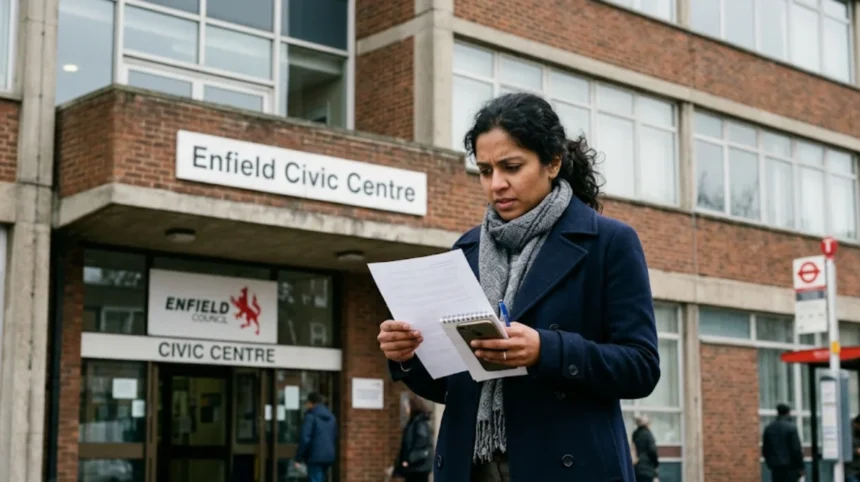
Submit your complaint to the service manager within one month of the problem, using email at complaints@enfield.gov.uk, phone at 020 8379 1000, or letter to Civic Centre, Silver Street, Enfield, EN1 3BG. The manager must confirm receipt within 1 week and respond with findings within 4 weeks. Include what went wrong, how you were affected, and what remedy you want.
Stage 1 is your first formal complaint level. You contact the manager of the specific service department involved—whether Housing, Council Tax, Planning, or Adult Social Care. For Adult Social Care complaints specifically, Enfield Council provides dedicated contact: statutory complaints adults and children manager at PO Box 59, Civic Centre, Enfield, EN1 3XL. The manager will investigate or assign someone else to investigate. They must write to you confirming receipt within 1 week and provide their decision within 4 weeks.
Your Stage 1 complaint must be written in English if submitted by letter. You need to include your name, address, the grounds for your complaint, and any supporting evidence. Keep copies of everything you send. Record the date you submitted and the reference number if given. If you call, note the name of the person who answers and what they say. This documentation becomes critical evidence if you escalate to the Ombudsman later.
What happens when you escalate to Stage 2 with Enfield Council’s Chief Executive?
Write to the Chief Executive within one month of receiving the Stage 1 response if you remain unhappy. The Chief Executive reviews what was done at Stage 1 and must respond within 4 weeks. Contact them by phone at 020 8379 3902 or by letter to Civic Centre, Silver Street, Enfield, EN1 3XY.
Stage 2 is the council’s final internal review. The Chief Executive does not re-investigate the original problem but examines whether Stage 1 was handled correctly. They review the investigation process, the evidence considered, and whether the Stage 1 response was appropriate. This is an administrative review, not a fresh investigation.
The Chief Executive will write to you within 4 weeks explaining their decision. They may confirm the Stage 1 outcome, suggest modifications, or recommend a different remedy. If the Chief Executive confirms the original decision and you still disagree, you have now exhausted Enfield Council’s internal complaints procedure. This exhaustion is the mandatory prerequisite for contacting the Ombudsman. Without completing Stage 2, the LGO will not accept your complaint.
When can you skip the council’s complaints procedure and contact the Ombudsman directly?
You can contact the Ombudsman immediately if the council hasn’t responded within a reasonable time—typically up to 16 weeks for most complaints. Children’s services complaints may take longer. You also qualify if the council refuses to accept your complaint without valid reason or if you face significant delay beyond their stated timelines.
The standard rule requires completing both Stage 1 and Stage 2 before contacting the Ombudsman. However, the LGO recognizes exceptions where waiting would be unreasonable. If you submitted a Stage 1 complaint and received no response after 16 weeks, you can escalate immediately. The same applies if Stage 2 drags on without response. The Ombudsman states: “You can also come to us if you’ve complained but haven’t received a response within a reasonable time. In most cases, we think this should be up to 16 weeks”.
Another exception occurs when the council refuses to process your complaint. If Enfield Council tells you they will not accept your complaint without a legitimate reason under their policy, you can contact the Ombudsman. Document this refusal clearly—it becomes evidence of the council blocking your access to the internal process.
What is the 12-month time limit for complaining to the Local Government Ombudsman?
You must contact the Ombudsman within 12 months of first knowing about the problem. The LGO will not consider complaints made more than 12 months after the event or after the council’s final decision, unless you provide a very good reason for the delay.
This 12-month deadline is strict. The Local Government Act 1974 sets this limit under sections 26B and 34D. The Ombudsman expects complainants to act within 12 months of becoming aware of the issue. In the Enfield council tax case, Ms X complained about 2023/24 arrears in February 2025 and the Ombudsman accepted it because she did not become aware of the arrears until 2024.
The deadline starts from when you first knew about the problem, not when the problem occurred. If Enfield Council sent you a wrong bill in January 2024 but you discovered the error in June 2024, your 12 months runs from June 2024. However, if you received the council’s final Stage 2 response on 1 March 2025, you must contact the Ombudsman by 1 March 2026. Missing this deadline means your complaint will be rejected unless you have exceptional circumstances.
How do you submit a complaint to the Local Government Ombudsman about Enfield Council?
Submit online at lgo.org.uk/make-a-complaint, call 0300 061 0614, or write to PO Box 4771, Coventry, CV4 0EH. The phone lines are open Monday to Friday, 8:30am to 5:00pm. Explain what the council did wrong, how it affected you, and what you want them to do.
The online form is the fastest method. You will need to provide your details, describe the problem clearly, and upload supporting documents. The Ombudsman website guides you through each section. When calling, have all your documents ready because the advisor will ask for specific details. If writing by post, include copies (not originals) of all relevant paperwork.
You must explain three things clearly: what Enfield Council did or failed to do, how this affected you specifically, and what remedy you want. For example: “Enfield Council allocated my payments to the wrong tax year without explaining this, causing a court summons I did not need. This caused me frustration and uncertainty. I want an apology and a symbolic payment for the avoidable distress”.
What evidence do you need to include when complaining to the Ombudsman about Enfield?
Include copies of your Stage 1 and Stage 2 complaint letters, the council’s responses to both stages, decision letters, emails, complaint reference numbers, and any evidence showing how the problem affected you. Be clear and specific so the Ombudsman quickly understands your evidence and what remedy you want.
Gather all documentation before submitting. Start with your Stage 1 complaint and the manager’s response. Add your Stage 2 letter to the Chief Executive and their response. Include the original decision or notice that sparked your complaint—such as a council tax bill, planning refusal, or housing decision letter. Add all email correspondence between you and Enfield Council. Include payment records, appointment confirmations, and any medical or financial evidence showing impact.
The Ombudsman recommends: “Include copies of relevant documents: decision letters, emails, your complaint to the local authority and their response, and any evidence of the impact”. Send copies only—keep originals safe. Organize documents chronologically with clear labels. If you have many pages, create a simple index listing what each document is and its date.
What does the Ombudsman investigate when reviewing your Enfield Council complaint?
The Ombudsman investigates “maladministration” and “service failure,” which the LGO calls “fault.” They examine whether the council followed proper procedures, made decisions based on correct evidence, communicated clearly, and treated you fairly. They also assess whether fault caused you “injustice”—significant adverse impact.
The LGO does not take sides or re-make the council’s original decision. Instead, they review the administrative process. For council tax cases, they check whether Enfield followed Council Tax Administration and Enforcement Regulations 1992. For housing cases, they verify compliance with the Complaint Handling Code. For social care, they examine whether the council applied the Care Act 2014 correctly.
In the Enfield council tax case (24 021 257), the Ombudsman found “no fault in the way the Council allocated payments” but found “fault in the way the Council communicated about the matter”. This distinction is critical: the Ombudsman separates the outcome from the process. Even if the council’s decision was legally correct, poor communication can constitute fault requiring remedy.
What remedies can the Ombudsman recommend if they find Enfield Council failed you?
The Ombudsman can recommend an apology, financial payments for frustration or distress, service improvements, correction of records, and steps to prevent recurrence. In the Enfield council tax case, the Council agreed to apologize, pay £100 symbolic compensation, and remind staff about clear communication.
Financial remedies fall into categories. Symbolic payments (typically £50-£500) acknowledge avoidable frustration and uncertainty. Actual loss payments cover quantifiable financial harm like court costs, extra bills, or lost income. Injury-to-feeling payments address emotional distress from serious fault. The Ombudsman publishes guidance on remedies setting expectations for effective apologies.
Service improvements might include rewriting procedures, training staff, or changing systems. In the Enfield case, the Council agreed to “remind relevant staff of the importance of clear and timely verbal and written communication in relation to the council tax payment allocation process”. The Council must provide evidence to the Ombudsman showing it complied with agreed actions.
How long does the Ombudsman investigation take for Enfield Council complaints?
Most investigations take 3 to 6 months from submission to decision. Complex cases involving multiple services or extensive documentation may take longer. The Ombudsman will contact you and Enfield Council for information during the investigation.
After you submit, the Ombudsman first decides whether to accept your complaint. They check if you completed the council’s procedure, if you’re within the 12-month limit, and if the issue affects you significantly. This initial decision usually takes 2-4 weeks. If accepted, the investigation begins. The Ombudsman contacts Enfield Council to request their response and all relevant files.
During investigation, an investigator reviews both sides’ evidence. They may ask for additional information from you or the council. The investigator then drafts a decision and sends it to both parties for comment. After considering any comments, they issue the final decision. The Ombudsman publishes all decision statements on their website, making them publicly available.
What happens after the Ombudsman issues a decision on your Enfield Council complaint?
Enfield Council must implement the agreed remedies within the timeframe the Ombudsman sets—typically 1-2 months. The Council must provide evidence to the Ombudsman showing compliance. If the Council fails to comply, the Ombudsman can report this to Parliament.
The Ombudsman’s decision is final and binding on the council. Enfield Council cannot appeal the decision. The Council must apologize if ordered, make financial payments if ordered, and implement service improvements if ordered. In the Enfield council tax case, the Council had to apologize and pay £100 “within one month of this decision” and complete staff briefing “within two months”.
You will receive a copy of the final decision statement. The Ombudsman publishes all decisions on lgo.org.uk/decisions where anyone can search by council name. This public record ensures transparency and helps other residents understand what remedies are possible for similar problems.
Explore More Help & Resources
Why do council housing requests take so long?
How to escalate an unresolved housing application?
What alternative options exist if the Ombudsman rejects your Enfield Council complaint?
If the Ombudsman rejects your complaint, you may pursue judicial review in the civil courts if the council’s decision was legally unlawful. You can also contact your local Enfield Council councillor or MP to raise the issue politically. Alternative dispute resolution may be available for certain types of complaints.
Judicial review challenges the legality of a council decision, not the fairness. You must show the council acted unlawfully, irrationality, or procedurally improper. This requires a solicitor specializing in public law and costs thousands of pounds. You must act quickly—usually within 3 months of the decision. The Ombudsman cannot investigate complaints where you are already taking or planning legal action.
Contacting your councillor is free and may generate political pressure. Find your Enfield Council ward councillor at enfield.gov.uk. For broader issues, contact your MP in Parliament. MPs can write to the Council’s Chief Executive or raise matters in Parliament. While this won’t force a remedy, it can prompt the council to reconsider.
How do you complain about Enfield Council Housing specifically?
Complain to Enfield Council Housing by phone at freephone 0800 40 80 160 or 0208 3791327, by letter to FREEPOST Enfield Council Housing, or by email at feedback.council.housing@enfield.gov.uk. Follow the same two-stage procedure before contacting the Housing Ombudsman if unresolved.
Enfield Council Housing has a dedicated complaints channel separate from general council services. Use these housing-specific contacts for issues about property repairs, tenancy disputes, housing allocation, or anti-social housing matters. The Housing Ombudsman handles housing complaints after you complete the council’s procedure, similar to how the LGO handles general council complaints.
For housing complaints, the timeline may differ slightly. The Housing Ombudsman’s Complaint Handling Code requires landlords to respond within specific timeframes. Stage 1 typically requires 10 working days, Stage 2 requires 20 working days. Document all housing communications carefully as housing disputes often involve significant financial impact.
What should you do if Enfield Council staff treat you unfairly during the complaints process?
Document every instance of inappropriate treatment with dates, names, and what was said. Include this in your complaint to the Chief Executive at Stage 2. If unresolved, report it to the Ombudsman as part of your complaint about how the council handled your case.
Enfield Council has policies tackling intimidation and degrading treatment by officers. Your complaint should specifically request application of the Code of Conduct for Officers. Document whether staff threatened you with the “persistent complainer policy” without providing the policy document—a practice the FOI request identified as potentially intimidating.
The Ombudsman can investigate poor treatment during the complaints process as separate from your original complaint. In your LGO submission, include both the original problem and the unfair treatment. The Ombudsman considers complaints about “how your complaint was dealt with” alongside the original issue.
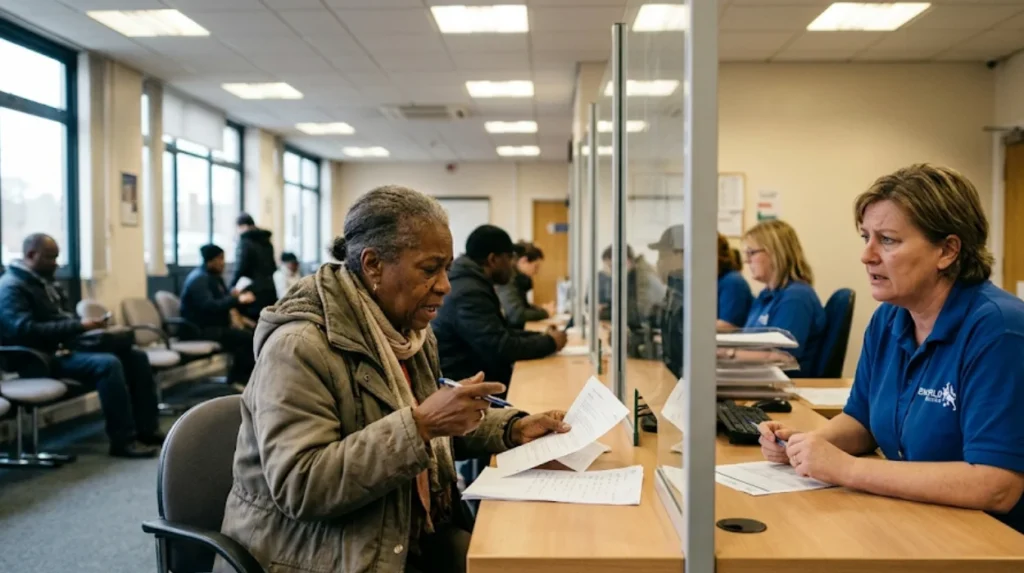
How can North London residents find help with making a council complaint?
Healthwatch Enfield provides free complaint assistance at Community House, 31 Fore Street, London N9 0PZ, phone 020 8373 6283 (9am-4pm Monday-Friday), text 07526 645683, or email admin@healthwatchenfield.co.uk. They help with complaints about health and social care services.
Healthwatch Enfield is an independent organization that supports residents making complaints. They can explain the process, help you write your complaint, and ensure you include all necessary information. For Adult Social Care complaints specifically, they provide detailed guidance videos explaining each step.
How do I complain about Enfield Council?
You must first use Enfield Council’s two-stage complaints procedure. Submit your complaint to the relevant service manager at Stage 1. If you’re unhappy with the outcome, escalate it to the Chief Executive at Stage 2. Only after completing both stages can you take your complaint to the Local Government and Social Care Ombudsman.