Key Points
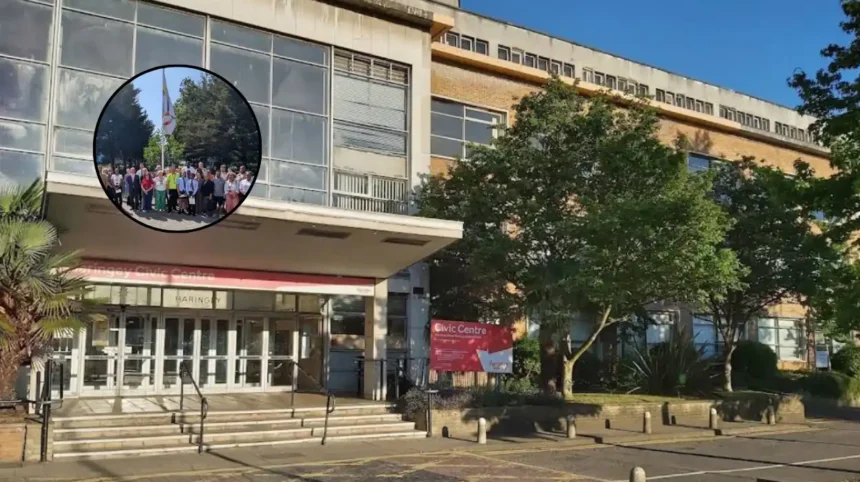
- Event Held: A formal flag-raising ceremony took place at George Meehan House in Wood Green to mark Windrush Day.
- Date and Theme: The event occurred on 22 June, aligned with the 2026 national theme, “Carrying the Flame,” highlighting cultural contribution, resilience, and community legacy.
- Key Attendees: The Mayor of Haringey, Councillor Dawn Barnes, led the ceremony alongside Council Leader Councillor Mark Blake, local residents, community networks, and schoolchildren.
- Speakers and Presenters: Personal testimonies and reflections were shared by resident Yvette Buttigieg, representatives from the EMBRACE network, students from St Thomas More Catholic School, poet Keiron Rennie, and writer Bridget Badoe McQuick.
- Core Significance: The annual observance recognises the profound impact of Caribbean immigrants who arrived in the United Kingdom between 1948 and 1971, specifically highlighting their roles in building the National Health Service (NHS), public infrastructure, and local culture.
Haringey Council (North London News) June 24, 2026— Community members, civic leaders, and local schoolchildren assembled at George Meehan House today to witness the raising of the Windrush Day flag, a ceremonial event marking the profound and lasting contributions of the Windrush Generation and their descendants to the London Borough of Haringey and the wider United Kingdom.
- Key Points
- Why is Windrush Day Celebrated on 22 June?
- Who Attended the Haringey Windrush Day Ceremony?
- What Did Local Leaders and Residents Say About the Windrush Legacy?
- How Has the Windrush Generation Shaped Modern Haringey?
- Background of the Windrush Development
- Predictions for the Local Community and Wider Audience
- Impact on First and Second-Generation Immigrants
- Impact on Community Cohesion and Local Policy
The flag-raising ceremony, led by the Mayor of Haringey, Councillor Dawn Barnes, serves as the centerpiece of local celebrations for Windrush Day, which is observed nationally every year on 22 June. This year’s national theme, “Carrying the Flame,” focuses heavily on the enduring impact, cultural enrichment, and community resilience passed down through successive generations.
The event brought together a diverse cohort of speakers, including Council Leader Councillor Mark Blake, local students, poets, and writers, all of whom reflected on how the influx of Caribbean migration has structurally and culturally shaped modern British society.
Why is Windrush Day Celebrated on 22 June?
Windrush Day is celebrated annually across the United Kingdom to commemorate the arrival of HMT Empire Windrush at Tilbury Docks in Essex on 22 June 1948.
The vessel carried hundreds of passengers from the Caribbean, many of whom were veterans of the Second World War, answering the British government’s call to help rebuild the post-war economy and labor force.
The historical window celebrated on this day extends from that initial 1948 arrival up until the passage of the Immigration Act 1971, a period during which thousands of Commonwealth citizens settled in the UK.
These individuals, along with the children and grandchildren who followed them, became foundational to the establishment of crucial British institutions, most notably the National Health Service (NHS) and the expanded post-war public transport network. In Haringey, this demographic legacy remains an permanent fixture of the borough’s civic identity.
Who Attended the Haringey Windrush Day Ceremony?
The civic ceremony at George Meehan House featured a broad cross-section of Haringey’s local governance and community sectors.
The political leadership was represented by the Mayor of Haringey, Councillor Dawn Barnes, and the Leader of the Council, Councillor Mark Blake. Their presence underscores the local authority’s official commitment to integrating Windrush history into the permanent cultural fabric of the borough.
In addition to elected officials, the event relied heavily on grassroots and educational participation. Representatives from the EMBRACE network—an organisation dedicated to supporting and advocating for minority ethnic staff and community groups—joined students from St Thomas More Catholic School.
The inclusion of youth voices was designed to represent the concept of “carrying the flame” across generations. The literary and artistic elements of the legacy were highlighted through presentations by local poet Keiron Rennie and writer Bridget Badoe McQuick, both of whom spoke regarding the intersection of personal family history and British identity.
What Did Local Leaders and Residents Say About the Windrush Legacy?
Official statements delivered during the ceremony focused on themes of gratitude, systemic contribution, and the ongoing fight against racial inequality. As reported by official communication channels for Haringey Council, the Mayor of Haringey, Councillor Dawn Barnes, stated that:
“Windrush Day is a chance to celebrate the extraordinary contribution of the Windrush Generation and their descendants to Britain and to Haringey. Their hard work helped build our NHS, public services and communities, while enriching our borough’s culture, food, music and identity. Haringey is proud of its strong history of diversity and anti-racism, and today we honour those who helped shape the borough we know today. Their legacy reminds us that our differences are our strength and that we are stronger together.”
The perspective of the second generation of Caribbean immigrants was brought forward by long-term borough residents. As documented by local civic records, Haringey resident Yvette Buttigieg stated that:
“I arrived in this country in the 1970s, part of the second generation of the Windrush story – too young to remember the ship, but old enough to carry everything that came after it. We didn’t just come here to survive. We came here to build a home, and we did. We raise this flag for all those who made that journey and thank them for their sacrifices, which helped make life easier for future generations. I thank them for paving the way for those of us who came after.”
How Has the Windrush Generation Shaped Modern Haringey?
The cultural and socio-economic landscape of Haringey is structurally tied to the migration patterns of the mid-20th century. The arrival of families from Jamaica, Trinidad and Tobago, Barbados, and other Caribbean islands transformed neighborhoods like Wood Green, Tottenham, and Hornsey into hubs of multicultural commerce, culinary diversity, and musical innovation.
Beyond cultural metrics, the workforce of the Windrush Generation was vital to maintaining the logistics and health infrastructure of North London. Local hospitals and transport depots were heavily staffed by Commonwealth citizens who faced significant social hostility and systemic discrimination upon arrival. Legal analysts and social historians note that despite these immense systemic barriers, the community established deep roots, creating local churches, advocacy groups, and business networks that continue to anchor Haringey’s contemporary civil society.
Background of the Windrush Development
The formal celebration of Windrush Day and the raising of flags by local authorities must be viewed within the context of recent British political and legal history, specifically the Windrush Scandal that emerged publicly in 2018.
It was revealed that thousands of legal British residents of the Windrush Generation had been wrongly classified as illegal immigrants by the Home Office due to a lack of official paperwork—a direct result of the government’s “Hostile Environment” policy.
Many individuals who had lived, worked, and paid taxes in the UK for decades were wrongfully detained, denied healthcare, stripped of their jobs, and, in at least 83 cases, unlawfully deported to countries they had not seen since childhood.
The subsequent public outcry led to the resignation of then-Home Secretary Amber Rudd, an official apology from the government, and the establishment of the Windrush Compensation Scheme.
Consequently, annual civic events like the one in Haringey have shifted from purely cultural celebrations to critical points of political recognition.
Local councils, particularly in highly diverse urban boroughs, utilize these ceremonies to publicly distance themselves from central government immigration policies and to reaffirm the legal and moral right of these communities to be recognized as fundamental components of British society.
Predictions for the Local Community and Wider Audience
The ongoing institutional focus on the Windrush legacy is predicted to have several distinct impacts on the local audience, ranging from educational frameworks to legal advocacy.
For youth audiences, such as the students from St Thomas More Catholic School who participated in the event, the normalization of Windrush Day ceremonies will likely accelerate changes in the local history curriculum. It is predicted that Haringey schools will increasingly integrate Black British history into their standard curricula year-round, rather than confining it to specific commemorative days.
This will provide younger generations with a more accurate understanding of post-war British reconstruction and the origins of their multi-ethnic communities.
Impact on First and Second-Generation Immigrants
For the aging first-generation Windrush individuals and their immediate descendants, continued public ceremonies provide a measure of emotional validation, but they also serve to maintain pressure on legislative bodies.
The visibility of these events ensures that the ongoing failures of the Windrush Compensation Scheme—which has faced severe criticism from human rights groups for its bureaucratic delays and low payout rates—remain in the public eye. Increased civic attention in boroughs like Haringey is expected to drive sustained demands for legal reforms and speedier compensation processing from the Home Office.
Impact on Community Cohesion and Local Policy
At the municipal level, the symbolic act of flag-raising reinforces Haringey Council’s positioning as an actively anti-racist authority. This public stance is predicted to influence future budgetary allocations toward minority-led community groups, local arts funding, and targeted public services.
By framing diversity as a structural strength, the local government aims to foster greater social cohesion and resilience against broader national anxieties regarding immigration and demographic change.