Key Points
- Sarah Sackman, MP for Finchley and Golders Green, has launched a free, pop‑up legal advice centre in North London.
- The centre brings together volunteer lawyers from the local community to offer advice on housing, employment and crime issues.
- It is designed to fill the gap left by the closure of Barnet Law Centre in 2014 after funding cuts.
- Sarah Sackman, who practiced as a barrister before being elected, said access to justice should not depend on how much money people have.
- The MP recalled her own experience volunteering at a free legal advice centre in Toynbee Hall in the East End as a young lawyer, which shaped her view on accessible justice.
- Residents in Childs Hill were the first to be invited to the centre, hosted at the Jewish Vegetarian Society in Golders Green.
- The next instalment of the pop‑up will be held at ArtsDepot in North Finchley.
- The initiative is framed as a community‑led, practical force for good, using local skills and knowledge.
- No fee is charged for the advice, and the service is explicitly targeted at constituents who previously had no easy route to legal support.
- The launch reflects ongoing concerns about the impact of legal aid and law centre closures on ordinary residents in North London.
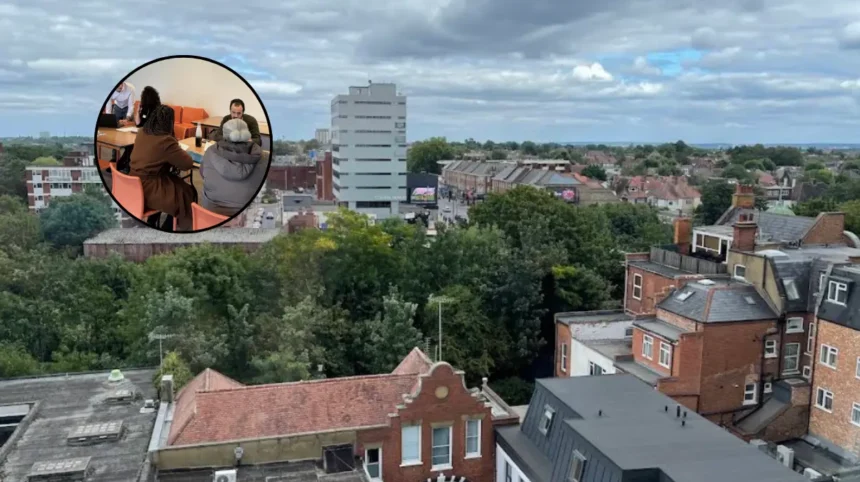
Finchley and Golders Green (North London News) July 11, 2026 – MP Sarah Sackman brought together constituents and volunteer lawyers from the community to establish the new initiative, which is being rolled out in stages across North London. Residents in Childs Hill were the first group invited to attend, with the initial sessions held at the Jewish Vegetarian Society in Golders Green.
- Key Points
- What Problems Does the Pop‑Up Centre Aim to Solve in Finchley and Golders Green?
- How Is the Centre Being Organised and Where Will It Be Held?
- What Is Sarah Sackman’s Personal Connection to Free Legal Advice Centres?
- How Does This Development Fit Into the Wider Context of Legal Aid and Law Centre Closures?
- Background: The Closure of Barnet Law Centre and the Rise of Pop‑Up Legal Services
- Prediction: How Could This Development Affect Residents, Volunteer Lawyers and Local Services in North London?
The next instalment is planned at ArtsDepot in North Finchley, extending access to a wider group of constituents.
As reported by the original news report covering the launch, Sackman said:
“Access to justice should not be determined by how much money you have”.
She added that she knows from her own experience the importance of making legal aid accessible, and that she is
“proud to see our community turning out to help each other, using their skills and knowledge as a practical force for good”.
mediahelpingmedia
The pop‑up centre arrives in a context where Barnet Law Centre, which previously provided similar services, closed in 2014 following funding cuts.
That closure is widely understood to have reduced the availability of local, affordable legal advice for residents facing complex issues in housing, work and criminal matters.
Sackman’s initiative is explicitly framed as filling that gap, by mobilising volunteer lawyers rather than relying on a permanently funded law centre.
Before being elected as an MP, Sackman practiced as a barrister and volunteered at a free legal advice centre in Toynbee Hall in the East End as a young lawyer.
She has said that this experience demonstrated to her the importance of accessible justice, and it is this background that underpins her decision to set up the pop‑up model.
The service is free for attendees, and the advice covers a range of common legal problems, including disputes over housing, employment issues and matters related to crime.
By using a pop‑up format in existing community venues, the scheme aims to make it easier for residents to access support without needing to travel to distant offices or navigate complex referral systems.
What Problems Does the Pop‑Up Centre Aim to Solve in Finchley and Golders Green?
The core problem the pop‑up centre addresses is the lack of locally available, free legal advice for constituents who do not qualify for, or cannot afford, private legal representation.
The closure of Barnet Law Centre in 2014 removed a key point of access for many residents in the Barnet area and beyond, leaving a gap that has not been fully replaced by other services.
As noted in the original reporting, Sackman highlighted that access to justice should not be determined by how much money people have, reflecting a concern that cost barriers prevent many from understanding their rights or pursuing remedies.
By bringing volunteer lawyers into community spaces, the pop‑up aims to lower those barriers and provide face‑to‑face guidance on navigating legal systems.
The focus on housing, employment and crime issues points to areas where legal complexity can have serious practical consequences for residents, including the risk of losing a home, unfair treatment at work or unresolved criminal matters.
In each of these areas, early advice can often prevent problems from escalating, which is one of the reasons such centres were traditionally valued.
How Is the Centre Being Organised and Where Will It Be Held?
The pop‑up legal advice centre is being organised as a series of events rather than a single, permanent office. Residents in Childs Hill were the first to be invited, with sessions taking place at the Jewish Vegetarian Society in Golders Green.
This choice of venue places the service within a familiar community setting, potentially making it easier for residents to attend without feeling they are entering a formal legal environment.
The next instalment is scheduled at ArtsDepot in North Finchley, extending the reach of the service to a different part of the constituency.
By using multiple venues, the initiative can serve a broader geographic area and reduce the distance some residents would otherwise need to travel.
Volunteer lawyers from the community are being brought together to provide the advice, indicating that the model relies on local professional expertise rather than a dedicated, funded staff. Sackman described this as the community
“turning out to help each other, using their skills and knowledge as a practical force for good”.
What Is Sarah Sackman’s Personal Connection to Free Legal Advice Centres?
Sarah Sackman’s commitment to accessible justice is rooted in her own professional history. Before being elected as an MP, she practiced as a barrister and volunteered at a free legal advice centre in Toynbee Hall in the East End as a young lawyer.
She has said that this experience demonstrated to her the importance of accessible justice, and it is this background that helps explain her decision to launch the pop‑up initiative.
As reported in the original coverage, Sackman stated:
“I know from my own experience the importance of making legal aid accessible”.
This personal connection is likely to strengthen her credibility with constituents who have previously struggled to access legal support, as it shows that her advocacy is informed by direct practice rather than solely political motivation.
How Does This Development Fit Into the Wider Context of Legal Aid and Law Centre Closures?
The launch of the pop‑up centre comes in the context of a longer trend in which local law centres across the UK have closed or reduced their services, often due to funding cuts.
The closure of Barnet Law Centre in 2014 is specifically cited as a key factor leaving a gap in accessible legal advice for residents in North London.
Reports and analyses of legal aid and law centre closures have highlighted that such reductions can disproportionately affect people who are already economically vulnerable, as they are less able to pay for private legal services.
Free legal advice centres have traditionally played an important role in helping these individuals understand their rights, negotiate with landlords or employers, and navigate criminal or civil proceedings.
Sackman’s initiative does not seek to replace a fully funded law centre, but rather to provide a stop‑gap solution using volunteer lawyers and existing community venues.
While this approach can increase access in the short term, it also raises questions about sustainability, continuity of support and the extent of advice that can be provided in a pop‑up format compared with a permanent centre.
Background: The Closure of Barnet Law Centre and the Rise of Pop‑Up Legal Services
Barnet Law Centre, which previously offered free or low‑cost legal advice to residents in the Barnet area and surrounding parts of North London, closed in 2014 following funding cuts.
Law centres like Barnet typically provided specialist advice on housing, employment, welfare and other areas of social law, often working with clients who had limited means and complex legal problems.
The closure of such centres has been widely linked to reductions in public funding for legal services and changes in legal aid policy, which have made it harder for many organisations to sustain their operations.
In response, some politicians, community groups and legal professionals have explored alternative models, including pop‑up advice sessions, community legal clinics and one‑day events, to maintain some level of accessible support.
Sarah Sackman’s pop‑up legal advice centre is an example of this type of response, using volunteer lawyers and community venues to provide advice without the overheads of a permanent law centre.
While this model can be effective in reaching people who might otherwise have no access to legal information, it is generally understood to be a partial solution rather than a full replacement for a funded law centre.
Prediction: How Could This Development Affect Residents, Volunteer Lawyers and Local Services in North London?
For residents in Finchley, Golders Green, Childs Hill and North Finchley, the most immediate impact of the pop‑up legal advice centre is increased access to free, face‑to‑face legal guidance on housing, employment and crime issues.
This could help individuals who previously had no clear route to advice to understand their rights, resolve disputes earlier and avoid some of the more serious consequences of unresolved legal problems, such as eviction, unfair dismissal or unresolved criminal matters.
For volunteer lawyers, the centre offers a structured way to contribute their professional skills to the community, potentially increasing their engagement with local residents and social justice issues.
Over time, regular participation in such initiatives may also strengthen networks among local legal professionals and community organisations, which could support future collaborative projects.
For existing local services, the pop‑up model may complement rather than replace other provisions, such as Citizens Advice, housing charities and specialist legal organisations, by providing an additional point of contact for initial advice and triage.
However, if the pop‑up becomes a regular fixture, it may also highlight the continuing need for more sustained, funded legal advice infrastructure, potentially influencing local discussions about how to address the long‑term gap left by the closure of Barnet Law Centre.