Key Points
- Barnet Council has awarded the Freedom of the Borough to five Jewish organisations, including three Hatzola branches (Northwest, Edgware and HBS).
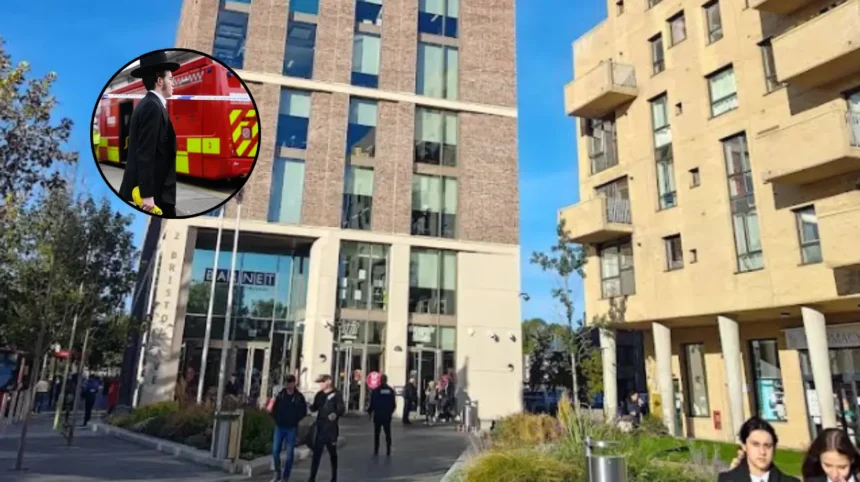
- The award comes after four ambulances used by Hatzola Northwest were set on fire in Golders Green on 23 March, an incident described as a suspected arson attack.
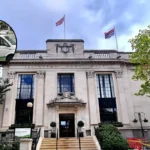
- The ceremony took place at Hendon Town Hall on Tuesday, with the council stating the honours recognised the organisations’ “extraordinary service to the borough”.
- A report published ahead of the meeting highlighted that Hatzola volunteers have responded to thousands of medical emergencies and worked alongside statutory emergency services for many years.
- Chief Rabbi Ephraim Mirvis described the arson attack as “particularly sickening” and praised Hatzola’s mission to protect life “Jewish and non-Jewish alike”.
- The award also included two additional Jewish organisations, bringing the total number of recipients to five.
- The development has raised broader concerns about antisemitism in the area and the role of community emergency services.
Golders Green (North London News) July 14, 2026 –Barnet Council has conferred the Freedom of the Borough, its highest civic honour, on five Jewish organisations, including the Hatzola Northwest ambulance service that was targeted in a suspected arson attack in Golders Green earlier this year. The move, announced at a ceremony at Hendon Town Hall on Tuesday, is intended to recognise what the council described as the “extraordinary service to the borough” provided by these groups over many years.
- Key Points
- Why did Barnet Council choose to honour Hatzola and other Jewish organisations at this time?
- How did community and religious leaders respond to the arson attack and the subsequent council award?
- What exactly is the Freedom of the Borough and who received it in this case?
- How have media outlets framed the link between the arson attack and the council’s decision?
- Background of the development
- Prediction: How can this development affect the Jewish community, Hatzola volunteers and wider Barnet residents?
The decision follows a widely reported incident on 23 March, when four ambulances used by Hatzola Northwest were set on fire in Golders Green. The attack, which has been described by local leaders and media as a suspected arson, sparked concerns about a rise in antisemitism in the area and drew strong condemnation from religious and community figures.
A report published ahead of the council meeting stated that Hatzola volunteers have for many years responded to thousands of medical emergencies, worked alongside statutory emergency services, promoted community health and helped save and enhance countless lives across the borough. The same report said the award recognised the organisations’ “extraordinary service to the borough”.
Why did Barnet Council choose to honour Hatzola and other Jewish organisations at this time?
The council’s decision to award the Freedom of the Borough to Hatzola Northwest, Hatzola Edgware and Hatzola HBS (which covers Southgate, Cockfosters, Hadley Wood and Barnet) is directly linked to the suspected arson attack on Hatzola Northwest’s ambulances in March.
The report laid out before the meeting emphasised that the award was not only a recognition of routine emergency work but also a statement of support for Jewish community services in the wake of what was described as a hostile act targeting them.
According to the council’s report, Hatzola volunteers have for many years responded to thousands of medical emergencies, worked alongside statutory emergency services, promoted community health and helped save and enhance countless lives across the borough.
The report stated that the honorary freedom was awarded to recognise the organisations’ “extraordinary service to the borough”.
The timing of the award, coming just months after the arson incident, has been interpreted by local commentators as a clear signal that the council intends to publicly back Jewish community organisations that provide essential emergency services, particularly in the context of rising concerns about antisemitism.
How did community and religious leaders respond to the arson attack and the subsequent council award?
At the time of the arson attack, Chief Rabbi Ephraim Mirvis described it as a
“particularly sickening assault – not only on the Jewish community, but on the values we share as a society”.
He went on to call Hatzola’s service “extraordinary”, adding that its
“sole mission is to protect life, Jewish and non-Jewish alike”.
The Chief Rabbi’s comments were widely reported and have been referenced in subsequent discussions about the role of community ambulance services in London and the broader context of antisemitic incidents affecting Jewish institutions.
His remarks underscored the view that the attack was not just against a specific organisation but against core societal values of protecting life and supporting vulnerable people.
Local leaders and council members have also used the language of “community solidarity” in describing the award, framing it as a way to demonstrate that Barnet stands with its Jewish residents and with organisations that serve the whole borough regardless of background.
What exactly is the Freedom of the Borough and who received it in this case?
The Freedom of the Borough is Barnet Council’s highest civic award. It is traditionally given to individuals or organisations that have made a significant contribution to the borough or who are seen as embodying its values. In this case, the council extended the honour to five Jewish organisations rather than to individuals.
The recipients named in the council’s report are:
- Hatzola Northwest
- Hatzola Edgware
- Hatzola HBS (covering Southgate, Cockfosters, Hadley Wood and Barnet)
- Two additional Jewish organisations (not detailed in the available report).
The council’s report stated that the honorary freedom was awarded to three branches of the Hatzola organisation – Northwest, Edgware and HBS – and that the award recognised the organisations’ “extraordinary service to the borough”.
The inclusion of two further Jewish organisations indicates that the council intended the honours to reflect a broader pattern of contribution by Jewish community bodies across Barnet, rather than focusing solely on the ambulance service that was attacked.
How have media outlets framed the link between the arson attack and the council’s decision?
Media coverage of the incident, including reporting by the BBC, has highlighted the arson attack on Hatzola Northwest’s ambulances in Golders Green on 23 March as the immediate context for the council’s decision to award the Freedom of the Borough.
Articles have described the attack as raising concerns about antisemitism and have quoted Chief Rabbi Mirvis’s description of the incident as “particularly sickening”.
Reports have also focused on the council’s framing of the award as a recognition of long-standing community service, rather than a purely reactive measure.
The council’s report emphasised that Hatzola volunteers have for many years responded to thousands of medical emergencies, worked alongside statutory emergency services, promoted community health and helped save and enhance countless lives across the borough.
This framing has allowed media outlets to present the award as both a response to a specific incident and as a broader affirmation of the value of community emergency services in Barnet.
The coverage has tended to avoid speculative language about the motivations behind the arson attack, sticking instead to the council’s and Chief Rabbi’s stated positions.
Explore More Barnet Council News
Barnet Council Upgrades Smart Video Network with Edge-AI: Barnet 2026
Barnet Council Overhauls CCTV with i-PRO Edge AI: London 2026
Background of the development
The Freedom of the Borough award to Hatzola and other Jewish organisations follows a suspected arson attack on 23 March in which four ambulances used by Hatzola Northwest were set on fire in Golders Green, an area within Barnet with a significant Jewish population.
The incident was reported by multiple media outlets, including the BBC, and was described as raising concerns about antisemitism.
Hatzola is a network of volunteer first-aid and ambulance services operating in Jewish communities across the UK. The three branches honoured by Barnet Council – Northwest, Edgware and HBS – provide emergency medical response in areas including Golders Green, Edgware, Southgate, Cockfosters, Hadley Wood and wider Barnet.
According to the council’s report, these volunteers have for many years responded to thousands of medical emergencies, worked alongside statutory emergency services, promoted community health and helped save and enhance countless lives across the borough.
The Chief Rabbi’s public comments at the time of the attack framed the incident as an assault not only on the Jewish community but on shared societal values, while also emphasising that Hatzola’s mission is to protect life regardless of religion.
The council’s decision to award the Freedom of the Borough has been presented as a formal recognition of this long-standing contribution and as a statement of support in the context of heightened concerns about antisemitic hostility.
Prediction: How can this development affect the Jewish community, Hatzola volunteers and wider Barnet residents?
This development is likely to have several practical and symbolic effects on the Jewish community in Barnet, on Hatzola volunteers and on the borough’s wider population.
For the Jewish community, the award may reinforce a sense that local institutions publicly recognise their contributions and are willing to stand with them following hostile incidents.
The council’s decision to honour not only the ambulance service attacked but two additional Jewish organisations suggests an intention to signal broader support for Jewish community life in Barnet, which could help mitigate feelings of isolation or vulnerability after the arson attack.
For Hatzola volunteers, the award may strengthen morale and provide additional public legitimacy for their work. Being recognised with the Freedom of the Borough, the council’s highest award, can be expected to increase visibility of the organisation and potentially encourage new volunteers or community partners.
It may also help in discussions with statutory emergency services about collaboration and resource sharing, given that the council’s report explicitly noted that Hatzola volunteers have worked alongside statutory emergency services for many years.
For wider Barnet residents, the development underlines the role of community-based emergency services in local life and may encourage greater public awareness of how such organisations operate.
By publicly linking the award to both long-standing service and the response to a suspected antisemitic attack, the council is likely to be seen as taking a clear stance against hostility towards minority communities, which could influence local attitudes and encourage reporting of similar incidents.
However, the extent of any long-term impact will depend on whether the council and other local institutions continue to back such statements with concrete actions, such as improved security for community assets and ongoing engagement with faith groups.