Key Points
- Dozens of staff at Chase Farm Hospital have begun strike action.
- The workers are employed by outsourcing firm ISS in catering, cleaning and security roles.
- The dispute follows months of negotiation that failed to resolve concerns over working practices, workplace culture, equalisation of terms with NHS staff and union recognition.
- GMB says 95% of members rejected ISS’s latest offer and voted to maintain industrial action.
- Strike action started on Tuesday 15 July 2026 and is scheduled to continue for 15-17 July and 22-24 July, with more dates expected.
- GMB regional organiser Jack Phipps says ISS has had over a year to address members’ grievances.
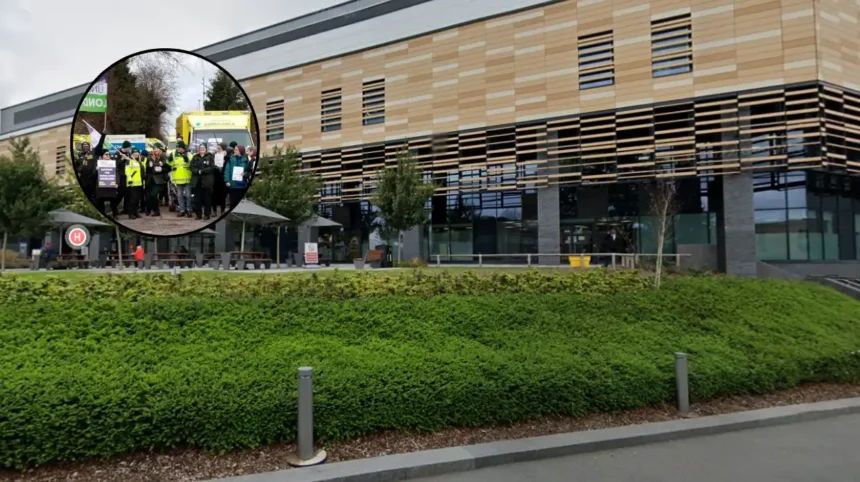
Enfield (North London News) July 17, 2026 – As reported by GMB London and the Barnet Post, dozens of outsourced workers at Chase Farm Hospital in Enfield began industrial action on Tuesday 15 July 2026 after talks with ISS failed to settle a long-running dispute over conditions, treatment at work and union recognition.
- Key Points
- What triggered the strike action?
- What have workers and the union said?
- Who is affected at Chase Farm?
- What does ISS say?
- When is the strike taking place?
- Why does the timing matter?
- What happened in earlier talks?
- What allegations were raised?
- How could services be affected?
- What is the wider significance?
- Background of the development
- Prediction
What triggered the strike action?
The strike was triggered after months of negotiation ended without agreement on a set of grievances raised by staff represented by GMB. GMB London said the dispute covers working practices and culture, equalisation of terms with NHS staff and union recognition, while the union also said members rejected ISS’s latest offer by 95%.
As reported by GMB London, the workers involved are employed by ISS in catering, cleaning and security roles at Chase Farm Hospital, which is part of North London NHS Foundation Trust.
The union says the decision to strike followed a failure to reach an acceptable settlement, despite what it describes as repeated attempts to resolve the issues.
What have workers and the union said?
Jack Phipps, GMB Regional Organiser, said ISS had “shown no respect for their workers” and had “repeatedly failed to make a reasonable offer” to address members’ concerns.
He added that staff first raised a collective grievance more than a year ago and argued the company had enough time to engage properly with those complaints.
Phipps also said the union’s message to ISS was to “get back round the table” and deal meaningfully with the concerns that members have raised.
That statement reflects the union’s position that the strike is a response to what it sees as unresolved issues rather than a sudden breakdown in relations.
Who is affected at Chase Farm?
The workers taking part in the action are outsourced staff, not direct employees of the hospital trust. According to GMB London, their roles include catering, cleaning and security, which means the strike is focused on support services rather than front-line clinical care.
That distinction matters because outsourced staff often perform essential day-to-day functions that keep a hospital running smoothly.
Even where patients do not see those workers directly, disruption in cleaning, catering or security can still affect the wider hospital environment and how services operate.
What does ISS say?
In the material reviewed, the union’s account is prominent, while ISS’s detailed response is not included. GMB London says the latest offer was rejected by 95% of members, which indicates strong opposition within the workforce to the company’s proposal.
Because the reporting available here does not provide a full statement from ISS, the dispute should be understood through the confirmed facts that are on record: negotiations failed, members voted to reject the offer and the strike began on the announced date.
When is the strike taking place?
GMB London said strike action was planned for 15-17 July and 22-24 July 2026, with further dates expected to be announced. The first round of action began on Tuesday 15 July at Chase Farm Hospital in Enfield.
The Barnet Post reported on 16 July that the strike had already started and would continue for the rest of that week before resuming on Wednesday 22 July for three more days. That report matches the timetable set out by GMB London.
Why does the timing matter?
The timing suggests the dispute is being sustained rather than used as a one-day protest. A multi-day pattern increases pressure on the employer while also giving the workers a clear schedule for continued industrial action.
For hospital users and staff, that means uncertainty may continue across several days, especially if more dates are announced later. It also indicates that the dispute may not be resolved quickly unless there is a renewed round of talks.
Explore More Enfield News
WW2 House of Secrets Museum Opens: Enfield, 2026
Enfield Conservatives Defend Pride Flag Decision: Enfield 2026
What happened in earlier talks?
According to GMB London, the strike followed “months of negotiation” that ended in a failure to agree on the main issues.
The union says the members’ concerns relate to working practices, culture, equal terms with NHS staff and union recognition.
GMB’s earlier statement on 3 June said staff had voted 95% in favour of industrial action after allegations of bullying, overwork and a toxic workplace culture. That earlier position shows the strike did not begin abruptly, but came after a period of escalation.
What allegations were raised?
The union’s June statement said staff raised concerns including bullying from managers, including racist comments, failure to properly pay overtime for bank holidays, changes to working patterns causing unmanageable workloads, and grievances taking months to resolve. Those allegations formed part of the background to the ballot for strike action.
GMB also said that despite repeated attempts by the union and its members to resolve the issues, ISS had not made a formal counteroffer at that stage to avert industrial action. That account helped explain why the dispute moved from complaint to strike.
How could services be affected?
The available reports do not provide a detailed service-by-service assessment, but the staff involved work in areas that support hospital operations.
If cleaning, catering and security cover is reduced, the hospital may have to reorganise duties or rely on temporary arrangements to keep essential functions running.
Because the strike is at Chase Farm Hospital, part of North London NHS Foundation Trust, the impact is likely to be felt most directly on non-clinical services rather than on medical decision-making.
Even so, the practical effect inside the hospital could still be noticeable for patients, staff and visitors.
What is the wider significance?
This dispute also highlights the continuing tension around outsourced hospital work, where staff employed by a contractor can argue for terms closer to those of directly employed NHS workers. GMB has made equalisation of terms one of the central issues in this case.
The strike is therefore not only about immediate workplace complaints, but also about the status and treatment of outsourced workers in the health service. That broader question is one reason the dispute has drawn attention beyond the hospital itself.
Background of the development
The current strike follows a series of complaints raised by workers over a prolonged period. GMB said staff first raised a collective grievance more than a year ago, and that the dispute later widened to include culture at work, overtime pay, workloads and the relationship between outsourced staff and NHS terms and conditions.
In early June, GMB announced that workers had voted 95% in favour of industrial action after what the union described as repeated failures to resolve the dispute. The present walkout is the result of that ballot and the breakdown of later talks.
Prediction
For outsourced staff, this dispute may strengthen calls for better treatment, clearer grievance handling and closer alignment with NHS standards if the strike continues to attract strong support.
If ISS and union representatives return to negotiations, the main pressure point will likely remain the same: whether the company can offer a settlement that members are prepared to accept.
For patients, visitors and hospital teams, the most likely short-term effect is disruption in support services and continued uncertainty while further strike dates remain possible.
If no agreement is reached soon, the action could spread into additional dates and keep pressure on hospital operations across North London.