Key Points
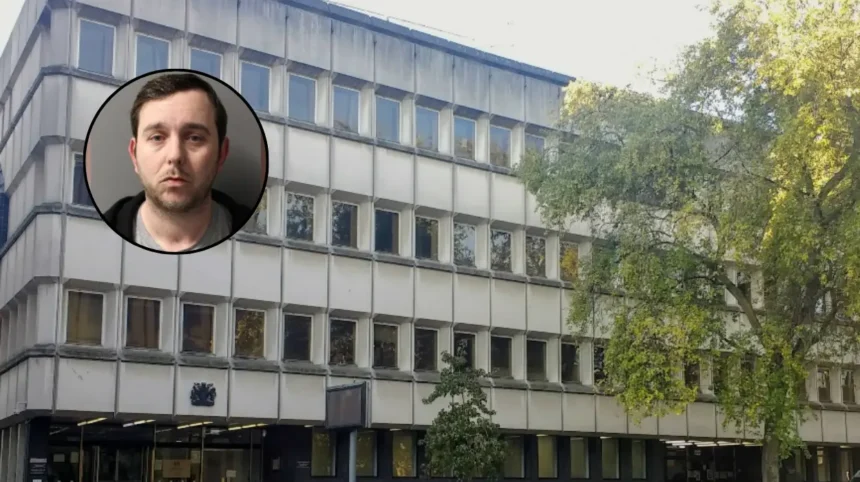
- Anthony Durkan, 36, of Corporation Street, Islington, pleaded guilty to 26 voyeurism charges at Highbury Corner Magistrates’ Court.
- The offences involved filming women through windows at their homes across north London late at night and in the early hours.
- The Metropolitan Police said the offending took place between January 2020 and March 2026.
- Durkan was arrested during a proactive patrol after officers linked separate reports and reviewed doorbell and security camera footage.
- Police found hundreds of images and videos on his mobile phone, and later seized five more devices and a small camera from his home.
- He will be sentenced later at Snaresbrook Crown Court.
- Detectives are still asking for reports from women in Islington and north London who may have noticed suspicious activity around their homes during that period.
Islington (North London News) July 22, 2026 – Anthony Durkan has pleaded guilty to 26 counts of voyeurism after police linked a series of incidents in which women were secretly filmed through their windows at home, with the Metropolitan Police saying the offending spanned more than six years and involved a sustained pattern of predatory behaviour.
As reported by the Metropolitan Police in its account of the investigation, officers identified Durkan after separate complaints from two women in Islington pointed to similar offending patterns, including a suspect dressed in black with a balaclava, using a mobile phone to record through windows during the early hours. The force said those reports were supported by doorbell and security camera footage, which helped detectives connect the incidents and increase targeted patrols in the area.
According to the Met, Durkan was spotted during a proactive patrol on Wednesday 25 March, when officers in an unmarked car saw a man matching the suspect’s description carrying out similar behaviour outside a property. He was arrested at the scene and identified as Anthony Durkan, with his phone seized immediately afterwards.
What did police find on Durkan’s devices?
The Metropolitan Police said a review of Durkan’s phone uncovered a hidden gallery containing hundreds of images and videos of women, and officers added that there is no evidence any of the women were aware they were being recorded.
A search of his home led to the seizure of five additional mobile devices and a small camera for further examination.
Police said the examination of those devices produced further evidence of voyeurism, prompting detectives to revisit historic crime reports in which no suspect had been identified and all viable lines of enquiry had been exhausted.
That review linked Durkan to offences dating back to January 2020, extending the timeline of the case well beyond the initial reports made earlier this year.
Why did officers focus on Islington?
The initial investigation began after two women in north London reported similar incidents involving a man looking through their windows and recording them without consent.
In one case, a woman in Islington was alerted by her neighbour, who saw a man in black and a balaclava approaching the property and holding a phone up to the windows, with the activity captured on a doorbell camera.
Weeks later, another woman in Islington reported a man recording her through a window before he fled when confronted, and that incident was also captured on security footage.
Investigators said the resemblance between the two cases, along with the proximity of the locations, suggested they were linked and helped direct patrols to the area.
Explore More Islington News
Islington Pension Fund Members Back Divestment Proposals Islington 2026
High Court Upholds Paradise Park Nursery Closure: Islington 2026
What did detectives say about the offending?
Detective Chief Inspector Gemma Alger, whose team led the investigation, said Durkan’s behaviour amounted to
“a serious and sustained course of predatory behaviour”,
adding that he had deliberately targeted women who were unaware they were being filmed and were in the privacy of their own homes. She also thanked the women who came forward, saying their reports and witness evidence enabled officers to act quickly and arrest him during a proactive patrol.
The Met said the conviction means
“a dangerous individual has been removed from the streets of London”,
preventing further harm to women.
The force also said the women who first reported the offences, together with an additional victim identified through the device analysis, are continuing to receive support from specially trained officers.
What are police asking the public?
Police are still seeking more potential victims and are particularly interested in hearing from women in Islington and north London who may have noticed unusual activity around their homes between January 2020 and March 2026, especially late at night or in the early hours of the morning.
The Met said residents should report suspicious behaviour such as someone lingering near residential properties, looking through windows or using a phone or camera.
The force also said footage from doorbell cameras or CCTV could prove vital in helping identify other possible incidents. That approach reflects a wider pattern in policing, where home security footage is increasingly used as evidence to support investigations and prosecutions.
Background of the development
Voyeurism cases involving home surveillance often depend on early reporting, because the offences can continue for long periods before suspects are identified.
In this case, police said the breakthrough came when separate reports from women in Islington were matched with footage that showed similar clothing, timing and behaviour.
The investigation also shows how police use device examinations and historic crime reviews to expand a case once a suspect is arrested.
By connecting newer complaints with older unresolved reports, detectives said they were able to establish a much wider pattern of offending dating back to 2020.
What could happen next?
Durkan is due to be sentenced at Snaresbrook Crown Court at a later date, so the case has not yet reached its final court outcome.
For women in north London, the case may encourage more reporting of suspicious behaviour around homes, especially where doorbell or CCTV footage can help police build a stronger timeline.
For local residents, the development could also reinforce awareness about home security and the importance of documenting repeated suspicious activity, since the Met said the case was solved partly through careful recording by neighbours and victims.
For the wider public, it underlines how early reporting can lead to arrests before offending continues over a longer period.