Key Points
- Legal Defeat for Litigants: A High Court judge has formally thrown out a judicial review application lodged by local parents attempting to block the closure of Paradise Park Children’s Centre.
- Interim Council Operation: Islington Council has pledged to step in and directly provide temporary, interim early-years childcare at the Paradise Park site throughout the summer holiday period and “beyond”.
- Playgrounds Saved: The local authority is taking over direct control of all four adventure playgrounds previously managed by the embattled Islington Play Association (IPA).
- Charity Financial Crisis: The dispute stems from severe financial turmoil surrounding the IPA, which surrendered its £4.3m municipal services contract early, resulting in redundancy warnings for 29 staff members.
- Conflicting Narratives: Parents and the IPA have disputed the council’s original claims that the charity’s trustees initiated the nursery shutdown, triggering a regulatory assessment by the Charity Commission.
Islington Council (North London News) July 16, 2026, faces High Court challenge over nursery closure. In a highly anticipated legal decision, a High Court judge has summarily dismissed a judicial review application brought by an Islington parent attempting to halt the closure of the Paradise Park Children’s Centre nursery. The local authority has, however, committed to providing temporary interim childcare directly from the Paradise Park site over the summer and beyond while search efforts continue for a long-term early-years provider. The municipal rescue operation extends to taking over four local adventure playgrounds that were facing sudden closure due to severe financial distress at the independent contractor charity, the Islington Play Association (IPA).
Why Did the High Court Reject the Parents’ Judicial Review?
The legal battle culminated in the High Court after a group of 37 local parents and residents launched a formal bid to block the closure of the nursery, located on Mackenzie Road.
The litigants, represented legally after issuing a pre-action protocol letter to the council on June 1, argued that the local authority was failing in its statutory duty under the Childcare Act 2006 to secure “sufficient” nursery provision for local families.
The claimants contended that the abrupt closure left dozens of low-income families in a state of crisis, with some facing wait times of up to a year for alternative subsidised places in the borough.
Furthermore, they accused the council of failing to act on clear warning signs regarding the IPA’s financial health, which had been discussed by senior council officers and local politicians.
However, the High Court judge rejected the application, effectively finding that the council had acted within its administrative powers and had fulfilled its statutory obligations by actively seeking alternative placements for the affected children.
In response to the decision, Islington Council moved quickly to assuage community anxieties by confirming that it will act as an emergency operator to provide localized cover at the physical site during the summer holidays.
Who is to Blame for the Paradise Park Nursery Closure?
The shutdown of the 20-year-old nursery has been marred by highly publicised bickering and directly conflicting accounts from Islington Council and the IPA.
On May 20, Islington Council released a statement declaring it had “reluctantly” agreed to shut down the early-years facility at the end of the summer term on July 22.
The local authority asserted that the closure was initiated at the formal request of the IPA’s trustees, who had expressed inability to continue running the nursery due to financial distress. The council stated it was “extremely disappointed” in the charity’s handling of its finances and operations.
In a sharp rebuttal published just two days later, the IPA trustees fiercely denied that the idea to close the nursery had originated from them.
The charity’s leadership released a statement insisting that
“allegations of financial mismanagement are also unfounded”.
Rather than mismanagement, the IPA pointed to systemic external pressures. As reported by journalist Bronte H. Lacsamana of Civil Society, the IPA stated it was facing unprecedented financial hurdles, including:
- Steep increases in energy bills and necessary, “significant” building repairs.
- Inflationary pressures affecting resources and everyday supplies.
- Rising staffing overheads driven by increases in the London Living Wage and employers’ National Insurance contributions.
Following the charity’s public pushback, Islington Council quietly removed its initial press release accusing the IPA of instigating the closure from its municipal website.
What are the Main Arguments from the Campaigners and Staff?
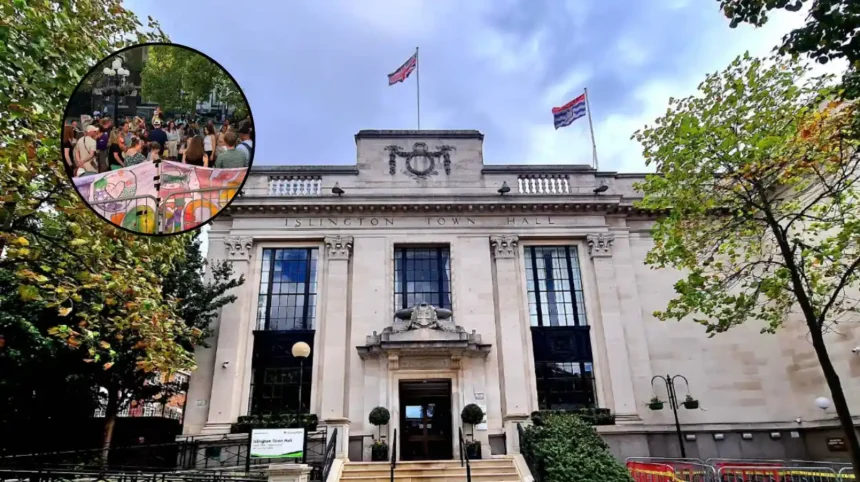
The announcement of the closure sparked immediate community outrage, including public protests outside Islington Town Hall.
Activists gathered with hand-painted banners to decry the loss of a critical public asset and submitted a petition containing more than 4,600 signatures demanding the council intervene.
As reported by Josef Steen, a Local Democracy Reporter writing for the Evening Standard, local parent Jonny Singer expressed the deep sense of betrayal felt by families:
“We feel pretty powerless. It just feels scandalous that a few days after being elected a Labour council will be shutting down an amazing community asset. The nursery staff are so caring and wonderful, and the quality of SEND [special educational needs and disabilities] care is fantastic here. If you uproot these children, that is going to do significant damage.”
Mr. Singer later added that alternative options presented by the council were financially unviable for many, noting that other childcare centers in the area were “frankly out of reach” for income-deprived households.
Staff members at the nursery, who faced immediate redundancy, also appealed to the council to consider alternative management solutions. Speaking anonymously to the Local Democracy Reporting Service, a group of affected workers stated:
“This distress is unnecessary and entirely avoidable. [We call on the council to] review a plan for a peaceful leadership transition supported by experienced local early years charities.”
The Charity Commission has since confirmed that it has received formal complaints from parents and is actively assessing concerns regarding the IPA’s financial governance to determine whether regulatory intervention is required.
Background of the Municipal and Charity Partnership
To understand the collapse of Paradise Park Nursery, it is necessary to examine the long-term relationship between Islington Council and the Islington Play Association.
The IPA is a 50-year-old registered charity that has worked alongside the council for decades to deliver early-years education and play services.
In 2023, the council awarded the IPA a long-term municipal contract worth £4.3 million, which was legally scheduled to run until 2030.
Under this agreement, the charity was tasked with operating the Paradise Park Children’s Centre alongside four key adventure playgrounds: Crumbles Castle, Lumpy Hill, Martin Luther King, and Cape Playgrounds.
Financial documents show the charity was in severe financial trouble well before the closure announcement. In the financial year ending March 2025, the IPA registered a total income of £1.37 million against an expenditure of £1.45 million.
This represented the charity’s third consecutive annual operating deficit. Internal records from October 2024 revealed that local councillors, including current Council Leader Una O’Halloran, were fully aware of a £170,000 budget shortfall at the charity, raising questions from campaigners about why preventative measures were not enacted sooner.
Furthermore, as noted in the IPA’s 2024-25 accounts, the charity faced increased competition for grant funding, ongoing recruitment issues, and the threat of industrial action from a newly unionised workforce.
With the charity unable to meet its obligations, the contract was surrendered early, forcing the council to reluctantly agree to the nursery’s closure while stepping in to save the four playgrounds to prevent total collapse of local play services.
Explore More Islington Council News
Islington Council £390m Home Upgrade Plan 2026
New Islington Planning Applications Filed for City Road and Hugo Road 2026
Prediction: How This Development Will Affect Local Families
The High Court’s ruling and the council’s subsequent interim plan will have immediate, tangible effects on several groups within the Islington community, particularly low-income families and children with special educational needs.
In the immediate term, the council’s commitment to providing interim childcare over the summer holiday period will act as a temporary safety valve.
It prevents families from being instantly plunged into a childcare vacuum during the peak working months of July and August.
However, the medium-to-long-term outlook remains highly unstable. Because Paradise Park is a council-subsidised facility, it caters heavily to low-income households and children requiring specialized SEND support.
If the council fails to secure a permanent, long-term early-years provider willing to operate under the same subsidized fee structure, these families will eventually be forced into the private market.
Given that London private childcare costs are among the highest in Europe, this transition will likely force some parents—particularly mothers—to reduce their working hours or leave employment entirely to manage childcare.
Furthermore, uprooting vulnerable children with SEND from a familiar environment and trusted educators is predicted by early-years specialists to cause regression in their developmental and social progress.
For the 29 IPA staff members, the High Court’s refusal to block the closure means their redundancy consultations will proceed. Even if an interim or long-term provider is established, there is no legal guarantee that the original staff will be transferred under TUPE (Transfer of Undertakings Protection of Employment) regulations, threatening their long-term livelihoods.
The closure also highlights a broader structural crisis facing the UK’s early-years sector, where high operating costs, unfunded wage increases, and inadequate municipal subsidy rates are making both charitable and private nursery provision increasingly unsustainable.