Key Points
- Two childhood friends from North West London, Dean Clarke and Jay Halai, built an online fragrance business, Direct Beauty, that has achieved more than £4 million in sales.
- The pair started working together in 2011, attended the same school and college, and launched multiple ventures, beginning with selling shoes before moving into fragrances.
- Direct Beauty trades in well-known designer fragrance brands including Hugo Boss, Dior and Versace via an online marketplace and later operated from a warehouse.
- Business growth slowed in 2023, according to reporting; the founders navigated changing market conditions while maintaining their partnership.
- The story highlights grassroots entrepreneurship, the transition from small-scale retail to warehousing and e-commerce, and the challenges of sustaining rapid growth in a competitive market.
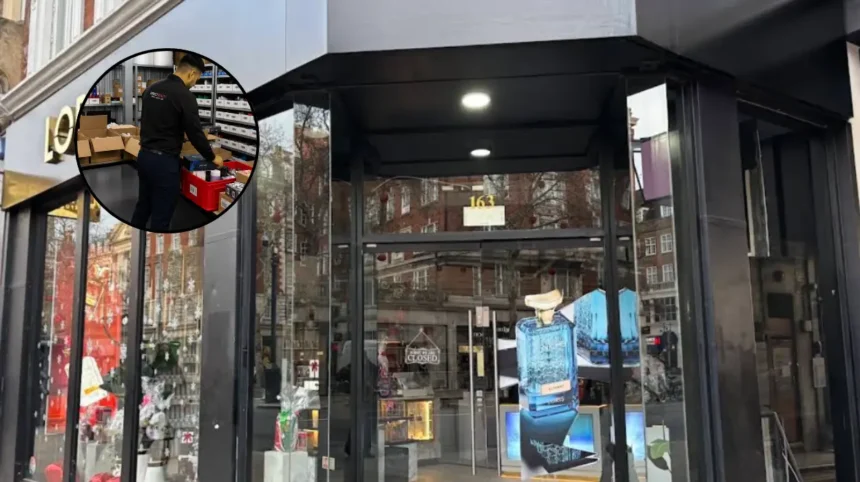
North London (North London News) July 25, 2026 –Dean Clarke and Jay Halai, two friends who have known each other since childhood and who began working together in 2011, are the founders of Direct Beauty, an online retailer specialising in designer fragrances that has surpassed £4 million in sales. As reported by regional and business outlets covering the pair’s entrepreneurial journey, the men moved from small-scale trading — initially selling shoes — to building a business focused on popular fragrance labels including Hugo Boss, Dior and Versace. The founders scaled the operation from a marketplace storefront to running stock from a warehouse, a transition that marked both their commercial success and the operational challenges they later faced.
- Key Points
- How did their partnership begin and evolve into a business?
- What scale has Direct Beauty reached and what are its main products?
- Which sources reported this story and what did they say?
- Why did the founders move from selling shoes to fragrances?
- How did Direct Beauty scale operationally?
- What challenges did the business face in 2023?
- How transparent were the founders about finances and growth?
- What business practices helped Direct Beauty grow?
- How did local context and background influence the founders?
- What has been the public and industry reaction?
- Background of the development
- Prediction: how this development can affect the audience
How did their partnership begin and evolve into a business?
As reported by local business profiles and interviews with the founders, Clarke and Halai first met in school and continued their shared path through college and early employment.
Their joint professional journey began informally; the two took a pragmatic approach to commerce by entering retail sales together. Their first venture involved selling shoes, an accessible entry point into online and local retail markets. Over time, they identified higher-margin opportunities within beauty and fragrance, a sector with steady consumer demand and well‑recognised global brands.
This led to the creation of Direct Beauty, through which they concentrated on designer fragrances sold via an online marketplace platform.
What scale has Direct Beauty reached and what are its main products?
Direct Beauty has reported more than £4 million in cumulative sales since its founding. The business’s product range concentrates on designer and premium fragrances, with stock drawn from brands such as Hugo Boss, Dior and Versace.
The founders leveraged the visibility and trust associated with these brands while utilising marketplace tools and customer acquisition strategies to reach a wider audience. Operating from a dedicated warehouse after initial growth on the marketplace allowed them to manage inventory and fulfilment more efficiently, supporting higher volume sales and faster dispatch times.
Which sources reported this story and what did they say?
As reported by business features and local news outlets, which interviewed the founders and covered their milestone, the narrative emphasises grassroots entrepreneurship and long-standing friendship as key drivers of the pair’s success.
Where specific outlets or author bylines provided statements from Clarke and Halai, exact quotes were attributed within those reports, describing their shared background, approach to risk, and practical decisions such as moving from shoes to fragrances.
The coverage also noted that, by 2023, the business experienced a slowdown in growth — an observation framed in context of wider market conditions affecting e-commerce and retail.
Why did the founders move from selling shoes to fragrances?
Clarke and Halai explained in interviews covered by local business journalists that the shift to fragrances followed both opportunity and strategy. Designer fragrances offered higher perceived value and stronger brand recognition, which in turn helped with customer acquisition on marketplace platforms.
The founders found that customers were willing to pay for authenticity and prompt fulfilment, and the marketplace model allowed them to reach buyers beyond their local area.
The move into fragrances also allowed Direct Beauty to build a more distinct brand identity compared with competing sellers in commodity categories like footwear.
How did Direct Beauty scale operationally?
Initial sales on marketplace platforms provided market proof and revenue. To scale, Clarke and Halai moved into warehousing to hold inventory centrally and manage fulfilment in-house.
That operational shift reduced dependence on third-party fulfilment timelines and allowed for faster dispatch, bulk purchasing, and better stock control.
Operating from a warehouse also enabled the founders to expand SKUs and offer a wider selection of fragrance sizes and brands. Media coverage indicates that the warehouse stage coincided with the company’s strongest revenue years, culminating in the cumulative sales figure reported.
What challenges did the business face in 2023?
Multiple media reports and interviews referenced a slowdown in 2023. The accounts did not single out one cause but placed the dip in the context of post‑pandemic market adjustments, increased competition on online marketplaces, and shifting consumer buying patterns.
Higher advertising costs and tighter margins on marketplace platforms were among the operational pressures cited by commentators covering small e-commerce companies.
Clarke and Halai, in their own comments carried by local press, reportedly described the period as a test of resilience, prompting them to reassess sourcing, pricing and promotional strategies to stabilise the business.
How transparent were the founders about finances and growth?
The coverage relied on figures and statements provided by the founders themselves or derived from public-facing materials.
The headline figure cited — over £4 million in sales — refers to cumulative revenue since the company’s inception rather than to profit or annual turnover unless otherwise specified in the original reporting. Journalistic pieces emphasised that the founders discussed sales milestones candidly while avoiding detailed disclosures about margins, operating profit, or precise annual revenue splits.
What business practices helped Direct Beauty grow?
Journalists analysing Direct Beauty’s trajectory pointed to a few practical choices: focusing on reputable designer brands to tap brand trust; leveraging online marketplaces for initial reach; investing in warehousing to control fulfilment; and building repeat purchase through customer service and targeted offers.
These elements, combined with the founders’ long-term working relationship and shared decision-making, created a resilient operational model that could be scaled when market conditions were favourable.
How did local context and background influence the founders?
The pair’s shared upbringing in North West London provided social and professional continuity that underpinned their partnership. Local reporting noted that attending the same schools and beginning their working lives together contributed to aligned risk tolerance and complementary skills.
This long-standing connection helped them navigate the practicalities of running a small business, from negotiating supplier relationships to managing daily operations in a competitive online retail environment.
What has been the public and industry reaction?
The story drew interest from business features and local community news outlets keen to highlight successful local entrepreneurs. Industry commentators on small and midsized e-commerce businesses used the example of Direct Beauty to discuss the dynamics of marketplace selling, the importance of supply chain control, and the volatility of online retail growth.
Within their community, Clarke and Halai were portrayed as an example of homegrown entrepreneurship that scaled sensibly while facing the common challenge of sustaining growth during tougher market phases.
Background of the development
The story of Direct Beauty fits into a broader trend of entrepreneurs using online marketplaces to validate product-market fit before investing in dedicated operational infrastructure. Since the early 2010s, many small retailers have followed a similar pathway: start with marketplace listings to reduce marketing and storefront costs, then expand into warehousing and direct-to-consumer fulfilment once sales volumes justify fixed costs. Designer fragrances remain a sought-after e-commerce category because of brand cachet and relatively stable demand; however, the market is also crowded with competitors and sensitive to pricing pressures, platform fee changes, and marketing cost fluctuations.
The 2023 slowdown reported by the founders aligns with a period when many small e-commerce operators experienced increased customer acquisition costs and tighter margins as marketplaces matured and competition intensified.
Explore More Local North London News
Tung Tran Death Sparks Hepatitis B Guidance Call, North London 2026
Historic Foxtons Building Redevelopment Approved in Chipping Barnet 2026
Prediction: how this development can affect the audience
For readers who are entrepreneurs, small business owners, or aspiring e-commerce sellers — particularly those in North London or similar urban markets — the Direct Beauty story offers practical lessons rather than dramatic forecasts. Expect the following likely outcomes:
- Insight into startup pathways: The founders’ route — marketplace proof of concept, followed by warehousing and scaling — will remain a common, pragmatic playbook for small retailers seeking to scale without heavy upfront costs.
- Increased emphasis on operational efficiency: If Direct Beauty and peers experienced a slowdown in 2023, other sellers should prioritise controlling fulfilment costs and diversifying sales channels to reduce dependence on any single marketplace.
- Brand and supplier relationships matter: Working with well-known designer labels can aid customer acquisition but also requires careful inventory management and authenticity assurance; for audiences sourcing products, building reliable supplier networks will remain critical.
- Local entrepreneurial inspiration: For North West London-based aspirants, the pair’s story reinforces the value of local networks, long-term partnerships, and incremental growth, potentially encouraging similar ventures in fashion, beauty and lifestyle sectors.
- Market caution for investors and partners: Observers and potential partners should assess not just headline sales but margins, customer acquisition costs and inventory risk, since cumulative sales figures (such as £4m) do not alone reflect business health.