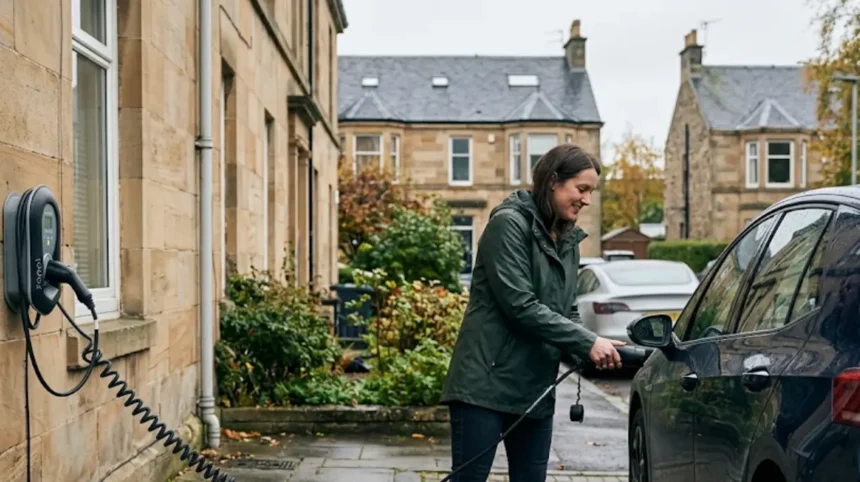
The UK VAT rules for EV charging split between domestic electricity and public charging. In Glasgow, home charging follows the domestic electricity rules, while public charge points are standard-rated for VAT at 20%.
- What is the domestic VAT exemption for EV charging?
- How does VAT apply to home charging?
- Why are public charge points different?
- What counts as a domestic premises?
- What happens in shared buildings?
- What are the business implications?
- What does this mean for Glasgow drivers?
- What should readers watch next?
What is the domestic VAT exemption for EV charging?
Domestic EV charging VAT exemption means the reduced or exempt treatment for electricity supplied for genuine domestic use, not a blanket exemption for all electric car charging. Home electricity can qualify for domestic VAT treatment, while public charge points do not.
The key point is that the tax treatment follows the electricity supply, not the vehicle. If the electricity is supplied to a domestic property and used there under the domestic rules, it falls within the domestic VAT framework. If the charging happens at a public location, the supply is standard-rated.
For Glasgow households, this distinction matters because a driveway charger, a private home wallbox, or a domestic meter sits in one category. A car park charger, a kerbside charger, or a petrol-station charger sits in another.
How does VAT apply to home charging?
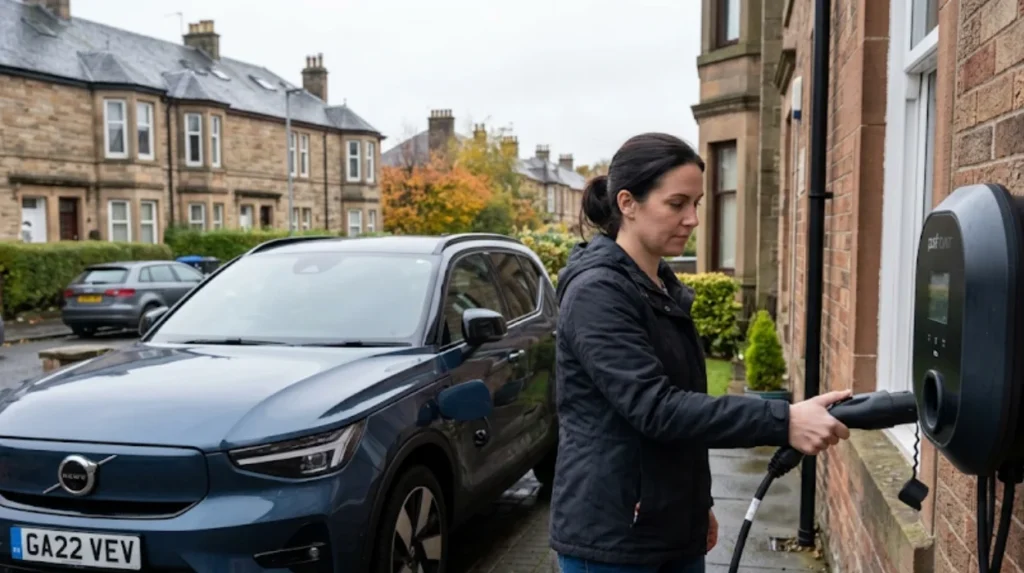
Home EV charging uses the same VAT treatment as domestic electricity, so the supply can qualify for the reduced domestic rate when it is supplied to genuine domestic premises and used for domestic purposes.
That means the VAT position depends on the supply, the premises, and the use. A home charger on a domestic property in Glasgow usually fits the domestic electricity framework. A shared supply, a mixed-use building, or a business property needs closer review because apportionment can apply.
The practical effect is simple. The charging cost at home follows the VAT rate on the electricity bill or on the meter that feeds the charger. The charger itself is not the VAT issue; the electricity supply is.
Why are public charge points different?
Public charge points do not qualify for domestic electricity treatment because EV recharging in public places is standard-rated regardless of quantity. This includes car parks, petrol stations, and on-street charging.
The reason is location and supply type. Public charging is not treated as supply to a person’s house or building. It is a separate commercial supply, so the standard VAT rate applies.
For Glasgow, this matters because public charging is used by residents without off-street parking, taxi drivers, delivery drivers, and visitors. The VAT treatment does not change because the charger is in Scotland or because the driver is private rather than commercial.
What counts as a domestic premises?
A domestic premises is a dwelling or qualifying residential accommodation used for genuine domestic purposes. Examples include houses, flats, caravans, houseboats, and some self-catering holiday accommodation.
The legal idea is broader than just a detached house. It can include a flat, a converted property, or another residential setting if it is genuinely used as living accommodation.
Some places do not count as domestic premises for fuel and power purposes. These include hospitals, prisons, hotels, and other non-domestic settings. That distinction matters because the VAT rate follows the nature of the premises and use.
For Glasgow residents, the key question is whether the electricity supply is tied to a domestic dwelling or to a non-domestic setting such as a business site, communal car park, or public road space.
What happens in shared buildings?
Shared buildings and landlord-controlled supplies create mixed-use VAT issues. When electricity is used partly for domestic purposes and partly for non-domestic purposes, the reduced rate applies only to the qualifying domestic element.
That rule matters in apartment blocks, rented properties, and developments with shared EV infrastructure. If a landlord supplies electricity for communal areas or shared charging points, the VAT outcome depends on the meter arrangement and the nature of the supply.
In mixed-use cases, the supply may need to be split between qualifying and non-qualifying use. That means some of the electricity is treated as domestic and some as standard-rated.
For Glasgow flats, tenements, and new-build developments, this is a common practical issue. The tax treatment depends on the structure of the supply, not just on the postcode.
What are the business implications?
The main business implication is that VAT treatment affects charging costs, invoicing, and input VAT recovery. Public charging is standard-rated, while domestic electricity follows domestic VAT rules where those rules are met.
Businesses with fleets, employee charging, or expense reimbursement need clear records. They need to know whether electricity was bought at home, at the workplace, or at a public charger because each route has a different VAT result.
For a sole trader charging a vehicle at home for business use, VAT recovery follows the normal business rules. For an employer paying an employee’s home electricity bill, the supply is still to the employee, not directly to the employer.
The key point is that VAT depends on the supply chain. Who receives the electricity, where it is supplied, and how the site is classified all affect the outcome.
What does this mean for Glasgow drivers?
For Glasgow drivers, the VAT distinction affects cost rather than access. Home charging normally carries the domestic electricity VAT treatment, while public charging remains standard-rated, so home charging is usually cheaper.
Glasgow has a large public charging network, which supports drivers who cannot charge at home. But the VAT rules still treat those public charges as standard-rated.
That creates a clear split in consumer cost. A household with home charging pays under domestic electricity rules. A driver relying on public charging pays standard VAT on the electricity supply at the charger.
This matters in a city with many flats and properties without private driveways. The VAT treatment affects affordability and charging strategy, especially for regular drivers.

What should readers watch next?
Readers should watch for changes in UK VAT law, tribunal decisions, and HMRC updates. At present, home electricity stays within the domestic VAT framework and public EV charging stays within the standard-rate framework.
This area can change through legislation or official guidance, so the safe evergreen position is to state the rule as it stands now. Domestic home electricity gets domestic treatment. Public EV charging does not.
A useful example is a Glasgow homeowner with a driveway charger. The electricity used at home follows the domestic supply rules. A second example is a driver using a charger in a city-centre car park. That supply stays standard-rated.