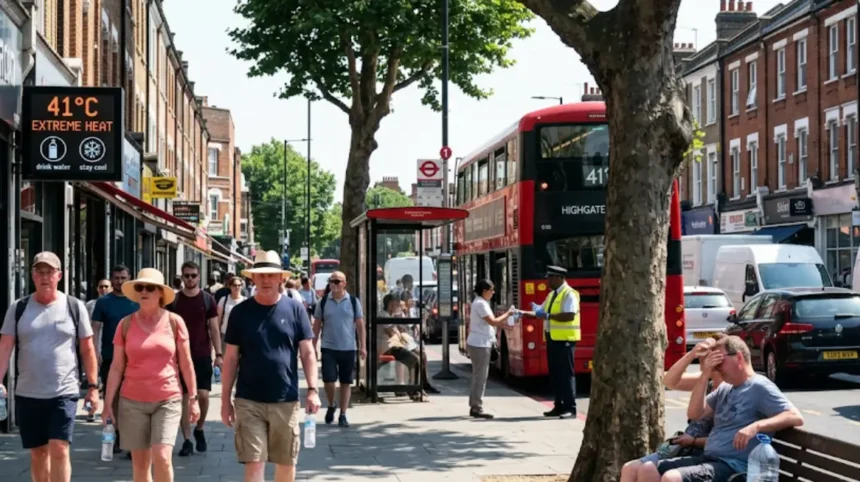
An extreme high temperature warning means hot weather is severe enough to threaten health, transport, work, and daily routines. In North London, the main risks are dehydration, heat exhaustion, heatstroke, poor sleep, and disruption to travel, schools, and outdoor activity when temperatures climb sharply.
- What is an extreme high temperature warning?
- Why do these warnings happen?
- What the alert levels mean
- How does extreme heat affect the body?
- Who faces the highest risk?
- Risk factors in daily life
- What should you do during a warning?
- Staying safe on transport
- How do you spot heat exhaustion and heatstroke?
- First aid for heat exhaustion
- Emergency action for heatstroke
- Why is North London especially vulnerable?
- How can households prepare in advance?
- Simple home actions
- What is the long-term relevance?
- Which official guidance should you follow?
What is an extreme high temperature warning?
An extreme high temperature warning is an official alert for dangerous heat that can harm health and disrupt normal life. In the UK, the Met Office issues weather warnings, while the UK Health Security Agency, or UKHSA, issues heat-health alerts that focus on public health risk. A red heat-health alert indicates a risk to life even for healthy people, while amber and yellow alerts indicate rising levels of impact and health concern.
The warning exists because heat affects the body’s ability to cool itself. When the air is hot, humid, and still, sweating becomes less effective and body temperature rises faster. That risk increases during long hot spells, warm nights, and periods when temperatures stay above 30C, which the Met Office has linked to significant impacts in London during recent extreme heat.
Why do these warnings happen?
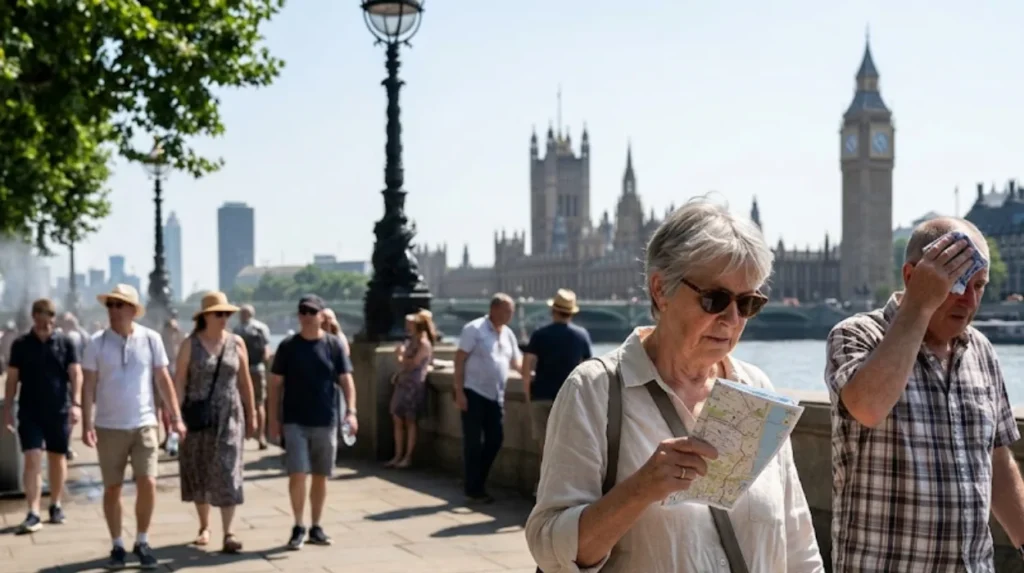
These warnings happen when forecast temperatures, humidity, and overnight warmth create a real risk to health and services. The Met Office and UKHSA use forecast data to identify periods when heat is likely to cause illness, strain the NHS, and disrupt travel, work, and care systems. In June 2026, London was placed under a red heat-health alert, showing that the capital can face the highest level of heat risk during severe summer conditions.
High temperature warnings are not only about daytime maxima. Warm nights reduce recovery, especially for older adults, babies, people with heart or lung disease, and anyone living in poorly ventilated homes. Humidity also matters because it slows down cooling through sweat, which increases strain on the body and worsens discomfort.
What the alert levels mean
Yellow alerts signal that hot weather can affect vulnerable people and create local disruption. Amber alerts indicate wider health and service impacts. Red alerts indicate a severe heat event with risk to life and major disruption. These categories help public services, schools, care settings, employers, and households prepare early.
How does extreme heat affect the body?
Extreme heat stresses the body by making it harder to lose heat and maintain a safe core temperature. The body normally cools itself through sweating and blood flow near the skin, but these systems become less effective in hot, humid conditions. When heat builds faster than the body can release it, symptoms begin with thirst, headache, dizziness, and tiredness.
Heat exhaustion is the first major warning stage. NHS guidance lists tiredness, dizziness, headache, nausea, sweating, cramps, thirst, irritability, and a high temperature as common symptoms. If the person is cooled down and given fluids quickly, they often recover within 30 minutes.
Heatstroke is more serious. It is a medical emergency marked by very high temperature, hot skin without sweating, fast breathing, fast heartbeat, confusion, restlessness, seizure, or loss of consciousness. The NHS and UKHSA both treat heatstroke as an emergency requiring 999 and immediate cooling while waiting for help.
Who faces the highest risk?
Older people, young children, people with long-term illness, and anyone living alone face the highest risk in extreme heat. UK government and NHS guidance repeatedly identifies older adults, people with heart or lung conditions, people with diabetes, and those who struggle to keep cool or hydrated as priority groups. People who work outdoors, travel on crowded transport, or exercise in the heat also face higher risk.
North London has many dense residential areas, busy bus and rail corridors, and homes that can trap heat during hot spells. That increases exposure for commuters, carers, delivery workers, and households without effective cooling. People taking medicines that affect hydration or temperature regulation also need extra caution, and the NHS advises checking guidance with a pharmacist or clinician when needed.
Risk factors in daily life
Living on upper floors, sleeping in loft conversions, using top-floor buses, standing in crowded stations, and walking long distances in direct sun all add heat stress. Warm indoor conditions also matter, especially when windows stay open during hotter outdoor air or when electrical devices add extra heat. That is why official advice focuses on both personal behaviour and home conditions.
What should you do during a warning?
Stay out of direct sun, drink fluids, cool your home, and reduce physical exertion during the hottest hours. The Met Office advises avoiding exercise between 11am and 3pm, drinking plenty of fluids, closing curtains in sun-facing rooms, and keeping a hat, sunscreen, and water with you if you go outside. UK government guidance also advises avoiding excess alcohol and checking on people who live alone or struggle to stay cool.
Indoors, close curtains or blinds on windows facing the sun and close windows if the outside air is hotter than the air inside. Turn off appliances and lights that generate heat where possible. At night, use the coolest part of the home for sleeping, keep bedding light, and maintain airflow where outdoor temperatures have dropped enough to make ventilation useful.
Staying safe on transport
Public transport adds risk because trains, buses, and stations can become very warm during peak heat. The Met Office advises carrying water, dressing in light fabrics and light colours, using ice packs or cold compresses if needed, and getting off at the next stop if you feel unwell. For North London commuters, this matters on crowded Tube platforms, bus routes, and rail services where heat builds quickly.
How do you spot heat exhaustion and heatstroke?
Heat exhaustion causes heavy sweating, headache, dizziness, nausea, cramps, thirst, and weakness; heatstroke causes confusion, very high temperature, hot skin, and collapse. The NHS lists tiredness, sweating, pale clammy skin, cramps, headache, and vomiting as common heat exhaustion signs. UKHSA guidance adds that a person with heat exhaustion should cool down within 30 minutes after moving to a cool place and drinking fluids.
Heatstroke has a different pattern. The person may stop sweating, become confused, breathe quickly, and lose coordination or consciousness. A high temperature of 40C or more, or persistent unwellness after cooling measures, requires urgent emergency action. In hot weather, confusion should never be dismissed as simple fatigue.
First aid for heat exhaustion
Move the person to a cool place, remove unnecessary clothing, give water, and cool the skin with water and fan air across the body. Cold packs wrapped in cloth on the neck or armpits help reduce temperature faster. Stay with the person until they recover, and seek NHS 111 advice if symptoms are hard to manage.
Emergency action for heatstroke
Call 999 immediately if heatstroke is suspected. While waiting, wrap the person in a cool wet sheet or sponge them with cold water and fan them. If they lose consciousness, place them in the recovery position and monitor breathing and pulse until emergency help arrives.
Why is North London especially vulnerable?
North London is vulnerable because dense housing, busy roads, and limited shade can trap heat and increase exposure. Urban areas often retain heat after sunset, which makes nights harder for the body to recover from daytime stress. That matters in a region where heat-health alerts now form part of seasonal public-health planning.
Heat can also affect work patterns, school routines, and local services. Transport delays, reduced concentration, and dehydration create small failures that add up across a busy borough network. The Met Office warns that severe heat can cause significant disruption to daily life, and the 2026 red warning for London shows that the capital faces real operational risk during intense heat.ukhsa-dashboard.
How can households prepare in advance?
Households should prepare water, cooling, medication checks, and a simple heat plan before hot weather starts. The NHS and UKHSA recommend checking on children, older people, and anyone with long-term conditions, because these groups face a higher risk of heat illness. Keeping cold drinks available, using light bedding, and identifying the coolest room in the home all reduce risk.
Preparation also includes practical checks. Fans, fridges, and freezers should work properly, and medicines should be stored according to their packaging instructions. People who rely on regular care, mobility support, or community visits need extra attention during heat events because routine support can be harder to maintain when services are strained.
Simple home actions
Close the curtains in sun-facing rooms early in the day. Drink water regularly instead of waiting for thirst. Keep physical activity to cooler hours. These steps align with Met Office and NHS guidance and give the body more time to manage heat stress.
What is the long-term relevance?
Extreme high temperature warnings are now a recurring public-health tool, not a rare summer footnote. UKHSA and the Met Office have issued repeated heat alerts across England in recent years, and London has already been included in red, amber, and yellow alert periods. That pattern shows that hot-weather preparation belongs in routine planning for homes, schools, workplaces, and local authorities.
The practical response is clear. Treat heat warnings with the same seriousness as other severe-weather alerts. Use official guidance early, protect vulnerable people, and adjust schedules before symptoms start. In North London, that means planning around heat as part of normal summer life rather than reacting after illness or disruption has already begun.

Which official guidance should you follow?
Follow Met Office weather warnings, UKHSA heat-health alerts, and NHS symptom guidance as the main UK reference points. The Met Office explains when the weather itself is severe, while UKHSA explains the public-health risk and the level of alert. The NHS explains the warning signs, first aid, and emergency steps for heat exhaustion and heatstroke.
For North London readers, that combination gives a complete action framework: watch the forecast, change your routine, protect vulnerable people, and act fast if symptoms appear. Severe heat becomes manageable when the response is early, specific, and grounded in official guidance.
What is an extreme high temperature warning?
An extreme high temperature warning is an official alert issued when forecast heat is severe enough to pose risks to health, transport, public services, and daily life. In the UK, the Met Office issues weather warnings, while the UK Health Security Agency (UKHSA) issues heat-health alerts to help people prepare for dangerous conditions.