Key Points
- A High Court judge has quashed Enfield council’s decision to grant planning permission for Tottenham Hotspur’s proposed women’s and girls’ football academy at Whitewebbs Park.
- The challenge was brought by campaign group Guardians of Whitewebbs.
- The judge found the council’s planning process was seriously flawed because councillors were not given all relevant information about environmental impact.
- The court rejected the bias argument, saying the claim was weak and that cordial relations between the council and Spurs were normal.
- Spurs had secured a 25-year lease for the site in 2023.
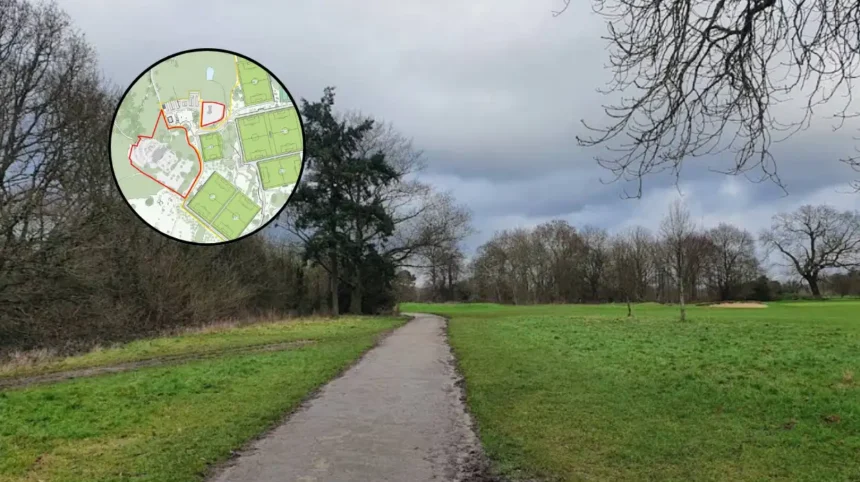
- The proposed development would have included 10 football pitches and other works across 6.5 hectares of parkland.
- Enfield council said it was delighted with the ruling and would move forward with plans that protect Whitewebbs Park.
Enfield (North London News) 28 July 2026 – Tottenham Hotspur’s plans for a new training facility in Whitewebbs Park have been blocked after a High Court judge quashed Enfield council’s approval of the project, in a ruling that centred on planning process failures and the information given to councillors.
According to The Guardian, the case was brought by Guardians of Whitewebbs, a campaign group opposed to the development. The group argued that the council’s February approval of planning permission for a women’s and girls’ football academy on 6.5 hectares of parkland was unlawful because councillors were not shown all the relevant material on the scheme’s environmental impact.
Sir Tim Kerr, sitting as a High Court judge, agreed that the council’s non-compliance with the rules was “serious” and found that councillors were “materially misled” when they voted on the proposal.
The judge’s ruling means the council decision has been quashed, but the wider dispute over the use of Whitewebbs Park has not disappeared.
The project had already drawn criticism because it would have changed a large area of publicly accessible green space near Spurs’ existing men’s training facilities.
What were the legal arguments in court?
Campaigners said the council failed to follow proper planning procedure by not making all relevant environmental documents available to councillors and the public. Their lawyers argued that an ecologist, Giles Sutton, had produced a report in November 2024 which should have been treated as a background document, rather than being partially reflected in the planning report without full disclosure.
Jenny Wigley KC, for Guardians of Whitewebbs, said Sutton’s advice showed that accepting claims the site would benefit the local environment was “counterintuitive” when about 40% of the park would be lost.
She also argued that the process involved what she called “salami slicing”, meaning parts of the report were disclosed while other parts were kept from public scrutiny.
Tottenham Hotspur opposed the challenge and argued the result would have been the same even if all information had been shared.
James Maurici KC, for the club, said there was no evidence that the campaign group had been prejudiced and described the claim as one where the outcome would “not have been substantially different” if the disputed conduct had not happened.
What did the judge say about bias?
The court did not accept the separate allegation that there was a real possibility of bias in the process. Sir Tim Kerr dismissed those claims as “weak” and said the “cordial relations” between the council and Spurs were normal given the overlapping functions and interests involved in the proposal.
That distinction matters because the ruling was not based on a finding that the council favoured the club in a corrupt or improper way. Instead, the judge focused on whether councillors had enough information to make a lawful planning decision, and concluded that they did not
What was the plan for Whitewebbs Park?
Spurs agreed a 25-year lease for the site in 2023, a move that was previously challenged without success at the High Court in 2024, according to The Guardian. The council then resolved to approve the planning application in February 2025.
The scheme would have involved building 10 football pitches and carrying out other works at Whitewebbs Park, which sits near Tottenham Hotspur’s men’s training base.
Campaigners have long argued that the plan would have reduced green space in the area, while the club has maintained that the site could be developed in a way that supports football infrastructure.
How did Enfield council respond?
Enfield council had already withdrawn its defence to the claim last month, before the final ruling. Alessandro Georgiou, the Conservative leader of the council since May 2026, said the authority was pleased with the decision and withdrew its defence because continuing would
“not have been in the best interests of residents across the borough”.
He added that the council had said it would protect Whitewebbs Park from what it considered an unacceptable proposal, and would now move forward with plans that reflect local needs while preserving and protecting the area. That means the council will now have to reconsider its position on the park in line with the court’s ruling.
What happens next for Spurs and the council?
The ruling does not, on its own, decide the future of the land forever, but it does remove the current planning approval.
Any revised proposal would need to go through a process that properly addresses the concerns raised by the court, including full disclosure of the environmental information relied on by planning officers and councillors.
For Spurs, the decision creates uncertainty around a project that was intended to expand its football facilities and strengthen the women’s and girls’ set-up.
For the council, the ruling increases pressure to show that any future decision on Whitewebbs Park is fully transparent and legally robust.
Background
Whitewebbs Park has become a major local planning dispute because it involves both the protection of public green space and the expansion of elite football infrastructure.
The campaign against the project has centred on whether the loss of parkland could be justified by the proposed sporting development and whether the council handled the application correctly
The case also follows earlier legal and political argument over Spurs’ long-term interest in the land, including the 25-year lease agreed in 2023 and the council’s approval process in 2025. Together, those decisions made Whitewebbs Park a contentious issue well beyond football circles.
Prediction
For local residents, the ruling is likely to delay any redevelopment at Whitewebbs Park and keep the site under close public scrutiny.
For Tottenham Hotspur, it means any future plan will probably face a stricter legal and planning test, while the council will need to be more careful about the evidence it shares if it revisits the project.