Key Points
- Teacher Banned: Rafiqul Islam, a former mathematics teacher at Friern Barnet School in north London, has been indefinitely prohibited from teaching in England following a Teaching Regulation Agency (TRA) tribunal.
- “Edward Cullen” Expressions: The panel heard that Islam sent Instagram messages to a student, known as Pupil A, professing love and likening his romantic feelings to an “Edward Cullen type of love” from the Twilight series.
- Inappropriate Communications: Islam admitted calling Pupil A “cute” and confessing his feelings, asserting in messages that he would be willing to sacrifice his career to be with her.
- Defense Rejected: Islam denied sexual motivation, claiming he was seeking companionship and was bound by religious beliefs against un-Islamic sexual relationships; however, the TRA panel concluded his actions were sexually motivated and constituted unacceptable professional conduct.
- Safeguarding Breaches: Islam failed to follow established school safeguarding procedures after believing or suspecting that Pupil A held feelings for him.
- Regret Expressed: Islam admitted to making serious mistakes and expressed regret over his actions during the early stages of his teaching career.
- Sanction Terms: The order bars Islam indefinitely from teaching in all maintained schools, academies, sixth form colleges, youth accommodation, and children’s homes in England.
Friern Barnet (North London News) July 31, 2026 – A former secondary school mathematics teacher who declared an “Edward Cullen type of love” to a pupil via social media messages has been barred from the classroom indefinitely following a professional conduct panel determination.
- Key Points
- What Details Were Disclosed During the TRA Panel Hearing?
- How Did the Teacher Defend His Actions to the Disciplinary Panel?
- What Decisions and Sanctions Were Reached by the Decision Maker?
- Background of the Particular Development
- Prediction: How This Development Can Affect the Educational Sector and Stakeholders
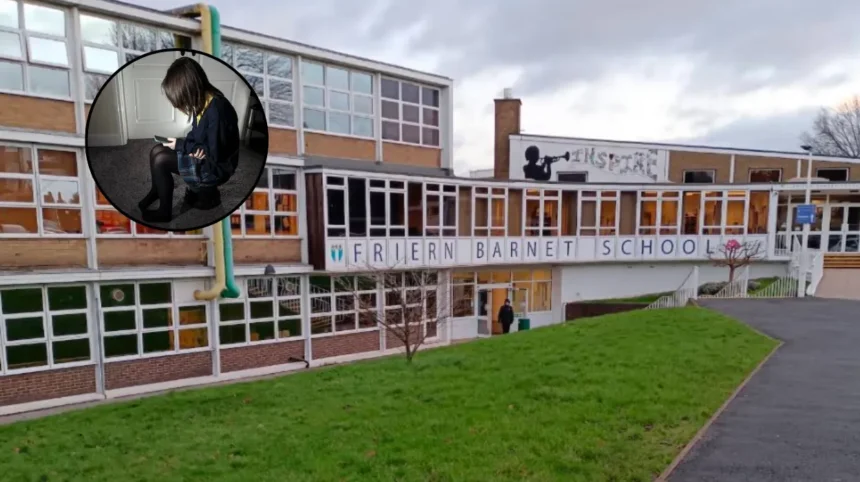
As reported by reporter Jack Simpson of The Daily Telegraph, Rafiqul Islam, 34, who was employed at Friern Barnet School in north London between July 2020 and July 2022, was subject to a disciplinary hearing convened by the Teaching Regulation Agency (TRA). The tribunal concluded that Mr Islam’s actions amounted to unacceptable professional conduct and brought the teaching profession into disrepute after he engaged in boundary-crossing interactions with a student designated as Pupil A.
What Details Were Disclosed During the TRA Panel Hearing?
The TRA panel examined evidence concerning communications sent by Mr Islam to Pupil A on or around 13 June 2022. The evidence showed that Mr Islam had sent a series of direct messages via Instagram expressing a deep romantic infatuation.
As detailed in the official findings of the TRA panel, chaired by designated tribunal members, Mr Islam admitted to sending messages in which he referred to Pupil A as “cute” and explicitly stated that he loved her. During the proceedings, extracts from the message exchange revealed that Mr Islam compared his emotions to the character Edward Cullen, the fictional vampire protagonist from Stephenie Meyer’s Twilight franchise known for intense, self-sacrificing devotion.
In his written statements, Mr Islam acknowledged that he had contemplated handing a physical letter to Pupil A before deciding instead to send the text in distinct components via Instagram due to social media character limitations. Within the messages, Mr Islam communicated a willingness to forfeit his teaching position if it meant he could pursue a relationship with the student.
Pupil A informed school officials during the initial internal investigation that she discovered the direct messages at approximately 8:00 AM on 14 June 2022 upon checking her mobile phone, noting that the contact came completely “out of the blue”.
How Did the Teacher Defend His Actions to the Disciplinary Panel?
Throughout the disciplinary hearing, Mr Islam contested the allegation that his conduct was sexually motivated. He maintained that his intentions were rooted in a search for genuine companionship rather than an explicit or physical relationship.
As recorded in the decision outcome document published by the TRA, Mr Islam argued that his personal religious beliefs strictly prohibited engaging in un-Islamic sexual relationships, which he argued proved a lack of sexual intent. He further posited that formatting changes made to the text during the presentation of evidence—specifically the re-insertion or removal of line spacing—altered the tone and interpretation of his messages.
However, the three-person panel rejected these arguments, finding on the balance of probabilities that his behavior was indeed sexually motivated. The panel concluded that seeking a romantic partnership with a student under his care inherently crossed professional boundaries.
Furthermore, the panel found allegation four proved against Mr Islam, determining that he had breached fundamental safeguarding standards by failing to inform the school’s designated safeguarding lead when he believed or suspected that Pupil A may have developed feelings for him.
What Decisions and Sanctions Were Reached by the Decision Maker?
Following the findings of fact, the decision on sanction was made on behalf of the Secretary of State for Education. The panel concluded that a fully informed member of the public would view Mr Islam’s actions as fundamentally unacceptable and damaging to public trust in the educational system.
As set out by the panel’s official report, Mr Islam expressed remorse during the proceedings, acknowledging his mistakes and describing them as errors made during the early stages of his teaching career.
Despite his expression of regret, the panel advised that an indefinite prohibition order was necessary and proportionate to preserve public confidence in the teaching profession and to ensure pupil safety. The order strictly prohibits Mr Islam from teaching in any maintained school, pupil referral unit, academy, independent school, sixth form college, relevant youth accommodation, or children’s home in England.
Background of the Particular Development
The Teaching Regulation Agency (TRA) operates as an executive agency of the Department for Education (DfE) in England, responsible for investigating allegations of serious misconduct against teachers. Under the Teachers’ Disciplinary (England) Regulations 2012, the agency oversees professional conduct panels to determine whether a teacher’s behavior falls short of the statutory Teachers’ Standards.
Friern Barnet School, located in the London Borough of Barnet, operates under statutory safeguarding frameworks mandated by the UK government’s Keeping Children Safe in Education (KCSIE) guidance. These frameworks mandate strict protocols regarding adult-pupil boundaries, acceptable communications, and immediate internal reporting mechanisms if a staff member suspects or identifies inappropriate attachments or disclosures.
In recent years, regulatory bodies have increasingly examined the use of private social media platforms and direct messaging services between educators and students. Standard safeguarding guidelines explicitly ban teachers from contacting enrolled pupils through personal social media accounts, citing the high risk of professional boundary blurring and abuse of authority.
Prediction: How This Development Can Affect the Educational Sector and Stakeholders
This enforcement action and public decision by the TRA are expected to have visible regulatory, operational, and institutional impacts across the UK education sector:
- School Administration and Policy Guidance: Educational institutions are likely to review and enforce stricter policies regarding digital communications. Schools may implement zero-tolerance rules for staff interacting with current students via non-sanctioned personal accounts or social media applications.
- Safeguarding Training: Staff induction programs and statutory safeguarding refresher courses will probably place greater emphasis on early boundary management. The case serves as an operational precedent that non-physical, purely text-based romantic declarations carry the same weight of professional disqualification as physical misconduct.
- Teacher Trainees and Early Career Frameworks: Training providers under the Early Career Framework (ECF) will likely incorporate specific case studies highlighting the professional liabilities associated with social media use, emphasizing that religious or personal justifications do not exempt teachers from standard regulatory definitions of sexually motivated behavior.
- Public Confidence: For parents and guardians, the enforcement of an indefinite ban reassures the public that regulatory bodies actively monitor and penalize boundary breaches, reinforcing safety standards within secondary education.