The London Borough of Barnet is the second-largest London borough by population, housing over 389,000 residents across an area of 86.74 square kilometres. Situated in North London, this borough connects outer suburban residential zones with outer commercial districts. The commercial ecosystem of Barnet contains a blend of regional shopping centres, historic market towns, high-street retail corridors, and independent boutiques. Retail assets in Barnet serve three distinct demographics: international tourists and domestic leisure travellers seeking flagship retail, suburban residents requiring daily commodities, and remote workers utilizing cafe-centric commercial districts. Understanding the geographical distribution, retail mix, accessibility, and operational characteristics of these commercial zones enables shoppers to optimize their itineraries across North London.
- What makes Brent Cross Shopping Centre the premier retail hub in Barnet?
- Historical Context and Development Framework
- Retailer Composition and Anchor Stores
- Facilities and Amenities for Remote Workers and Travellers
- Location and Transit Access
- Which historic high streets and independent markets operate across Barnet?
- The History and Origin of Chipping Barnet Market
- Modern Market Operations and High Street Layout
- The Spires Shopping Centre Infrastructure
- Visitor Demographics and Accessibility
- What unique boutique and luxury shopping options exist in Golders Green and Temple Fortune?
- Architectural Character and Urban Layout
- Specialist Retailers and Independent Food Markets
- Remote Working and Leisure Infrastructure
- Transit Connections and Strategic Reach
- How do local shopping districts in Finchley and Mill Hill support remote workers and travellers?
- Structural Organization of Finchley Retail Corridors
- Mill Hill Broadway Commercial Dynamics
- Infrastructure for Digital Nomads and Business Travellers
- Transport Interchanges and Accessibility
- What role do transport links and future urban developments play in Barnet retail landscape?
What makes Brent Cross Shopping Centre the premier retail hub in Barnet?
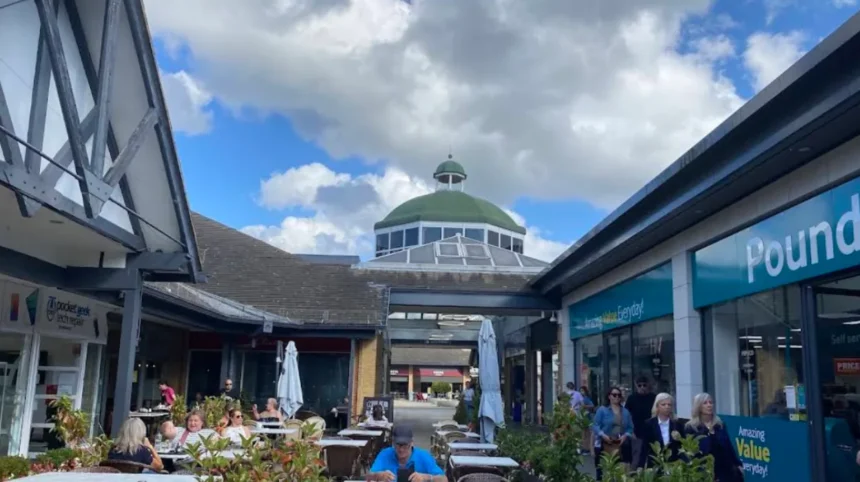
Brent Cross Shopping Centre is the premier retail destination in Barnet because it offers 120 retail units across 800,000 square feet of enclosed commercial space, featuring flagship anchor stores, climate-controlled concourses, free parking facilities, and direct motorway accessibility.
Historical Context and Development Framework
Brent Cross Shopping Centre opened in March 1976 as the first covered, American-style enclosed shopping mall in the United Kingdom. Developer Hammerson constructed the original facility at a cost of £20 million on a 52-acre site located at the junction of the A406 North Circular Road and the A41 Hendon Way. The original architecture featured an I-shaped layout bounded by major anchor department stores. In 1995, an expansion scheme transformed the layout into an inverted T-shape, increasing the total retail square footage and adding multi-storey car parking structures. Barnet Council and the Greater London Authority designated Brent Cross as a core regional economic node within the Northern Line transport corridor.
Retailer Composition and Anchor Stores
The retail tenant mix at Brent Cross Shopping Centre caters to high-street, middle-market, and premium consumer categories. The centre contains three primary flagship anchor stores: John Lewis & Partners, Marks & Spencer, and Fenwick department store. Beyond these anchor tenants, the complex houses over 115 secondary retail stores. Apparel and fashion chains constitute the largest proportion of retail floor area. Apparel retailers operating within the complex include two international high-street brands, Zara and H&M, alongside specialized fashion stockists such as Reiss, Levi’s, and Superdry. Jewellery, beauty, and technology retailers occupy dedicated wings along the main concourses, with permanent locations for Apple, Boots, Pandora, and Sephora.
Facilities and Amenities for Remote Workers and Travellers
Brent Cross Shopping Centre incorporates infrastructure designed to support long-stay visitors, business travellers, and digital nomads. The complex provides three distinct visitor amenities: free multi-storey vehicle parking containing over 7,000 spaces, high-speed public Wi-Fi networks, and dedicated customer service desks. Work-friendly hospitality spaces operate within the main atrium and adjoining concourses. Coffee shop chains including Costa Coffee, Starbucks, and Caffè Nero provide power outlets and seating configurations suitable for laptop productivity. Dining options span two food court zones offering casual sit-down dining, quick-service counters, and international cuisine choices.
Location and Transit Access
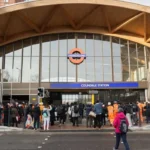
The physical site sits in the southern sector of the London Borough of Barnet, adjacent to the Brent Cross Flyover. Transport access relies on three principal transit modes: London Underground services, London Bus routes, and arterial road links. Brent Cross Underground Station on the Northern Line sits 0.6 miles south of the main entrance. Brent Cross Bus Station operates as a major regional transport interchange located directly on Prince Charles Drive, serving 18 individual bus routes including the 113, 142, 186, 210, and 232. Vehicle drivers access the complex via the A406 North Circular, the A41, and Junction 1 of the M1 Motorway.
Which historic high streets and independent markets operate across Barnet?
Chipping Barnet High Street and The Spires Shopping Centre form Barnet’s main historic shopping hub, combining a weekly chartered market operating since 1199 with modern high-street brands, independent specialty stores, and accessible community retail spaces.
The History and Origin of Chipping Barnet Market
Chipping Barnet functions as the historical commercial core of the borough. The term “Chipping” derives from the Old English word “ceping,” signifying a market or trading site. King John granted a royal market charter on 23 August 1199 to the Abbot of St Albans, authorizing a weekly Thursday market. Queen Elizabeth I issued a second charter in 1588, establishing the famous Barnet Livestock Fair. The market evolved from a medieval agricultural clearing into a major regional trade hub for cattle, meat, and grain supplying London.
As you explore the modern site, you are crossing land with a deep heritage. Read about the full [Insert Anchor Text for History Article Here] to understand its origins.
Modern Market Operations and High Street Layout
Chipping Barnet Market operates twice weekly on Wednesdays and Saturdays from 8:30 AM to 3:00 PM. The open-air market occupies a dedicated bandstand area adjacent to St Albans Road and The Spires Shopping Centre. Independent traders staff stall setups across four primary product classifications: fresh agricultural produce, artisan food items, vintage apparel, and household hardware. Chipping Barnet High Street stretches along the A1000 road, anchored by medieval architecture, Georgian coaching inns, and traditional shopfronts. The high street preserves three heritage pub structures: The Mitre Inn, The Red Lion, and The Ye Olde Murre’s Head.
The Spires Shopping Centre Infrastructure
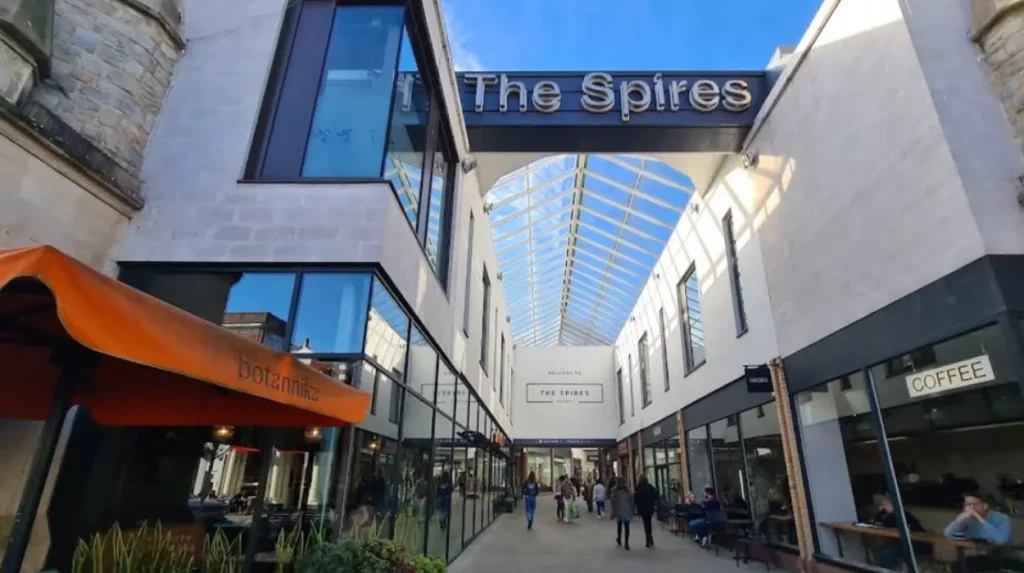
The Spires Shopping Centre is the primary covered retail precinct on High Barnet High Street. Constructed in 1988, the complex incorporates two historic mock-Tudor brick spires originally belonging to the 1892 Methodist Church that occupied the site. The open-air pedestrian mall spans 90,000 square feet of floor space on a single level. The centre features three anchor retail operations: Waitrose supermarket, H&M apparel, and Waterstones booksellers. The Spires contains 37 retail units, an attached multi-storey car park providing 436 spaces, and open courtyard seating.
Visitor Demographics and Accessibility
Chipping Barnet attracts cultural tourists interested in battleground heritage, domestic shoppers, and day-trippers. High Barnet Underground Station serves as the northern terminus of the High Barnet branch of the Northern Line, situated 500 metres south of The Spires. Bus services stopping directly on the High Street include routes 34, 84, 107, 234, 263, 326, 383, 384, and 614. The location sits 2.5 miles south of Junction 23 on the M25 Motorway, making it a gateway shopping zone for Hertfordshire residents.
What unique boutique and luxury shopping options exist in Golders Green and Temple Fortune?
Golders Green and Temple Fortune provide specialized shopping districts featuring independent boutiques, luxury fashion stockists, kosher bakeries, international food halls, fine jewellers, and high-end interior design showrooms along Golders Green Road and Finchley Road.
Architectural Character and Urban Layout
Golders Green and Temple Fortune sit in the southern boundary of Barnet, immediately north of Hampstead and Hampstead Garden Suburb. The commercial corridors align along two primary thoroughfares: Golders Green Road (A504) and Finchley Road (A598). The streetscapes display Edwardian parade architecture, with multi-storey brick buildings housing retail frontage on the ground level and residential flats above. Temple Fortune represents the quieter, upper-market commercial northern extension of Golders Green, centered around the intersection of Finchley Road and Regent’s Park Road.
Specialist Retailers and Independent Food Markets
The retail identity of Golders Green and Temple Fortune relies on specialized cultural retailers, independent culinary providers, and boutique fashion stockists. The district hosts three specialized food store categories: kosher supermarkets, traditional Jewish bakeries, and Asian specialty grocers. Prominent culinary institutions include:
- Bakeries and Delicatessens: Carmelli Bakery, Grodzinski Bakery, and Delicatessen Temptations provide traditional breads, pastries, and cured meats.
- Specialty Supermarkets: Kosher Kingdom and Tapuach operate large-scale independent grocery formats stocking international imports.
- Independent Bookshops and Judaica: Stores such as Jerusalem the Golden and Menorah Books sell religious texts, literature, and handcrafted ceremonial items.
Boutique retail in Temple Fortune focuses on luxury apparel, independent childrenswear, bespoke footwear, and home interiors. Independent fashion stockists like Joseph, B-Spoke, and The Wardrobe supply designer collections. High-end lifestyle brands operating along Finchley Road include Russell & Bromley for footwear, alongside independent home design showrooms like Modus and Elements.
Remote Working and Leisure Infrastructure
The hospitality offering in Golders Green and Temple Fortune accommodates business travellers, local professionals, and digital nomads seeking laptop-friendly environments. Independent cafes line Golders Green Road, offering table service, power points, and wireless internet. Prominent work-friendly locations include Novell Coffee, Cafe Sol, and Delissa Coffee House. The close proximity of Golders Hill Park and the extension of Hampstead Heath provides outdoor leisure space adjacent to the main commercial strip.
Transit Connections and Strategic Reach
Golders Green operates as one of North London’s critical multimodal transit hubs. Golders Green Underground Station sits on the Edgware branch of the Northern Line, delivering travel times of 15 minutes to Central London. The adjacent Golders Green Bus Station serves as a terminus for national coach services operated by National Express, linking London directly to Luton Airport, Stansted Airport, and northern UK cities. Local bus routes serving the high street corridor include routes 13, 83, 102, 183, 210, 240, and 460.
How do local shopping districts in Finchley and Mill Hill support remote workers and travellers?
Shopping districts in Finchley and Mill Hill support remote workers and travellers through linear high-street layouts, independent coffee houses, boutique retail options, co-working facilities, and rapid Northern Line and Thameslink rail links.
Structural Organization of Finchley Retail Corridors
Finchley contains three distinct commercial sub-districts distributed along a 4-kilometre North-South corridor: East Finchley, Finchley Central (Church End), and North Finchley. Each district serves specific commercial functions:
- East Finchley (High Road A1000): Focuses on independent boutique retail, art-house entertainment, and local dining. Key retailers include independent gift shops, second-hand bookstores, and organic grocers.
- Finchley Central (Ballards Lane): Houses essential service retail, financial institutions, regional supermarkets, and international dining establishments.
- North Finchley (Tally Ho Corner): Serves as a major retail junction featuring national high-street chains, the arts depot cultural centre, and large-scale retail parades.
Mill Hill Broadway Commercial Dynamics
Mill Hill Broadway represents a self-contained, high-density suburban high street situated in the western quadrant of the borough. The district runs along the Broadway thoroughfare between Hale Lane and the Thameslink railway line. Retail density is high, with over 100 commercial premises operating along a 600-metre strip. Mill Hill Broadway features three primary business types: independent clothing boutiques, artisanal food markets, and health and beauty services. Prominent retailers include independent fashion boutiques, premium butcher shops, and health food stores.
Infrastructure for Digital Nomads and Business Travellers
Finchley and Mill Hill offer high concentrations of work-friendly commercial spaces per square kilometre in North London. These locations provide infrastructure tailored to remote working, including high-speed Wi-Fi, abundant electrical outlets, quiet workspace zones, and specialty coffee options. Prominent coffee hubs and co-working spaces across these districts include:
- East Finchley: Campbell & Syme Coffee Roasters and Fair-Trade Cafe provide laptop-friendly seating arrangements.
- Finchley Central: Tintico and Coffee Bank feature dedicated work tables equipped with individual power sockets.
- North Finchley: The artsdepot cultural centre provides public co-working lounges, cafe facilities, and quiet study areas across multiple floors.
- Mill Hill Broadway: Coffee Lab, Mill Hill Espresso Bar, and Nibbles Cafe cater directly to hybrid workers and business travellers.
Transport Interchanges and Accessibility
Transport infrastructure across Finchley and Mill Hill provides efficient connectivity to London’s central business district and the Home Counties. Finchley relies on three Northern Line tube stations: East Finchley, Finchley Central, and West Finchley. North Finchley connects to Woodside Park station and houses the Tally Ho Bus Station, serving 12 bus routes including the 125, 134, 221, and 460. Mill Hill Broadway station operates on the Thameslink rail line, delivering direct rail service to London St Pancras International in 18 minutes, Farringdon in 22 minutes, and Gatwick Airport in 68 minutes.
What role do transport links and future urban developments play in Barnet retail landscape?
Transport infrastructure and major urban regeneration projects, such as the Brent Cross Town development, shape Barnet’s retail landscape by introducing new high streets, expanding transit access, and integrating sustainable retail spaces.
The Brent Cross Town Regeneration Project
The Brent Cross Town development represents a £8 billion urban regeneration project covering 180 acres directly south of the existing Brent Cross Shopping Centre. Jointly delivered by developer Related Argent and Barnet Council, the master plan creates a new park town for London. The development introduces 50 acres of public open space, 6,700 new residential homes, and 3 million square feet of commercial office space designed for 25,000 workers.
The retail strategy for Brent Cross Town focuses on pedestrianized high streets, independent retail spaces, and food corridors. The development incorporates three distinct retail zones: Merchant Square, the Main High Street, and Neighbourhood Enclaves. Unlike traditional indoor shopping centres, Brent Cross Town prioritizes independent retailers, local artisans, sustainable fashion brands, and health-focused culinary concepts.
Strategic Transport Nodes and Accessibility Networks
Retail viability across the London Borough of Barnet depends on strategic transport connections. The borough benefits from three primary transport layers:
- London Underground: The Northern Line splits into two northern branches within Barnet (the High Barnet branch and the Edgware branch). These lines serve 13 Underground stations across the borough, bringing visitors directly from Central London to high-street destinations.
- National Rail and Thameslink: Brent Cross West station opened on the Thameslink line, providing direct transport access between Central London, Brent Cross Town, and Luton Airport. Mill Hill Broadway and Oakleigh Park stations supply secondary heavy-rail connectivity.
- Arterial Road Networks: Barnet acts as a major vehicular gateway to Greater London. The borough intersects four strategic road corridors: the A406 North Circular Road, the A41 Hendon Way, the A1 Great North Road, and Junction 23 of the M25 Motorway.
Sustainability Trends and Future Retail Implications
Retail development across Barnet increasingly incorporates environmental sustainability standards and digital integration. New commercial spaces comply with BREEAM (Building Research Establishment Environmental Assessment Method) “Excellent” or “Outstanding” certifications. Retail properties feature energy-efficient building envelopes, rooftop solar photovoltaic arrays, rainwater harvesting infrastructure, and zero-waste management frameworks.
Electric vehicle (EV) charging infrastructure is expanding across all commercial parking hubs in the borough. Brent Cross Shopping Centre and The Spires house rapid EV charging bays to accommodate zero-emission vehicles. Furthermore, physical retailers throughout Barnet integrate click-and-collect fulfillment services, contactless point-of-sale systems, and localized digital directory kiosks. These technological and environmental infrastructure enhancements ensure that Barnet remains a resilient, highly accessible, and competitive commercial destination within North London.
What is the biggest shopping centre in Barnet?
Brent Cross Shopping Centre is the biggest shopping centre in Barnet. It features more than 120 shops, major department stores, restaurants, cafés, and entertainment facilities, making it the borough’s premier retail destination.