Barnet, in North London, combines historic buildings, traditional high streets, green spaces and distinctive architectural landmarks. From the medieval heritage of Chipping Barnet to the grand interiors of historic churches and the landscaped grounds of local parks, the borough offers a range of locations for architectural photography, street photography, portraits and travel photography.
- Which Barnet landmarks are best for architectural photography?
- What makes St John the Baptist Church in Chipping Barnet a photographic landmark?
- Why is St Mary the Virgin Church in Monken Hadley one of Barnet’s best photo locations?
- Where can photographers capture historic village scenes in Monken Hadley?
- Is Hadley Green a good place for landscape and heritage photography?
- Which Barnet landmarks are best for photographing historic streets and shopfronts?
- Where can photographers find distinctive historic buildings beyond Barnet High Street?
- Is Barnet Museum worth visiting for heritage photography?
- Which Barnet landmarks are best for photography in different seasons?
- What camera settings work best for photographing Barnet’s landmarks?
- How can visitors plan a Barnet landmark photography walk?
- What photography rules should visitors follow at Barnet landmarks?
- Which Barnet photography locations are best for beginners and smartphone users?
- Why are Barnet’s historic landmarks important for local photography?
- Which Barnet landmarks should photographers prioritise?
The best Barnet landmarks for photography depend on the subject, lighting and access requirements. Historic churches suit architectural detail, traditional shopping streets provide urban compositions, and parks offer natural backgrounds for landscape and wildlife photography. These locations also help visitors explore Barnet’s local history while documenting its contemporary character.
Which Barnet landmarks are best for architectural photography?
Barnet’s strongest architectural photography locations include historic churches, traditional town-centre buildings and heritage properties. High Barnet, Chipping Barnet and nearby historic settlements provide contrasting architectural details, including brick façades, church towers, traditional rooflines and period street scenes.
Architectural photography records the design, materials, proportions and historical character of buildings. In Barnet, photographers can focus on the relationship between historic structures and the surrounding urban environment.
The borough covers a substantial area of North London, including established neighbourhoods such as High Barnet, Finchley, Hendon and Edgware. Each area has a different built environment, ranging from historic town centres to suburban residential streets and civic buildings.
High Barnet is a useful starting point because its town centre combines historic associations with modern commercial activity. Photographers can frame shopfronts, building entrances, upper-storey windows and street perspectives. Chipping Barnet’s historic high street provides additional opportunities to document the development of a traditional market town.
When photographing buildings, a wide-angle lens captures entire façades, while a standard or short telephoto lens isolates architectural features. Photographing from across the street also helps preserve the proportions of a building without requiring specialised equipment.
The best conditions depend on the building’s orientation. Morning light reveals surface texture on east-facing façades, while late-afternoon light creates longer shadows that emphasise brickwork and decorative details.
Photographers should check whether a building is open to visitors before planning interior photography. Public access to a street does not automatically permit entry into private buildings or unrestricted commercial photography.
What makes St John the Baptist Church in Chipping Barnet a photographic landmark?
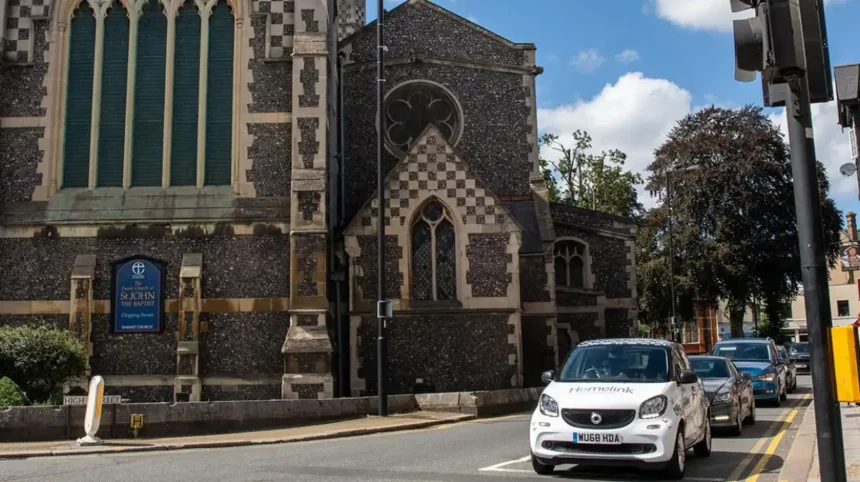
St John the Baptist Church in Chipping Barnet is a historic religious building that provides opportunities to photograph traditional ecclesiastical architecture. Its exterior, entrance details and surrounding streets help document the area’s long-standing religious and architectural heritage.
St John the Baptist Church is associated with the historic settlement of Chipping Barnet, an area whose development predates the modern suburban expansion of North London. Churches such as this are valuable subjects because their architecture reflects religious practice, local building traditions and the changing needs of established communities.
Photographers can begin with a wider composition that includes the church within its streetscape. Closer photographs can record masonry, windows, entrances and other visible architectural features. These images work well in a collection documenting historic Barnet.
Church architecture also provides a way to connect contemporary travel photography with local history. A visitor photographing the building today is recording a structure shaped by earlier generations of worshippers and residents. For further context, this location can be paired with an article about the [historical heritage of Chipping Barnet and its historic landmarks].
Before visiting, check current access arrangements, as opening hours and permission for interior photography vary. Religious services should remain undisturbed, and visitors should follow any photography restrictions displayed inside the building.
For exterior photography, an overcast day produces softer light across stonework and brickwork. Direct sunlight is useful for strong contrasts, particularly when the architectural details face the sun.
Why is St Mary the Virgin Church in Monken Hadley one of Barnet’s best photo locations?
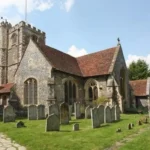
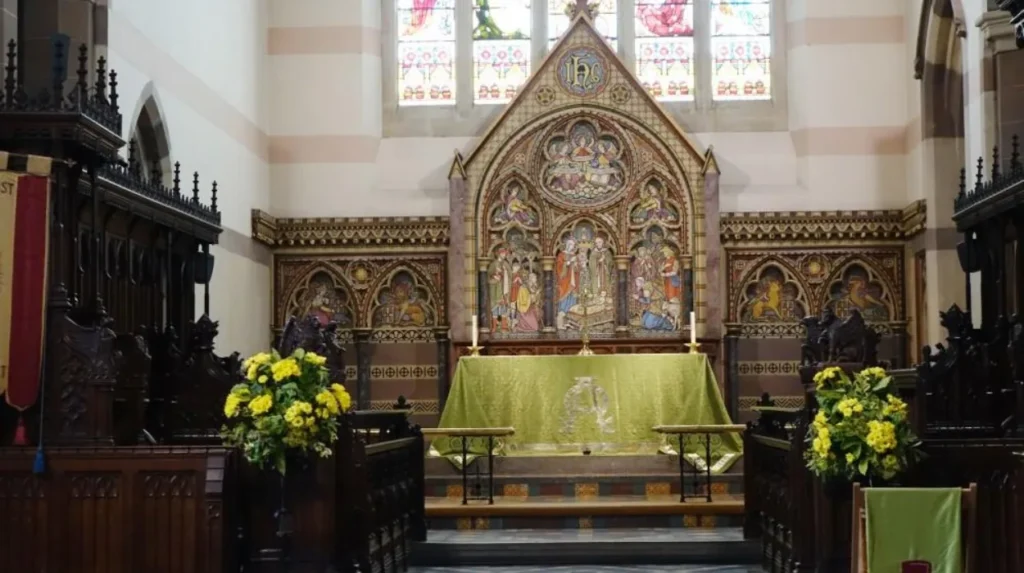
St Mary the Virgin Church in Monken Hadley is one of Barnet’s most distinctive historic photography locations. Its medieval origins, traditional church architecture, surrounding churchyard and proximity to Hadley Common create opportunities for architectural, heritage and landscape photographs.
The church stands on Hadley Green Road beside the historic village of Monken Hadley. A church has occupied the site since the twelfth century, while the present building developed primarily during the fifteenth century. Its long history makes it an important subject for visitors interested in historic buildings and North London’s former rural settlements.
The building’s exterior works well in photographs that include the surrounding landscape. A wider frame captures the church in context, while closer compositions highlight the tower, roofline, masonry and entrances.
The adjacent churchyard adds another photographic dimension. Historic memorials and mature greenery create visual contrasts between stone, timber and vegetation. Visitors should treat these features respectfully and avoid disturbing graves or people attending religious services.
The church also provides a useful starting point for a wider photography walk through Monken Hadley. Nearby common land and historic lanes offer complementary subjects, allowing visitors to create a collection that combines architecture, landscape and village character.
Check the church’s current visiting arrangements before planning interior photographs. The church’s official website provides service and visitor information.
Where can photographers capture historic village scenes in Monken Hadley?
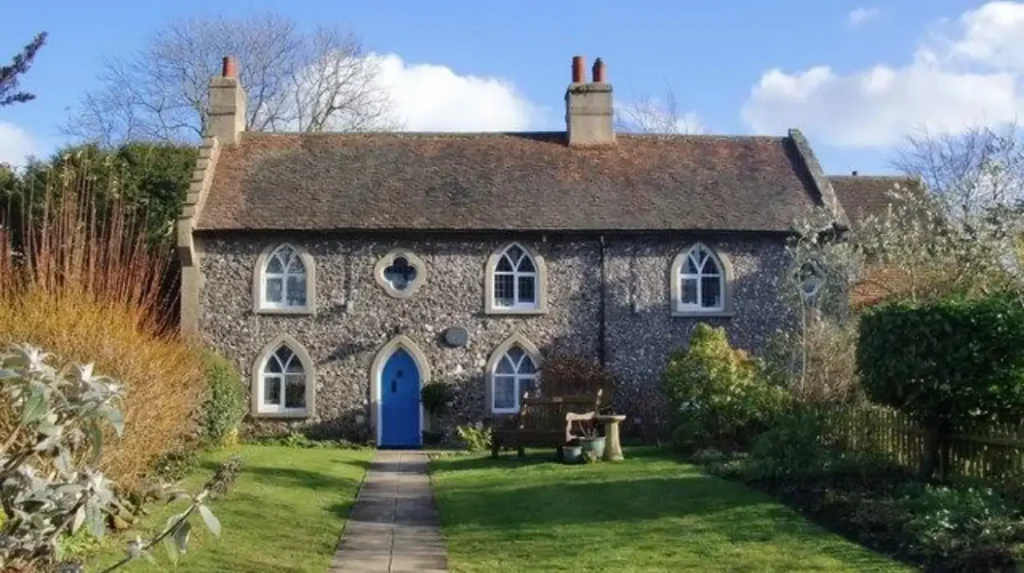
Monken Hadley offers some of Barnet’s most recognisable historic village scenes through its winding lanes, traditional buildings, church surroundings and green spaces. The conservation area is particularly suitable for photographs that combine historic architecture with a quieter suburban landscape.
Barnet Council identifies Monken Hadley as a conservation area in the north-east of the borough. Its character reflects a long association with rural settlement, including historic buildings, winding lanes, scattered oak trees and common land.
A conservation area is a place designated for its special architectural or historic interest. The designation helps protect the character of the area, including the relationship between buildings, streets and their surroundings.
For photographers, this means the most effective compositions often show more than a single building. A street-level frame can include a traditional house, boundary wall, mature tree and the lane leading into the distance. These elements communicate the character of the village without requiring extensive editing.
Use a standard lens for natural-looking street scenes. A wider lens works when the lane is narrow, although excessive perspective distortion can make buildings appear to lean. Photographing from a respectful distance also reduces the risk of including identifiable details of private homes.
The best time to explore is during daylight, when building details and street layouts are clearly visible. Early morning often provides fewer pedestrians and parked vehicles, although the result depends on local activity and weather.
Monken Hadley is especially suitable for photographers who want to document a historic settlement rather than concentrate exclusively on major tourist attractions.
Is Hadley Green a good place for landscape and heritage photography?
Hadley Green is an excellent location for combining open-landscape photography with local history. Its grassland, mature trees, historic surroundings and memorial obelisk create compositions that connect Barnet’s rural landscape with the events and transport routes that shaped its development.
Hadley Green is an established area of common land beside the historic route through Chipping Barnet and Monken Hadley. The London Gardens Trust records that the land was secured as public open space in 1818. An obelisk associated with the Battle of Barnet was erected in 1740 and subsequently moved in 1840.
The Battle of Barnet took place in 1471 during the Wars of the Roses, a series of dynastic conflicts over the English crown. The battle is a major part of the area’s historical identity.
The open green provides a different photographic environment from Barnet’s streets and churches. Wide compositions can show the grassland, trees and surrounding buildings together. In autumn, fallen leaves introduce additional texture, while spring and summer produce greener landscapes.
The obelisk provides a focal point for heritage photography. Positioning it against the sky creates a clear silhouette, while a wider shot places the monument within its historic setting. Low-angle photography works best when the foreground is uncluttered.
Hadley Green also suits environmental portraits and travel photography. Visitors can photograph people walking along public paths, provided they respect privacy and seek permission when taking identifiable close-up portraits.
As the green is public open space, it offers a practical location for a short photography session without requiring access to a private building. Visitors should remain on appropriate paths and avoid damaging vegetation.
Which Barnet landmarks are best for photographing historic streets and shopfronts?
Chipping Barnet High Street and Wood Street are useful locations for photographing traditional commercial architecture. Their historic buildings, shopfronts, upper-storey windows and street layouts show how Barnet developed as a market town along an important route north from London.
Chipping Barnet developed around the historic Great North Road, a major route connecting London with settlements farther north. The road encouraged travel, trade and commercial activity, leaving a legacy of historic buildings in the town centre and surrounding conservation areas.
High Street is a practical location for street photography because it combines commercial activity with surviving historic architecture. Photographers can record traditional façades, signs, doorways, window arrangements and the relationship between older structures and newer businesses.
Wood Street offers additional architectural subjects. Historic England’s records include Church House, a late nineteenth-century building with a neo-Tudor design, flint facing, stone dressings and a tiled roof. Its distinctive materials and façade provide a useful subject for architectural detail.
Street photography benefits from observation rather than rushing between landmarks. Look for repeating window shapes, contrasting brickwork, reflections in shop windows and the perspective created by buildings along the road.
Mid-morning provides useful natural light for many street scenes. Overcast conditions reduce harsh shadows and help retain detail in both bright shopfronts and darker doorways.
Commercial streets are active public environments. Avoid blocking pavements, photograph businesses respectfully and ask permission before taking close-up images of customers or staff. Interior photography requires the business’s consent.
Where can photographers find distinctive historic buildings beyond Barnet High Street?
Historic England’s local heritage records identify several distinctive buildings across the London Borough of Barnet, including Golders Green Crematorium, Hendon Central Underground Station, historic churches and former aviation structures. These provide varied subjects for architecture and heritage photography.
Barnet’s photographic appeal extends beyond its historic market town. Its built environment contains buildings associated with transport, religion, memorials and suburban development. Historic England’s Barnet Local Heritage Hub provides an authoritative starting point for identifying listed buildings and understanding their significance.
Golders Green Crematorium is a notable example of early twentieth-century memorial architecture. Historic England records its development across the period from 1901 to 1939, including chapels, columbaria and memorial structures. Its architecture provides subjects for visitors researching historic buildings and commemorative design.
Hendon Central Underground Station offers a contrasting architectural subject connected with London’s transport history. Historic England identifies the station as dating from 1923, with later alterations. Photographs can document its street-facing architecture and its relationship with the surrounding commercial area.
The Church of St Mary at Church End, Hendon, is another important historic building. Historic England records it as a Grade II* listed church. Its designation reflects its particular architectural or historic interest.
These locations suit photographers who prefer precise architectural subjects to broad landscape views. Before travelling, verify the exact location, public access arrangements and any restrictions on photography. A listed designation identifies a building’s heritage significance; it does not automatically provide public access to its grounds or interior.
Is Barnet Museum worth visiting for heritage photography?
Barnet Museum is a useful stop for visitors interested in documenting the borough’s history. Its local collections and historic material provide context for photographing nearby streets, churches and landmarks, although photography inside the museum depends on its current rules and permissions.
Barnet Museum is a free local history museum run by volunteers. Its collections cover Chipping Barnet, East Barnet, New Barnet, Hadley and neighbouring districts, with artefacts ranging from the Bronze Age to the present day. The museum also maintains an archive for local and family history research.
For photographers, the museum is valuable because historical context improves the accuracy of captions and location descriptions. Understanding a building’s former use, the development of a road or the history of a local community helps turn individual photographs into a coherent visual record.
Visitors can use the museum to research a nearby landmark before photographing it. This approach is particularly useful for heritage features that are not immediately obvious from the street, such as the significance of a memorial, the age of a building or the development of a former village.
Museum opening times vary by day. The published schedule includes weekday afternoon sessions and weekend openings, so visitors should check the official website before travelling. Permission should be confirmed before photographing displays, archival material or other visitors.
A practical approach is to combine a museum visit with an outdoor photography walk around Chipping Barnet. This creates a connection between historical research and the visible architecture that survives in the modern town.
Which Barnet landmarks are best for photography in different seasons?
Spring and summer suit Barnet’s green spaces and historic village scenes, while autumn highlights foliage around Hadley Green and Monken Hadley. Winter provides clearer views of building shapes and architectural details when trees lose their leaves, although daylight hours are shorter.
Seasonal photography depends on the relationship between natural light, vegetation and the built environment. Barnet offers a useful mix of open land, traditional streets and historic structures, so photographers can adapt their subjects throughout the year.
Spring brings fresh foliage and flowering plants to village surroundings and public green spaces. Photographers can combine historic buildings with new growth, particularly around churchyards and mature trees. Morning light often produces softer colours and fewer strong shadows.
Summer provides longer daylight hours for exploring multiple locations. The extended evening light can illuminate building façades and open landscapes. However, strong midday sunshine creates deep shadows beneath rooflines and trees. Photographing earlier or later in the day usually gives more balanced results.
Autumn introduces warm foliage and changes the visual character of Hadley Green and Monken Hadley. Fallen leaves provide foreground texture, while overcast skies help maintain detail in bright foliage and darker buildings.
Winter is useful for documenting building outlines, rooflines and masonry without dense leaves obscuring the view. Historic street scenes also benefit from the lower angle of the sun, which creates longer shadows when the weather is clear.
Weather should determine the final composition. After rain, reflections on pavements and roads add depth to street photography. In fog, distant buildings become less prominent, allowing a nearby church or monument to stand out. Photographers should protect equipment from rain and avoid unsafe positions on roads or slippery paths.
What camera settings work best for photographing Barnet’s landmarks?
Aperture priority, a low ISO setting and careful exposure control provide a reliable starting point for Barnet’s architectural and landscape photography. Wide-angle lenses capture entire buildings, standard lenses record natural street scenes, and telephoto lenses isolate architectural details.
The best camera settings depend on the light, the subject and whether people or moving objects appear in the frame. A smartphone also produces strong results when the photographer pays attention to composition, focus and exposure.
For architecture, start with an aperture around f/8 when light permits. This setting provides useful depth of field for keeping the building’s front and visible details sharp. Use a lower ISO, such as ISO 100, in bright conditions to reduce image noise.
For landscapes at Hadley Green, a similar aperture provides detail across the foreground and background. Focus on a suitable point within the scene rather than automatically selecting the closest object.
For portraits near historic buildings, a wider aperture such as f/2.8 to f/5.6 separates the subject from the background, depending on the lens and distance. Keep enough detail in the landmark to establish the location.
A tripod helps with longer exposures in low light, but it should not obstruct public paths or create a hazard. Check whether tripods are permitted before using one inside a museum or religious building.
Composition matters as much as camera equipment. Vertical lines can appear distorted when a camera points sharply upwards. Move farther back when space allows, keep the camera level and use a perspective-correction tool during editing if necessary.
How can visitors plan a Barnet landmark photography walk?
Visitors can plan a photography walk around High Barnet, Chipping Barnet, Monken Hadley and Hadley Green by grouping nearby landmarks into manageable sections. Checking transport, opening hours, weather and walking routes in advance helps maximise photography time.
A well-planned route reduces unnecessary travel and provides time to photograph each location in suitable light. Visitors should select a small group of nearby subjects rather than attempting to cover the whole borough in one session.
Stop 1: Chipping Barnet High Street
Begin with street photography, traditional shopfronts and historic façades. Allow time to photograph details from different angles without obstructing pedestrians.
Stop 2: St Mary the Virgin Church
Continue towards Monken Hadley to photograph the church exterior, its tower and the surrounding historic village. Check current access arrangements before planning interior photographs.
Stop 3: Hadley Green
Finish with landscape and heritage photography. Include the obelisk, open grassland, mature trees and surrounding historic setting in a variety of compositions.
This route combines three distinct photographic themes: commercial streets, historic religious architecture and open green space. Check walking distances and current transport options before setting out, as the time needed depends on the starting point, pace and time spent photographing.
Visitors arriving by public transport should verify services and the nearest suitable stations before departure. High Barnet Underground station is a useful transport reference for exploring this part of North London, but the most efficient route depends on the locations selected.
Carry a charged phone or camera, spare battery where available, water and weather-appropriate clothing. Comfortable footwear is particularly useful when combining streets with grassland and uneven paths.
What photography rules should visitors follow at Barnet landmarks?
Visitors should respect private property, religious services, memorials and other people’s privacy when photographing Barnet landmarks. Public access to a street or green space does not automatically permit entry into buildings, commercial use of images or unrestricted photography inside historic sites.
Photography in public places across England is generally permitted, subject to applicable laws and specific restrictions. However, landowners and operators can impose conditions on photography within privately managed premises. Churches, museums and other heritage sites can also restrict photography to protect visitors, collections and religious activities.
Listed buildings receive legal protection under the Planning (Listed Buildings and Conservation Areas) Act 1990, which governs listed-building consent for relevant alterations. Listing does not, by itself, prohibit ordinary exterior photography from a public place.
Visitors should observe the following practical principles:
- Respect signs that restrict photography or access.
- Ask permission before photographing identifiable people at close range, particularly for portraits or commercial projects.
- Avoid entering private gardens, church buildings or restricted grounds without permission.
- Do not climb on memorials, historic structures or boundary walls to obtain a photograph.
- Check licensing requirements before using images commercially, especially when photographing privately managed premises or restricted interiors.
Churchyards and memorials require particular consideration. Avoid disturbing funerals, worshippers or people visiting graves. A respectful approach protects the experience of other visitors while allowing photographers to document the area’s heritage.
Commercial photography can involve additional requirements. If a shoot includes professional equipment, models, lighting stands or a large crew, contact the relevant land manager before arriving.
Which Barnet photography locations are best for beginners and smartphone users?
Beginners can capture strong photographs at Hadley Green, Monken Hadley and Chipping Barnet High Street using a smartphone or basic camera. These locations offer accessible subjects, varied compositions and opportunities to practise architectural, landscape and street photography without specialised equipment.
Smartphone photography works particularly well when the subject is clearly defined and the composition avoids unnecessary distractions. Barnet’s historic buildings and open spaces provide straightforward opportunities to practise framing, exposure and perspective.
At Hadley Green, use the obelisk or a mature tree as the main subject. Include some surrounding landscape to establish the setting. Avoid placing every subject directly in the centre of the frame; shifting it slightly creates a more balanced composition.
In Monken Hadley, look for leading lines created by paths, walls and village lanes. These lines direct attention towards a church, building or distant feature. Keep the camera level when photographing façades to reduce perspective distortion.
On Chipping Barnet High Street, photograph architectural details such as window frames, traditional signs and decorative entrances. These smaller subjects help beginners develop an eye for texture and pattern without needing to capture an entire building.
Smartphones also provide useful editing tools. Adjust exposure, crop carefully and correct vertical lines where necessary. Avoid excessive saturation or artificial sharpening, particularly when documenting historic buildings whose original colours and materials are important.
The most effective way to improve is to photograph the same landmark from several positions. Compare wide, medium and close-up compositions, then select the image that communicates the building’s character most clearly.
Explore More Area Guide
Best Instagram Spots in Barnet: Historic Sites and Green Spaces
Where to Spend a Half-Day in Barnet with Family
Why are Barnet’s historic landmarks important for local photography?
Barnet’s historic landmarks preserve visual evidence of the borough’s development from medieval settlements and market-town streets to modern North London. Photographing these places creates a record of architectural features, public spaces and local heritage for visitors, residents and future generations.
The value of Barnet’s landmarks extends beyond their appearance. Historic churches, traditional streets and memorials reflect different stages of local development. Photographs can document these features while helping people understand the relationship between the area’s past and present.
Monken Hadley’s conservation area preserves evidence of a predominantly rural settlement, while Chipping Barnet’s historic streets reflect its position along the Great North Road. Hadley Green connects the landscape with the Battle of Barnet in 1471 and the area’s longer history of travel and settlement.
Photographs also provide a baseline for observing change. New shopfronts, building repairs, landscaping and transport infrastructure alter the visual character of places over time. A dated collection allows photographers to compare these changes, provided that images are captioned accurately and locations are identified correctly.
Historic England’s local heritage resources and Barnet Museum’s collections provide useful background for researching landmarks before photographing them. Combining archival research with contemporary photography produces more informative captions and supports responsible heritage interpretation. Historic England+1
For visitors, the main benefit is the opportunity to explore several different aspects of North London through photography. Barnet combines architectural subjects, historic village streets, public green spaces and monuments within one borough, making it suitable for both short photography walks and more detailed heritage projects.
Which Barnet landmarks should photographers prioritise?
Photographers seeking the strongest combination of historic architecture, landscape and local character should prioritise St Mary the Virgin Church in Monken Hadley, Hadley Green and Chipping Barnet High Street. These locations provide contrasting subjects for a varied North London photography collection.
The best location depends on the image you want to create. Monken Hadley is suitable for medieval church architecture and historic village scenes. Hadley Green provides open landscapes and a monument associated with the area’s history. Chipping Barnet High Street offers traditional commercial architecture and everyday urban activity.
For a broader architectural project, add Wood Street, Hendon Central Underground Station or other buildings identified through Historic England’s Barnet heritage records. Barnet Museum is a useful research stop for visitors who want to understand the history behind their photographs.
Planning around light, access and walking distances helps visitors make better use of their time. A small collection of carefully composed images from different locations provides a more complete record of Barnet than hurried photographs taken at numerous stops.
Barnet’s historic landmarks remain valuable subjects for travel photography because they document the architectural, cultural and landscape features that distinguish this part of North London.
Which is the best landmark for photography in Barnet?
St Mary the Virgin Church in Monken Hadley, Hadley Green and Chipping Barnet High Street are among the best locations for photography. They offer historic architecture, open landscapes, monuments and traditional street scenes.