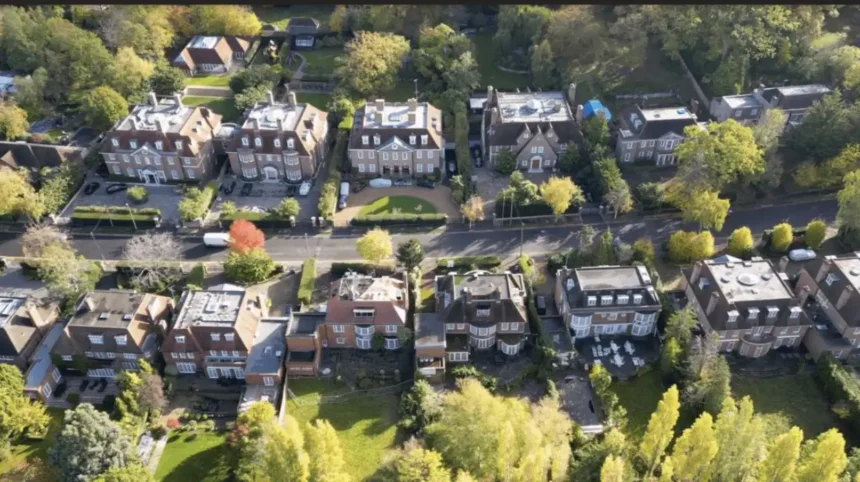
Barnet occupies a distinctive position in North London. It is one of London’s largest outer boroughs by population and has a broad mix of suburban neighbourhoods, town centres, parks, transport corridors and protected open land.
- How does Barnet compare geographically with other North London boroughs?
- Why does Barnet have a stronger suburban character than some North London boroughs?
- How does Barnet’s population compare with other North London boroughs?
- What makes Barnet different from Camden and Islington?
- How does Barnet compare with Haringey?
- How does Barnet compare with Enfield?
- How does Barnet compare with Waltham Forest?
- Which borough has more green space: Barnet or other North London boroughs?
- How do Barnet’s transport connections compare with other North London boroughs?
- What is Barnet’s visitor appeal compared with other North London boroughs?
- What does Barnet offer digital nomads and business travellers?
- How has Barnet changed while retaining its North London identity?
- Why is Barnet useful as a base for exploring North London?
- What is the overall difference between Barnet and other North London boroughs?
The London Plan classifies Barnet as an Outer London borough, alongside areas such as Enfield, Haringey and Waltham Forest. Camden and Islington are classified as Inner London boroughs. This distinction helps explain differences in urban density, land use, housing patterns and relationships with central London.
Barnet had 389,300 residents at the 2021 Census, up from about 356,400 in 2011. Its population increased by 9.2% during that period, compared with 7.7% across London. ONS data also places Barnet among the less densely populated London boroughs.
The comparison with other North London boroughs therefore involves more than population. Geography, urban form, green space, transport, town centres, heritage and visitor attractions all shape the experience of each borough.
How does Barnet compare geographically with other North London boroughs?
Barnet is an outer London borough with a lower population density and stronger suburban character than inner North London areas such as Camden and Islington. Compared with Enfield, Haringey and Waltham Forest, Barnet combines residential districts, green spaces, town centres and major transport corridors.
Barnet occupies the north-western part of Greater London and borders several London boroughs as well as Hertfordshire. Its geography stretches across a large area containing established neighbourhoods including Finchley, Hendon, Edgware, Mill Hill, Golders Green, Whetstone, East Barnet and Chipping Barnet.
This geographical scale creates considerable variation inside the borough. Central Barnet has a historic town-centre identity. Finchley contains several established commercial and residential districts. Hendon has strong transport and employment connections. Mill Hill contains substantial green and suburban areas. Edgware forms another important northern centre.
The borough’s physical structure differs from more compact inner areas. Camden has a much stronger central-London relationship, with neighbourhoods such as Camden Town, Bloomsbury and Hampstead positioned close to major cultural and employment destinations. Islington is also strongly integrated with the central city.
Haringey sits between these two patterns. It contains dense urban districts such as Tottenham and Wood Green but also includes greener areas around Highgate, Muswell Hill and Alexandra Park.
Enfield provides another useful comparison. It is an Outer London borough with extensive suburban districts and significant open land. ONS recorded approximately 330,000 residents in Enfield in 2021, compared with 389,300 in Barnet. Enfield’s population density was also relatively low compared with many London boroughs.
Waltham Forest has a different geographical relationship with North and East London. Its population reached approximately 278,400 in 2021, and ONS classified it among the more densely populated London boroughs than Barnet and Enfield.
These differences matter for visitors. Barnet provides a large geographical area where urban neighbourhoods sit close to parks, playing fields, woodland and protected open land.
Why does Barnet have a stronger suburban character than some North London boroughs?
Barnet’s suburban character comes from its extensive residential districts, lower density, established town centres, large parks and proximity to open land. The borough combines urban services with neighbourhood environments that are less densely built than central and inner North London districts.
The London Plan identifies outer London as having significant potential for appropriate intensification while retaining its existing suburban pattern. Barnet therefore sits within a wider London planning structure where residential growth and transport investment operate alongside established suburban communities.
Barnet’s residential geography developed through several stages. Older villages and market settlements expanded as roads and railways improved. Later suburban development produced large areas of semi-detached housing, terraces, flats and planned estates.
Transport played an important role in this transformation. Railway expansion connected northern settlements with central London. Underground extensions further strengthened the relationship between suburban neighbourhoods and central employment areas.
The resulting landscape is different from the more continuously urban streetscape found in parts of Camden, Islington and southern Haringey.
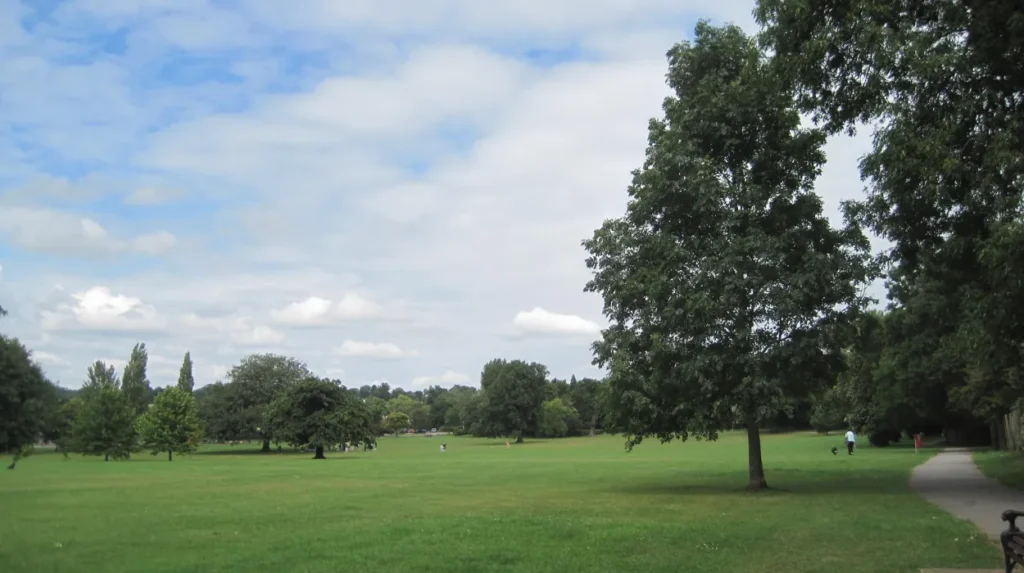
Barnet also contains substantial open space. The borough’s parks and recreational areas include locations such as Mill Hill Park, which contains sports facilities, gardens, children’s play areas, tennis courts, a café and wildlife interest.
Green Belt policy provides another geographical distinction. London’s Green Belt is designated open land intended to prevent urban sprawl and maintain permanent openness. The London Plan gives the Green Belt strong protection and requires exceptional circumstances for boundary changes.
This does not mean that every part of Barnet is rural. The borough is highly urbanised overall. Instead, its defining feature is the close relationship between built-up neighbourhoods and protected or publicly accessible open spaces.
For leisure travellers, this creates a different type of North London experience. A visitor can move between busy high streets, historic centres, parks and suburban streets without leaving Greater London.
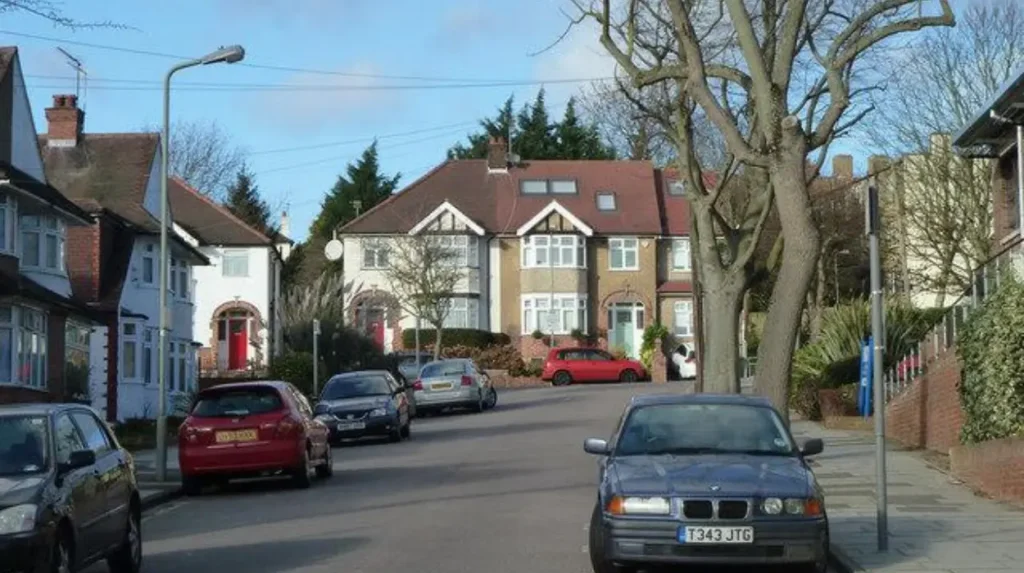
How does Barnet’s population compare with other North London boroughs?
Barnet had 389,300 residents in Census 2021, making it one of London’s larger boroughs by population. Enfield had about 330,000, Haringey about 264,200 and Waltham Forest about 278,400, while Camden had a smaller resident population.
Population size provides useful context but does not determine how a borough feels.
Barnet’s 2021 population was approximately 389,300. Between 2011 and 2021, its population increased by about 33,000 people, representing 9.2% growth.
Enfield increased from around 312,500 residents in 2011 to approximately 330,000 in 2021, representing growth of 5.6%.
Haringey increased from approximately 254,900 to 264,200 during the same period, representing growth of 3.6%. ONS describes Haringey as one of the more densely populated English local authority areas.
Waltham Forest increased from around 258,200 to 278,400, representing growth of 7.8%.
These figures show that Barnet has a larger resident population than several commonly compared North London boroughs.
The population structure also contributes to Barnet’s suburban identity. Barnet Council’s Census analysis recorded 96,600 residents aged 0–19, 266,400 aged 20–74 and 26,300 aged 75 and over in 2021. The council also reported a higher proportion of residents aged 0–15 and residents aged 40 and over compared with London overall.
Population statistics should therefore be interpreted alongside density and land area. A large population spread across a relatively extensive borough produces a different urban experience from a similarly sized population concentrated within a smaller area.
What makes Barnet different from Camden and Islington?
Barnet is more suburban and geographically extensive than Camden and Islington, while Camden and Islington have stronger inner-London characteristics. Barnet centres on neighbourhoods, parks and town centres, whereas the inner boroughs have denser urban development and closer proximity to central cultural districts.
Camden and Islington occupy strategic positions immediately north of London’s central core. Both contain neighbourhoods with dense development, extensive public transport and strong connections to central employment, culture, education and entertainment.
Camden includes major destinations such as Camden Town, King’s Cross, Bloomsbury, Hampstead and Regent’s Park. Its visitor economy is strongly connected with museums, cultural institutions, markets, entertainment and central London attractions.
Islington has a similarly urban structure. Areas such as Angel, Clerkenwell and Highbury connect residential neighbourhoods with restaurants, theatres, independent businesses and major transport routes.
Barnet has a different visitor geography. Its attractions are distributed across a larger area. Local experiences include parks, historic sites, high streets, sports facilities, heritage buildings and neighbourhood shopping districts.
The distinction is especially important for travellers who want to explore beyond central London. Barnet provides opportunities to experience residential North London and its local centres rather than focusing primarily on major central attractions.
The borough’s location also makes it relevant to travellers combining London visits with journeys towards Hertfordshire and destinations farther north.
This geographical relationship is part of Barnet’s historical development. As you explore the modern borough, you are crossing land shaped by centuries of settlement and transport change. Read the full to understand its origins.
Camden and Islington remain important comparison points because they demonstrate how quickly London’s urban character changes over relatively short distances. A journey north from the inner boroughs into Barnet gradually produces more suburban streets, larger residential areas and stronger open-space connections.
How does Barnet compare with Haringey?
Barnet is generally less densely developed than Haringey, while both boroughs contain varied neighbourhoods, parks and strong public transport connections. Barnet has a more extensive suburban pattern, while Haringey combines dense urban districts with greener neighbourhoods around Highgate, Muswell Hill and Alexandra Park.
Haringey is an Outer London borough under the London Plan, but its urban character varies substantially across the borough. Its southern and central districts have strong connections to inner London, while northern and western areas include established residential neighbourhoods and major green spaces.
Haringey’s population reached around 264,200 in 2021. ONS recorded approximately 63.8 residents per football-pitch-sized area, placing Haringey among London’s more densely populated boroughs.
Barnet recorded about 32 residents per football-pitch-sized area in the same census comparison. ONS placed Barnet among London’s less densely populated local authorities.
This difference is visible in the built environment.
Haringey’s neighbourhoods include dense terraces, flats, commercial streets and major town centres. Wood Green provides a large retail and transport hub. Tottenham has a strong cultural and sporting identity. Highgate and Muswell Hill contain substantial residential and heritage environments.
Barnet also has busy centres, but these are distributed across a broader suburban geography. Finchley, Hendon, Edgware and Chipping Barnet each perform different local roles.
For visitors, the choice between the two boroughs depends on the type of North London experience being sought. Haringey offers closer proximity to several inner urban neighbourhoods and a denser streetscape. Barnet provides greater spatial variety between town centres, residential districts and open land.
Both boroughs also demonstrate why “North London” is not a single urban type. Their neighbourhoods have developed through different historical, transport and planning processes.
How does Barnet compare with Enfield?
Barnet and Enfield share an Outer London position, substantial suburban neighbourhoods, green spaces and connections towards northern London. Barnet has a larger 2021 population, while Enfield has its own town centres, parks, industrial areas and access routes towards Hertfordshire and the wider Lee Valley.
Enfield is one of Barnet’s most useful comparisons because the two boroughs share several geographical characteristics.
Both extend towards the northern edge of Greater London. Both contain substantial residential suburbs. Both have town centres serving local communities. Both include significant areas of open space.
Enfield’s population reached approximately 330,000 in 2021. ONS recorded population growth of 5.6% between 2011 and 2021. Barnet’s population increased by 9.2% during the same period.
Enfield is also among London’s less densely populated boroughs. ONS recorded around 29 residents per football-pitch-sized area in 2021, compared with around 32 in Barnet.
The two boroughs therefore have comparable suburban characteristics despite their different local identities.
Enfield Town functions as a major centre within Enfield. Southgate, Palmers Green, Winchmore Hill, Edmonton and Cockfosters add further neighbourhood identities.
Barnet’s equivalent network includes centres such as Chipping Barnet, Finchley, Hendon, Edgware and Golders Green.
For tourists, both boroughs offer alternatives to the central London sightseeing circuit. They provide access to local parks, neighbourhood businesses, historic buildings, markets, sports and community spaces.
Their northern positions also make both relevant to visitors travelling beyond central London. Barnet has particularly strong connections through the Northern line and Thameslink network, while Enfield has important rail and Underground links serving its eastern and central districts.
How does Barnet compare with Waltham Forest?
Barnet and Waltham Forest are both Outer London boroughs with suburban districts and substantial green infrastructure, but their urban patterns differ. Barnet is generally less dense, while Waltham Forest has stronger links with East London and combines residential neighbourhoods with busy town centres and the Lea Valley.
Waltham Forest is geographically east of central London and has a different relationship with the capital’s urban structure.
Its population reached approximately 278,400 in 2021, representing a 7.8% increase from 2011. ONS recorded around 51.2 residents per football-pitch-sized area, substantially denser than Barnet’s approximately 32.
Waltham Forest contains well-known neighbourhoods including Walthamstow, Leyton, Leytonstone and Chingford. These areas demonstrate the borough’s mixture of urban, suburban and green environments.
Walthamstow has a major town-centre role and strong public transport connections. Chingford provides a different landscape with direct access towards Epping Forest.
Barnet similarly combines busy centres with green areas, but its geography is more closely associated with the northern and north-western edge of London.
The comparison is useful for travellers interested in everyday London rather than landmark tourism. Both boroughs provide opportunities to explore local markets, parks, cafés, independent businesses, residential architecture and community spaces.
The main difference is geographical orientation. Barnet connects strongly with North and North-West London and Hertfordshire. Waltham Forest connects North-East London with the Lea Valley and Essex-facing routes.
This creates different day-trip possibilities even though both boroughs share an Outer London classification.
Which borough has more green space: Barnet or other North London boroughs?
Barnet has a strong green-space identity because parks, playing fields, gardens, woodland and protected open land are distributed across its suburban geography. Other North London boroughs also contain major green areas, including Hampstead Heath, Alexandra Park, Epping Forest and Lee Valley spaces.
Green infrastructure is a major component of London’s spatial planning.
The London Plan defines green infrastructure as a network of green and open spaces and green features within the built environment. Its policy framework covers Green Belt, Metropolitan Open Land, parks, biodiversity, trees, woodlands and other forms of open space.
Barnet’s green character is particularly visible in its northern and western areas.
Mill Hill Park provides sports facilities, gardens, play areas and wildlife interest. Other parts of the borough contain playing fields, allotments, local parks and open landscapes.
The comparison with other boroughs demonstrates that green space takes different forms.
Haringey contains Alexandra Park, Highgate Wood and other significant green spaces. Waltham Forest contains Epping Forest and access to the Lee Valley. Camden contains Regent’s Park and Hampstead Heath, while Enfield includes large parks and open landscapes.
The key difference is not simply the existence of green space. It is how green areas interact with residential neighbourhoods and transport.
Barnet’s parks often sit within a suburban environment. This creates frequent transitions between residential streets and open recreational areas.
The London Plan states that London’s Green Belt covers approximately 22% of the capital’s land area and performs functions including recreation, food growing and helping to combat the urban heat-island effect.
For visitors, this makes Barnet relevant to walking, informal recreation, photography, local heritage exploration and slower-paced day itineraries.
How do Barnet’s transport connections compare with other North London boroughs?
Barnet has extensive transport connections through the Northern line, Thameslink, buses and major roads. Its network links suburban districts with central London and northern destinations, while neighbouring boroughs add Underground, rail, Overground and Elizabeth line connections across different parts of North London.
Transport is one of Barnet’s strongest structural characteristics.
Northern line stations serve several parts of the borough, including areas around Golders Green, Hendon, Finchley and Mill Hill. Thameslink provides north-south rail connections through stations including Mill Hill Broadway and Hendon.
The bus network adds local connections between neighbourhoods and town centres.
Barnet also sits close to major strategic roads connecting London with Hertfordshire and the wider South East.
Other North London boroughs have different transport strengths.
Haringey benefits from Underground, rail and London Overground connections. Stations around Finsbury Park, Seven Sisters, Tottenham Hale and Wood Green provide links towards central London and other parts of the capital.
Camden has exceptionally dense public transport coverage because of its central location. Underground and rail stations connect the borough with major destinations across London.
Enfield has Underground and rail connections serving areas including Cockfosters, Enfield Town and other northern neighbourhoods.
Waltham Forest has Underground, Overground and rail services connecting Walthamstow, Leyton, Leytonstone and Chingford with central and eastern London.
For digital nomads and business travellers, transport affects the practical value of a neighbourhood. Barnet provides access to central employment areas while retaining a suburban setting.
For leisure travellers, transport allows Barnet to function as both a destination and a base for wider North London exploration.
What is Barnet’s visitor appeal compared with other North London boroughs?
Barnet’s visitor appeal centres on local heritage, parks, neighbourhood high streets, recreational spaces and access to northern London landscapes. Camden provides major central attractions, while Haringey, Enfield and Waltham Forest offer distinct combinations of culture, parks, town centres, heritage and local experiences.
Barnet is not defined by one single tourist landmark. Its visitor appeal is distributed across its neighbourhoods.
Historic Chipping Barnet provides a traditional town-centre setting. Finchley contains parks, cultural venues and established commercial streets. Hendon provides museums, parks and transport connections. Golders Green has a strong international food and shopping identity. Mill Hill offers access to suburban green spaces.
This distributed visitor model differs from Camden, where globally recognised attractions and entertainment areas form a concentrated tourism economy.
Haringey also has a diverse visitor offer. Alexandra Palace and Park, Alexandra Park, Highgate and Tottenham provide different cultural and recreational experiences.
Enfield has heritage locations, parks and town centres that appeal to visitors seeking a less central London itinerary.
Waltham Forest combines cultural attractions, local markets, independent businesses and access to Epping Forest.
Barnet’s advantage as a visitor destination is therefore geographical variety rather than a single attraction category.
The borough works particularly well for visitors who want to combine local exploration with access to central London. A day can include a suburban high street, a park, a heritage site and a transport-connected journey into the city centre.
This also supports repeat visits. Different neighbourhoods provide separate experiences within the same borough.
What does Barnet offer digital nomads and business travellers?
Barnet provides a practical suburban environment for remote workers and business travellers through cafés, local centres, public transport, parks and proximity to central London. Its dispersed neighbourhood structure creates different work and downtime settings from denser inner boroughs.
Digital nomads and domestic business travellers often require a combination of connectivity, food, transport and places for breaks.
Barnet’s town centres provide cafés, restaurants, shops and everyday services. Transport links provide access to central London for meetings and events.
The borough’s parks provide additional options for downtime between commitments. Mill Hill Park, for example, contains a café and recreational facilities alongside green space.
The suburban environment also changes the rhythm of a short business stay. Instead of remaining within central commercial districts, travellers can use local centres for meals, shopping and informal recreation.
Camden and Islington provide a more central environment. Haringey provides a transition between inner and outer London characteristics. Enfield and Waltham Forest offer their own suburban and town-centre combinations.
The most relevant distinction is therefore not a universal quality ranking. It is the relationship between work, transport and leisure.
Barnet suits travellers whose itinerary includes both central London commitments and time spent in quieter neighbourhood environments.
How has Barnet changed while retaining its North London identity?
Barnet has experienced population growth, new development and changing transport needs while retaining established suburban neighbourhoods, town centres and protected open spaces. Its current identity reflects historic settlements, twentieth-century suburban expansion and continuing London-wide pressure for housing and infrastructure.
Barnet’s present structure is the result of long-term urban development.
The modern London Borough of Barnet was formed in 1965. Its boundaries brought together several former local government areas and established the borough in its current administrative form. Barnet’s historical records include extensive material covering Finchley, Hendon, Edgware, Golders Green, Whetstone and other local areas.
The borough has since developed through housing construction, transport investment, commercial expansion and redevelopment.
Its population increased from approximately 356,400 in 2011 to 389,300 in 2021. This growth demonstrates continuing demand for housing and services.
At the same time, London planning policy continues to protect strategic green infrastructure.
The current London Plan was adopted in 2021 and remains the strategic planning framework for London while the next London Plan is being prepared. The current framework covers development through 2041.
This creates an important future tension between growth and land protection. Barnet must accommodate housing, employment, transport and community infrastructure while maintaining designated open spaces.
The outcome is a borough that continues to change without losing the geographical characteristics that distinguish it from more central North London districts.
Explore More Area Guide
Why Is Barnet a Suburban Part of London?
What Is Everyday Life Like in Barnet, North London?
Why is Barnet useful as a base for exploring North London?
Barnet works as a North London base because it combines multiple neighbourhood centres, public transport, green spaces and access to central London. Its position also supports journeys towards Hertfordshire, while neighbouring boroughs provide additional cultural, historical, recreational and shopping destinations.
Barnet’s location provides flexibility for visitors.
A traveller staying in Barnet can explore local destinations without travelling into central London for every activity. Parks, high streets, restaurants, cafés, heritage locations and community facilities are distributed across the borough.
The Northern line provides connections towards central London. Thameslink provides another north-south transport corridor. Local buses connect neighbourhoods that are not directly served by rail.
Barnet’s northern location also creates access towards Hertfordshire and destinations outside Greater London.
This differs from staying in Camden or Islington, where central attractions are immediately accessible but suburban North London requires additional travel.
It also differs from Waltham Forest, where the natural relationship is more strongly oriented towards East London and the Lea Valley.
Enfield provides another northern base with similar suburban characteristics. Haringey offers a more central position between inner and outer London environments.
For visitors, these distinctions allow accommodation and day planning to be matched to the intended itinerary.
What is the overall difference between Barnet and other North London boroughs?
Barnet stands out through its combination of scale, suburban neighbourhoods, green infrastructure, transport connections and varied local centres. The comparison is not a ranking. Each borough has a different spatial structure, visitor offer and relationship with central London, suiting different travel purposes.
Barnet’s defining characteristics become clearer when the borough is considered alongside its neighbours.
Compared with Camden and Islington, Barnet has a stronger Outer London and suburban identity.
Compared with Haringey, Barnet generally has lower population density and a more extensive suburban geography.
Compared with Enfield, Barnet shares many northern suburban characteristics but has a larger population and different town-centre structure.
Compared with Waltham Forest, Barnet has a less dense urban pattern and a stronger North and North-West London orientation.
These distinctions are supported by Census and London planning data. Barnet recorded approximately 389,300 residents in 2021, compared with approximately 330,000 in Enfield, 264,200 in Haringey and 278,400 in Waltham Forest.
The differences extend beyond statistics.
Barnet’s geography creates a combination of town centres, residential streets, parks, transport corridors and open land. Its visitor appeal is therefore based on variety across neighbourhoods rather than concentration around a single central attraction.
For tourists, Barnet provides an alternative way to experience North London. For residents, its network of local centres supports everyday life. For digital nomads and business travellers, its transport links connect suburban accommodation with central London while its parks and local facilities provide opportunities for downtime.
The most useful way to understand Barnet is therefore as a large and varied Outer London borough positioned between central London, North London suburbs and the wider northern fringe.
Its comparison with other North London boroughs shows that “North London” represents several distinct urban environments rather than one uniform landscape. Barnet occupies one of the clearest suburban positions within that wider geography.
Is Barnet considered part of North London?
Yes. Barnet is a borough in North London and is classified as an Outer London borough. It covers a large area in the north-west of Greater London and includes neighbourhoods such as Finchley, Hendon, Edgware, Mill Hill, Golders Green and Chipping Barnet.